2/3/2015 UPDATE: ICI/PRO contributor Joan Kenk Ph.D. has published a new book on Sugar Addiction! So to celebrate her success I thought it would be helpful to republish her interview from 2011 – it was previously only for ICI/PRO members.
The first thirty seconds of the podcast will have you convinced she is the expert on the addictive qualities of sugar – and what to do about it.
As I was preparing this interview I went back and counted… Dr. Joan Kent is the 20th different Master Instructor that I've had the privilege of interviewing for the Indoor Cycle Instructor Podcast!
Dr. Kent is a Master Instructor with The Indoor Cycling Group of North America and she holds a Doctorate in psychoactive nutrition; the study of how foods effect brain chemistry along with a Masters in Exercise Physiology.
We got off of our intended track when I described an eating problem that I have and Joan helps me with a possible solution, one that maybe of interest to someone in you class.
Joan's suggested solution to my problem of yielding to sugar cravings after dinner was to take a spoonful of Super B Complex Vitamins. I'll let you know how it works 🙂
“I don’t stop when I’m tired. I only stop when I’m done.”
It surprised me to learn that the above quotation came from Marilyn Monroe. How many times have we heard those words in connection with athletics?
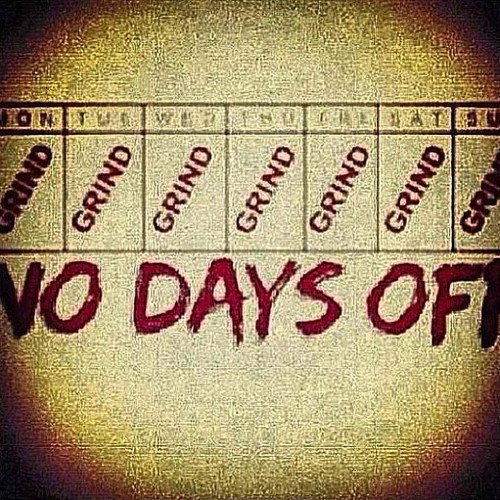
In the training and weight loss program I taught for 14 years, participants would sometimes wish for a day off, or even several days. They’d tell that to the strength-training coach, for example, and his reply was an annoyed, “There are no days off! This is it — the way you eat, the way you train — all the time.”
Men can get away with saying things like that more easily than women can, I think. Regardless, I appreciated him for saying it — and, of course, agreed with him.
One participant asked me if she could stop keeping her food log on the weekends. She acted as if (and maybe actually believed) she just wanted a break from logging.
It seemed obvious, though, that those days off would only encourage her sugar addiction. I imagined her stopping the log not on Saturday, but on Friday morning, eating sugar nonstop for three days, and re-starting her log sometime on Monday.
What I pictured most vividly, however, was her discovery that she wasn’t losing weight and asking for my help. But we’d have no records of her weekly binges.
I told her the truth: I couldn’t stop her from doing that but wasn’t going to approve it. How could I agree to help her fail and then tell others that our program didn’t work?
Toward the end of 2014, I read an article for entrepreneurs on finishing a great business year. The author explained that the only way to finish the year strong was absolutely to understand that there would “never be a day that (would) not require dedication, discipline, perseverance, accountability, and the need to execute relentlessly.”
Wow. That article may have been written about business but is all about fitness, athletic training, even weight loss. We know success in those areas depends on consistent and persistent action, not on temporary changes till the pounds are lost or the goal is reached.
I must be in a quotation kind of mood because Dan Millman comes to mind:
“There are no ordinary moments.”
Isn’t that what wishing for a day off is — a wish for moments that simply don’t count? Moments with no repercussions, when we can do what we know we shouldn’t and not suffer the consequences?
I’ve wanted those moments, too: when the alarm wakes me at some ridiculous hour to go train, for instance, or when I was flat-out tired of writing my dissertation.
We’ve probably all had moments when we wish for ordinary moments. But since I’m quoting everyone else’s wisdom today, here’s the proverb I like best in this context:
“When climbing a mountain, give up a thousand times; just keep your feet moving.”
That one really works. We can mentally go in any direction — discouraged, foolish, negative, fanciful, absurd — but never let it affect our behavior or change our plan of action.
At this point in January, some of our participants or clients may already be struggling with a motivation slow-down. Instead of trying to recharge everyone’s battery, which will need to be done over and over, why not encourage them just to keep their feet moving, no matter what?
And on that note, how about one final quote:
I do not believe in a fate that falls on men however they act, but I do believe in a fate that falls on them unless they act. — G.K. Chesterton
Kathy Helmuth and I have just received confirmation that our ACE approved Parkinson's Indoor Cycling Coaching program has been accepted by the SilverSneakers organization!
Now, Parkinson's Cycling Coaches will now receive reimbursement directly from SilverSneakers, through their FLEX Instructor Program.
I am planning an interview with the SilverSneakers National Program director that will explain exactly how the FLEX program works.
My short description: a FLEX Instructor can walk into any studio and teach a SilverSneakers approved class and it's free to SilverSneakers members. SilverSneakers then compensates the Instructor directly.
To become a SilverSneakers group exercise class instructor, one must:
Be at least 18 years of age.
Maintain current CPR certification.
Hold a two or four year degree in health, exercise science, recreation or physical activity related field or maintain a nationally recognized certification (for example, ACE, AFAA, YMCA).
Attend a SilverSneakers instructor training workshop for the specific SilverSneakers class one would like to teach.
SilverSneakers classes are available in 12,000 locations and the FLEX Instructor program allows you to easily (and at no cost) add SilverSneakers classes to your studio 🙂
It’s New Year’s resolution time again. For some of your participants, that may mean weight loss goals. Don’t worry; there’s no list of weight-loss tips below to pass along to your classes.
But I have been thinking about eating behaviors.
Grazing is one eating behavior that can impact weight significantly. I’m convinced that grazing is a type of binge eating, and that sugar may prompt it.
Grazing is characterized by “repetitive eating of small or modest amounts of food in an unplanned manner.” Because the behavior has yet to be fully defined, clarified and classified, there are some vague aspects to it.
Most of the research on grazing has been done on obese individuals, but my doctoral research and clinical experience indicate that non-obese people also graze.
Is Grazing a Form Of Binge Eating?
Binge eating doesn’t always fall into distinct binge episodes. In my study on women with binge eating disorder, participants were asked to log their food intake for 8 weeks and circle any binge eating episodes.
In the logs of several participants, and on more than one occasion, an entire day’s food intake had been circled — one big circle around the whole page.
Binge eating typically involves eating more food in a specific time period than most people would under similar circumstances. It also involves a lack of control — being unable to stop eating or control how much or which foods.
DSM-5 Criteria
The DSM-5 cites a 2-hour time period for a binge — but only as an example, not a strict criterion. If we expand the binge period to 24 hours, grazing could definitely fit the criterion.
Grazers may also experience a lack of control, along with other behaviors typically linked with binge eating — eating lots of food when not hungry; eating alone due to embarrassment over the eating; feeling disgusted, depressed or guilty afterwards.
Comments by the women who circled entire pages showed they felt their eating was out of control on those days. The amount they ate during each “grazing” might have been small or modest as defined above, but the overall amount of food eaten over the day was large.
So What Does All of This Have To Do With Sugar?
We’ve just made it through what might have been (for some of your participants) a high-sugar holiday season. The effects of sugar on our eating, though, don’t always disappear on January 1.
My dissertation suggested that standard criteria for addiction could be seen as “explaining” binge eating disorder, with sugar as the addictive substance.
I would modify this explanation for grazing: it isn’t limited to sugar addicts. As covered in a previous post — endorphins (beta-endorphin) triggered by sugar could, and would, inhibit the feeling of satiety in the main satiety center of the brain (the VMH). So sugar can make us want to eat more — not just at the moment but even days later.
As also covered previously, endorphins change food preferences toward sugars and fats, which may not only contribute to weight gain, but also increase the endorphin in a self-perpetuating cycle.
What Should Participants Do?
If any of your participants are struggling with grazing while trying to lose weight, they might need to change some things in their diets. Let’s keep this ridiculously simple for now.
One step is to stop eating sugar. The other is to eat protein throughout the day. Both could help them stop grazing and stick with their weight loss resolutions.
Sometimes, research language can be revealing and amusing. In animals (don’t run away yet!), sugar triggers beta-endorphin — linked with “continuance of ingestion and sustained consumption once begun.”
Is it just the geek in me, or does that sound to anyone else like grazing and the inability to stop eating?
In a previous post, I listed the DSM-5 criteria for addiction and left tolerance and withdrawal for another time because they take a bit more explanation. For the sake of completeness, here they are. I promise to keep this short!
Tolerance and withdrawal are linked with addiction, but addiction can occur without them. Once called the classic markers of addiction (criteria 1 and 2 in the DSM-IV), tolerance and withdrawal have been moved to 10th and 11th places in the DSM-5 criteria for substance abuse disorder.
Tolerance
Tolerance is reduced effectiveness of an addictive substance. We’ll talk about sugar. A larger dose is needed to obtain the same effect, which may increase sugar intake.
Tolerance involving endorphins occurs with sweet substances. Sugar and artificial sweeteners can both change endorphin (beta-endorphin) function through up- or down-regulation. Endorphins are produced in response to pleasure or pain.
Serotonin is another brain chemical that alleviates pain, and tolerance can occur to its effects, as well. Serotonin production is higher when insulin release is higher, so more sugar means more serotonin.
Carb sensitivity — the exaggerated release of extra insulin when eating sugar — would also increase serotonin production.
Withdrawal
Withdrawal is a predictable set of symptoms that most addictive substances will produce when chronic use stops or drops.
Withdrawal includes physical symptoms and negative moods, both associated with low levels of specific brain chemicals.
It’s common to use more sugar, or a closely related food, like fruit, to relieve or avoid withdrawal symptoms.
Addiction involves two types of reinforcement. Positive reinforcers establish and sustain habits because they cause pleasure. That’s what typically creates an addiction in the first place.
Negative reinforcers establish and sustain habits because they alleviate pain or distress. If eating sugar takes away the discomfort of withdrawal, the sugar is a negative reinforcer. That’s true even though it started as a positive reinforcer.
Most addictions will run in this direction — toward seeking negative reinforcement to stop withdrawal — no matter how “positive” the reinforcing effects of the substance or food were in the beginning.
Any positive reinforcer can be addictive. Any negative reinforcer can be addictive, too. The negative reinforcer can be either a substitute or the substance itself.
So anything that’s substituted for sugar and takes away withdrawal symptoms (negative reinforcement) has addictive potential. I’m thinking fruit, agave, sweeteners.
What Withdrawal Looks Like
80% of self-labelled chocoholics reported irritability or depression when avoiding or cutting down on chocolate. They felt preoccupied with chocolate at those times. Abstinence from chocolate led to relapse and overeating of chocolate in all participants.
One thing that occurs during withdrawal is craving. A craving is an intense urge or desire for a substance. Cravings are typically highest when withdrawal is most severe — and the greater the intake, the greater the withdrawal and craving.
Cravings may be triggered externally (seeing or smelling the sugary food) or internally (tasting a little). Withdrawal is also internal triggering.
Among women, chocolate is the most craved food, and the cravings peak premenstrually. Chocolate contains stimulants and mood-elevators, including caffeine, theobromine (similar to caffeine), tyramine and phenylethylamine (the being-in-love chemical). These were defined as the “psychoactive components” of chocolate.
Yet, when chocolate wasn’t available, all the substitutes were sweet, rather than stimulants like caffeine.
PMS and morphine withdrawal share several symptoms, including cramping, carb craving, sweating, fever, increased appetite, insomnia, irritability and nausea. During PMS, endorphins drop, so PMS has been described as periodic withdrawal from endogenous opioids (endorphins).
If clients could meaningfully impact ingrained eating behavior by subtly fine- tuning their thinking patterns about exercise, would you try to help them do that? Consider these new findings from the Cornell Food and Brand Lab as an opportunity to move people in the right direction.
Research published recently in Marketing Letters showed that if participants thought of exercise as “fun” or a “well-deserved break,” versus a “workout,” it significantly changed the way they approached postactivity food consumption. Those with fun top of mind ate less than those who viewed exercise as a workout.
Abstract:
Do consumers eat more when they exercise more? If so, the implications could ripple through the multi-billion dollar fitness and food industries and have implications for both consumers and health-care providers. Three studies–two field experiments and one observational field study–triangulate on this potential compensatory mechanism between physical activity and food intake.
The findings showed that when physical activity was perceived as fun (e.g., when it is labeled as a scenic walk rather than an exercise walk), people subsequently consume less dessert at mealtime and consume fewer hedonic snacks. A final observational field study during a competitive race showed that the more fun people rated the race as being, the less likely they were to compensate with a hedonic snack afterwards. Engaging in a physical activity seems to trigger the search for reward when individuals perceive it as exercise but not when they perceive it as fun. Key implications for the fitness industry and for health-care professionals are detailed along with the simple advice to consumers to make certain they make their physical activity routine fun in order to avoid compensation.
I had to look up the word hedonic to be sure I understood what they meant by; consume fewer hedonic snacks. According to this online dictionary:
What I think they are referring to here is eating as a pleasurable reward, as in; I worked out today… so now I can treat myself to carmel roll/large vanilla latte, candy bar, etc…
All of us in the USA heard (or said) this last week during Thanksgiving – we're doing a “pre-burn” ride or “I'm doing the Turkey Trot Thursday morning”. The purpose of both is to give permission to indulge in hedonic eating, post workout. Problem is that even riding a hard, hour-long class will only consume maybe 300 – 800 calories. One small slice of pumpkin pie has around 300+ calories and that's without whipped cream.
So are we undermining our participants weight loss goals, with all of the metrics we offer?