
by Ben Greenfield | Feb 24, 2010 | Ben Greenfield
 As you read through this series, remember that the goal is to give you basics of a simple way to teach your indoor cycling class about nutrition — and it is not meant to be a complete primer or university equivalent of Nutrition 101! This means that you can feel free to put your own spin on the information if you want to add more for your class. For example, if you’re into more plant-based protein sources, tell your class about hemp and flax seeds, quinoa, nuts and rice protein. If you are more a paleo-type, introduce them to healthy beef jerky, lamb, or cold-water fish. You can also include discussions about omega-3 eggs, greek yogurt, whey protein and other dairy based sources.
Speaking of omega-3’s, this article is going to cover the essentials of fat!
(more…)
by | Feb 6, 2010 | Health and Wellness, Latest News, Melissa Marotta
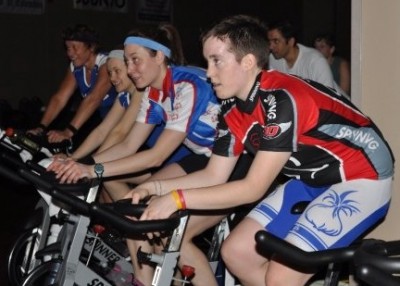 It gives me (beyond) great pleasure to announce that the state of Vermont will be hosting the 10th Annual Ride for a Reason indoor cycling marathon to benefit the Special Olympics on Sunday, March 21, 2010. The event will be held at the Sheraton in Burlington, Vermont.
Along with myself (STAR 3 Instructor Melissa Marotta, Vermont), Spinning Master Instructors Anthony Musemici (New York) and Angie Scott (Vermont), and STAR 2 Instructor David Means (Vermont), Jennifer will co-lead what will undoubtedly be an inspiring and invigorating six-hour endurance challenge. 150+ riders at last year's event raised nearly $40,000 to support the athletes of the Special Olympics.
To join us all for the big event in Vermont, you can visit http://www.vtso.org/spinning_marathon.php
You can register for the full day (6 hours), put together a relay team to split up the day, or simply register for any number of hours you'd like to ride.
by Ben Greenfield | Feb 1, 2010 | Ben Greenfield
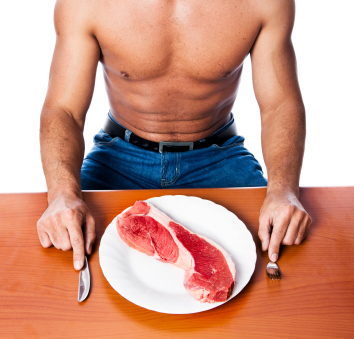 Now that you have a good idea of how to teach your indoor cycling class about the basics of carbohydrates and performance, let’s move into the next logical macronutrient: protein.
You’d be surprised at the number of people in your class who have only a very basic understand of protein, and often simply think that it is derived from meat and should be eaten with dinner.
Begin your discussion of protein with an explanation of what proteins actually are: vital components of every organ and action within the human body, without which we would simply cease to function. In the absence of proper nutritional building blocks for protein, the human body will cannibalize it’s own lean muscle mass and organs, and experience a weakened immune system, poor performance, and inadequate recovery and fitness response. Proteins are comprised of amino acids — many of which the body cannot make on it’s own unless complete proteins are present in the diet.
But it’s a myth that you need to get your complete protein from meat.
(more…)
by Ben Greenfield | Jan 28, 2010 | Ben Greenfield
 Everybody knows that nutrition is important.
Whether a student’s goal is fat-burning or human performance, if the proper fuel isn’t there, the goal won’t be achieved.
The problem is that it can be too easy to feed your students through the firehose on Day 1, scaring them away with big words like “glycemic index” and “periodization”. Instead, why not include a series of mini-lectures in your class, during which you teach your students with a brief 5-10 minute anecdote during warm-up or cool-down?
You can literally take each manageable section of this ten week series on Indoor Cycling Nutrition, and turn it into a ten week nutrition mini-class for your students. This will give you a value-added service that you can feature in your marketing, and give your students both a physical and mental benefit during your classes. I’ll write each article in a manner that allows you to easily a) break information into small chunks so you don’t have to be reading this article off a piece of paper while you’re sitting on your bike and b) easily explain it to your students, most of which will not have backgrounds in nutrition science and physiology.
Without further ado, let’s hop into Part I of Teaching Your Indoor Cycling Class About Nutrition: Carbohydrates.
(more…)
by | Jan 6, 2010 | Health and Wellness, Melissa Marotta
“A student approached me after one of my indoor cycling classes, complaining of an intense headache and asking me what I thought. I didn’t know what to say, so I just told her to see her doctor! Any thoughts?”
– S.H., Darien, NY
Melissa writes:
First off, kudos to you for having the courage to acknowledge the limits of your expertise. You did exactly the right thing to refer your student to see her physician.
Exercise-induced, or exertion headaches are yet another incompletely understood phenomenon (that tends to be what I end up writing about on ICI/PRO, after all!). Headaches that occur during or immediately after exercise are well-described in the literature and are thought to be quite common: it is estimated that 1 out of 100 people experience at least one exertion headache at some point in their lives1. However, large prospective studies are lacking to identify exactly what causes them2.
We can think about exertion headaches as one of two flavors: primary, which are not connected to any underlying problems, and thus not serious, and secondary, attributable to some other, potentially serious medical problem but triggered by exertion. Most exertion headaches are primary. Exertion headaches are often described as “throbbing” bilateral (both sides) pain, lasting anywhere from 5 minutes to 48 hours. Secondary exertion headaches can also include vomiting, visual changes, and neck stiffness, and can last for several days3.
We know that exertion headaches occur under conditions of “strenuous” activity. But why?
The leading theory on headache, migraine or otherwise, is that it is related to changes in blood flow to the brain (both increased and decreased flow — all that counts is that there is a change). Revving up one’s system, perhaps due to inadequate warm-up, or starting an intense training program without appropriate build-up, indeed causes changes in blood flow all over, which influences blood flow to the brain4. Even during responsible exercise, there is increased oxygen demand not only in skeletal and cardiac muscle but also to the brain. To increase blood flow to the brain to enhance oxygen delivery, the vessels of the brain dilate. It is this exercise-induced vasodilation which can cause headache5.
Moreover, exercising in warm conditions (i.e., outside on a hot summer day, improperly ventilated Spinning studio) can independently lead to vasodilation (think: heat dilates vessels; cold constricts vessels — we’ll revisit this later).
Hypoglycemia, or low blood sugar, can also cause headache6. Reminding students to make sure that they eat something (check out ICI Podcast #3 with dietitian Tyler Young on tips for pre- and post-exercise fuel) before and after they train, and during exercise for a training session lasting longer than 60 minutes, is an important responsibility we as instructors should take seriously. Our nutritional fuel has major ramifications for our metabolic adaptations during and after exercise, which I will describe in an upcoming ICI column.
So what to do about exertion headaches?
Anyone who experiences an exercise-induced headache (intense pain during or after strenuous exercise) for the first time should see their physician for evaluation, as well as anyone who experiences changes in their exercise-induced headaches. After determining that these headaches are not the result of an underlying problem, the physician will often prescribe an anti-inflammatory drug (like indomethacin, which constricts blood vessels) for the athlete to take immediately when he or she feels a headache coming on7.
But the mainstay of exertion headache treatment is prevention, through the reduction of risk factors. Proper warm-up before exercise, proper cooling and ventilation of exercise settings, as well as adequate sleep, nutrition and hydration can reduce the occurrences of exertion headaches8.
In addition, research supports the use of head-cooling for the treatment of headaches. Just as heat causes the blood vessels in the brain to dilate, cold causes the same vessels to contract. By applying ice packs around the head or submersing large portions of the head in ice water (i.e., under a faucet or a locker room shower immediately after indoor cycling class), this can reverse the vasodilation process and stop the headache9. Neat, huh? (And while anecdotes don’t mean much, this is how I treat my own exercise-induced vasodilation headaches. Works every time.)
TAKE-HOME POINTS
Exertional or exercise-induced headaches are a common but incompletely understood phenomenon. Most exertional headaches do not reflect any serious medical problem. However, if someone experiences a headache during or after exercise for the first time, or a headache more severe than usual, he or she should see their doctor for evaluation.
Like all other recommendations to prevent, well, anything: Warm-up. Exercise in ventilated areas. Sleep enough, eat enough, drink enough. Once option maybe to use a Chill-Its Cooling Towel. And if all else fails, stick your head under the sink under the most frigid water you can bear.
Melissa Marotta is a Family Medicine Resident Physician at Middlesex Hospital. She is also a STAR 3 Spinning Instructor, Certified Personal Trainer (ACE), and author.
[plulz_social_like width=”350″ send=”false” font=”arial” action=”like” layout=”standard” faces=”false” ]
References
- Exercise Headaches. Mayo Clinic. http://www.mayoclinic.com
- Turner, J. Exercise-related Headache. Current Sports Medicine Reports: Feb 2003 — 2(1).
- Exercise Headaches. Mayo Clinic. http://www.mayoclinic.com
- Nadelson, C. Sport and Exercise-induced Migraines. Current Sports Medicine Reports: Feb 2006: 5(1): 29-33.
- Turner, J. Exercise-related Headache. Current Sports Medicine Reports: Feb 2003 — 2(1).
- Ibid.
- Exercise Headaches. Mayo Clinic. http://www.mayoclinic.com
- Nadelson, C. Sport and Exercise-induced Migraines. Current Sports Medicine Reports: Feb 2006: 5(1): 29-33.
- Singh RK, Martinez A, Baxter P. Head Cooling for Exercise-Induced Headache. J Child Neurol 2006;21:1067-1068
by Barbara | Oct 24, 2009 | Barbara Hoots, Featured Articles, Music

ICI/PRO’s Top 100 Songs
Want to punch up your playlist with some of the best music on the planet AND get the inside scoop on how to teach each empowering song? Thanks to a suggestion from ICI/PRO member Charles Farrow of Montgomery, Alabama, we’re going to collect 100 of the BEST songs ever recorded along with coaching tips from YOU – the most passionate instructors in the world!
Think for a moment…what is your favorite song – that little gem that creates explosive energy and reaffirms your commitment to indoor cycling? Now, here comes the good stuff….how do you TEACH that magical song to encourage your students and help them squeeze out every last drop of effort?
We need your help to create this golden list of inspiration. I’ll kick it off with my top five songs and the rest is up to you! Simply reply to this post – ONE SONG per COMMENT. C’mon, send us your best! (Duplicate songs are welcome as long as the teaching method is different.)
Update: Comments are closed on this post and Barbara has compiled the list for you. We ended up with 161 and they are available free to subscribers of our email newsletter.
The list of 161 songs is old news. Have you seen our new: BEST 400 Indoor Cycling Songs list? It's free to subscribers to our email newsletter. Click here to join now.
