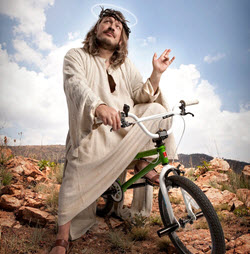
A rock solid climb for this week! Super motivating with lots of twists and turns for coaching moments and power adds.
This Russian DJ hit the scene in 2009 at the age of 19 and has been pumping out the hits ever since.
This tune is 4:08 and has an rpm at 68. I cue ‘out of the saddle' at :40 with the music- staying out until a music pull back at 2:00. Again we get out at 2:30 with more load :), and a zone 4/5 push to the end starting at 3:16.
Featuring Angel Taylor, here's DJ Arty and ‘Up All Night':
I’m going to go out on a limb here (wow, that’s new for me right? NOT!) and say that we will see a resurgence of interest in Power this year. It’s not rocket science nor spooky soothsaying, it’s just logical from my point of view. When the Keiser & Schwinn made their initial power introduction to the market about 5 years ago, there was considerable interest and attention. Well, one or two Schwinn recalls later, and a Keiser journey that kept their data locked inside their smallest of on-board computers, we found interest slowly wane. About that time Flywheel and Soul Cycle started to become the talk of the town, and I do mean that in the most New York sense of the word.
The interesting thing about Flywheel is that their initial element of distinction was their custom “power” (or as they refer to it – torque) as represented on their group display called the “Torque Board”. It was neither power nor torque, and I wrote about my first hand experience in an earlier blog, but nevertheless it began to get some excessive PR as is often the case with things that are new or different in New York City.
As I watched from the sidelines, I think this actually helped Soul Cycle since the founder of Flywheel was originally part of the partnership that created Soul Cycle and the mere discussion of this fact helped both get more media exposure. These two female powerhouse entrepreneurs have been a veritable case study in seizing the market with savvy PR, branding and professional connections to the point that they have stayed the center of attention in the Indoor Cycling world for probably the last 3 years.
In the meantime, those that have focused more on the technology rather than on the experience have been quietly seeing more and more options for displaying power and all of its related metrics on not only the slew of new bikes, but also in the way of group displays.
Suunto may have started the group heart rate experience, but Polar, MyZone, and Performance IQ were quickly on their heels with similar offerings as well as adding power to the mix. With the bigger studios beginning to consider how they can compete with the Soul Cycle and Flywheel expansion, they are beginning to look at technology and other ways to differentiate the experience or even introduce real training in the mix.
As my dad used to say when he had an inside scoop, “A little birdie told me” that this March, at IHRSA we will see Keiser finally unlock their data with a couple options for getting the data out of the computer. Given that they sold more power bikes than any other manufacturer since power was introduced to the market, this should be the final element needed to pull the new technology players into the limelight and begin to turn soul cycle mania into a more power player movement.
Only time will tell if my “Spidey sense” is on target or if I’m just doing more wishful thinking. Nevertheless, I have begun to re-double my efforts to study how power is being represented in this Indoor Cycling industry, and how we can exploit it. To that end, this blog represents the first in a series that will be exploring power and how we can make it more accessible, more understandable, more reliable, and more straight forward to teach with.
Spinning® studio owner Suzanne Olson, along with her 4 partners, runs Pure Energy in Paoli, PA . Suzanne joins me to discuss how she ensures a quality experience for her participants, in their multi-format fitness studio.
[firstname], teaching an endurance PROfile is all about keeping them engaged and focused. Listen as Master Instructor Janet Toussaint explains how she does it in her ride called The Endurance Connection.
Here's your Spotify PRO/Playlist! We have made every attempt to replicate the original playlist. In some instances the tracks specified were unavailable in Spotify. When necessary we have substituted individual songs of similar length and tried to maintain the Instructor's intent. Here's the Deezer Playlist
Summer is in full swing and with Independence Day coming up, you may want to consider a theme ride for your next class. While it may be difficult to collect enough themed songs for a Fourth of July playlist, you could definitely include some summer themed songs as well. Here are a few great ideas for you to include along with suggestions on how to use them! Hope your summer is filled with sunny days and full classes!
You'll be able to ride longer with less fatigue. You should have your feet attached to the pedal (either with toe cages or clipped in) to ride at 90 RPM comfortably if you are not used to this pedal speed.
Here's the Science:
90 RPM recruits more Type 1 (“slow twitch”) muscle fiber which generally use aerobic forms of energy (stored fat for fuel) and allows you to cycle for longer periods of time without getting fatigued.
Pedaling slower, say 60 to 80 RPM, tends to recruit the Type 2 “fast twitch” muscles (ironic, right?) which are larger and more powerful. Because of their high demand, Type 2 muscle fibers tend to use anaerobic energy production (glycogen stores) for powerful bursts of speed.
Glycogen stores are limited, fat is not. Let's use more fat and pedal at 90 RPM.
I'll add that most people whom I've worked with who have never had any cycling training start out pedaling slower, say at 60-75 rpm. I think this is because…
1) No one has taught them good pedal stroke (how to pull back, up, and over the pedal in addition to pushing down).
2) Their feet are not attached to the pedal – it is hard to impossible to have a good pedal stroke when your feet are not somehow attached to the pedal (cleats, toe cages).
3) No one has explained the whole idea of pedaling faster to conserve energy. And they haven't practiced it to make it smooth and comfortable.
4) No one has explained that pedaling slowly into a hill will only S L O W your pedal speed even more – and maybe you'll end up walking up the hill. If you head into the hill at a faster cadence, then you have more room to slow your pedals as the hill gets longer or steeper. (Don't forget to shift or reduce resistance!)
How to Count your Cadence – Watch the video below
Does your Indoor cycle or bike monitor show RPM or Cadence? (by the way, RPM – Revolutions per Minute – and cadence mean the same thing)
If not, here is how to count your RPM:
* Take a 15 second count
* As you pedal, tap your right knee each time at the top of the pedal stroke, count how many times you tap.
15 taps = 60 RPM
17-18 taps = 70 RPM
20 taps = 80 RPM
22-23 taps = 90 RPM
25 taps = 100 RPM
27-28 taps = 110 RPM
Here is a video to show you exactly how to do this: How to Count your RPM
Happy Tapping!
Coach Robin
CEM (Chief Executive Mole)
www.powertopedal.com <= We teach you about pedal stroke and speed in these videos!