If your objective is to communicate (sell) the value of either Training With Heart Rate – or – Training With Power, teaching your class using Three Zones will be the most easily understood, accepted and remembered… here's why.
The Rule of Three
It's no accident that throughout history – thousands of years in fact – three (3) is the magic number in many, memorable fairy tales, myths and marketing campaigns. They're easily remembered and shared because they follow The Rule of Three…
There were three little pigs, three blind mice, Goldilocks and the three bears, Three Musketeers, three wise men and the Three Stooges.
1st, 2nd, 3rd – who ever remembers (or cares) who came next?
This copy writing blog explains the Rule of Three very well in the context of effectively communicating ideas.
It all comes down to the way we humans process information. We have become proficient at pattern recognition by necessity, and three is the smallest number of elements required to create a pattern. This combination of pattern and brevity results in memorable content, and that’s why the Rule of Three will make you a more engaging writer.
Sticky Ideas
You see the Rule of Three used all the time across diverse areas of life. Why?
Because information presented in groups of three sticks in our heads better than other clusters of items. For example:
“Life, liberty, and the pursuit of happiness”
“Government of the people, by the people, for the people”
“Friends, Romans, Countrymen”
“Blood, sweat and tears”
“Location, location, location”
“Father, Son and Holy Spirit”
“Faith, Hope and Charity”
“Mind, body, spirit”
“Stop, Look and Listen”
“Sex, Lies and Videotape”
“I came, I saw, I conquered”
I'm confident you can add a bunch more to this list, which kind of makes my point. All of our brains are hard wired to create and retain patterns of three concepts… not four, five, six or seven – three is the magic number.
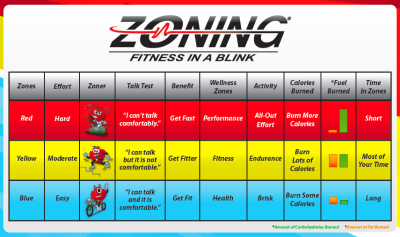
Sally Edwards understood The Rule of Three. Her three heart rate training zones concept called Zoning is designed to appeal to as many people as possible.
Please note that I didn't ask; What's the most accurate/precise/correct number of HR or Power zones? My question was; What's the best number of Heart Rate and/or Power Zones in our classes?
Cameron Chinatti with Stages Indoor Cycling says the answer is 7 Power zones. So does Joe Friel, Dr. Andrew Coggan. Chris Carmichael appears to use five. All super smart and knowledgeable people to be sure. Administered properly to a committed endurance athlete, 7 power zones is probably the most accurate/precise/correct number of HR or Power zones for them to train with.
But 7 Power training zones is too many IMO for our classes filled with Club Athletes.
The ICI/PRO Power Training Zones follow The Rule of Three.
How cool would it be if your insurance company paid for indoor cycling classes?
A national policy of Prescriptive Exercise would be the holy grail* for small studio owners.
Imagine; A new client walks in with her doctor specified exercise regimen for you to “fill”, just like at a pharmacy. As an approved provider, you and your studio would provide the required exercise and then bill the clients insurance company… and not at your normal class rate – at a much higher rate in recognition of your fitness expertise.
A fantasy? Nope**, not if you're near The Wellness Institute in Winnipeg Canada. Doctors there are actually writing detailed prescriptions for exercise. How cool is that?
Doctors at a unique medical facility in Winnipeg are starting to write some unusual prescriptions.
“A lap a day keeps the doctor away” is one of the mottos at the Seven Oaks Wellness Institute (SOWI), a fitness facility attached to the Seven Oaks General Hospital on Leila Avenue, where doctors have started prescribing exercise instead of pills.
Dr. Kevin Saunders is one of the founders of the SOWI and the medical director. He said exercise is an effective treatment for all kinds of illnesses, including hypertension, Type 2 diabetes, high cholesterol and even some forms of cancer.
The facility offers clients a more holistic approach to fitness, helping people from all walks of life to understand what kinds of exercise they should be doing, and what they need to avoid if it puts their health in jeopardy.
You'll note that what Dr. Sanders is targeting with this program are Special Populations of people who would benefit from physical activity. I'm guessing you'd have a little trouble getting a prescription for a USAT Triathlon coach to get you ready for your next Ironman 🙂
What has me most excited here is the potential for prescriptive exercise for people suffering from Parkinson's Disease. It's been shown repeatedly that people of all ages with PD respond well to Indoor Cycling classes. Especially classes that are designed and taught by a Parkinson's Cycling Coach. Indoor Cycling studios already have the necessary tools to conduct this hugely beneficial classes. They're best held around 10:30 – 11:30 in the morning, which is normally a time without a scheduled class
I did some research and found an excellent article here at emedicine.medscape.com that explains in detail what Perscriptive Exercise is (different from physical rehab) and includes a number of areas where exercise is typically prescribed by a physiian.
Background
Exercise prescription commonly refers to the specific plan of fitness-related activities that are designed for a specified purpose, which is often developed by a fitness or rehabilitation specialist for the client or patient. Due to the specific and unique needs and interests of the client/patient, the goal of exercise prescription should be successful integration of exercise principles and behavioral techniques that motivates the participant to be compliant, thus achieving their goals.[1, 2, 3, 4, 5, 6, 7]
Components of exercise prescription
An exercise prescription generally includes the following specific recommendations:
Type of exercise or activity (eg, walking, swimming, cycling)
Specific workloads (eg, watts, walking speed)
Duration and frequency of the activity or exercise session
Intensity guidelines — Target heart rate (THR) range and estimated rate of perceived exertion (RPE)
Precautions regarding certain orthopedic (or other) concerns or related comments
Note that a properly structured, Power based Indoor Cycling class would easily include all of the stated components.
Consider this simple prescription:
Type of exercise or activity – Indoor Cycling class.
Specific workloads – Below, @ and Above riders observed 4 minute Best Effort PTP Watts or FTP if known
Duration and frequency of the activity or exercise session – 3 x 60 min classes weekly
Intensity guidelines — each 60 class to include: 5 x 5 min intervals @ PTP, 3 x 1 min intervals Above PTP, that remainder of class Below PTP and Above VT1 (staying aerobic) + adequate recovery after each @/Above interval.
Precautions – None
What you'd have is essentially an endurance training program, written by an MD.
Taking this further. If you were to incorporate the rider's performance data capture, from a Display Training system like Performance IQ or Spivi, your doctor could review your progress = make informed recommendations for future exercise prescriptions. Wouldn't that be awesome?
If you can offer any additional information about prescriptive exercise, I'd love to hear from you!
*Yes, I'm aware that many insurance programs offer a discount/rebate for club dues – if you attend a speciaf number of days a month. This is very different.
** I don't know the specifics of Canada's reimbursement system, but I'm looking into it. I have asked for a representative join me on the Podcast to discuss all of this.
This Podcast is was originally published on September 28, 2008, I have updated it with our new Podcast host information and I am representing it now. I hope you enjoy it, Joey
Sally Edwards, the originator of Heart Zones Training, and I discuss the origin of Zone based Heart Rate Training. Sally explains its importance to conducting an effective Indoor Cycling Class and the fallacy of using age based Max Heart Rate charts and formulas.
Listen to the show below or subscribe with iTunes with the link on the right.
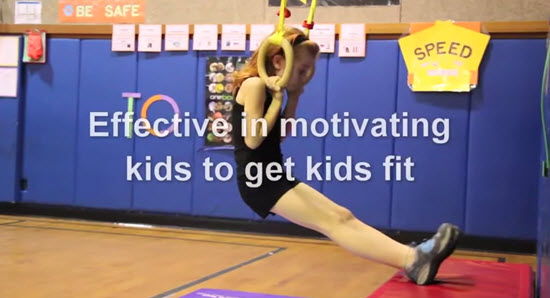
While most of us are focused on adult fitness, Sally Edwards and her Heart Zones company are doing some pretty amazing stuff with middle and high school aged children – using display training technology to motivate kids and get them active 🙂
https://youtu.be/psEPcsR-R3A
I love seeing active kids who are enjoying fun activities… they're our future Instructors and participants!
Use this contact form to request more information.
Thinking many of us would love to know how we could improve the fitness of the children in our neighborhoods, I'm sharing this press release I received earlier this week:
For Immediate Release
Contact: Joe Gooden Heart Zones, Inc.
Award-winning Physical Education teacher and visionary Beth Kirkpatrick joins forces this week with the experienced team of educators and entrepreneurs to accomplish a very large goal – get kids and teachers fit. “We are moving into 21st century education and PE is getting left behind,” says Heart Zones, Inc.'s CEO Sally Edwards, MA, MBA. “And, Beth Kirkpatrick has the spirit and the stamina to lead teachers, administrators, and students by revitalizing curriculum, leading professional development, and implementing technologies that will accomplish getting kids and getting America fit.”
From 1973 to 1993, Beth Kirkpatrick taught middle school PE in the public schools systems in Vinton, Iowa. She was one of the first PE teachers in the nation to pioneer the application of wearable technologies – the heart rate monitor – in schools. For the next 18 years, from 1993-2011 she was the Director of Education for Polar Electro Inc. using her experience, imagination, insight, and boldness to elevate physical education and education overall to new heights. A trailblazer ahead of her time, Beth has been unwavering in her conviction that the integration of technology and assessment through objective measurement best captured through heart rate and now almost any wearable smart device could create real breakthroughs in PE and in the health literacy of children long-term. “We must be able to prescribe personal exercise to individuals in a group setting. Without foot pods for tracking, heart rate monitors for assessing intensity, and hardware/software for collecting and interpreting the data, physical educators are prescribing exercise as one-size-fits all which doesn't work.”
Beth Kirkpatrick has been featured on CNN, NBC Nightly News with Tom Brokaw, Life Magazine, countless magazine and newspaper stories nationwide. Her published work includes one of the first books for using heart rate monitors in physical education titled “Lessons From the Heart.”
It would be difficult to find an individual who has impacted more lives in the PE profession than Beth. She has moved the profession forward and inspired countless teachers, administrators and decision makers to engage and motivate movement using sensors and software like the new Heart Zones “Smart Hearts System”. She has testified before the Congressional Health, Education, Labor, and Pension Committee in Washington D.C. and was part of the NASPE, National Association of Sport and Physical Education, advocacy group that lobbies Congress yearly to provide federal funding for physical education.
Beth's drive to incorporate fitness technologies into the more than 100,000 schools in the USA spans kindergarten through collegiate levels. She has worked with several NCAA Division I basketball teams introducing heart rate monitor training to universities including Duke University, the University of Kentucky, the University of Tennessee, the University of Connecticut, LSU, NC State, Fresno State, BYU, University of Iowa, Iowa State, Michigan State, and Ball State University to name a few.
Beth's reach extends far beyond the borders of the USA. Beth has keynoted over 1500 conferences in all fifty states as well as international keynotes in Malaysia, South Africa, Germany, Brazil, China, and Canada.
Beth was awarded the Emens Distinguished Professorship at Ball State University, and numerous state and national education awards including the U.S. Department of Education's Christa McAuliffe Fellowship Award, as well as the US West Outstanding Teacher of the Year for Iowa, and National Association of Sport and Physical Education's teacher of the year for the state and district.
According to Joe Gooden, Director of Physical Education for Heart Zones, Inc., “This is the era of Smart PE – integrating digital data and tracking into health clubs, sports teams, and school PE classes in an affordable way that it is in the reach of every PE teacher and every PE department. I know of no better educator than Beth Kirkpatrick to lead school physical education into the 21st century because of her dedication and commitment to kids and to health literacy. We are all excited that Beth has joined the Heart Zones team of like-minded PE advocates.”
____________________________________
About Heart Zones, Inc:
For the past 25 years, the fitness technology, education, and training company, Heart Zones, Inc. has been a leader in the development wearable technologies and their companion education and training solutions. Founded by author, professional athlete, exercise scientist, PE teacher, and app developer Sally Edwards, the company develops and markets wearable solutions for fitness enthusiasts such as the Blink heart rate monitor, the Apple iPad app Heart Zones PE, as well as the Smart Hearts System platform. These sensor based tools are used to track and assess participants activities and performance. The company holds several federal patent on the cardio- training methodologies ZONING and Threshold Training. Heart Zones, Inc. is headquartered in Sacramento, California.
I used Epic Planet's video Epic Acadia this morning in a class I subbed. Because these early AM people are very committed and they all understand the value of Threshold based training, I knew I could lead them on a ride that included a 20 minute climb at (or very near) Threshold. The first 30 minutes are a perfect warm up with a number of short climbs I used to bring them to Threshold before we got to the climb. The graphical representation of where you are during the class is the best of any of the DVD creators that I have experienced, although I'm not completely sure what TZ 4-5 means. I assume TZ stands for Training Zone and if we only had a universal standard for what TZ stood for …
Recently, I found myself at the local big box home improvement store looking for some primer paint. A helpful person asked if I had any questions. I explained that I had some pealing paint that I intended to scrape, prime and repaint. He suggested “brand X” as the best primer that they sold. Before I could ask if it would be possible to have the primer tinted, he moved off to help someone else. Content that I had the right paint, I carried a can of it over to the counter where they mixed custom colors. “What are you using this for?” asked the helpful person behind the counter. I told her the same thing I had told the earlier helpful person and asked if I could have it tinted. “This isn't what you want.” was her reply. She then began giving me a chemistry lesson that went way over my head. I listened politely before explaining I needed a few other things and would be right back.
I left the store with nothing but confusion.
In the survey I asked the question; What would you change, add or implement at your club or studio that you feel will increase Heart Rate monitor usage by members? 61% said they would implement Instructor training so everyone talks the same language.
Have we created a “Tower of Babel”?With 413 responses to the Heart Rate Training Survey it is clear that we have a language barrier that needs to be addressed. I feel the confusion it creates for our students is partially to blame for the low level of Heart Rate monitor usage in our classes.
I respect the fact that people will have their own point of view, i.e… which is the best paint for your house, but do our answers always reflect what's best for the customer?
I needed help making a decision and helpful person #1 gave me exactly what I needed; a simple, confident recommendation. Even though it was based on minimum information, his confidence left me feeling ready to take action… in this case making the purchase.
Helpful person #2, while thinking she was being helpful, did the exact opposite. The confusion she created had me second guessing what should have been a pretty simple decision. So I did nothing… which I'm thinking is what many of our students do every day.
In these three posts I am advocating for a standard method of describing HR training Zones and I would love your feedback.