Wahoo BLE & ANT+ cadence sensor easily attaches to either crank arm and doesn't require any magnet or second sensor.
We talk a lot about the new Indoor Cycles with consoles that display a rider's performance data; Power /watts, RPM, distance, calories. Training with Power is fabulous if your club or studio as invested bikes recently. It's even more fabulous when all of that data is connected to a display training system like what's offered from Performance IQ or Spivi. Either system really adds to the fun factor, while delivering true performance data directly into each participant's email box – an awesome convergence of Keeping It Fun & Indoor Cycling 2.0 🙂
But is there an option to bringing big screen display training to your club or studio using conventional Indoor Cycles?
Absolutely and around 90% of the investment you'll make today will carry over to when you do finally upgrade to Power bikes – assuming you do of course.
My assumption is based on the fact that if you are riding a conventional Indoor Cycle, with no computer/console, there's a good chance you're on Star Trac Spinner® NXT's and Spinner® Pro's. Star Trac owned the market for indoor cycles back in the 2000's and sold thousands of both models. To my knowledge, back then nearly all of the Big Box clubs were riding Star Trac's – the one exception being LA Fitness.
So if your NXT's or Pro's are in relatively good nick and you would like to add technology so everyone knows how fast they're pedalling, you have a couple of options.
NOTE: I haven't seen a studio adapt a bicycle computer successfully and don't recommend wasting your time trying.
The most common solution is to install a Spinning® computer. These consoles will display cadence, distance (wildly inaccurate) time and HR if you're wearing an analog HR strap. A few words of caution:
The Spinning computer has no option for connection (BLE or ANT+) to a display training system = they won't connect with Performance IQ or Spivi.
These computers are designed to fit multiple models of Spinners®. There is a setting (you use a magnet to get into the option screen) you need to make to adjust the computer to your model of bike – to have RPM displayed correctly.
They're pricey at $167.00 each and I'm not aware of any bulk discounts.
The alternative for studios not ready to replace their bikes, but do want to begin offering performance metrics (even RPM & HR can make a huge impression on clients) and possibly a bike reservation system, I recommend the new Wahoo RPM cadence sensor.
The $39.99 Wahoo sensor is about the size of a quarter and attaches easily to one of the crank arms. That's it. There's no second magnet or parts needed. The package comes with a number of attachment methods – I'm showing it simply stuck on using some incredibly sticky double sided tape.
Battery life (replaceable coin cell) is supposed to be a year or more with it's auto-on feature. The sensor transmits in both BLE and ANT+ with great range so you could have a large studio with 40 or more NXT's wirelessly connected to Performance IQ or Spivi. Let the fun begin 🙂
The other option would be for participants to bring in their personal portable device; iPhone, iPad or Android phone. There are multiple Apps that will receive the sensor's BLE signal (all phones have BLE) and the free Wahoo Fitness App would be my choice. It's super easy to use and paring is very intuitive.
Yes this sensor will work with the Spinning App – only after you purchase additional sensor options.
The word “technique” intrigues some and makes others yawn. But there’s much to be said for technique. It’s the foundation for all athletic performance features.
Technique involves improved skills. In the broadest, most general terms, that means eliminating unnecessary movement; making movements in the correct directions; applying the necessary power, but no more than that; using the right muscles for the activity; and using optimal speed if time isn’t a factor.
Okay, that’s a dry list. Still, the benefits of good technique — and the consequences of bad — affect training and performance. The last thing I’m going to do is describe cycling technique; vastly superior riders have done that in too many venues. (Check out the excellent videos here on ICI-PRO.) Instead, I’d like to list some benefits of good technique.
Efficiency
The main benefit of good technique is efficiency. Efficiency is the ratio of work output to expended energy. If work output increases OR energy expenditure decreases, efficiency has improved. Efficiency and technique are closely related because principles of efficiency are so similar to principles of technique.
Many activities have an optimal rate. Rates above and below that cost more energy. The mechanism behind that is stored muscle elasticity, which requires the shortest time between muscle relaxation and contraction to prevent the loss of energy as heat.
Good technique reduces the energy required for the pedal stroke, reduces energy lost as body heat, and retains more mechanical energy for the next pedal stroke. Strength goes up — functional-type strength.
Practice reinforces cycling technique, so it improves efficiency.
Consistent velocity
Consistent velocity also affects technique. Unintentionally accelerating or decelerating due to poor technique wastes energy. Obviously, holding a single cadence throughout a cycling class isn’t usually part of the workout plan.
But staying consistent during a song or segment — an important technical skill — can increase efficiency. Beatmatch is an excellent teaching tool for helping students develop consistency.
What else affects efficiency?
Efficiency may involve factors other than technique. For example, it may depend on the contractile properties of the muscle: slow-twitch is more efficient than fast-twitch. It may depend on training, which can increase strength and endurance by increasing muscle efficiency. Big-gear training, for example, can improve efficiency in fast-twitch fibers.
Other benefits of good technique
Doing something with correct technique feels good, probably because the body is being used the right way.
Correct technique makes the student look good. In my master’s thesis, I compared the principles of technique and efficiency to principles of movement aesthetics. It turns out that what makes a movement correct and efficient is also what makes it beautiful.
So technique leads to efficiency, and that wastes less energy. The less we waste, the more energy is left for the demanding parts of the class when it really counts. And the better we look and feel cycling.
You’d like your students to look and feel good while taking your class, complete it successfully, and want to come back for more, right?
Jim Karanas always said, “Endurance athletes don’t mind expending energy, but they never want to waste it.”
Tom Scotto provides this Audio PROfile for our ICI/PRO Members.
RPMx is designed to help riders adapt to higher legs speeds and promote a higher average cadence. The intensities will range depending on how developed a rider’s pedal technique is and how relaxed they remain throughout the drills. Riders with good pedal technique, who remain relaxed, will be able to maintain the various cadences at a lower perceived effort. Complete RPMx PROfile here.
Here's your Spotify PRO/Playlist! Deezer. We have made every attempt to replicate the original playlist. In some instances the tracks specified were unavailable in Spotify. When necessary we have substituted individual songs of similar length and tried to maintain the Instructor's intent.


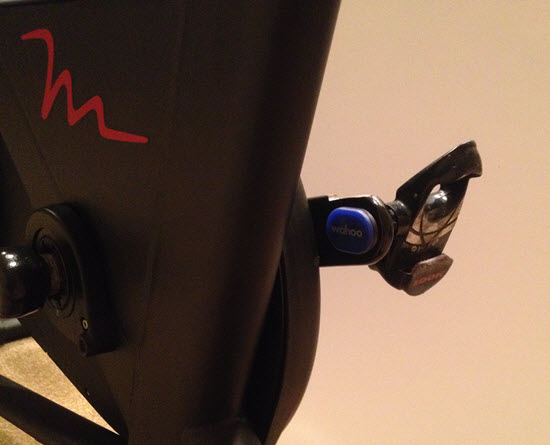
 magnet or parts needed. The package comes with a number of attachment methods – I'm showing it simply stuck on using some incredibly sticky double sided tape.
