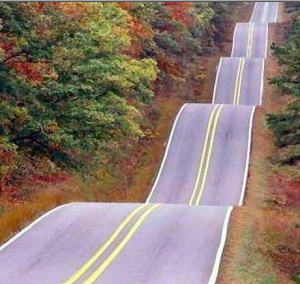
The more I teach the more I find that the simplest profiles are the most popular. I often put together simple profiles and I'm always worried that my participants are going to be bored, but the longer the intervals and the more I repeat each set the more they love it. This gives participants more and more opportunities to understand the set and perfect how they perform it. When you combine a simple set with the science of anchoring time and effort, the shorter the interval the higher the output or the longer the interval the lower the output, it makes for a challenging and very personalized workout. I have also found the if I'm not taking the class on a “journey”, but just doing an interval based class my playlist only needs to be a mix of high energy songs, there is no need to try to match riding position or RPM with the music, just rock it!
This week I'm sharing with you a profile I used this week in most of my classes. It starts with a 5 minute warmup where I increased the intensity, wattage or HR ever minute. After a minute of recovery we did a 6 minute interval where we rode seated with a RPM of 80-110. If we were riding on bikes with wattage we remembered our average wattage at the end of the interval. If wattage wasn't available but participants had HR monitors I had them take note of either their average HR for the interval. If average HR wasn't available I asked them to take their best guess at their average HR. If the only option was perceived exertion I had riders remember the gear or resistance they were were working with and the feelings in their body like their breathing and burning sensation in their legs. After a minute recovery we rode for 4 minutes but this time we rode with an RPM of 60-80 and at a higher wattage, gear, HR and/or perceived exertion. After a 1 minute recovery we rode for 2 minutes while standing at an rpm of 60-80 and an even higher wattage, gear, HR and/or perceived exertion. After a 1 minute recovery we repeated the 6,4,2 minute set again, taking a 1 minute recovery after each interval, but this time we rode the 6 minute interval in a seated position with a RPM of 60-80, the 4 minute interval standing at 60-80rpm and for the 2 minute interval we sat between 80-110prm. After another 1 minute recovery we we rode for 6,4,2 minute interval for a final time. This time the 6 minute interval was ridden in a standing position at 60-80rpm, the 4 minute interval was ridden seated between 80-110prm and the 2 minute interval was ridden seated between 60-80rpm, taking 1 minute off between each interval and trying to increase the wattage, gear, HR and/or perceived exertion with each interval.
Finally I finished with a tabata interval of 8 X 20 seconds at max effort and 10 seconds recovery. If done properly output, wattage, gear and/or rpm will drop throughout the interval. I tell my class the output will drop but effort should not.
New Power of 3 Mix, Right Click > Save As / Save Target As to download on PC or Download Linked File As on Mac. Open in iTunes and then you'll see this in your Spotify Local File folder.
I'm not a Snoop Dogg fan – but there's some awesome tracks this week on Spotify.
This has become an almost regular habit for me. I'll cue up the New Music Tuesday playlist published by Spotify and then drag promising tracks into my Future To Use folder. Some weeks are near complete washouts. This week has what could be a complete class of songs… Oh, what the heck. Here's a playlist of just songs from today (no Snoop you'll notice) that follows my typical Life Time Fitness 45 minute Evolution Class Format – times are approximate and vary dependent on song length:
5 min Warmup – 90+ RPM
5 min Openers – 4-5 accelerations pushing above threshold (your Edge in Life Time speak)
3 min Reset – fun change of pace, but not a full recovery
4 min Best Effort = maximum sustainable Watts / HR
4 min @ VT1 (Aerobic Threshold or top of zone #2) / Base Watts
7 min Challenge #1
2 min Reset
7 min Challenge #2
2 min Reset
4 min Big Finish = a Best Effort / slightly above threshold final effort
5 min Dedication, cool down & stretch[wlm_private ‘PRO-Platinum|PRO-Monthly|PRO-Gratis|PRO-Seasonal|Platinum-trial|Monthly-trial|PRO-Military|30-Days-of-PRO|90 Day PRO|Stages-Instructor|Schwinn-Instructor|Instructor-Bonus|28 Day Challenge']
Why do I choose to follow a templated class profile?
Lots of reasons actually:
The Life Time Fitness 45 minute Evolution Class profile is supposed to follow this template format. One of the rare times in my life that I choose to willfully follow directions 🙂
15+ years of experience has me believing my participants enjoy a consistent, predictable class profile. This is especially true for my early AM “A” types. They need to see that I have a plan and purpose for the class. Sticking to a familiar pattern (they know what to expect) appears to be comforting to them + knowing what's coming has them working harder throughout the class.
It helps keep me creative. Knowing WHAT profile I'm planning frees me to play with music that determines HOW I'll lead each segment. The Best Efforts and Challenges are “open” – meaning, if I want to use a big climb for the first Best Effort I can. Just pick a powerful track with a slower tempo and I'm done with that segment. Challenge #1 and #2 can be speed, endurance, strength, etc… and typically a pair of songs.
Knowing in advance, what I'm doing this week, makes life less stressful. Less stress allows me to concentrate on delivering a better class presentation.
Simplifies creating fresh playlists. Because I already know the profile, I can quickly assemble a playlist. Contrast that with not knowing either the profile or playlist. I would have twice the work. No thanks.
[/wlm_private]I'll be using this playlist and profile on Thursday. I'll let you know what their response is!
Over the past few weeks there have been some questions on the ICI/Pro website that gave me the idea for this week's post. One question was about music flow and another was asked which comes first, playlist or profile?
To show one way to make music flow I decided to put together a playlist of songs that are all in the same harmonic key, this is technique is called “Harmonic Mixing” and is used by many of the world's top DJ's. I use a software named “Mixed in Key” (http://www.mixedinkey.com) that automatically analyzes all my music files and determines the key and tempo of each song. Mixing harmonically enables you to create smooth transitions between songs and ensure that all songs sound great together. I put this playlist together without any consideration of the profile. I chose popular, high energy, songs and let the Harmonic Mixing create the flow. This is a playlist that can be used with, just about, any interval based profile where the profile, not the music, is the focus.
Next I put together a killer profile using a technique known as “anchoring time and effort”. This is a very simple tactic where riders should be able push higher intensities as interval length gets shorter. Less Time = More Work.
[wlm_private ‘PRO-Platinum|PRO-Monthly|PRO-Gratis|PRO-Seasonal|Platinum-trial|Monthly-trial|PRO-Military|30-Days-of-PRO|90 Day PRO|Stages-Instructor|Schwinn-Instructor|Instructor-Bonus|28 Day Challenge']
You can join my TrainerRoad Team at : http://www.trainerroad.com/teams/2484-dennis-mellon-s-indoor-cycling-team
60 minute harmonically mixed track, to download Right Click > Save As / Save Target As to download. Open in iTunes and then you'll see this in your Spotify Local File folder.
This is just one example of how I put together my classes. Other times I try to match the music and profile exactly and let the music dictate the terrain. I would recommend instructors get proficient at both methods. This way you don’t pigeonhole yourself and you keep your participants on their toes. It also keeps things fresh and exciting for you.[/wlm_private]
We've all heard the causality dilemma, “Which came first, the chicken or the egg?”. Ancient philosophers have been debating this question since the beginning of recorded history. Indoor cycling instructors have been asking themselves a similar question,”What comes first, the playlist or the profile?”, ever since Jonny G showed the world how much fun it could be to ride a bike that goes nowhere.
As a more “seasoned” instructor and Master Educator for Stages Cycling I am often asked my advice on this dilemma. I tell them that an awesome playlist or a great profile can carry a class, but if you can create both you'll be a rock star.
[wlm_private ‘PRO-Platinum|PRO-Monthly|PRO-Gratis|PRO-Seasonal|Platinum-trial|Monthly-trial|PRO-Military|30-Days-of-PRO|90 Day PRO|Stages-Instructor|Schwinn-Instructor|Instructor-Bonus|28 Day Challenge']
In my “The Power of 3” posts I put together 3 harmonically mixed songs and a short profile that can be used with each mix. I'm always searching for the perfect blend of music and performance based interval sets. Sometimes, like I did for the “ICI/Pro DJ Scott Melker Music Playlist Contest” I let the timing and energy of the music determine my profile. In this post I'm presenting a profile that takes the lead and the music is of secondary importance.
Below I have provided a harmonically mixed 65 minute long music track. The music is not the focus of this profile, so if you want to use your own playlist go right ahead. I would recommend you find a playlist that is high energy and don't worry about the timing of each song and interval, just let the music play.
The two profiles I have provided are very similar, actually the timing of the intervals are exactly the same. The only change is the difference between the low intensity or “Floor” and the high intensity or “Ceiling” of each workout. Due to the high intensity or vaulted ceilings of the Above Threshold workout a low intensity or shallow floor is required to recovery after each interval. It's important to understand this principle, if you are asking your class participants to work above threshold for any length of time you are also going to need to give them time to recover, the higher the intensity, the lower the recovery. If you do not give appropriate recovery you should expect to see a drop in the work done for each interval. I purposely DID NOT give my class appropriate recovery between each interval of this workout. My goal was to have them work on their anaerobic endurance, lactate clearance and lactate buffering. I expected a drop in wattage or work from interval to interval but asked my riders to try to keep this drop as small as possible. Between each interval set riders were given a 2 minute recovery to filter out as much of these accumulated waste products as possible. The cue I kept repeating in the middle of each interval set was “Your legs should feel like you're taking a bath in a tub full of lactate.”
The timing of the @ Threshold workout was exactly the same as the Above Threshold workout, but the height difference between floor and ceiling went from a room with vaulted ceilings to something that resembled a crawl space. The higher intensity or ceiling should be only a few watts above threshold or just above maximum sustainable intensity and the low intensity should be just below threshold or to the point where riders can regain control of their breathing. I like to compare this workout to a Time Trial effort or I also call it a Criss Cross Threshold workout. It is as much mental toughness training as it is physical. Science has shown us that a rider can maintain a threshold effort for more than an hour, so riders are physically capable of successfully completing this workout, the question is are they mentally capable. We can train the brain the same way we can train the body, if any participants cannot continue, let them know it's okay to take a 2-3 minute recovery then rejoin the group when they are recovered both physically and mentally. Also let them know that the next time you teach a class like this they should expect to “keep the power the pedals” longer. The cue I used in the Above Threshold profile also holds true here, after about 10 minutes, “Your legs should feel like you're taking a bath in a tub full of lactate.”
Give these two profiles a try and let me know how it goes. Both profiles are very similar and very challenging, so challenging that a bet your participants will not be able to remember a single song you played for the entire class.
In many of my “The Power of 3” posts I have written about the importance of “anchoring” time and effort. In it's most basic terms this means that the shorter the interval the higher the effort. If you instruct on bikes with power, then a higher effort should also translate to a higher wattage. This “anchoring” concept holds true as long as riders are given appropriate rest or recovery after each interval or hard effort. If riders are not given enough recovery between intervals their effort may still be high but their output or wattage will start to drop as fatigue increases. The ability to see this phenomenon is one of the most “powerful” features of a bike with a wattage meter.
The theme for my Above Threshold classes this month is to show my participants the importance of recovery. Over the last few months I've been using a lot of interval sets where I decrease the interval time from interval to interval and I expect to see a higher average wattage for each interval. For example I may have my participants perform intervals of 5, 4, 3, 2, and 1 minutes, each interval is followed by a 2 minute recovery, with the goal of increasing average wattage for each interval. This month I'll have my riders perform the same intervals, but I plan on reducing the recovery time to as low as 30 seconds between each interval. At the beginning of the month I expect to see wattage drop from interval to interval, as the body fatigues from lack of recovery. In the middle of the month I expect the see wattage held steady from interval to interval and by the end of the month, as the body adapts, I hope to see wattage again increase as the interval time decreases.
The body is truly an amazing organisms and it adapts to the stresses it faces, be patient and enjoy the process.
[wlm_private ‘PRO-Platinum|PRO-Monthly|PRO-Gratis|PRO-Seasonal|Platinum-trial|Monthly-trial|PRO-Military|30-Days-of-PRO|90 Day PRO|Stages-Instructor|Schwinn-Instructor|Instructor-Bonus|28 Day Challenge']
The Power of 3 – “More Rest = More Work”
“Without You (Sample Gee Remix, Melker Edit)” by David Guetta vs U2
“Pompeii (Audien Remix)” by Bastille
“The Monster (eSQUIRE vs OFFBeat Remix)” by Eminem & Rihanna
3 song harmonically mixed track, to download Right Click > Save As / Save Target As to download. Open in iTunes and then you'll see this in your Spotify Local File folder.