
by Gino | Nov 30, 2017 | Training With Power
 No, MSP doesn’t stand for “My Secret Pal”, nor does it stand for “Mom’s Special Potion”, and I’ll stop right there before this gets really silly. MSP stands for Maximum Sustainable Power. It is the level of power once can sustain for a specific time interval. When you are referencing an hour interval (measured and estimated with 20 minute tests), most elite cyclists who train with power refer to this as FTP or Functional Threshold Power.
I prefer to reserve the term “Threshold” for that unique metabolic event that takes place with respect to the production of energy; the “cross-over” process between the aerobic and non-aerobic energy production systems. In my opinion, this term should be reserved for cardiovascular training (it has been used and researched with this term as the agreed upon nomenclature for years before power meters even existed). Therefore, to avoid confusing heart rate and power training terms, I do not refer to threshold with respect to power, but instead reserve its use solely to reference ones heart rate when this metabolic event occurs.
(more…)
by Joan Kent | May 4, 2015 | Engage Your Students, Health and Wellness, Master Instructor Blog
Caffeine is a drug that can be used in appropriate ways, so it has definite value. This post covers a few uses of caffeine.[wlm_private ‘PRO-Platinum|PRO-Monthly|PRO-Gratis|PRO-Seasonal|Platinum-trial|Monthly-trial|PRO-Military|30-Days-of-PRO|90 Day PRO|Stages-Instructor|Schwinn-Instructor|Instructor-Bonus|28 Day Challenge']
Ergogenic Aid
Much has been written about the ergogenic benefits of caffeine, particularly for endurance athletes, so it’s unnecessary to go into detail here.
Bottom line, caffeine can help athletes work harder and generate more power, often without feeling the extra effort. They may not even realize they’re putting out more effort, although the power increase could be as much as 3%.
It’s a good idea to get accustomed to caffeine in training before using it during a performance event, whatever that may be. My advice has always been, “No surprises on race day.”
Know how caffeine affects you and how much you can safely consume without upsetting your stomach or causing anxiety, irritability, high heart rate, or insomnia.
Brain Chem and Caffeine
When we drink coffee or tea, caffeine occupies the brain receptors that are normally occupied by adenosine. Adenosine inhibits the release of dopamine and norepinephrine — two brain alertness chemicals — to prevent an over-release of them.
When caffeine ‘takes over’ the adenosine receptor, adenosine can’t inhibit dopamine and norepinephrine, so those two chemicals are disinhibited. We feel alert and may notice improvements in memory, mood, energy, reaction time and general cognitive function.
Protein can also make us feel alert.
Why Do We Need Protein When We Can Just Drink Coffee?
The two mechanisms of action are completely different. While caffeine uses (and eventually depletes) stored brain levels of dopamine and norepinephrine, protein provides the amino acids that the brain uses to make more. The amino acids are tyrosine and phenylalanine.
If you haven’t been eating much protein for a while, you might find yourself drinking more coffee. Or you might discover that you get less effect from any caffeine you have because brain stores are already depleted.
On the other hand, if you systematically and consistently eat more protein foods, you might find you don’t need or want as much coffee or tea because your brain keeps making — and releasing — dopamine and norepinephrine.
(Sleep restores dopamine, too, but that’s a separate topic.)
Health Benefits of Coffee and Tea
Recent research has shown beneficial effects of coffee consumption. Coffee contains antioxidants and has been found to reduce the risk of type 2 diabetes, endometrial cancer, skin melanoma, multiple sclerosis, Alzheimer’s, and heart disease.
The benefits of green tea have long been known. It contains powerful antioxidants, can reduce anxiety, and can improve dental health. Like coffee, it may also reduce the risk of Alzheimer’s, type 2 diabetes, heart disease, certain cancers, and Parkinson’s.
Caffeine As a Pain Reliever
It’s less frequently mentioned, but relieving pain could be considered another benefit of caffeine. Norepinephrine and dopamine both trigger an analgesic effect. Plenty of potent pain-killing substances are available, but caffeine could be seen as a more natural pain reliever, especially in light of the health benefits listed above.
Unsweetened Is Better
Do I need to mention that sugar could reverse most of the beneficial effects covered in this post? Limit fancy coffees with exotic names. Sticking with the basics is a healthier choice.[/wlm_private]
by John | Jan 21, 2015 | Latest News, Master Instructor Blog, Training With Power, Zone based Heart Rate Training
Hey [wlm_firstname] how hard should I be working to; get faster, lose weight, build endurance, ect…
Answering that is the age old dilemma many of us face when questioned by our riders. We try to be helpful by offering subjective descriptions of what both thresholds should feel like. We give breathing cues, run special FTP classes and/or include Best Effort intervals into our class. They're all designed to help our participants discover (for themselves) their threshold hearts rates and/or threshold wattages. We can get close… but at the end of the day they're still subjective measurements = not always as accurate as we would like.
Breathing gas exchange monitors can scientifically measure the two thresholds. Systems like those from New Leaf and Korr can objectively measure the changes in our breathing levels of O2 and CO2. They work well, but are very expensive to own (you can no longer purchase a New Leaf cart, now that they were purchased by Life Time Fitness) and individual metabolic testing can run to $200.00 or more. The actual tests are rather unpleasant, requiring you to wear a very uncomfortable mask – trust me on this > I've had over a dozen tests and would dread doing another.
The only other option was blood lactate testing during a graded exercise test at a university or sports performance center. Here they prick your finger every two or three minutes, while you work to failure during the assessment. I haven't done one of these personally, but it sounds equally unpleasant.
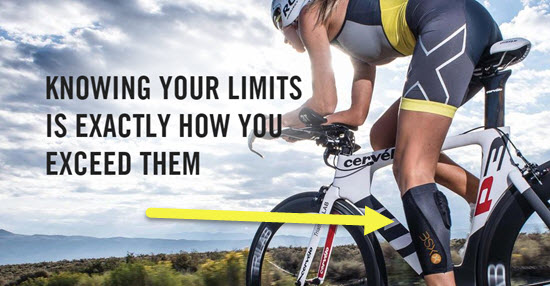
Enter the new BSXinsight – a wearable device that optically measures your O2 levels = this could be exactly what all of us training athletes were looking for. Pictured above, the BSXinsight is positioned on your calf using a compression sleeve. It wirelessly communicates with a smart phone and the data is displayed by (you guessed it) their special app.
Don't just listen to your body, look inside it.
Data and gear are only as good as their ability to improve your riding. Now you can access the most powerful training metric in endurance sports, making every mile more effective and putting every piece of technology you already use into valuable perspective.
BSXinsight uses revolutionary technology that allows you to see inside your muscle, measuring your lactate threshold and generating personalized training zones. Stop trying to “feel” whether you’re pushing too hard or leaving too much in the tank and let the science of your body speak to you.
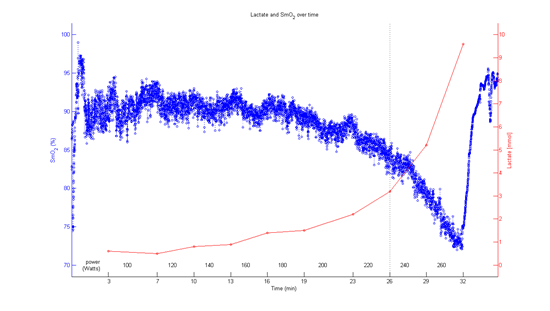
Clearly identifying LT2 threshold
I just finished a fascinating conversation with one of the principals of the company. They have offered to send me a demo BSXinsight to experiment with. When I'm done I'll be sending it to Dennis Mellon for his feedback. Once we are done accurately learning our own LT and overlaying it with our Heart Rates and wattages, we will record an episode with the company spokesperson so we can share what we've learned with all of you.
Stay tuned 🙂
