
by Joan Kent | Apr 20, 2015 | Best Practices, Engage Your Students, Health and Wellness, Promote and Build Your Class, Your Fitness Business

Do you have an elevator pitch? Mine has changed several times — all necessary. But this post is actually about the emotions that sugar generates.
I began with a standard 30-second elevator pitch. Remember that version? It was the original length years ago, but now almost nobody will listen that long.
I shortened mine to 15 seconds.
Yet people went glassy-eyed when I said “psychoactive nutrition,” even though I immediately defined it as “how foods affect brain chemistry.”[wlm_private ‘PRO-Platinum|PRO-Monthly|PRO-Gratis|PRO-Seasonal|Platinum-trial|Monthly-trial|PRO-Military|30-Days-of-PRO|90 Day PRO|Stages-Instructor|Schwinn-Instructor|Instructor-Bonus|28 Day Challenge']
Still, brain chemistry interested them, so I changed the pitch again. I started with ‘food and brain chemistry’ and left out ‘psychoactive nutrition.’
Then I heard great recommendations from speakers and marketing pros on the perfect pitch:
– Don’t explain your process, just the results.
– Keep it short.
– Avoid big words.
– Start with a question.
All sounded like good ideas. I re-crafted my pitch with a starting question and shortened it again — this time to 10 seconds.
“You know how people have diabetes, high blood pressure, or other medical problems they can’t fix because they’re stuck on sugar? Well, I help people conquer sugar addiction so they can transform their health and feel great.”
I could never finish it. Everyone would interrupt by the time I said “high blood pressure…”
“My father has both, and high cholesterol. What should he do?”
“My mother’s diabetic. Are you a doctor?”
One woman told me, “The second part interested me, but the first part didn’t.”
(Ironically enough, when I asked what she did, her answer took 45 complicated, boring seconds. I didn’t have the heart to challenge her critique of my 10-second pitch when hers was a remedy for insomnia. But I digress.)
I changed my pitch again and dropped the opening question.
“I help people conquer sugar addiction, so they can transform their health, feel better, lose their mood swings, and gain control of their eating.”
It’s 6 seconds long. And I can’t make it through the 6 seconds without being interrupted, right after ‘sugar addiction’:
“Oh, that’s so important!”
“That’s a big deal right now. Everyone’s addicted to sugar.”
“My daughter is addicted to sugar; it’s all she eats.”
“Sugar is more addictive than heroin. Don’t you agree?”
“Do you really believe it’s possible to be addicted to sugar?”
So — and I already knew this — it’s an emotional topic. If I can’t even get through a 6-second sentence, something is charging people up enough that they must speak then and there.
In past presentations, people have glowered at me when I’ve talked about the health problems linked with the granulated white stuff.
A man walked out during one talk because I answered his question that, yes, fruit is sugar.
While I was still working on my doctorate, fat was the go-to dietary demon. In a lecture I gave to fitness pros, I was discussing sugar as a factor in health issues. “I have the same degree you do,” an angry woman shouted [we had master’s degrees in exercise physiology], “and you don’t know what you’re talking about!”
With all of these food-related emotions, this past weekend was such a relief. A real estate agent asked what I do.
He gave me the full 6 seconds to finish my sentence and questioned, “Is there a market for that?”[/wlm_private]

by Joan Kent | Apr 13, 2015 | Engage Your Students, Health and Wellness, Your Fitness Business

Participant resistance was such a big part of running a weight-loss program, I didn’t even realize it was a thing to write about (if that makes any sense). It just went with the territory.
“Resist” has many synonyms: oppose, battle, combat, duel, fight back, put up a fight, defy, struggle against, stonewall. Why would someone join a weight-loss program — and pay lots of money — only to do these?
Participants resist in many ways. Below are only a few examples of actual participant behavior during the 13 years I ran a program combining athletic performance training and a robust nutrition plan geared to weight loss and ending sugar addiction.[wlm_private ‘PRO-Platinum|PRO-Monthly|PRO-Gratis|PRO-Seasonal|Platinum-trial|Monthly-trial|PRO-Military|30-Days-of-PRO|90 Day PRO|Stages-Instructor|Schwinn-Instructor|Instructor-Bonus|28 Day Challenge']
Names have been changed to protect the guilty.
Jeffrey
Jeffrey was our first participant. He got used to having my full attention and turned petulant when other participants joined. From that point on, he continually criticized the program and stopped following instructions. When I said peanut butter was okay to eat, he ate a 1-pound jar in a day.
John
John was in the program for almost a year before he lost any weight. Once his weight started dropping, he told me that, at first, he wanted to prove it wouldn’t work, so he made sure it didn’t.
Kathy
Kathy complained about hearing sugar addiction info in both a live class and a webinar, instead of realizing she heard it twice because it was key. After a private consult, she waved to me from the window of Pete’s (the coffee place) while eating. Based on Pete’s menu, draw your own conclusions about the food.
Kimberly
Kimberly was a vegetarian, miserable, touchy, and quick to anger. She masked it with a phony-soft voice but complained to management about everything (especially me). Even her doctor had told her she needed protein. I knew on Day 1 she’d never finish the first quarter. She didn’t.
Tom
Tom was an alcoholic who reacted to the rule about avoiding alcohol with a strange grin. He dropped out and rejoined over a year later. He reacted to the alcohol rule with the same grin, dropped out again and never came back.
Shelly
Shelly was in sales and said she had to drink with clients. She had many reasons she couldn’t get around drinking. She never lost weight until she did the AIDS ride from San Francisco to L.A. (without alcohol).
Kristin
Kristin’s attendance at trainings was poor. Because it was a progressive, periodized training program, not a drop-in class, she didn’t progress. She also wanted detailed menus instead of guidelines. When we didn’t supply menus right away, that became her excuse to eat pizza, drink wine, and never keep a food log.
When we developed menus, she complained they weren’t specific enough. She wanted to know precisely what SHE should eat every hour of every day. She gave me The South Beach Diet and said our nutrition program was just like it. It wasn’t, but I never understood why she didn’t just follow that diet instead of eating nachos and drinking margaritas. Or what any of this had to do with never logging her food intake as instructed.
So why do people pay lots of money and then resist? Here are a few reasons.
Alcoholism
Addiction defies rules of reason and logic. It’s a complex topic, very briefly covered in a previous post (Sweet Tooth or Sugar Addiction: What’s the Difference?). Alcohol can sabotage weight loss, as covered in another post.
Sugar Addiction
See above. People will go to extreme lengths to avoid giving up their favorite foods. Lots of blame gets thrown.
Not Taking Responsibility
They’re overweight because of a spouse’s work schedule. Or they go to restaurants frequently. Or they never learned what to eat as kids. Or… fill in the blank.
Plausible Diversion
Registering and paying for an expensive, intensive program showed their sincere desire to lose weight. If they didn’t lose, it was the fault of the program, not because they never did the work to make it happen.
[/wlm_private]
These stories aren’t pretty — and they’re crummy memories — but they’re 100% true. If you have a similar experience with your students, maybe something here can help you start them moving in the right direction.
by Joan Kent | Apr 6, 2015 | Health and Wellness

The Natural Eating Cycle is simple and straightforward: We feel hungry. We eat in response. The hunger stops. We stop eating and lose interest in food.
We could visualize those 4 steps as a circle because they form a continual, ongoing process. Eating that natural way is primal and elemental.
Babies are expert at it, although it obviously takes a parent or caretaker to feed them. The last step is one they have down cold, though. Have you ever tried to feed a baby who’s not hungry anymore? Good luck.
That’s how it’s supposed to be.[wlm_private ‘PRO-Platinum|PRO-Monthly|PRO-Gratis|PRO-Seasonal|Platinum-trial|Monthly-trial|PRO-Military|30-Days-of-PRO|90 Day PRO|Stages-Instructor|Schwinn-Instructor|Instructor-Bonus|28 Day Challenge']
Yet the natural eating cycle can go wrong, and sugar is one reason that can happen. More about sugar’s effects later.
Unnatural eating patterns could include restriction (dieting or fasting); bingeing; purging (self-induced vomiting, abuse of laxatives, excessive exercise); irregular meal timing (skipping meals, grazing all day); extremely rapid eating; or eating a lot of food when not hungry.
I once read 2 different articles, each describing a “disturbed” eating cycle. According to the first cycle, an event disturbs our equilibrium. We eat. We feel fat and resolve to diet.
The other eating cycle went like this: We diet. We feel deprived. We binge.
No doubt some of your students have experienced one or both of those cycles. What if we put the two patterns together and look at interactions among the steps?
1. An event disturbs our equilibrium.
2. We eat.
3. We feel fat and resolve to diet.
4. We diet.
5. We feel deprived.
6. We binge.
The 6 steps in sequence seem reasonable, and form a pattern to which your students might relate. Based on clinical experience, though, I say there’s more to it. Below are a few ways it might go.
Scenario A
We go all the way through steps 1-6. After we binge in Step 6, we then circle back to Step 3 — we feel fat and resolve to diet. From there, we continue through the lower part of the list, and cycle through Steps 3-6, possibly over and over.
Scenario B
We’ve binged, presumably after Steps 1-5. That takes us to Step 1 at the top of the list: bingeing is the event that disturbs our equilibrium, so we eat in response to it. We might then continue to cycle through the remaining Steps 3-6, possibly over and over.
Scenario C
This one involves only Steps 1-3: the event that disturbs us, eating, feeling fat and resolving to diet. But in this scenario, resolving to diet — just anticipating the stress of dieting and deprivation — is enough to disturb our equilibrium, so we eat. Someone could stay stuck in Steps 1-3 in this way for quite some time.
How can sugar make any or all of these 3 scenarios more likely?
We might feel deprived in Step 5 because we gave up sugar to diet and are now experiencing sugar cravings.
We might feel stressed at the anticipation of dieting in Step 3 because it will mean giving up sugar.
With sugar, we might find ourselves at Step 1 more frequently, feeling more disturbed by a greater number of events. That could simply be because the neurochemical effects of sugar make it difficult for some people to maintain equilibrium. Almost any stage of sugar addiction, including withdrawal, can make our behavior (eating behaviors and others) more impulsive.
The natural eating cycle is a delicate balance. It’s always subject to disruption, but eating sugar can disrupt it a lot more. If you have students who are struggling with unnatural eating patterns, please let them know.[/wlm_private]
by Joan Kent | Mar 17, 2015 | Health and Wellness, Strength Training
Liquid B complex is the only Nutrition Magic I know. It can stop a sugar craving within a few minutes. But every so often, people will tell me they tried it and it didn’t work. How could that be?
Careful questioning revealed a few common reasons that prevent B complex from working effectively. Here’s what I’ve discovered.
Not Using Liquid B Complex
The liquid formulation seems to speed up the effect so we can feel it within a few minutes. Tablets take longer and might be good for regular supplementation, but a “craving emergency” is better dealt with by using liquid B.
If you already take a daily B-complex tablet, you can safely add liquid B on a day that you get a craving. On the other hand, if you’ve used liquid B for a craving before taking your usual dose of B, there’s no reason to take the tablet that day.
A one-day “overload” of B vitamins won’t be harmful, but it’s best to avoid it on a regular basis. (If you have any questions about this, please check with your doctor.)
Taking B12 Instead of B Complex
For reasons I’ve never been able to understand, people misinterpret “B complex” as “B12.” It’s possible that this dates back to the once-upon-a-time practice of getting B12 injections for energy.
Whatever the reason, B12 is only part of the complete complex — and not even the most important B vitamin in trampling cravings. Yet this misinterpretation has happened so often, I now clarify immediately whenever I recommend B complex to a client.
So again, use LIQUID B COMPLEX. Not tablets, not B12, not any other individual B vitamin.
Not Eating Any Protein
When this mistake is made, it’s usually by folks who haven’t worked with me as clients. All of my clients know I stress the importance of protein.
Protein is a key element in the craving-killing plan. B vitamins work as catalysts to help form specific brain chemicals. Those chemicals can end cravings (and also prevent them) when they’re at optimal levels. But the brain chemicals are made from amino acids — which we learned in 7th—grade biology as “the building blocks of protein.”
We can’t make the necessary brain chemicals without protein.
Junking Out On Sugar First
If you’ve eaten half a bag of cookies, please don’t expect B vitamins to stop you from eating the other half. The neurochemical changes that the cookies have set in motion are powerful — and even more powerful for some people than for others.
For reasons beyond the scope of this post, those brain changes will probably make you want the rest of the cookies.
Suffice it to say there’s simply no way that a teaspoon of liquid B complex can override the strong effects of whatever sugar you may have just eaten. The most helpful idea is to use B vitamins to stop your craving so you don’t eat the cookies in the first place.
I’ll throw in a side note. If you find it too easy to reach for cookies because you’re home and they’re conveniently located in your kitchen cabinet, please do yourself a huge favor: Don’t keep cookies in your kitchen. Throw away the ones you have. Don’t buy more.
It Works If You Work It
Liquid B complex is still the only nutrition magic I know. It’s effective; it’s quick. But it’s not a stand-alone miracle. It’s best used as part of a sincere attempt to reduce dietary sugar.
Please stay aware that B vitamins are a short-term solution for stopping sugar cravings. Getting rid of cravings permanently requires changes in diet.
And, yes, changing diet can virtually eliminate cravings. Think of the freedom that could mean for your students.
by Joan Kent | Mar 9, 2015 | Best Practices, Health and Wellness, Latest News
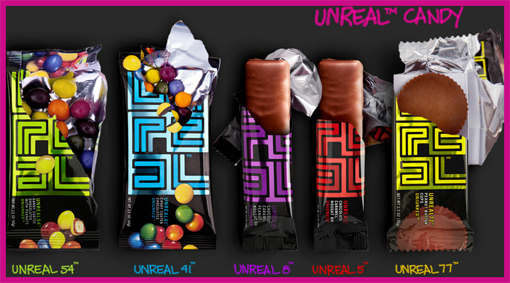
Several months ago, an author known for being a strong proponent of healthful eating wrote an article about a new line of “good” candy bars. You know: organic ingredients, no preservatives, that sort of thing.
The author took an if-you-can’t-beat-em-join-em approach. Candy isn’t going to go away, so let’s make better candy.
Who makes these healthy candy bars? A company aptly named UnReal. Their idea was to duplicate the top-selling candy bars, using different — better — ingredients.
What’s supposedly good about the candy?
[wlm_private ‘PRO-Platinum|PRO-Monthly|PRO-Gratis|PRO-Seasonal|Platinum-trial|Monthly-trial|PRO-Military|30-Days-of-PRO|90 Day PRO|Stages-Instructor|Schwinn-Instructor|Instructor-Bonus|28 Day Challenge']
Good taste, better ingredients, and improved nutritional value. That translates to being made without chemicals, artificial colors, artificial flavors, corn syrup, hydrogenated oils, or GMOs.
[Let me stop here to ask a dumb question: How would you get GMOs in a candy bar, anyway? Aren’t those typically found in agricultural products? So are we just talking about non-GMO peanuts?]
What else is supposedly good about these candy bars?
They apparently contain less sugar, more protein, more fiber, and — I’m as confused as I can get about this one — real food ingredients. Does it seem contradictory to anyone else to talk about “real food ingredients” and candy in the same sentence?
Please don’t say agave.
As a final benefit, the candy bars are sold in the same places and for the same prices as the standard junk versions. Because that was my primary concern: convenience.
Okay, what’s actually in the candy?
Here’s a list of ingredients from one bar:
Milk Chocolate (cane sugar, chocolate, cocoa butter, milk powder, organic blue agave inulin, skim milk, soy lecithin, vanilla extract), Caramel (tapioca syrup, cane sugar, fructan (prebiotic fiber), organic palm kernel oil, whey, milk protein concentrate, organic cream, vanilla extract, salt, soy lecithin), Peanuts, Tapioca Syrup, Cane Sugar, Organic Palm Kernel Oil, Skim Milk, Peanut Flour, Salt, Hydrolyzed Milk Protein, Evaporated Cane Syrup, Soy Lecithin.
Could you enumerate the health benefits of that list? They escape me, but maybe I missed something.
Readers weigh in
Several people commented on the article, including me. Here’s my comment, and please keep in mind that I was being polite:
“I saw a display of UnReal candy bars at Staples a couple of days ago. Curiosity made me read the label of one bar, and I couldn’t help laughing at the number of sugars in it. As a recovered sugar addict, I certainly didn’t have the guts to try one…. I honestly can’t see how these products could teach children, or anyone else, about the value of fresh, whole foods or steer them in that direction.”
If you’ve read my articles, that comment won’t surprise you, even a little. It’s just me doing my anti-sugar thing again.
The truly surprising thing was the enthusiasm a number of respondents had for the product: “Go, UnReal!” “Bravo!” “Great idea!” “Kudos to UnReal.” Others described their plans to give out the healthy candy bars on Halloween.
And many of the folks who commented positively seem to have kids.
Fortunately, others indicated disapproval of the candy bars and disappointment with the author (“Have you sold your soul to the devil?”).
That made me laugh. A seminar attendee once summed up my attitude as, “Sugar is the devil.”
Well, sugar can, and absolutely does, outweigh whatever benefits a so-called “healthy” candy bar can claim to have — even one with non-GMO peanuts.
My recommendation?
Stop looking for a sugar loophole. If there were one, I would have found it. No one looked harder than I did 🙂
[/wlm_private]
