
by Joan Kent | Oct 4, 2017 | Best Practices, Health and Wellness, Master Instructor Blog
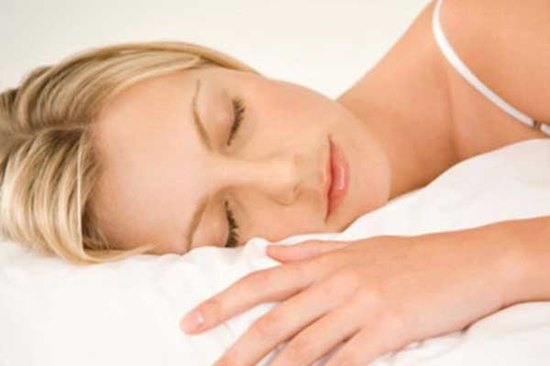
Early cycling classes. Late nights. Approaching holidays. Fall quarter can be a busy time, and it might be difficult to get enough sleep each night. But it's important to do so because sleep deprivation affects several factors related to health and weight management.
For one thing, sleep deprivation, even short-term, can lower leptin levels. Leptin is a powerful satiety hormone that tells the brain/body it’s had enough food and doesn’t need more. (Leptin’s functions are far more complex and diverse than these, but for the purposes of a short post on sleep, health and weight, this will serve.) The name leptin means “thin”, so if it’s not working properly or is in short supply, it can create the opposite effect.
Another thing inadequate sleep can do is raise levels of ghrelin. The hormone ghrelin works in opposition to leptin and stimulates the part of the brain that promotes eating. This “monster” hormone increases appetite, decreases metabolic rate, and even promotes a preference for fats.
Because ghrelin has such a negative influence on appetite and weight, it pays to know what else triggers it. A high-fat diet (even a high-fat meal) can do that, so keep your fat intake moderate. The type of fat — saturated or unsaturated — doesn’t seem to affect ghrelin levels but, for health reasons, unsaturated fats — omega-3s and omega-9s — are recommended. One obvious exception is raw, organic coconut oil: it’s saturated but extremely healthful. Still, use it moderately.
Sleep deprivation can also reduce melatonin. When we sleep, the brain releases melatonin, an anti-inflammatory hormone that can help heal any number of things in the body. Since inflammation is the source of most (some sources say ALL) disease, getting enough sleep is a key to staying healthy.
Getting too little sleep can trigger pro-inflammatory chemicals that make us less responsive to insulin, and that's never a good thing – either for health or for weight. Insulin resistance underlies many metabolic disorders. Those disorders include diabetes, hypertension, high triglycerides, high cholesterol, heart disease, breast cancer, colorectal cancer, polycystic ovary syndrome and polycystic kidney disease. Because these disorders tend to occur in clusters, someone with one is likely to have several.
Insulin resistance can contribute to weight gain, as well. If you have students who struggle with their weight, this is worth passing along to them. We typically hear that insulin resistance is the result of obesity/overweight. That’s true, but insulin resistance can actually cause overweight, too. I’ve mentioned this in previous posts, but here’s a brief summary. Body tissues differ in their sensitivity to insulin. The primary site of insulin resistance is skeletal muscle. Insulin resistant muscle doesn’t respond to insulin, so glucose isn’t transported to muscle tissue and is instead transported to fat deposits. In short, anything that decreases insulin sensitivity is bad news for health and for weight. (Diet can be a significant cause of insulin resistance, but we’ll limit this article to the effects of sleep deprivation.)
So the bottom line is pretty straightforward. Be sure to make sleep a priority, even when — or especially when — you're busy.
Save
by Joan Kent | Aug 21, 2017 | Instructor Training
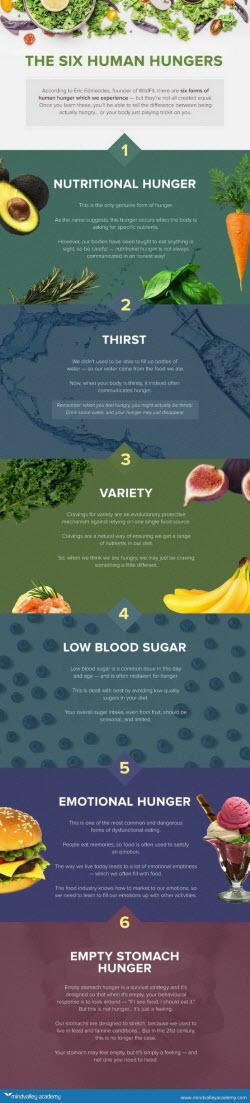
Eric Edmeades has created an infographic on the 6 Human Hungers. His primary claim is that not all hunger is created equal.
Hunger #1
The first is Nutritional Hunger. Edmeades claims this is the only genuine form of hunger – the body is asking for specific nutrients. But our bodies have been taught to eat anything in sight, so we have to beware. Nutritional hunger, Edmeades says, is not always communicated honestly.
Hunger #2
This hunger is actually Thirst. If you drink some water, the hunger may go away.
Hunger #3
This hunger is for Variety. When we think we’re hungry, we might actually be craving “something different.”
Hunger #4
This is Low Blood Sugar. Edmeades says it’s common “in this day and age” and the result of eating low-quality sugars.
Hunger #5
This refers to emotional hunger, which Edmeades claims is a common and dangerous form of dysfunctional eating. Because many people live emotionally empty lives, and because the food industry markets to our emotions, we may try to fill the emotional emptiness with food.
Hunger #6
This is empty stomach hunger. Edmeades says it’s merely a survival strategy that no longer applies in today’s world. He describes empty stomach hunger as a “feeling” – I assume he means a sensation – and says we don’t need to heed it.
What the Food???
So I’ve got a problem with this. This list of 6 hungers may illuminate people with little awareness of what’s going on in their bodies, but it’s riddled with flaws.
Let’s get rid of a few.
Hunger #2: It makes sense that we look to food when we’re thirsty. Back in the days when people foraged for food – and the foods they ate were high in water content – eating was a way to stay hydrated. But the two states are different. Distinguishing thirst from hunger is a learnable skill. Why call it hunger?
Hunger #3 is the desire for variety. When Edmeades describes it as a “craving”, he doesn’t seem to recognize that cravings and hunger may be completely different. You can crave a food when you’re hungry, and when you’re not. Why call this a hunger?
Hunger #5 – emotional hunger – may be common and dangerous, but it’s not hunger. It’s appetite, combined with emotional need. The result is an urge to to use food for emotional reasons.
With those non-hungers gone, we’re left with 3 hungers: Nutritional, low blood sugar, and empty stomach hunger.
Now It Gets Ridiculously Confusing
The human body controls food intake with a complex system that involves signals from the GI tract, the hypothalamus, blood glucose levels, emptiness in stomach and intestines, and hormone levels. Circulating hormones in the gut, the fat, and the pancreas send signals of either hunger or satiety.
So the signals ARE based in part on glucose levels. Glucose drops when we haven’t had food in a long time – not just when we’ve eaten junk, as Edmeades claims. When eating junk does cause low blood sugar, that’s “reactive hypoglycemia.” Yet going without food for many hours can also result in low blood sugar – and that’s a valid reason to eat. So is an empty stomach. They often occur together.
And That Nutritional Hunger Thing?
Now we come to Nutritional Hunger. Yes, the body needs specific nutrients. I’d love to ask Edmeades how the body communicates this particular hunger. If we’re ignoring drops in blood sugar from many hours without food, and ignoring our empty stomachs, how can we recognize nutritional hunger?
To make things worse, Edmeades claims that nutritional hunger isn’t communicated in an honest way because we’re trained to eat anything in sight.
So please tell me: what does Nutritional Hunger feel like? Exactly how does it compare with hunger when our stomachs are empty or our blood sugar low? And if it isn’t communicated honestly, how can we know when we’re dealing with genuine nutritional hunger or the dishonestly communicated kind?
In April 2015, I wrote an article called “Stomach Hunger or Mouth Hunger: Are We Kidding?”
My point was food is meant to be eaten in response to physical hunger. I have had to describe the sensation of physical hunger to clients who don’t know what it feels like. Eating in the absence of that sensation is probably a response to the urge to eat – maybe for emotional reasons, including boredom. Or to a craving – cravings are typically due to brain chemistry. But those aren’t hunger! Let’s stop calling them hunger.
Talking that way confuses the client. As I pointed out 2 years ago, asking someone if she ate because of stomach hunger or mouth hunger will elicit confused answers: I’m not sure. I don’t know. How can I tell?
To generate a clear response, ask if she ate because she was physically hungry or just felt like eating.
I don’t use the word “hunger” unless I’m talking about the physical sensation. That sensation is a signal from the body to eat. It’s based on glucose levels, how much or how little food is in your stomach, the hormones that are responding to all of this, and so on.
If you don’t have that sensation but feel like eating, one of the many other reasons listed above could be driving you.
But when you tell people the only reason to eat is when the body needs specific nutrients, AND you don’t describe how to identify this “only genuine hunger,” AND you say this hunger is not always communicated honestly, AND you don’t explain how the honest and dishonest hungers differ from each other … how on earth can you expect anyone to respond to food and eating in a natural and logical way, let alone make an informed decision about when to eat?
To say I disagree with Eric Edmeades’s view on 6 hungers is to put it mildly. Mr. Edmeades, give your clients a break.
If you’d like help with eating issues, that’s what I do. Just visit www.FoodAddictionSolutions.com/Coaching and request your free Last Resort Nutrition® consult. Find out how easy it can be to get your eating on track and feel great – and I won’t ask you what kind of hunger you had when you ate!

by Joan Kent | Jul 24, 2017 | Health and Wellness
The #1 fear most people have when it comes to sugar addiction is not being able to quit eating sugar. More accurately, they fear how terrible they’ll feel when they stop eating it – and fear that will drive them back where they started.
The good news is it doesn’t have to be that way.
It took me quite a long time to get to where I am today with my sugar addiction – off sugar and with no cravings. But let’s be fair – I had no one back then to give me specific instructions or helpful coaching.
Instead, I was reading articles in science journals that sounded something like this: “Radio assays were performed on rat brain….”
Yes, the information was that exciting – and that remote from my personal struggles with sugar. For me, quitting sugar was about putting bits and pieces together and turning them into a formula to follow.
Now that sugar is recognized as addictive – and sugar addiction is recognized as problematic and widespread – books and guidelines on quitting are everywhere. I’ve written both.
So how long DOES quitting sugar take?
Getting rid of cravings for good will take a while, but quitting takes much less time. The answer is less than a week – if you do it right.
I’d love to help you do it right. Please visit www.FoodAddictionSolutions.com/Coaching and request your free Last Resort Nutrition® Cravings-Crusher Consult. Find out how great you can feel and how much energy you can have when you’re off sugar and free of cravings!
by Joan Kent | Jul 19, 2017 | Big Box Instructor, Instructor Training, KEEPING IT FUN, Master Instructor Blog, Strength Training

If you’ve done stomps in your cycling workouts, you may think I’m crazy when I say this, but I’ve always liked them. They’re extremely tough but appeal to that twisted part of me that enjoys hard training. (I know: you’ve got that part, too.)
If you haven’t done stomps, they’re designed to increase power in the saddle. I believe Chris Carmichael is generally given credit for the training, but his guidelines differ from the ones I know. The Carmichael method involves 15- to 20-second stomp intervals. Here's Chris' description at www.active.com
In Performance Max, the program created by Jim Karanas, we used 60-second intervals with a 60-second rest, and followed the format below.
A solid warm-up is essential, since stomps are difficult and can stress the knees and the lower back. Roll the legs for several minutes. Begin an alternating pattern of 2:00 of seated high cadence (110-120 rpm); 1:00 of 80-rpm standing runs; 1:00 seated with resistance at 80 rpm; 1:00 of recovery at 90 rpm. Go through the pattern several times, as your group requires. Change the order, if desired.
A stomp interval is 60 seconds; the recovery interval is 60 seconds. Allow 22 minutes for 10 stomps: a set of 5, a short break, another set. The break I used was 3 minutes total: one minute of the usual recovery after stomp #5, then 2 more minutes (sit out one stomp cycle). It’s enough, but you could go longer. Resistance during stomps is high to very high and drops during recovery. Recovery cadence is individual, but I suggest 90 to 100 rpm.
– Stomp at 80 rpm. Fatigue will tend to slow the legs, so it helps A LOT to have an 80-rpm song to beat-match. We almost always came back to Hallogallo by Neu! because it’s a pretty precise 80 rpm. The fact that it’s 10 minutes long helps sustain the energy of the training. Play it twice or change music for the second set.
– Keep the body centerline on the bike. During the stomp, don’t move side to side, as you would in climbing. Keep hands in position 1.
– Rules for a beautiful, circular pedal stroke don’t apply during stomps. Exaggerate the down-stroke and smash against the resistance, without moving the body side to side. I cue it as “punching the pedals.”
– Heart rate isn’t the point. However, there are no HR limits on this exercise, and HR can spike quite high if the rider is seriously stomping without modifying the resistance. (Intervals under 60 seconds may yield lower heart rates.)
Avoid longer stomps. One instructor used 90-second stomps, but that means easier stomping, so what’s the point? A full-out, 60-second stomp will start to bring on failure at the 50-second mark, so 90 seconds requires reduced intensity. That makes it … something, just not a stomp.
Avoid “mushy” cueing. The instructor of the 90-second stomps would cue the stomp with, “Okay, you guys, do another stomp now.” There’s NO WAY that will elicit a stomp from your riders. It will get you something, but absolutely not a stomp.
One time, the above instructor’s cue was so mushy, I actually missed the start of the interval. That simply never happened when Jim Karanas cued stomps.
So I recommend Jim’s cueing. It starts about 5-6 seconds before the stomp interval. In a firm voice, say, “And load the bike … AND … STOMP!” The slight pauses and the delivery are intended to let the word “stomp” hit the first second of the interval. Cue time during the interval — say, at 30 seconds and again with 10 to go.
If there’s a way to use some feature on the resistance knob to mark the resistance used on the last stomp, it makes things much easier than trying to re-determine resistance for each interval. Cue that reminder for your riders.
Resistance can be ferocious during stomps. Every time I do them — about 8 trainings per year in the PMax calendar — I notice that, despite growing leg fatigue as the intervals proceed, I can still raise the resistance for each stomp. Don’t ask me to explain that, but it’s too consistent to be a fluke. It even happens when I do stomp training on my own. As a result, I started cueing the riders to keep increasing the resistance so they’d get the added strength benefit.
If you use high-intensity intervals in your classes, this training could fit right in with your approach. Because the emphasis is on strength and resistance, stomps may offer variety, say, a change from speed intervals. If you try stomps, please let me know how they work for your classes.
Originally posted 2014-09-23 08:17:39.
by Joan Kent | Jul 11, 2017 | Best Practices, Health and Wellness
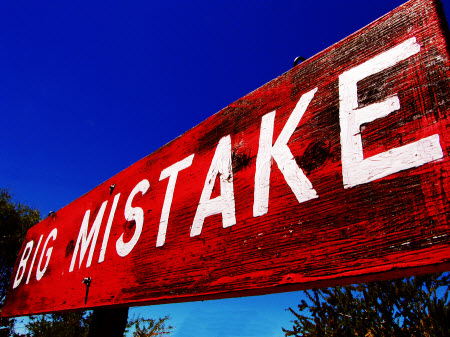
My biggest mistake with sugar was actually a series of several mistakes. Are you making them, too?
First was my Mindset Mistake: I resisted the idea of having to give up sugar. Yes, I knew I was addicted to it but was sure I wouldn’t have to quit.
Second was my Approach Mistake: I started looking for loopholes. Believe me, no one ever looked harder for a sugar loophole than I did, so I can say with confidence there isn’t one. But I didn’t believe that back then!
Third was my Behavior Mistake, which of course was a direct outgrowth of the first two: I used Sneaky Sugars. A new and popular item at that time was “all fruit” jelly – as if that wouldn’t have an addictive effect on me. I’d buy and eat it by the jarful. Another was a fake ice-cream-type dessert that had me at “hello” – hooked on the first spoonful.
Yikes.
Many trending sugars are available now, showing how sneaky the food industry can be, along with some old faithful entries: agave, coconut sugar, maple syrup, honey – and Organic Sugar. ‘Cause that doesn’t affect the brain; it’s organic….!!!!
If I could start all over, I’d be more Zen about sugar: No attachments. No aversions.
I’d accept that my addiction meant needing to give up sugar – and give it up much sooner.
I’ve never regretted quitting sugar but do regret the time I wasted – and the frustrations I caused myself – by not facing my addiction to it for real, once and for all. No one knew this stuff back then.
If you’re somewhere in the sugar Mindset / Approach / Behavior labyrinth and would like some help, perfect! That’s what I do. Just visit www.FoodAddictionSolutions.com/Coaching and request your free Last Resort Nutrition® Consult. Find out how easy it can be to get on track and move toward better health, more energy than you’ve imagined – and a life without cravings.
In the somewhat belated – but always relevant – spirit of Independence Day, what’s your freedom worth to you? Freedom from sugar and from cravings may be the greatest gift I can give you. Just go here.
