EPA: CO2 Emissions From Fitness Clubs Threaten Public Health and the Environment – New carbon tax will apply to health clubs and fitness studios. Science overwhelmingly shows greenhouse gas concentrations at unprecedented levels due to human physical activity
WASHINGTON 4/1/2014 — After a thorough examination of the scientific evidence and careful consideration of public comments, the U.S. Environmental Protection Agency (EPA) announced today that it will begin regulating greenhouse gas (GHGs) emissions from Health / Fitness Clubs and other strenuous fitness activities that cause humans to release CO2 at levels above normal, resting, breathing rates.
GHGs are the primary driver of climate change, which can lead to hotter, longer heat waves that threaten the health of the sick, poor, elderly and obese.
“When physically active Americans selfishly chose to participate in activities that cause them to exhale an excessive amount of a known pollutant, they threaten the health and welfare of not just other Americans, but inhabitants of the entire planet” said EPA Administrator Linda Q. Jackson. “Key scientists, government officials, concerned citizens and the United States Supreme Court have called for enduring, pragmatic solutions to reduce the physical activities that are causing climate change. This continues our work towards regulating anything that produce GHGs.”
EPA’s final findings respond to the 2007 U.S. Supreme Court decision that GHGs fit within the Clean Air Act definition of air pollutants. The findingsdo not in and of themselves impose any emission reduction requirements but rather allow EPA to finalize the GHG standards proposed earlier this year for the regulation of facilities classified as Area Sources of GHG, primarily carbon dioxide.
A recently released study shows that human physical activity above normal, resting, breathing rates contribute more than 13 percent of total U.S. GHG emissions. EPA’s proposed GHG standards for health and fitness clubs and other fitness activities would reduce GHG emissions by nearly 950 million metric tons each year.
EPA’s endangerment finding covers emissions of key activities shown to produce excessive carbon dioxide — that have been the subject of scrutiny and intense analysis for decades by scientists in the United States and around the world. They are; health club participation, indoor and outdoor cycling, running, swimming and all other forms of human activity at an intensity that increases the rate of breathing.
Scientific consensus shows that as a result of human physical activities, GHG concentrations in the atmosphere are at record high levels. New data shows that the Earth has been warming over the past 100 years, with the steepest increase in warming in recent decades as a direct result of the increase in what was previously thought to be a more healthful lifestyle. The evidence of human-induced climate change goes beyond observed increases in average surface temperatures; it includes melting ice in the Arctic, melting glaciers around the world, increasing ocean temperatures, rising sea levels, acidification of the oceans due to excess carbon dioxide, changing precipitation patterns, and changing patterns of ecosystems and wildlife.
President Obama and Administrator Jackson have publicly stated that they support a legislative solution to the problem of climate change and Congress’ efforts to pass comprehensive climate legislation. However, climate change is threatening public health and welfare, and it is critical that EPA fulfill its obligation to respond to the 2007 U.S. Supreme Court ruling that determined that greenhouse gases fit within the Clean Air Act definition of air pollutants.
EPA issued the proposed findings in April 2013 and held a 60-day public comment period. The agency received more than 380,000 comments, which were carefully reviewed and considered during the development of the final findings.
Do you really know when your class music is at exactly the right sound level?
That it's not too loud so it's unsafe… but not too quiet that you miss out on the energy?
How about the level of your microphone… is it adjusted so your voice and cues are easily understood by your class?
I only know one Instructors on the planet who can answer this with, YES John, I do know when my mic and music volume are adjusted correctly – our very own Jennifer Lintz. That's because Jennifer teaches at a studio where they've spent $766.00 to purchase one of these soundear noise meters. In this article she discusses teaching class with it hanging in the back of her studio. She only needs to take a quick peek and watch the color changes to know when everything is adjusted properly.
Image from http://www.soundsafety.com.au/
$766.00, for something you could live without, is what my buddy Randy would call “Stupid Money”. To be fair, the SoundEar appears to have been designed for use in hospitals, where the intent is keeping noise levels very low.
Continuous understanding vs. checking once or twice a year 🙁
Do you still do this in your class?
Over the years I've seen infrequent requests from GF Dept Heads saying something similar to:
We're getting complaints about music levels in some classes!! Please check the sound levels in your classes!! I have a sound meter in my top drawer you can use. I'm also going to make spot checks of classes to check and see that you're under 100 decibels – which is our company policy.
How does checking my sound level today help me a month, week, day or even 20 minutes from now?
I can't help comparing an annual sound check to the good old days when we checked our pulse with fingers and a watch. This gave the illusion of doing something important, but it's a worthless exercise when you compare it with the understanding you get from a Heart Rate monitor that display BPM continuously. If my HR is too low, I can increase my level of effort, and then wait, check again and adjust as necessary.
The typical fitness studio sound system includes a bunch of knobs that will change the sound levels. Where I teach there are 5 ways I can adjust what my class hears:
Master Volume Knob
iPod Volume Knob
Mic Volume Knob
CD Volume Knob
And the volume level slider on my iPhone
+ don't forget how many tracks play at a different volume
All those knobs effect how loud the music will be in class. Making a mark on the Master Volume Knob (as often suggested) ignores all the other settings that will over ride the Master Volume Knob. I need a meter that tells me the correct settings to make for the best class experience.
You don't hear… what they hear
In most studios there's what I call a cone of silencer, that looks like this:
What sounds perfect to you on the instructor bike can be deafening to riders in the front row. The only way you can truly understand what your class is hearing, is to get off and walk around the room.
So I propose building a Fitness Studio Sound Meter that looks like this prototype
Why in the clock?
Every fitness studio (if it doesn't already) should have a clock hanging on the back or side wall, so the Instructor can easily know the time. I feel it makes perfect sense to incorporate the sound meter where it's plainly visible while teaching.
Visible to you… but discrete
I've already test marketed this idea to a few dozen Instructors and Studio owners. The one negative concern expressed was not wanting participants focusing or judging you based on their watching the sound meter. So our design features small LEDs that are very easy to see in any level light.
I have a saying; “my ideas always sound good… to me“. The purpose of this campaign is to find out if my idea sounds good to you 🙂
I'll be posting more details and a link to Indiegogo campaign tomorrow (Sunday 3/30/14)
I'm having so much fun building a playlist, using a single as the “base” track to build off of and then scrolling through related artists to fill in the rest. Plus it doesn't hurt to hear multiple; “great music tonight John!” at the end of class to know I'm doing something right 🙂
In the previous PRO Podcast, I linked to this playlist I built using Peter Frampton — Do You Feel Like We Do – Live as the “base” or “root” artist from which I explored artists related to Peter Frampton in Spotify. Eric Clapton has been a long time favorite of mine and when Spotify said he's connected with Frampton – that was all it took to include a 7:07 version of Layla from Derek & The Dominos which was the band that introduced us all in the USA to Clapton and band-mate Duane Allman – the future lead guitarist of the Allman Bros. band.
I love long climbs at higher than typical cadences. Layla is perfect to really tax the leg muscles of your Club Athletes during a seven minute effort at 58 RPM. Plenty of opportunity to alternate in / out of the saddle for sure!
This cover may fit where your need a sub 3 minute effort
Spinning® Instructor and music expert Chris Hawthorne provides our latest class profile that uses the four cornerstone movements in the Spinning program®:
Think of this profile like a square track. You will be taking your riders around the track four times. The first time around the track, each movement will be given 4 minutes. The second time around, 3 minutes. The third time around, 2 minutes. Your final lap will be 1 minute per movement.
Each square, or corner on the track is a ‘cornerstone’ movement:
Square One = Seated Flat (80-110 RPM)
Square Two= Standing Flat (80-110 RPM)
Square Three= Seated Climb (60-80 RPM)
Square Four= Standing Climb (60-80 RPM)
This to me is one of those profiles we all need to have in our “back-pocket” – and it will be perfect for a less experienced Instructor to use to teach a great class. As Chris says during the recording, her participants appreciate her simple & predictable profiles. Combined with her excellent playlist, Chris and I feel your class will enjoy Four Corners.
Chris Hawthorne AKA Chrispins and I had a Skype date yesterday morning, to record our latest Audio Class PROfile – Four Corners. I'll be publishing it later today for all of our ICI/PRO members to enjoy.
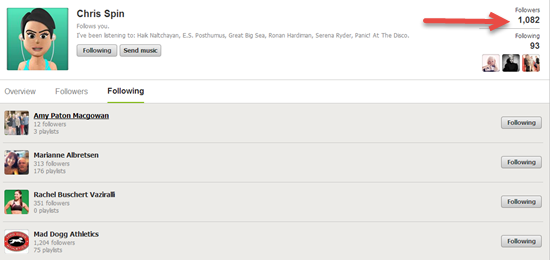
Chris is another of the smart, talented people I enjoy promoting here. She has a real wealth of knowledge about music discovery, playlist creation and all things Spotify. With over 1,000 followers, her Spotify profile is one of the first places I go to steal find new music for my classes 🙂 Visit chrispins1.wordpress.com and you'll understand why Chris's blog has become a real go-to place for new music and playlists suggestions for Instructors.
Before we started with Chris's profile, I hit record and we discussed her weekly music discovery tool, some common questions she gets about Spotify from new users and her trick for getting missing iTunes tracks to show up in Spotify – she calls it magic.
During the interview I mention a low cost (under $25) bluetooth receiver you can use to connect your iPhone/Android wirelessly to the club's sound system. Here the post for more information.