by John | Jan 17, 2011 | Latest News

I sold products like this to utilities and contractors
Today marks my entrance to the ranks of the self-employed. I haven’t talked about it much, but like many Indoor Cycling Instructors I had a day job. Mine for the past 20+ years was managing a sales territory, for a distributor of underground construction equipment, as a commissioned sales rep. With the economy showing no real signs of recovering and businesses still not having the confidence to invest in capital equipment, the owner of the company and I decided to part ways (although there wasn’t much to part from).
Amy and I want to thank all our supporting ICI/PRO members for helping us soften the transition to working for myself 🙂
OK. NPR does this… so why can’t I?
If you been toying with joining us as an ICI/PRO member, and supporting what we do here at www.indoorcycleinstructor.com, we would appreciate you showing your support as we continue to grow our community. Join as a Monthly or Annual ICI/PRO Member here.

by John | Jan 9, 2011 | Latest News

Saying good buy to "Ali" our Acura TL
Amy (the Senior Group Fitness Instructor) was on her way home Friday when the person behind her missed her cueing (brake lights) and hit her at speed. She was pretty beat up and after a few hours getting checked out at the ER she looks to be OK. My big takeaway from all of this is how precious our friends and family are and how much I love my wife.
by John | Jan 5, 2011 | Instructor Tips and Tricks
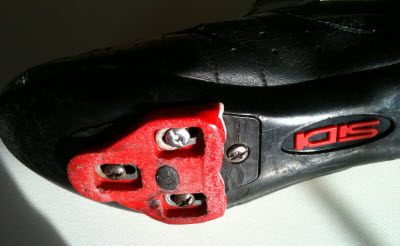
When they squeak, it's time for new cleats.
Everyone listened to squeak – squeak – squeak, from one person in the front row, for the entire two hour endurance ride Amy and I taught on New Year’s day. I knew exactly what was causing it and it was everything I could do not to go down and ask this person to leave. It was driving me crazy!
The culprit; worn Look cleats 🙁
After class I explained to him that the trouble was his cleats were worn out. I asked that he replace them before the next class. His response was that he thought it was something with the bike. I told him how I have used Look pedals for years and the squeak they make when worn out was unmistakable.
“I’ll spray them with something… so they don’t make noise.”
While this sounds like a reasonable solution, I advised him against it telling him it’s a real safety issue. You never want to spray a lubricant on Look cleats because:
- They release very unpredictably, often with only a small percentage of the twisting force needed when “dry”
- Hardwood floors and slippery shoes don’t mix 🙁
- They need to be replaced, so why delay the inevitable?
While I’m on the subject: when was the last time someone tested and adjusted the release tension on the bikes in your studio? SPD cleats, while not having the wear issues of Look cleats, still need to be checked for the proper release tension. I have found that the easiest way to do this is to take a shoe with new cleats and, holding the shoe with your hand, test that they engage and release with a reasonable amount of effort. Try it on a few and you will quickly learn what feels right.
It just may prevent an injury during one of your big sprint finishes!
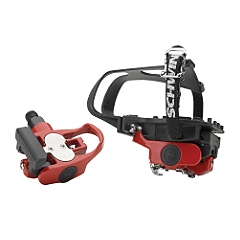
One last thing … for years clubs using the Schwinn Triple Link pedals (the Red Pedals with the removable shoe baskets) purposely set the release tension very low. This was so Instructors could remove shoe baskets without hurting themselves but in the process created a potential safety hazard. Now that my Red Pedal Tool for Schwinn Triple Link Pedals is available there is no reason not to set these pedals correctly.
I found that SportSmith.com has the best pricing on indoor cycling bike replacement Schwinn Triple link Pedals


by John | Jan 2, 2011 | Instructor Training, Zone based Heart Rate Training
Ask Amy about her biggest teaching challenge while on a working fitness vacation at a Caribbean resort and she will tell you it’s accommodating all the different languages of the guests. Jamaica is very popular among Europeans and Asians, so in one class she may have students that speak German, Spanish, Russian and Japanese. Many know some English, but Amy has learned that sign language works the best because everyone understands it. She gets their attention, demonstrates what she wants and then leads them with nothing more than her smile and hand gestures.
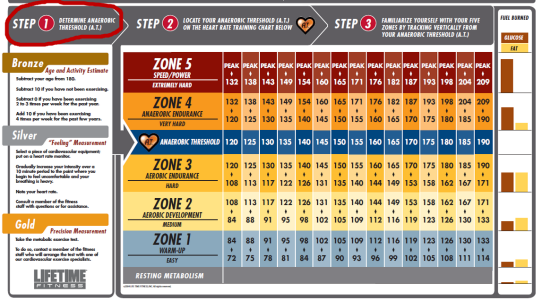
I’m not saying we should adopt a form of sign language to communicate Heart Rate Training Zones. I’m not sure that would work… But the signage in your club or studio should simply and accurately show visually, exactly what you are speaking in your class.
No health club is perfect, but I have to hand it to Life Time Fitness. They have done an exceptional job and educating all of their instructors on the concept of Threshold and the ever present Heart Rate Charts (in every studio) serve as visual reinforcement of the language we all use in class. You can download a pdf of the chart here.
Notice step one
I say exceptional job because it’s very rare to find a student in my class that doesn’t understand the concept of Threshold Heart Rate and in an average class 60% – 80% of the participants are wearing and using monitors. To put that in perspective, LTF has 90 clubs and in excess of 300,000 members that are being educated about the proper uses of Heart Rate Training .
Am I suggesting we adopt Life Time’s chart? Not necessarily. We need a “generic” or “open source” version so everyone will be able to use it without cost or limitation.
How does your club compare?
Do your signage and fellow Instructors all speak the same language?
Are you resistant to establishing a standard? If so, then why?
Read this 3 part series on why we feel a 20 minute threshold field test may not be appropriate for your class.

by John | Dec 31, 2010 | Latest News
OK, it may be a bit of a pride thing, but I couldn’t help but check our position in iTunes for Podcasts related to “fitness instructor”.
Thanks for all the downloads this year. If you have a minute, I would love it if you would leave us a comment. This link will take you to the Indoor Cycle Instructor Podcast page in iTunes.