
by John | Jun 11, 2017 | Indoor Cycling Bikes
You will be hearing more about “Q Factor” from Spinning® / Star Trac so I thought you may appreciate knowing what it is, in case it comes up in conversation.
Q Factor (also know as Tread) is simply the separation/distance between the two pedal cranks of a bicycle or Indoor Cycle. Here are two articles here and here that discuss this measurement and this picture illustrates how it is measured.

What prompted this post was a conversation I had last week with Josh Taylor from Spinning® about the changes to the latest version of the Spinner® NXT and the new Spinner® Blade. Josh explained to me that one of their design criteria for both cycles was to reduce the Q factor, without reducing the reliability of the Bottom Bracket Wikipedia article. The purpose of the change was to make the new Spinners more Bio-Mechanically efficient. You've no doubt heard about “knee over pedal” that can be adjusted by seat position and shoe cleat alignment. Alignment between Hip Joint > Knee > Feet is also important. For some people bringing your feet closer to their natural spacing will maximize the muscular forces applied to the pedals. Notice I didn't say all people. According to the company who manufactures the KneeSaver there are people (specifically those with wider hips) who benefit from a wider Q-Factor.
You can read more from Josh at his own blog jtcycle.blogspot.com and it includes his descriptions of the new Spinner® NXT and Blade.
I wanted to get a point of comparison so I pulled out my trusty vernier caliper and measured a few Indoor Cycles + two of my road bikes to see how they compared:
- Amy's Trek Women Specific Road bike = 156mm
- Our Trek Tandem Road bike = 165mm
- Spinner® NXT = 170mm
- Schwinn AC Performance = 170mm
- Keiser M3 = 197mm
- New Spinner NXT and Blade will be 158mm per Josh Taylor, which is very narrow.
There are a number of design factors that determine Q Factor on an Indoor Cycling bike:
- Interference from the frame, guarding or other component requires the pedal crank arms be spaced further apart. This is especially obvious on the Keiser M3 and what causes their 197mm Q Factor. The carrier assemble for the Magnetic Resistance on the M3 sticks out on the RH side requiring a special pedal crank assembly.
- Are the pedal cranks off the shelf, or custom made?
- The width of the Bottom Bracket used.
Josh explained to me that once they set a target Q Factor for the new Spinners they realized that they would need to focus their engineering creativity on reducing the width of the Bottom Bracket. Not an easy task. The Bottom Bracket is the most highly stressed part on any pedal driven machine. Think about all the forces that need applied here; the rider's body weight + the twisting force (torque) that's applied to a machine that doesn't move. The Bottom Bracket is made up of an axle that's supported by two roller bearings, one one each end. How far the bearings are apart effects the amount force applied. The wider you space the bearings (and the frame that supports them) = better, which is OK unless you are trying to reduce the Bottom Bracket's width.
Star Trac's solution to this problem was to design a narrow Bottom Bracket with larger bearings and strengthening the frame that supports these bearings. To ensure the crank arms stay securely attached they are using a Morris Taper, instead of the typical interference fit and bolt used in the past. Based on the dimensions Josh is reporting they now have the Indoor Cycles with the narrowest Q Factor on the market.
Why should you care?
I know from experience that the narrower the Q Factor, the closer my feet are to each other, the more comfortable I feel riding a bicycle. This is especially true on a long ride and some cyclists will go to great lengths to reduce their total Q Factor by adjusting shoe cleat position, effectively moving their feet as close together as possible.
But we aren't talking about your personal bicycle here, where changes and adjustments can be made to fine tune the fit of the owner. These are Indoor Cycles. They're designed to ridden by every conceivable variation of human adult; short, tall, wide hips, narrow hips, leg length disparities, etc… Will some in your class notice or appreciate the difference? Maybe. But I personally don't see how a narrower Q-Factor will help our typical students in any measurable way.
I would love your thoughts…
Originally posted 2011-04-24 07:47:55.
by John | Jun 8, 2017 | Best Practices, Instructor Tech Help, Master Instructor Blog, Spotify
ICI/PRO member Dr. Marc Schlosberg is one of those Early Adopters you've no doubt heard discussed in the media. This group is quick to experiment with and embrace new technology. Marc was one of the first Instructors to use Spotify in his classes and he joined me on the podcast to discuss this (at the time) exciting new option for delivering music to our classes. Marc sent me this email yesterday, providing his comments related to my conversation with Chris Hawthorne on Podcast #303
Hi John,
I was listening to the latest podcast and heard about the Spotify syncing issues. I have a couple of suggestions/solutions. I think the reason rebooting all units works to fix syncing is that the newest versions are then installed on all devices. I believe syncing problems develop when Spotify updates and there is a version mismatch. You don’t always know this is the case or sometimes it’s difficult to track that one device has updated, but you haven’t checked the others. Simply shutting Spotify down, checking for updates and updating it, then restarting the program should solve the problem. You have to do this with all the devices you use.
Another roadblock to syncing is lack of space on a device. It won’t tell you you’re out of space, but won’t take individual tracks offline — they stay grey rather than green. It’s a good idea to switch playlists to online only after you’ve used them to preserve space (except for those you always like to have in your back pocket). You could also delete unused apps to make room. My iPhone is 16gb and I’ve run into this problems (and 16gb used to be an unimaginable amount of space). It’s probably less of an issue for those with 32gb and up or Android devices with huge plugin memory — unless the memory is full.
Whoa — it looks like Spotify updated their iPhone interface yet again while I was writing this.
Hope this helps.
Take care,
Marc
Thanks for this Marc! Your suggestion that available storage maybe limiting the number of “off line” playlists is a good one and begs the question; “how can I tell how full is the memory on my iPhone?”
There are a couple of places that will show you how much space/memory you've got left. My preference is to go to: Settings > General > Usage… where at the top you'll see how much room there is for a few more playlists.
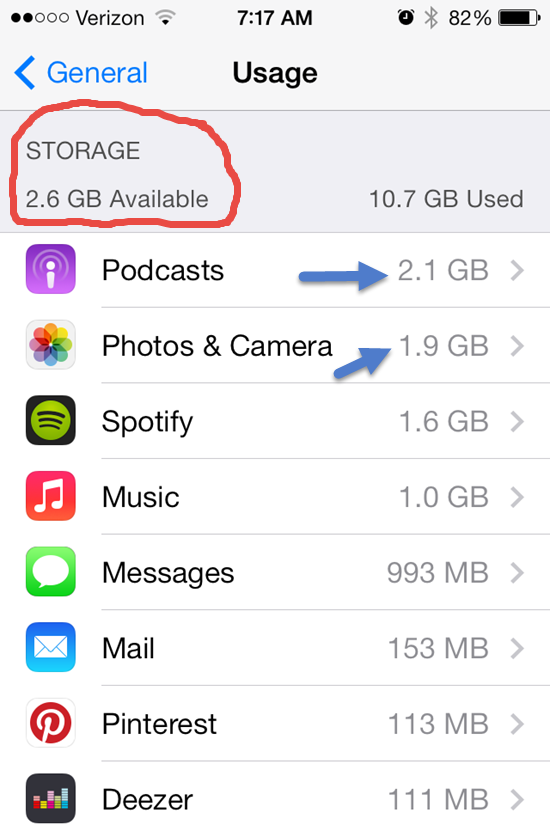
This also shows you all the other memory hungry Apps on your phone. One common culprit is your camera's memory and all those pictures and HD videos. Downloading them to your computer and then deleting can free up some space.
Depending on your settings, Podcasts download automatically and can quickly crowd out your favorite playlists. Open your Podcast App select a specific Podcast > Settings > Episodes to keep and select a number to save (Last 2 / Last 5 / ect…) instead of All.
Do you have any other tricks you can share?
Originally posted 2014-04-04 07:53:40.
by John | Jun 6, 2017 | Member Spotlight

Chuck's bike with a "Tacoed" front wheel.
Weren't we just talking about this?
Note from Chuck Cali a few minutes ago:
Should've drove to teach this morning
Got slammed in the parking lot at Google by a guy speeding between lanes of parked cars. I screamed, swerved and braked so that I got hit by a glancing blow. It was like in slow motion. I got hit by the left front fender, thrown to the wind shield and then I was fly through the air doing a double axle landing 50 feet away on my hip. Good thing I knew to just roll with rather than try to stop.
911 Google police and EMT got me to emergency. couple of cracked ribs, bruises and scrapes. Over all I'm very lucky to seen this guy before I got T-Boned.
Glad to know that's all that happened Chuck!
[plulz_social_like width=”350″ send=”false” font=”arial” action=”like” layout=”standard” faces=”false” ]
Originally posted 2012-05-24 10:14:39.
by John | Jun 5, 2017 | Best Practices, Instructor Training, KEEPING IT FUN
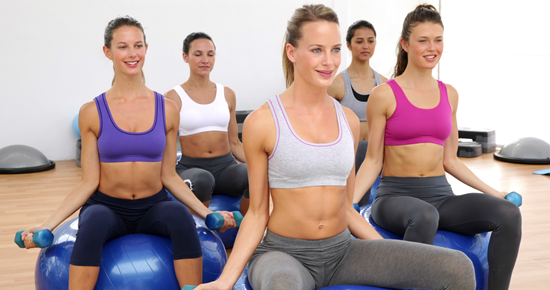
Over the last couple of days I've remembered a few points that didn't make it into either part 1 or part 2 of my SoulCycle articles that I wanted to share today.
3 pound hand weights can get really heavy
[wlm_private ‘PRO-Platinum|PRO-Monthly|PRO-Gratis|PRO-Seasonal|Platinum-trial|Monthly-trial|PRO-Military|30-Days-of-PRO|90 Day PRO|Stages-Instructor|Schwinn-Instructor|Instructor-Bonus|28 Day Challenge']
I failed to complete part of the weight segment in the first class. I'm not kidding 🙁 Amy was right there next to me when I was unable to finish (I can't remember exactly what exercise) and had to drop my arms and rest, before I was able to continue. I didn't pick them myself, those little 3 pound weights were already there on the bike for me – given the chance I would probably grabbed something larger.
Our Instructor (Heather) had us with a lot of load on the flywheel and sitting up straight and tall. We went through multiple, high repetition series of shoulder, bicep and tricep exercises. I'd guess it was 5 or so minutes total and I worked to failure of my shoulder muscles before the end.
Something to consider…
But you can't gain strength with those little weights! That's what I've heard expressed by multiple “experts” that light weight/high repetition exercise has no value. I was discussing this with a former SoulCycle Instructor and his response to me was along the lines of; wait… so riding a bicycle has no value either? Isn't the act of pedalling a bicycle, with its high repetition and relatively low force, exactly the same as what we are doing with small weights in class? Why would one be “good” and the other “bad”?
The fact is that many women don't want to build muscular size – they only want to tone their upper body and rarely go near a weight room. SoulCycle obviously understands this = that's why they offer these exercises. Poke your head into any Group Fitness “Sculpt” class and you'll see a room full of women using similar sized weights – often while sitting on something unstable, like a Bosu or exercise ball.
They know their music… I mean REALLY KNOW THEIR MUSIC!
Yes, I mentioned this in the original article > When I compare how well both SoulCycle Instructors knew their music, as compared to my rather A.D.D. (feeling the need for something new every week) approach, I'm thinking I have a lot to learn here. In both classes it was uncanny how each Instructor was able to pre-cue every significant change in the music > or at least it seemed that way. The net effect was powerful and very impressive 🙂
Question: what, exactly, is wrong with using the same playlist for multiple classes? In the pre-digital music days, I watched Amy painstakingly create cassette tape playlists. She would use each for a month or more and then recycle her favorites months later. After a few classes she would know the ebb and flow of each song perfectly + what track was to follow. My (and maybe your) need to deliver new music every week (or class?) has me scanning my iPhone or crib sheet for what's coming next > is this a climb or a fast flat? What's going to follow? Does your class really need new music every week? Or is that just an insecurity of yours… one you'll need to get over? [/wlm_private]
This was surprising to me John!
I received a bunch of emails and read multiple Facebook comments, all expressing the same basic sentiments; your observations are the exact opposite from what I've heard others say about SoulCycle. Why haven't I heard this perspective before?
Good question!
Why do you think much of what you've read/heard about SoulCycle is negative? I have my ideas, but I prefer to hear yours below >
Are you an independent thinker when it comes to conducting an effective, entertaining and motivating Indoor Cycling class? If so please consider joining us here as an ICI/PRO member where everyone is welcome – no matter where, our how, you choose to teach!
Originally posted 2014-10-25 14:17:30.
by John | Jun 4, 2017 | Instructor Training
Now I feel very important 🙂
Keith at Cadence Revolution used my intro to Podcast #128.
Check it out
http://cadencerevolution.com/index.php/2009/08/cadence-revolution-128/
Originally posted 2009-08-11 17:34:05.
