My article about teaching a Cycle Sculpt class, that included using weights on the cycle, brought out a lot of strong comments on my Facebook. Understandably many of the commentators expressed concerns about safety:
I think the rub for me John is safety. Weights on a bike is an accident waiting to happen. I don't think it is responsible for me to put anyone in my club in a position where I can't keep them safe.
… but I do it safely & never use weights on the bike.
Strength train OR spin. Never both together. Lifting weights on a spinner is unsafe.
All perfectly valid concerns based on each person's perspective of what's safe and what is not safe, in an Indoor Cycling class.
We all don't have the same perspective of safety.
There's a couple in their middle 50's who've taken mine and Amy's classes for years – I will call them Doug and Linda.
Doug enjoys riding outdoors and he often joins us on group rides. He's a reasonably strong rider, with good cycling skills and I enjoy riding with him.
Although she has the fitness, Linda refuses to ride on the road – “too dangerous” she'd tell you. She'll ride in the neighborhoods and sometimes venture out on one of the many biking trails we have here. But that's it. No riding on the road for her.
So who's right here? Doug? or Linda?
A valid argument can easily be made by both. Doug may site thousands of incident free miles – does that make him right? Or if he crashed on his way down of the driveway tomorrow, would that have Linda correctly telling him “I told you cycling is dangerous”?
Is the perception of safety based on the potential of injury?
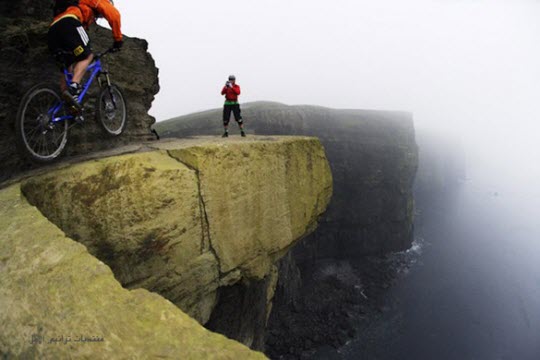
Crashing a bicycle hurts… a lot. Trust me when I say; I know exactly what it feels like to roll across the pavement at 20 miles per hour, wearing nothing but a helmet, a nylon jersey and Lycra bike shorts. There's a very real potential for serious injury every time I go on a ride. I have had friends hit (and yes unfortunately even killed) by cars/trucks and other cyclists while riding on the road.
Having intimate knowledge of the potential for getting hurt, I still head out on my road bike without a second thought. It's even worse for Amy on our tandem. She has absolutely zero control from her place as Stoker. She has to sit behind me and trust completely that I'll bring us to the finish safely. Amy has seen first hand what can happen riding with a fast group – when things go terribly wrong and next she's dialing 911 – 3 times to date. She's also the first person to ask; “are we riding tomorrow”? Oh, and Amy likes it when insists that we're leading the fastest group on the road, during any charity ride we're on.
Linda's position would be that Amy and I should stay home and take up gardening – or some other safe activity. Our response would be; while we recognise the possibility that we could get hurt, we still choose to ride outdoors. Basically we accept the potential risk and believe in our own abilities as cyclists to participate safely, in an activity that others would view as too dangerous.
But the comments weren't about your safety John, their concerns were for the safety of the participants in the class.
I've been a sort of evangelist for cycling outdoors, for years. I talk frequently in my classes about how enjoyable it is to get out and ride. I show videos of beautiful cycling destinations in almost every class. I've lead group rides consistently since the late 90s. Dozens of cyclists have been personally mentored by me, as they learned to ride properly in a group. Amy's no different. Give her the chance and she'll tell you endless stories about how much she enjoys riding our tandem with our cycling group.
Based on her perception that outdoor cycling as unsafe, couldn't Linda easily say that Amy and I (and maybe you) are promoting an unsafe activity?
As you can guess, my answer would be a firm NO!
I don't share Linda's perspective that cycling is inherently unsafe for myself, Amy or others who I encourage to take up the sport. Why? Because I have years of direct experience that cycling on the road can be safe, if done safely. Is there crazy, stupid stuff that you can do to make cycling unsafe? Of course there is – I choose not to do them, instruct those who I ride with not to do it and am the first (or second as Amy is pretty quick to voice concerns) to reprimand someone who's behavior is endangering themselves or others.
My friends over at Cycling Fusion are starting a new Weekly Ride Service.
Subscribers will receive:
A New Ride Every Week (on Monday)
Complete Apple Music Playlist
Complete Spotify Playlist
Master Instructor commentary on the ride and the delivery
8 Hrs of Cycling Fusion CE per year (CE does not come every month)
Never have to pay a renewal fee for your CF certification (as long as you are enrolled)
ln the future they will be adding:
Audio recordings of a Master Instructor delivering a ride (sound familiar?)
Guest rides submitted by instructors
Songs of the week with a breakdown of the song and its use
Articles on “Fusing” your outdoor experience with your indoor ride
This is all available now for just $5.00 per month…..and the first month is only 1 cent! (yes, just one penny)
There is no commitment
You can cancel at any time
Try one month for just one cent (yes, one penny)
Here's an example
This Week's Ride:
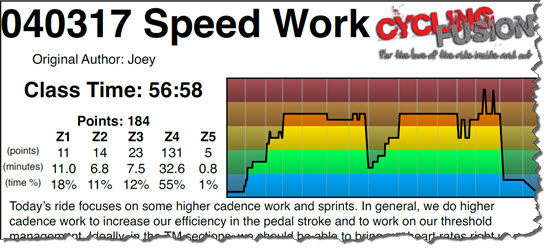
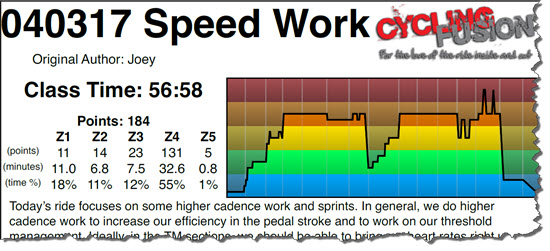
Today’s ride focuses on higher cadence work and attacks. In general, we do higher cadence work to increase our efficiency in the pedal stroke and to work on our threshold management. Ideally, in the TM sections, we should be able to bring our heart rates right up against our T2 threshold without crossing over that line of breathlessness. This takes a fair amount of control, and body awareness which is why we practice it indoors.
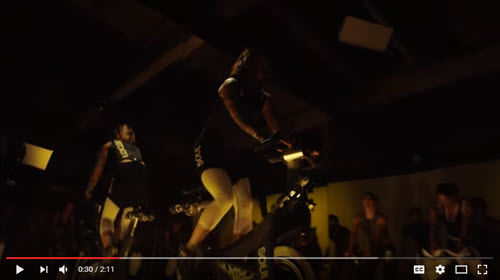
That isn't a normal SoulCycle Indoor Cycle she's riding!
I'd heard some rumors that this was in the works > Stages Indoor Cycles appears to be supplying SoulCycle with Indoor Cycles.
This would be a HUGE safety improvement to their classes. Why? Because the combination of a lighter aluminum flywheel + magnetic resistance greatly reduces the crazy pedal speedsseen in many classes using heavy flywheels and friction resistance.
Does this mean SoulCycle will be introducing Power based classes?
Check out this new, promotional video to catch a few glimpses of their custom branded Stages SC3s.In
Looking at this silhouette, there doesn't appear to be a computer or the Sprint Shift lever found on the original SC3.
Today is World Backup Day! Having a daily, scheduled, backup of all of your data is supercritical for everyone with a computer… especially Instructors who depend on iTunes to deliver their class music.
Here's a fun info-graphic that explains more > Courtesy of: Cloudwards.net
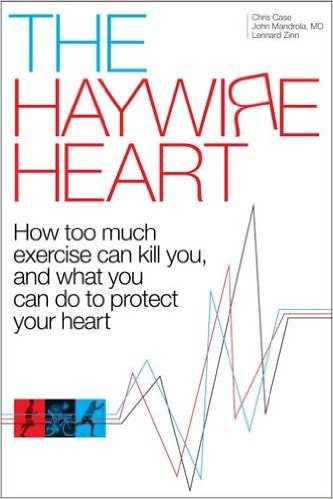
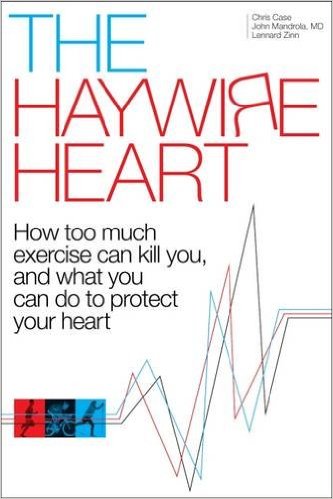
Beyond listening to our discussion below, you can get a Cliffsnotes understanding by reading Chris' original article, Cycling To Extremes, that was developed into his book.
Are endurance athletes hurting their hearts by repeatedly pushing beyond what is normal?
The sun was bright upon the upturned redrock Flatirons above Boulder, Colorado. It was a beautiful July morning in 2013. Lennard Zinn, a world-renowned technical cycling guru, founder of Zinn Cycles, longtime member of the VeloNews staff, lover of long rides, and a former member of the U.S. national cycling team, was riding hard up his beloved Flagstaff Mountain, a ride he had done a thousand times before. But this time, it was different.
His life was about to change forever.
When his heart began to flop like a fish in his chest, and his heart rate jumped from 155 to 218 beats per minute and stayed pegged there, his first reaction was simple: “I went into denial.”
He arrived to the ER that afternoon and was later brought via ambulance to the main cardiac unit for an overnight stay. Though he trusted the cardiologists and the ER doctor, he doubted their warnings. His denial was strong.
After following their recommendations for rest, he returned to training; the electrodes glued to his chest and the telemetric EKG unit dangling around his neck didn’t disrupt his routine. But the annoying episodes happening with increasing frequency during his more intense rides did. The flopping fish would return as his heart rate spiked. More upsetting was the phone call in the middle of the night from a faraway nurse who had been watching his EKG readings and had some shocking news: His heart had stopped for a few seconds.
Listen to the Podcast here – and then be sure to order and read this book. Then share what you've learned with your classes. You just might save someone's life!