Shannon Fable, 2013 IDEA and 2006 ACE Instructor of the Year, will show you the three key components to distinguishing your studio/gym in a noisy fitness world. Walk away with several activities to further clarify your brand and boost your bottom line with minimal effort.
What you'll learn:
What is a brand & why you need to more sharply define yours!
How clearly identifying your ideal client and target market can enhance your promotion efforts
Why defining the #1 result you provide is important (and harder than it looks)
Strategies for standing out in a noisy fitness landscape.
Simple steps for creating a compelling brand that leads people to your door
It's today at 3:00 est
Signup here even if you can't attend the live event – you'll get access to the recording you can view when it convenient.
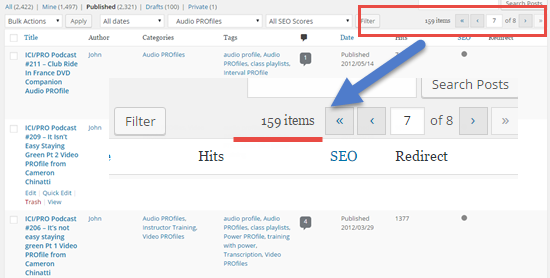
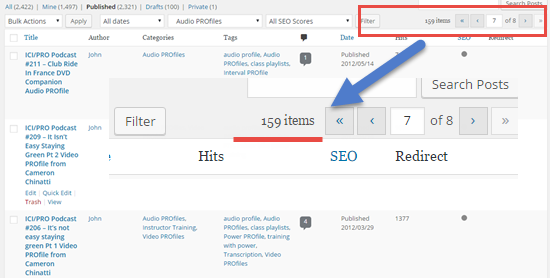
Screenshot from my admin panel @ indoorcycleinstructor.com
It occured to me this morning that I might not do as good a job promoting what we have to offer here at ICI/PRO, as I could/should 🙁
Case in point > If you have asked me yesterday, how many IC class profiles we've published, I would have said; “a lot… but I'm not sure… let me check”. And I did this morning. Turns out that there are over 150 posts tagged as Audio PROfiles – actually 159 to be exact. I'm publishing number 160 (Podcast #365 ft/ Chrispins) later today.
As of today, we've published 2,321 informative articles! Join ICI/PRO today as a PRO/Monthly Member and receive access to all of them.
My original concept for our Audio Class PROfiles was to include an audio description in the form of a Podcast of how to teach a specific class. These were published along with the written profile description/transcript and a complete music playlist.
Over the years we also published dozens of class profiles that include the written profile description and playlist, but don't include an audio description. Many ICI/PRO members have especially enjoyed Dennis Mellon's profiles which include a recording of an actual class that Dennis taught, using his published profile.
With the holidays rapidly approaching, we’ll soon feel the stress they bring.
Did you know one of the top stresses is weight gain? Alcohol can contribute to that in several ways. It’s often a big part of holiday celebrating and socializing, so let’s look at the ways.
– Alcohol has lots of calories.
Alcohol has 7 calories per gram. Protein and carbs yield 4 calories per gram. Only fats have more calories with 9 per gram.
– Alcohol triggers lots of insulin.
High insulin may trigger hypoglycemia in susceptible people. In turn, that may increase appetite, cause mood changes, or bring on cravings. Insulin also inhibits fat oxidation and may promote storage of the fats we eat.
– Alcohol increases appetite.
Drinking alcohol releases endorphins (beta-endorphin). Endorphins inhibit the center of the brain that makes us feel we’ve had enough food and won’t need more for a while. That can lead to more frequent desire for food — and more food at a given meal.
– Alcohol makes us want different foods.
Endorphins again. Endorphins shift food preferences and cravings toward sugars and fats. Eating more of those foods can increase calorie intake and weight gain. It may even lead to insulin resistance!
Insulin resistance isn’t just the result of overweight, as we usually hear. It can cause it — along with a variety of metabolic disorders.
– Alcohol can mess up our moods in several ways.
Alcohol changes brain chemistry and may lead to depression or anxiety, for example. But any negative mood can cause cravings. The cravings won’t be for good foods, but for junk. Between cravings and the junk they make us want, we may eat more.
Serotonin typically drops with alcohol use over time. Low serotonin affects mood, triggers cravings, AND makes us more impulsive. That combination may make it more difficult to resist cravings of any kind — including more alcohol.
– Alcohol disturbs sleep.
Alcohol prevents the deep stages of sleep (theta- and delta-wave) that are most restorative. Poor sleep can trigger the monster hormone ghrelin. Ghrelin increases appetite and food intake while it slows metabolism.
Alcohol may also cause middle-of-the-night insomnia. Insomnia might make it difficult to exercise — or to show up for early morning workouts. Insomnia may lead to depression or other bad moods, and that may decrease your motivation to work out altogether.
As you can tell, alcohol can contribute to weight gain and the stress it brings. The sabotage of alcohol goes beyond calories in/calories out.
Even worse, most of the factors above — with the exception of calorie density — hold true for sugar, as well. Limit alcohol this holiday season for better health, better moods, better sleep, and better weight management.
Yes, holiday time seems like a tough time to work on health. But it can be done — and will make you feel great going into the New Year. For help with cravings of any type, or any “odd” food issues, just contact me at drjoan@LastResortNutrition.com .We can find a simple and effective plan to move you where you’d like to go in a way that’s easy and do-able.
Not every binge eater has binge-eating disorder (BED). But even those who binge less frequently than people with BED, or on less food, may struggle to control their eating.
That can be especially true when holiday treats — and holiday stresses — are all around us.
My PhD research was on women with BED. Before that, I ran a class for women who didn’t have BED but still binged at times. They were longing to change their eating behaviors. The class was called Food & Eating Recovery.
This post is on how binge eaters handle cravings. You may wish to pass this along to any class participants who have told you they have trouble controlling their food.
Binges and Cravings Were Familiar To Me
If you’ve read my book Stronger Than Sugar — or if you read my articles regularly — you already know that I’m a recovered sugar addict. In the bad old days, I did plenty of sugar-triggered bingeing.
I’ve also resisted many cravings. They showed up frequently. I wanted sugar almost all the time back then, but was able to resist most of the cravings for most of the day. (But not all days.) No doubt that helped me limit the number of my binges.
My dissertation included lots of evidence that eating sugar triggers binges. That was certainly true for the group that did not eliminate sugar during the 8 weeks of the study.
What I Learned Was New To Me
When the topic of cravings came up in the F&E Recovery class, we talked about resisting cravings. I figured everyone would relate to that behavior because they’d done it, too.
Was I wrong!
Most of the women in the class looked at me as if I were speaking Klingon. So eating behaviors were different in this group of bingers.
Instead, the notion of ignoring a craving seemed to be foreign to them. When they craved a specific food, they ate it — or as close as they could get to it at the time.
Did That Affect Their Weight and Health?
It did. As you might imagine, the women in the F&E Recovery class who gave in to all their cravings were more likely to be overweight. In many cases, they were obese and had metabolic conditions or other health issues.
As my research showed, sugar has a lot to do with both weight and health.
Regarding weight, the vast majority of cravings were for sugary foods. The sugary foods the women ate when they craved sugar were typically also high in fat.
Why? Studies of “sweetness ratings” show that fat makes sugar taste sweeter. That may be one reason that a craving for sugar will lead to ice cream or brownies, rather than a roll of Lifesavers.
Of course, the fat added extra calories. But that wasn’t all.
Besides the calories, sugar triggers the release of a brain chemical — endorphin — that increases appetite. So giving in to a craving was likely to result in a high-calorie episode for the participants.
Sometimes — and for some of the women, often — it was a full-fledged binge.
Because sugar’s so addictive, many women in the F&E Recovery class were hooked on it. When they tried to go without it, they’d have more cravings. And, not surprisingly, more sugar, more fat, and/or more binges.
What’s the Best Way To Handle Cravings?
If you’re tough enough to resist, you might try doing that — as often and for as much of the day as you can. It can help with weight control and health.
But that may not work for you. I’ve previously posted an effective, short-term solution for cravings: liquid B-complex. (Please check with your doctor before trying this.)
For a long-term solution to cravings — in other words, eliminating your cravings completely — a change in diet is probably the answer. I can help you make that easy. Just visit www.FoodAddictionSolutions.com/Coaching and request your free Eating Empowerment call. Find out how simple it can be — and how great you can feel — once you’re free of cravings and completely in control of your food and eating.
After a meteoric increase in new Indoor Cycling studios and other forms of boutique fitness businesses, it makes sense that a few of them will be sold. I've recently received a number of inquires from studio owners, asking for help selling their business – and I went ahead and posted them. Here's a cycling studio in Magnolia, TX and another studio in Marietta, GA for sale.
Our mission here at ICI/PRO is to provide quality information, for all aspects of Indoor Cycling. Wanting to be helpful, while not having any personal experience selling a fitness business, I did what I always do – I found (and vetted) an expert at brokering fitness businesses.
In this episode of the podcast you can meet fitness business broker Shane Massey. Shane explained to me that there are multiple mistakes studio owners tend to make, when selling their business. We decided to focus on these five that he felt were the most important.
AVOID THESE 5 MISTAKES WHEN SELLING YOUR FITNESS BUSINESS
WITH FITNESS CLUB BUSINESS BROKER, SHANE MASSEY
1. THEY DON’T HAVE A LEGITIMATE REASON FOR SELLING THE BUSINESS
2. THEIR BUSINESS VALUATION / SELLING PRICE IS WRONG
3. THEY DIDN’T PLAN (PROPERLY) FOR THE SALE
4. THEY IGNORED POTENTIAL DEAL KILLERS
5. THEY DIDN’T SEEK PROFESSIONAL ADVICE
Listen to our discussion below.
Shane is prepared to assist an owner, regardless of where you're located. He has agreed to provide an initial consultation at no cost for our readers and listeners.
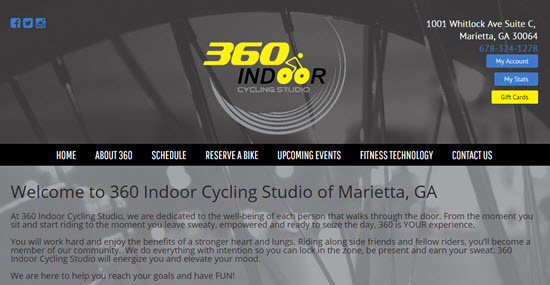
Studio owner Karina Belli is offering what she describes as a “Business in a box – 360 Indoor Cycling Studio” that someone could purchase and move to their own location… or assume her lease and continue at it's current location in Marietta, GA .
I hope this email finds you well. As I mentioned in my FB message, I am looking at selling my studio. The concept is selling everything that is needed to start a studio (EVERYTHING), thus the name “Business in a box”.
I need to cut my losses and be able to move on. Unfortunately, things did not work out as I had hoped for. I am pretty much giving everything away… Here is what is included for $36,000:
21 Bikes – Freemotion 11.9 with console with power sensor
PIQ – Bike reservation
Sound Equipment Website/Signage/Branding/Furniture/Dispensers (wet towels, hand sanitizer, bathroom towels, soap)/Smart TV/ Front Desk MAC Computer/ HeartRate monitors/printer/fans/ washer & dryer
And much much more
I am also open to selling things separately, but would prefer to sell everything to one party.
Please let me know if you have any questions. And thanks for posting this for me!