This Podcast is was originally published on November 24, 2008, I have updated it with our new Podcast host information and I am representing it now. I hope you enjoy it, Joey
My guest for this Podcast is Dr. Haley Perlus. Haley and I discuss Indoor Cycling Instructor Burnout, what it is, where it comes from and how to conquer it!
Haley is a doctor of sport and exercise psychology. She is an expert at empowering individuals to achieve peak performance.
In addition to her expertise in exercise psychology, Haley has been an indoor cycle instructor for 11 years. She's one of us and has first-hand experience teaching full classes as well as teaching a cycle class with 2 participants in a room that holds 50 bikes.
Visit www.DrHaleyPerlus.com and register to receive Dr. Perlus’s FREE monthly Mental Toughness Training articles.
Special Webinar (tele-seminar) Announcement
Dr. Perlus has offered to to hold a live consulting & training tele-seminar, specifically for my audience, this upcoming Sunday November 23rd, 8:00 pm Eastern Time.
Its worth mentioning Haley charges participants $97 per person to attend her group Mental Toughness Training calls. However, since we have on average 1,000 people downloading my Podcasts…she’s agreed to allow as a bonus to my audience that the first 25 people who download this podcast and register now at www.DrHaleyPerlus.com/cycle will get in absolutely FREE. She’s also been generous enough to allow those people who are not the first 25, attend her live consulting call for just $9.00 That’s a huge $88.00 savings.
Listen to the Podcast below for additional details or subscribe using iTunes or Zune.
This Podcast is was originally published on October 10, 2008, I have updated it with our new Podcast host information and I am representing it now. I hope you enjoy it, Joey
What a treat to be able to interview Johnny G along with Jennifer Sage as my co-host for this special Podcast. When you listen to him speak, it’s easy to understand why Spinning has become a household word.
Johnny G and Jennifer talk about their involvement with the Challenged Athletes Foundation at the Tour de Cove in San Diego CA. Jennifer is presenting and Johnny G is speaking during the 4 ½ hour Spinning Tour to raise money for the Challenged Athletes Foundation. Here’s the link to Jennifer’s Donation Page.
Next Johnny explains how his new Johnny G Krankcycle “competes with nothing, yet compliments everything.” Listen as he describes; his initial inspiration, what makes it special, group class formats and it’s use for physically challenged athletes.
This Podcast is was originally published on October 10, 2008, I have updated it with our new Podcast host information and I am representing it now. I hope you enjoy it, Joey
The first is that I’m going to be doing live Podcast Interviews at the Heart Zones USA – ACTIVE HEALTHY LIVING conference, coming up November 14th – 16th 2008, in Denver Colorado. I will be participating as a student in their – Level 1 (primary) and Level 2 (advanced) Cycling Instructor certification programs. I will be interviewing the presenters, participants and Podcast about my experiences as I go along. Will you be there? If so I would love to meet and possibly interview you. I am especially interested in following someone over the weekend who is getting their initial indoor cycling certification. Leave a comment or send me an email john(at)indoorcycleinstructor.com
Haven’t decided yet? Maybe this will help… Sally Edwards has offered my listeners a special 20% discount off the regular conference registration. Here is the special discount code to get your discount – trainersatconf08 You can register here
I promised two announcements. If you were me, doing a Podcast about indoor cycling, who would you feel would be the ultimate guest? Listen to find out if you were right. Be sure to subscribe to the free Podcast downloads. You won't want to miss what's coming next.
Listen to the show below or subscribe with iTunes with the link on the right.
This Podcast is was originally published on September 29, 2008, I have updated it with our new Podcast host information and I am representing it now. I hope you enjoy it, Joey
Part two of my interview with Sally Edwards. Listen as Sally explains her upcoming Active Healthy Living Conference 2008, November 14th – 16th, in Denver Colorado. If you are looking to become certified as a Indoor Cycling Instructor, with the latest information on Heart Zones Training, this may be something you should check out.
Who Should Attend – If you want to get certified as a
Cycling Instructor – Level 1 (primary) and Level 2 (advanced) or both in one weekend!
Personal Trainer – For certified personal trainers seeking advanced training.
Heart Zones Coach – For those seeking to coach using the Heart Zones Training system.
Triathlon Coach- Level 1. Community Coaching certification in the sport of triathlon.
Metabolic Specialist – weight loss management certification.
Periodization is the backbone of an instructor's success, and it can quickly become the key to your popularity as an instructor and it will become the foundation for your students to reach their goals. Periodization is the process of structuring training into progressive phases or blocks of time that are organized into Macro, Meso and Micro cycles. The outdoor cycling community uses periodization as a method to increase their strength and to peak for their target (or A) race.
One of the most important parts of periodization is the planning process where you will divide your an annual training plan into sensible blocks, where each block has a particular physiological adaptation and accordingly a specific dose of stress to elicit that adaptation. While I realize that you may not use an annual plan in your indoor classes, in a later article I will explain how to use the periodization concept in designing your rides. The planning and the journey is really the important part of this process; it gives you time to consider your goals and get focused.
In short, periodization allows you to organize your training into hard training periods and easier training periods to facilitate recovery. Periodization can also help to expose your riders to different aspects of cycling and it can allow you to work on both your cardiopulmonary system and your musculoskeletal system which will produce stronger riders with greater endurance.
The Macrocycle
The macrocycle is the longest of the three cycles and generally consists of a year or more. The macrocycle should include all of the areas of a complete training program including low zone endurance work, strength building, race ready maintenance and of course recovery. The macrocycle is your long term view of your training plan.
The Mesocycle
The second block of training is called a mesocycle. Your macrocycle will contain several mesocycles. While a macrocycle is a long term view of training, a mesocycle represents a specific block of training that is focused towards a particular physiological adaptation and usually not more than 3-6 weeks long. This could be endurance, strength or perhaps even recovery. Mesocycles are the true working phases of your training plan, and you will use these cycles as careful evaluation points to be sure that you are meeting your training objectives. It is not uncommon for there to be an intermetiate resting or recovery period between mesocycles.
The Microcyle
The smallest block of training is called a microcycle. The microcycle is the point at which you are considering and designing specific drills to meet the required stress to force your adaptation. An example of a microcycle is an endurance block where a you put together several long rides in a week to progressively overload the training volume and force an adaptation. Usually, you will have four or more microcycles within a mesocycle and then four or more mesocycles within a macrocycle.
This organizational approach is valuable in indoor cycling for 3 reasons:
1) It provides balance between the volume, intensity and specificity of training.
2) It provides a method for progressively increasing the amount of training or level of intensity as fitness increases.
3) It provides a connection with how the cycling community trains throughout the year; moving from the General to the Specific.
While an annual plan is not always practical for indoor cycling, in a future article I will discuss an approach to periodize your indoor classes over a much shorter time frame that will provide three main advantages for your classes:
1) Because of the changes in focus, you will provide varying stimulus to your participants, hopefully allowing them to continue without hitting a plateau.
2) Your rides will not just have separate playlists, but also separate focused training which will keep the classes interesting for the students.
3) By varying the classes you will be exposing your students to many different aspects of cycling and hopefully have them embrace the “Fusion” of the outside and inside rides.
The foot to pedal connection could be the single most important aspect of how the rider fits on the bike in addition to the safety aspects of a good connection. Due to the inertia and momentum that can be created by the weighted flywheel, it is necessary for riders to keep their feet secured to the bike at all times when riding.
Most indoor bikes are equipped with toe cages and straps to secure a rider’s foot to the pedal. The rider inserts their foot into the plastic or metal cage and tightens the attached strap to ensure their foot will not come out while pedaling.
Many indoor bikes now provide clipless pedals. Although this can appear to be an oxymoron, clipless pedals use a cleat that is attached to the bottom of a cycling shoe which then “clips” into the pedal. The cleats and pedals can come in various sizes depending on the make and model. Currently, the most common are SPD® (Shimano® Pedaling Dynamics) although a few facilities still use the older LOOK® (red cleat) pedals. Contact your facility to learn which pedal options are available for the bikes you are going to use.
There are large benefits of using clipless pedals over flat pedals in terms of comfort and efficiency. There are several good reasons to ride clipped in which include: 1) Riding clipped in allows you to recruit more of the muscles in your leg, more efficiently. While flat pedals tend to get the most drive when you push down, the clipless pedals also create forward movement when you pull up. 2) Provided your cleats are set up correctly and your saddle height and fore/aft position is right, you’ll be clipping yourself into the optimum position — limiting the chance of injury and improving efficacy. 3) Your feet won’t slide around like they can do on flat pedals.
To get clipped in, start with one foot already attached, and at the top of the pedal stroke. Push down with the clipped-in foot, and sit on the saddle. When the unattached pedal comes to meet your foot, rest the cleat attached to your shoe over the top of the pedal, and apply pressure. To release yourself from clipless pedals, you simply need to twist your ankle outwards.
If you have never used clipless pedals before, we strongly recommend that you take a few moments to practice getting in and out of the pedals when not in front of the class.
Cycle science (As printed in Mountain Bike Rider)
“According to sports scientist Will Harrison, “The type of pedal we use will alter technique and the lines we choose. Clipless can knock our confidence at first, however they can help us with better power, control and efficiency”.
That’s exactly what we wanted to test- do clipless really affect power that much? We jumped onto the Wattbike and found a big difference.”


 This Podcast is was originally published on November 24, 2008, I have updated it with our new Podcast host information and I am representing it now. I hope you enjoy it, Joey
 This Podcast is was originally published on October 10, 2008, I have updated it with our new Podcast host information and I am representing it now. I hope you enjoy it, Joey
 This Podcast is was originally published on October 10, 2008, I have updated it with our new Podcast host information and I am representing it now. I hope you enjoy it, Joey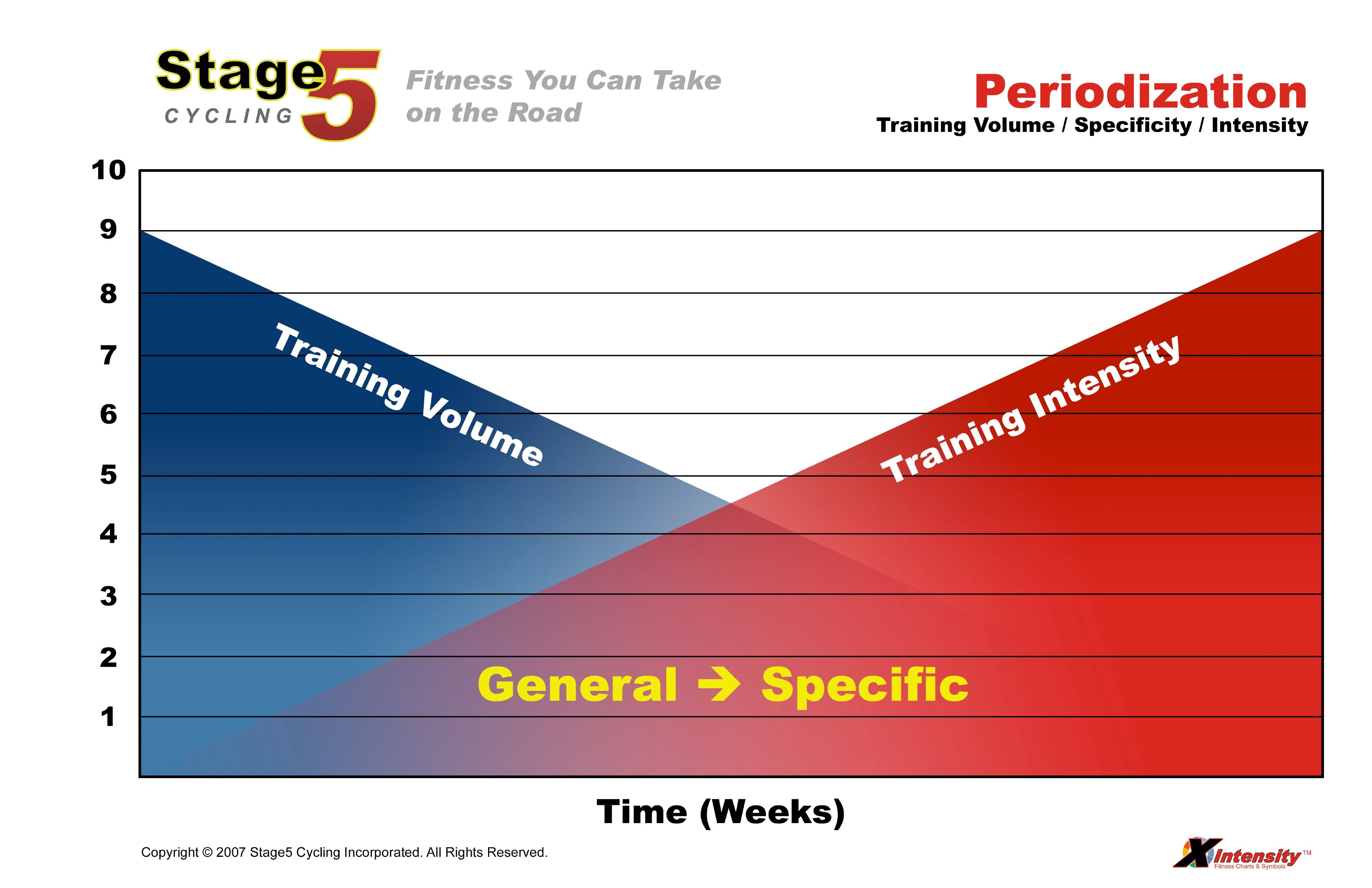
 eriodization is the backbone of an instructor's success, and it can quickly become the key to your popularity as an instructor and it will become the foundation for your students to reach their goals. Periodization is the process of structuring training into progressive phases or blocks of time that are organized into Macro, Meso and Micro cycles. The outdoor cycling community uses periodization as a method to increase their strength and to peak for their target (or A) race.
 The foot to pedal connection could be the single most important aspect of how the rider fits on the bike in addition to the safety aspects of a good connection. Due to the inertia and momentum that can be created by the weighted flywheel, it is necessary for riders to keep their feet secured to the bike at all times when riding.