by Joey Stabile | Oct 17, 2018 | Engage Your Students, Health and Wellness, Strength Training

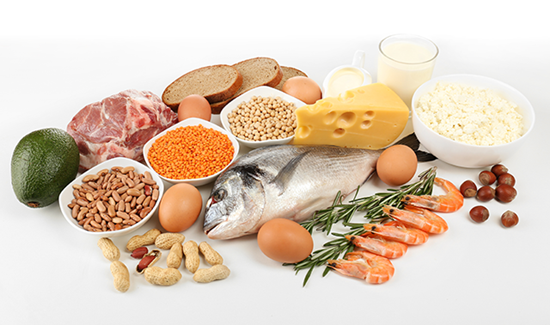
Protein Power: It’s Not Just for Muscles (Part 2 — Appetite Control)
By Joan Kent, PhD, and Shawn Bevington
Protein is used to make hormones, which are messengers in the body. They’re produced in one part of the body and then distributed — through blood, interstitial or other body fluid — to other organs or tissues. There they modify activity and function.
This brief post will focus on just a few hormones and how they affect appetite.
*CCK (Cholecystokinin) – Satiety is the feeling that you don’t need another meal because you’re still satisfied from the last one.
CCK is arguably the most powerful satiety hormone in the body. It reduces appetite by stimulating the function of the brain’s key satiety center, the VMH (ventromedial hypothalamus).
CCK is released when we eat protein and fats. It affects our food preferences by reducing the desire for carbs.
Anyone who suffers from an exaggerated desire for carbs probably needs to eat more protein. Vegans, for example, may experience strong cravings for carbs, including sugars. Finding a true protein source is a key factor in reducing vegans’ cravings. More on that in Part 3.
Eating adequate protein can also be key in conquering sugar addiction for this same reason.
*Ghrelin – Ghrelin increases appetite by stimulating the brain’s lateral hypothalamus. The LH can be seen as a ‘feeding’ center.
Eating protein can help to reduce ghrelin release. In healthy men, a high-protein breakfast decreased post-meal ghrelin levels more than a high-carb breakfast. The high-protein meal also slowed gastric emptying. Researchers attributed both effects to the secretion of CCK and glucagon, both triggered by protein.
*Glucagon – Glucagon is a hormone made in the pancreas. Insulin is, as well, but the functions of the two hormones are oppositional and work to balance glucose levels.
Insulin also tends to be a fat-storage hormone, while glucagon moves fats out of storage and into the blood stream so they can be utilized as fuel, rather than stored.
While many foods trigger the release of insulin, only protein foods trigger glucagon. Glucagon is also secreted when we exercise.
As mentioned above, glucagon and CCK seem to control appetite by modifying ghrelin levels.
Don’t miss protein and brain chemistry, age, and the vegan solution in Part 3, right here this week!
Shawn Bevington is a holistic health coach, certified by the National College of Exercise Professionals (NCEP). He has been a fitness trainer for six years, and boasts another seven years of activity in various programs, including football, shot-put, pro wrestling and other strenuous sports. Self-motivated, Shawn has spent years researching on his own – and putting that information into practice with his clients. His knowledge, skill and experience have made him a sought-after fitness trainer, both by clients and by colleagues who bring questions to him.
Dr. Joan Kent has a PhD in Psychoactive Nutrition. She was the first to document the brain chemical pathways of sugar addiction and to explain the sugar/fat seesaw hormonally and chemically. Joan has helped hundreds and hundreds of clients with metabolic conditions — diabetes, hypertension, heart disease, cancer — as well as clients with inflammation and mood disorders. Joan has written 2 best-selling books: Stronger Than Sugar, on conquering sugar addiction, and The Sugar-Free Workout, on fueling before, during and after training for optimal performance. Visit www.LastResortNutrition.com and grab your free gifts.

by Jim Karanas | Oct 2, 2018 | Health and Wellness, Master Instructor Blog

by Team ICG® Master Trainer Jim Karanas
“Today was the hardest recovery ride ever! I complained the entire way and had three different plans to abort and shortcut the ride throughout the route.”
That’s an actual comment sent to me by a former student of mine. The rider is dedicated, committed and strong. And the statement raised so much conflict in me, I felt obliged to write another post about the all-too-real dangers of overtraining. (Please see my earlier post, “Endurance Exercise and Heart Damage”.)
Being able to ride long distances makes you feel like a cyclist, regardless of how fast you are. Riding long gives a feeling of accomplishment. It’s the kind of training that can easily become overtraining because the conditioning increases your ability to endure whatever happens on the bike. Aches, pains, bad weather, lousy traffic are all part of it. You get tough. The tougher you get, the more you ignore the signs that it’s time to let the miles go.
Many of my students have graduated from my classes to the road. Some have gone on to become accomplished cyclists. Several have gone in the direction of riding long distances.
If you’ve never racked up a lot of miles, it’s important to understand that there’s a “buzz” to it. Each week, you end up riding many more miles than are good for you, but it’s gratifying to have finally reached the point where you can ride that many miles. All the training has culminated in considerable ability; you don’t want to let go of the conditioning. Couple that with the resilience you had to develop and, before you know it, you’re no longer getting stronger. You’re doing whatever you can to keep yourself from breaking down.
This kind of overtraining syndrome can be hard to discern. The intensity isn’t high, a day or two of rest helps you feel better, and there’s a mindset that this is what it takes to get strong on the bike. It’s difficult to know when you’ve crossed the line.
Dr. Philip Maffetone talks about three stages of overtraining. He calls Stage 1 Functional Overtraining. It may include a seemingly minor plateau or a slight regression in training performance. While that may be noticeable in a professional athlete receiving close observation, it’s likely to be overlooked in the situation I’m describing.
Maffetone refers to Stage 2 as Sympathetic Overtraining. The sympathetic part of the nervous system becomes overactive, which results in a classic overtraining sign — increased resting heart rate. This is discussed by cyclists and indoor-cycling instructors all the time. I can say from experience is that it’s easy to keep training through this.
Stage 3 is Parasympathetic Overtraining. Chronic overtraining has led to more serious hormonal, neurological and mechanical imbalances that parallel adrenal dysfunction. Eventually the sympathetic nervous system becomes exhausted, and most, if not all, hormone levels are significantly reduced, including cortisol. Believe it or not, this is not an uncommon state for many of our students who like to ride long distances. At this point, negative feelings increase, such as depression, anger, fatigue and irritability. Ratings of perceived exertion increase, as well. (Consider the statement at the beginning of this post.) Serious injury is possible, as is an increased likelihood of crashing. Yet getting on the bike for another ride is still within reach, still feels accessible.
My question for discussion is: What can be done with students in this state? I know from experience they don’t want to hear anyone tell them to stop riding so many miles. They know from experience that their conditioning will lose its edge and they’ll detune. That’s hard to accept. The ego is engaged here because they’ve reached a level of conditioning that makes them proud of their training.
I’ve often tried to intervene — to little avail — with students going through this. A coach of mine once told me that life is the only real coach when it comes to ego, and that everyone needs to go through significant downturns and trauma to learn life lessons.
I’m interested in what the rest of you have experienced.
by Sarah Cummings | Sep 19, 2018 | Health and Wellness, Instructor Training, New Instructor 101

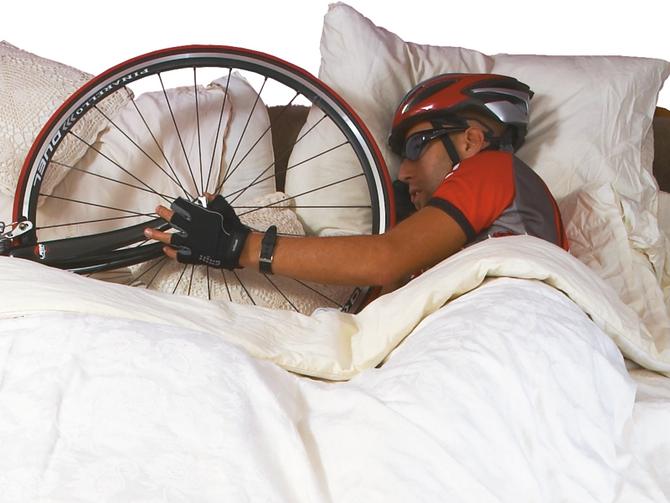
If I could tell you that I had access an incredibly effective performance enhancer that couldn’t be picked up on any drug test and is completely and utterly free, I’m fairly sure you accuse me of lying.
What about if I then said that you had unlimited access to it too? You’d probably just shake your head and walk away. Well it’s all true. What is this wonder drug? Sleep. That’s what.
Sleep has been called the most potent natural performance enhancer known to humankind. With very good reason. Below we take a brief look at exactly how sleep and athletic performance are linked…
Sleep and training
Getting sufficient rest is vitally important for all of us, athlete or not. It plays a role in just about every single thing we do, The Sleep Advisor team discuss this in great detail. But it’s importance takes on new levels when you start putting your body under unusual amounts of physical strain — like training for a race for instance.
No amount of hours spent on the track or gym will make you into a top athlete if you are not sleeping well. Those hours pumping iron or pedaling furiously are actually doing your body harm, you are tearing muscle fiber down. it's only with sufficient down time that the body is able to repair and reinforce.
Any training regime that clocks up the hours spent in the gym or on the track, without making account for sufficient time to allow the body to repair itself, is doomed to end in failure.
So if you are looking for things to cut out of your schedule to make space for more training don’t you dare thing about cutting your sleep shorter. Dump the girlfriend, quit the day job or cancel your Netflix subscription. But don’t cut out on sleep. If anything you should be sleeping more.
Sleep and motor skill acquisition
When it comes to learning new skilled actions and behaviors such as those needed for athletic success, it has long been thought that practice is the only thing required for improvement. Studies now suggest this view to be too simplistic.
Research now suggests that the brain continues to learn even when the day’s practice session is over. In fact it’s during sleep that night that the brain consolidates any new techniques learnt during the day. Say for instance you’re working on a new tennis swing, it’s during your sleep than the brain replays the action over and over again.
So remember, it's no longer just ‘practice that makes perfect’ when it comes to mastering a new technique. It’s ‘practice, sleep, practice again, makes perfect’. Not quite as catchy I will give you that, but more accurate.
Sleep and performance
The gap between medal winners and also rans (or also-cycled), often involves little more than hundredths of seconds. Sleep has a huge impact on cognitive performance. The difference between winning a race and finishing dead last could be as little as an hour more (or less) in bed.
Don’t believe me? Ok. Just as a thought exercise, try and recall the last time you had a bad night’s sleep. Statistics suggest you won’t have to think too hard on this. Now consider for a moment what your reaction times were like. I bet it took you a good five minutes to even decide what breakfast cereal to have. Now imagine you’re on the starting line waiting for the gun to go off. Yikes!
The impact poor sleep has on reaction times has been compared to the impact alcohol has. And no athlete looking to perform at the highest level would dare turn up to race after a couple of pints. In terms of performance that’s exactly what they’re doing if they turn up after a bad night’s rest.
Sleep and injury
Excelling at your chosen sport is a lot to do with consistency, are you able to get out there week after week and perform at a high level? If the answer is no, it might not be because of a lack of talent but because your body simple can't cope.
Study after study has shown that one of the most reliable predictors of injury in athletes is how well they sleep. It’s quite simple, athletes who got eight or more hours a night have been shown to get injured far less than athletes who sleep less than eight hours.
There seems to be two main reasons for this. The first relates to what we discussed above, our body needs time to repair and prepare, sleep is this time. If we don’t get enough sleep or our sleep is broken then those repairs and preparations aren’t properly carried out. The result is injury.
Training without sufficient sleep is kind of like driving the car out of the garage before the mechanic has put the engine back together and bolted the wheels back on. You might get a little way down the road but it ain’t gonna be pretty!
The second reason for the upturn in injury amongst sleep-deprived athletes relates to cognitive performance. When we’re tired we’re low on energy and our reaction times are significantly impaired. To make up for these shortfalls we overcompensate. We stretch further than we should. Tackle harder than we need to. This overexertion leads to poor technique. Both of which can lead to injury.
If you’re an athlete and you’re trying to work out why you keep getting injured or why your times simply aren't improving as you’d hoped — maybe it’s not your training or your diet that needs altering — but your bedtime. Sweet dreams!

by John | Sep 12, 2018 | Health and Wellness, Instructor Training, Master Instructor Blog, Promote and Build Your Class, Training With Power, Your Fitness Business, Zone based Heart Rate Training

How cool would it be if your insurance company paid for indoor cycling classes?
A national policy of Prescriptive Exercise would be the holy grail* for small studio owners.
Imagine; A new client walks in with her doctor specified exercise regimen for you to “fill”, just like at a pharmacy. As an approved provider, you and your studio would provide the required exercise and then bill the clients insurance company… and not at your normal class rate – at a much higher rate in recognition of your fitness expertise.
A fantasy? Nope**, not if you're near The Wellness Institute in Winnipeg Canada. Doctors there are actually writing detailed prescriptions for exercise. How cool is that?

Doctors at a unique medical facility in Winnipeg are starting to write some unusual prescriptions.
“A lap a day keeps the doctor away” is one of the mottos at the Seven Oaks Wellness Institute (SOWI), a fitness facility attached to the Seven Oaks General Hospital on Leila Avenue, where doctors have started prescribing exercise instead of pills.
Dr. Kevin Saunders is one of the founders of the SOWI and the medical director. He said exercise is an effective treatment for all kinds of illnesses, including hypertension, Type 2 diabetes, high cholesterol and even some forms of cancer.
The facility offers clients a more holistic approach to fitness, helping people from all walks of life to understand what kinds of exercise they should be doing, and what they need to avoid if it puts their health in jeopardy.
You'll note that what Dr. Sanders is targeting with this program are Special Populations of people who would benefit from physical activity. I'm guessing you'd have a little trouble getting a prescription for a USAT Triathlon coach to get you ready for your next Ironman 🙂
What has me most excited here is the potential for prescriptive exercise for people suffering from Parkinson's Disease. It's been shown repeatedly that people of all ages with PD respond well to Indoor Cycling classes. Especially classes that are designed and taught by a Parkinson's Cycling Coach. Indoor Cycling studios already have the necessary tools to conduct this hugely beneficial classes. They're best held around 10:30 – 11:30 in the morning, which is normally a time without a scheduled class
I did some research and found an excellent article here at emedicine.medscape.com that explains in detail what Perscriptive Exercise is (different from physical rehab) and includes a number of areas where exercise is typically prescribed by a physiian.
Background
Exercise prescription commonly refers to the specific plan of fitness-related activities that are designed for a specified purpose, which is often developed by a fitness or rehabilitation specialist for the client or patient. Due to the specific and unique needs and interests of the client/patient, the goal of exercise prescription should be successful integration of exercise principles and behavioral techniques that motivates the participant to be compliant, thus achieving their goals.[1, 2, 3, 4, 5, 6, 7]
Components of exercise prescription
An exercise prescription generally includes the following specific recommendations:
-
Type of exercise or activity (eg, walking, swimming, cycling)
-
Specific workloads (eg, watts, walking speed)
-
Duration and frequency of the activity or exercise session
-
Intensity guidelines — Target heart rate (THR) range and estimated rate of perceived exertion (RPE)
-
Precautions regarding certain orthopedic (or other) concerns or related comments
Note that a properly structured, Power based Indoor Cycling class would easily include all of the stated components.
Consider this simple prescription:
- Type of exercise or activity – Indoor Cycling class.
-
Specific workloads – Below, @ and Above riders observed 4 minute
Best Effort PTP Watts
or FTP if known
-
Duration and frequency of the activity or exercise session – 3 x 60 min classes weekly
-
Intensity guidelines — each 60 class to include: 5 x 5 min intervals @ PTP, 3 x 1 min intervals Above PTP, that remainder of class Below PTP and Above VT1 (staying aerobic) + adequate recovery after each @/Above interval.
-
Precautions – None
What you'd have is essentially an endurance training program, written by an MD.
Taking this further. If you were to incorporate the rider's performance data capture, from a Display Training system like Performance IQ or Spivi, your doctor could review your progress = make informed recommendations for future exercise prescriptions. Wouldn't that be awesome?
If you can offer any additional information about prescriptive exercise, I'd love to hear from you!
*Yes, I'm aware that many insurance programs offer a discount/rebate for club dues – if you attend a speciaf number of days a month. This is very different.
** I don't know the specifics of Canada's reimbursement system, but I'm looking into it. I have asked for a representative join me on the Podcast to discuss all of this.
by Joan Kent | Sep 10, 2018 | Health and Wellness, Master Instructor Blog

I’d like to ask for your help with an extremely important campaign. The campaign is to raise money for pregnant women with metabolic disorders: diabetes, high blood pressure, high cholesterol, low “good” cholesterol, obesity, insulin resistance, and more. These metabolic conditions make it more likely that the moms-to-be will give birth to babies that develop autism.
I specialize in reversing these metabolic disorders through nutrition. I want to help get these pregnant women healthy, so they can give birth to healthy babies that stay healthy. This is significant and worthwhile — and I definitely need your help.
The research linking metabolic disorders in pregnant women and babies that develop autism is new. Researchers are worried that autism will increase due to rising obesity rates nationally, which, of course, impacts pregnant women. No one to my knowledge, however, is targeting the cause of these metabolic conditions at the root level — specifically, the nutrition of the pregnant women.
These metabolic conditions can be completely reversed; I've been helping people reverse metabolic syndrome for 20 years. I would now like to target pregnant women and try to reduce the incidence of autism.
Please help by donating if you can and/or by spreading the word and letting your friends, family and coworkers know about this campaign. Any support they can offer would be greatly appreciated.
I truly believe we can make a difference by reversing a problem that looks as if it will only get worse — unless people like you help to stop it! Thank you for your support and your willingness to help.
Here’s a link that will take you to the Indiegogo site, where you can get more information on this important campaign: ‪http://goo.gl/ouS9NR ‬
by Joan Kent | Aug 28, 2018 | Engage Your Students, Health and Wellness

A previous post covered ways that sugar can increase fat consumption. One way is that fat makes sugary foods taste sweeter. That may mean a sugar/fat combination tastes preferable to a sugar-only food, such as hard candy.
Clients have told me that, when they eliminate sugar from their diets, they can actually enjoy snacking on a brown rice cake topped with a slice of tomato or sprouts.
When they’ve been eating sugary foods, though, such a snack seems unappealing and unpalatable. At those sugar-laden times, they find themselves wanting different things: bologna or salami sandwiches, for example, or other heavy foods.
Those heavier foods have more fat in them than the first snack, so the clients are consuming extra fat — even though they weren’t necessarily seeking high-fat foods in the first place.
In my dissertation, I named this “secondary fat consumption.”
Secondary fat consumption can occur in several different ways:[private PRO-Platinum|PRO-Monthly|PRO-Gratis|PRO-Seasonal|Platinum-trial|Monthly-trial|PRO-Military|30-Days-of-PRO|90 Day PRO|Stages-Instructor|Schwinn-Instructor|PRO-Studio|28 Day Challenge]
– We eat more of a fatty food (like peanut butter) when we have sugar (jelly) to eat with it and make it taste better.
– We eat sugar, which triggers endorphins, as explained above. That shifts our preferences to other foods that trigger endorphins — to more sugar or to high-fat foods, or both.
– We crave something sweet and want the sweetest taste we can get — so we instinctively choose a sugar/fat combination, instead of, say, a hard candy with sugar only.
Unfortunately, that’s not the worst of it. High-fat foods we eat trigger the hormone ghrelin. To me, it always seemed like a Monster Hormone.
For one thing, ghrelin slows metabolism. Who wants that?
At the same time, ghrelin stimulates the part of the brain that increases appetite (the lateral hypothalamus). That gives “secondary fat” a chance to increase calories — not only through the secondary fat calories themselves, but also through all the other foods we might suddenly want to eat simply because that secondary fat has triggered ghrelin and our appetite.
It’s obvious that there’s potential for a self-perpetuating cycle in this, and that it can toboggan its way down a slippery slope and pick up speed.
It also seems obvious that — bottom line — sugar is the culprit in this metabolic mess.
Avoiding sugar is one important factor in transforming your health, increasing your energy, and feeling great. Heart disease, the #1 cause of death in the U.S., has been linked with inflammation. So have diabetes, hypertension, cancer, and more.
Inflammation is strongly affected by nutrition, and sugar’s effect on insulin and hormones makes it a strong contributor to inflammation. Dare I advise, yet again, not to eat it?[/private]
