
by Barbara | Jul 5, 2011 | Barbara Hoots, Promote and Build Your Class

The dog days of summer are here with a vengeance, and your classes may be showing the wear and tear of hot weather. But there is no reason why your studio can’t be a riot of activity in spite of the heat. Consider these six easy perk-ups to generate new energy and unstoppable momentum.
“Featured Artists” Spin® Off
ICI/PRO Member Nina Israel asked me to create a mixtape featuring music by Prince and Michael Jackson to help launch a new studio. Because her idea was so awesome, I offered the same ride at my own facility and even included classic YouTube video performances prior to the ride. Who can forget Michael Jackson’s Moon Walk? A few creative posters promoted the event, and many students arrived an hour before class to secure a bike. Not a fan of Michael or Prince? Select your own artist showdown: Zeppelin vs. Rolling Stones, 70’s vs. 90s’, Akon vs. Usher, Divas vs. Degenerates, etc.
Cycle 101
Promote weekly intro classes to recruit new students. Bonding with other newbies creates a fraternity, and students feel comfortable knowing they have a buddy system for encouragement and accountability. Offer a “graduation” incentive after attending six Cycle 101 classes: a logo water bottle, towel, bumper sticker or tee shirt.
Spruce Up Your Studio
Let’s be honest. Does your facility look the same as it did last summer? No wonder your class attendance has slumped! Momentum must be created and sustained continually in order to foster growth. You’ve talked for years about updating your studio — now is the time.
Guest Instructors
In a rut? When was the last time your club brought in a guest instructor to motivate and inspire both students and teachers? Generate a buzz and create excitement when you hype up a guest appearance. Reach beyond your comfort zone and invite a motivating instructor to teach a few rides at your studio. Works like a charm.
Monday Night Lights
Beg, borrow, rent or purchase some nightclub-quality LED lights. Just plug them in around the room to create a visually stimulating light show every Monday night during the summer. You can easily transform an average class into a spectacle of lights and sound. American DJ lights are affordable and simple to install.
We’re Going Out!
Teens and college kids home for summer are an enormous untapped market. My studio added a Friday evening “We’re Going Out” ride with music and instruction designed for the “Under-25 Crowd.” Instructors invited their friends to attend using Facebook and free passes. Those friends soon became members, and now they are an integral part of our cycling family.
What idea would you like to share?
by | May 16, 2011 | Health and Wellness, Melissa Marotta

I was completely over-the-top ecstatic to come across an article in this month's Sports Medicine relating to new recommendations for exercise during pregnancy (Zavorsky & Longo, 2011). My experience during my medical training thus far is that, with pregnant patients just as non-pregnant patients, there is not a whole lot of discussion about exercise intensity. It's either “it's safe to exercise, and you should” vs. “it's not safe to exercise; don't.” For some pregnant patients, this is adequate; for many, it's not. So when this latest contribution to the medical literature purported to provide recommendations for exercise intensity during pregnancy with specificity unlike any before it, I was beside myself. That's what I get for getting this excited over a journal article…
A bit of history: In 2002, the American College of Obstetricians and Gynecologists issued guidelines for exercise during pregnancy and the immediate postpartum period. While very helpful in terms of issuing absolute and relative contraindications for exercise, criticism arose in response to its lack of specificity about intensity and duration. In 2003, the Society for Obstetricians and Gynecologists of Canada took a stab at its own guidelines, and prescribed a thorough set of heart rate guidelines (as in, specific heart rates — imagine?) for women with uncomplicated pregnancies, theoretically based on modified calculations for maximum heart rate (Zavorsky & Longo, 2011). Sigh. So here we are in 2011, where the authors of this latest review of evidence are advocating for calculating heart rate reserve percentages (as in, another formula that includes maximum heart rate). You know how we at ICI feel about maximum heart rate formulas.
But rather than be disappointed about the lack of practicality that I feel these specific intensity guidelines provide for me both for the pregnant women I train or the pregnant women I see in clinic, I think there is still some general principles we can learn from my synopsis of all three sets of recommendations. Note: I will be speaking with reference to only uncomplicated pregnancies.
1. In the absence of medical contraindications, regular exercise during pregnancy is good.
There is evidence that it can prevent and help manage gestational diabetes, help reduce excessive weight gain during pregnancy (Zavorsky & Longo, 2011) – for women with normal pre-pregnancy weights, we aim for pregnancy weight gain of 25–35 lbs. All pregnant women should be evaluated by their physician to evaluate whether there are any absolute or relative contraindications to exercise (Artal & O'Toole, 2003; Davies et al, 2003). If you have riders in your indoor cycling class who are pregnant, you should ask them if they have been evaluated by their doctors and whether they have been advised of any restrictions. There are a lot of good books from respected experts  you may want to read.
2. ACOG has described warning signs that pregnant women should stop exercising. You should be aware of these warning signs in case you see them, and refer your clients to medical attention.
These include vaginal bleeding, shortness of breath before beginning exercise, dizziness, headache, chest pain, weakness, calf pain/swelling (I actually saw this during my 1st week as an indoor cycling instructor — I'd had no medical training at that time but decided it didn't look right, and told my client I thought she should leave class and call her doctor immediately. She did and, turns out, she had a deep venous thrombosis — or blood clot — in her calf. High levels of estrogen during pregnancy predispose people to blood clots.), amniotic fluid leakage, signs of preterm labor (Artal & O'Toole, 2003; Davies et al, 2003).
3. If I leave you with nothing else: Turn the AC/fans on.
Go dig up Gene Nacey's epic article about why we need ventilation to facilitate evaporative cooling during an indoor cycling class, and how dangerous it is to fail to do so. Take that, and magnify the risk for a pregnant woman. During pregnancy, core body temperature is elevated at baseline. During exercise, core body temperature rises further. If a pregnant women exercises in a neutral or cool temperature, as well as maintains adequate hydration and electrolyte balance, there should be no negative impact on the fetus. The best indicator of whether thermoregulation is going ok is the pregnant woman's subjective account (Artal & O'Toole, 2003). If she feels too hot, she is too hot and needs to change her environment; she should feel comfortable at all times, regardless of her (or her co-riders') desire to sweat buckets in your class.
4. Pregnant women need to accommodate for the normal physiological changes that occur to their musculoskeletal and cardiovascular (among other) systems. With knowledge about what is happening, modifications to exercise regimens should be based on common sense.
During pregnancy, connective tissue gets more lax (one might reason that looser ligaments are a pretty convenient adaptation, given what needs to happen during labor). With ligament instability in addition to weight gain causing increase force across the hips and knees, pregnant women may be more prone to musculoskeletal injury. Walking lunges may be particularly risky with lax pelvic ligaments, and should be avoided. Strength-training is best done with light weights/high repetitions (we know that women won't be accomplishing much in the way of muscle strength building — and that's ok. The idea is to keep building muscular endurance). Heavy weights or isometric exercises should be avoided, due to theoretical compromise in fetal blood flow. Women should also be advised not to lift anything while laying on their backs — this position puts pressure on an important vein called the inferior vena cava, which decreases cardiac output (doing the same exercise on an inclined bench is fine). Strength-training with resistance bands may be safer than free weights, given the possibility of inadvertently knocking into the abdomen (Zavorsky & Longo, 2011). Speaking of which: Contact sports should be avoided, as should activities that increase risk of falling (a stationary bike should theoretically be fine). With increased basal metabolic rate, pregnant women have increased nutritional requirements — she needs to replete even more fuel before, during, and after exercise than she did prior to pregnancy. Lastly, there are dramatic changes to the cardiovascular system: increase in blood volume, heart rate, stroke volume (how much blood is ejected from the heart with each heart muscle contraction) increase; the resistance within blood vessels decreases (leading to a drop in blood pressure). So even a well-trained athlete is going to experience a different response to the same intensity of exercise, and may need to scale back her efforts (Artal & O'Toole, 2003).
5. Stay aerobic.
For all the discussion of METs and % HRR and blah blah maximum heart rate formulas, it all comes down to this: all the research on safety in exercise, even “vigorous” exercise, during pregnancy is referring to intensity levels that we would still define as sub-lactate threshold, even if the researchers never call it that. I am not a doctor yet, but I will be recommending to my future patients that they “stay aerobic” during pregnancy. If you have a pregnant rider in your class where you are incorporating anaerobic intervals, I would strongly suggest encouraging her to modify her efforts. Use of a heart rate monitor during pregnancy is difficult — evidence is mixed for how HR responds to exercise during pregnancy (Zavorksy & Longo, 2011): some women have a blunted HR response (as in taking a beta blocker!); some do not. Most women have an increase in resting HR (Artal & O'Toole, 2003). Due to these irregularities, rate of perceived exertion (RPE) is the way to go.
6. Pregnancy is not a time for achieving peak fitness or any sort of hardcore training. The idea is to keep moving and keep comfortable.
30 minutes most, if not all, days at that “light” to “somewhat hard” RPE (Davies et al, 2003). If a woman is exercising longer or more intensely than that, the number of days per week can be decreased (Artal & O'Toole, 2003). If a woman had been previously inactive, she should begin with 15 minute sessions and gradually increase to 30 minutes (Davies et al, 2003). As explained earlier, attention should be given to adequate nutrition, hydration, and proper evaporative cooling (i.e., turn the AC on). In the absence of complications and medical restrictions, this should be continued throughout the pregnancy (Zavorsky & Longo, 2011).
You can go a long way with your pregnant clients just by asking if there is anything that is making them uncomfortable, and making common-sense recommendations for them to modify what they're doing. For example, early in my career I had a rider in an indoor cycling class who refused to acknowledge my gentle cueing to hold onto the handlebars during class. I was a substitute instructor and lacked confidence that I'd be able to accomplish anything, so decided to “let it go.” Then it occurred to me to ask her about it. “I can't help but notice that you're not holding onto the handlebars. How did you come to decide to do that?” She told me that she was pregnant, and that leading forward on to grasp the handlebars caused her a lot of pressure in her abdomen. I smiled and showed her that we could raise the handlebars so that she wouldn't have to lean over (remember: proper handlebar setup is only based on comfort!). She was thrilled! And just like that, we worked together so that she could enjoy her indoor cycling experience and derive all of its physical and psychological benefits — safely.
Both in pregnancy and non-pregnancy, the idea is that folks should listen to their bodies. We all have clients who struggle with this, and perhaps we struggle with it ourselves. In pregnancy, however, there is the “permissive” external motivation to decide when enough is enough — and for that to be perfectly okay. (Note: it's always okay.)
References
Artal R, O'Toole M. (2003) Guidelines of the American College of Obstetricians and Gynecologists for exercise during pregnancy the postpartum period. British Journal of Sports Med; 37:6-12
Davies GAL, Wolfe LA, Mottola MF, MacKinnon C. (2003). Exercise in Pregnancy and the Postpartum Period. Joint SOGC/CSEP Clinical Practice Guidelines, No. 129, June 2003
Zavorsky GS, Longo LD. (2011). Exercise Guidelines in Pregnancy: New perspectives. Sports Medicine, 41(5): 345-360
The author is in her final year of medical school at the University of Vermont College of Medicine in Burlington, Vermont. Author of the popular coaching motivation blog, Spintastic (http://spintastic.blogspot.com), her research interests include the psychological effects of heart rate training and use of heart rate monitors for anxiety treatment.
Have a medical research question for the ICI team? E-mail melissa.marotta@uvm.edu.
by | Apr 28, 2011 | Health and Wellness, ICI/PRO Team Member Articles, Melissa Marotta

From Jill Brown Photography
Dear Melissa,
One of my “regulars” was recently diagnosed with diabetes. She's on medicine for it. Does this impact how she is able to participate in my indoor cycling classes? What do I need to know?
Sincerely,
G.H., Concord, NH
In response to G.H.'s excellent question, here is a crash course on diabetes treatment and how to maximize your riders' safety.
Shortest Background Section Ever
I could write ten pages on diabetes — but you'll probably stop reading before you get to The Good Stuff. So let us begin with the barest-bones background required for working with clients who have diabetes.
There are two basic “kinds” of diabetes.
Type 1 (DM-1) is an autoimmune disorder with typical peak onset in childhood-young adulthood (but can occur at any age) characterized by antibodies against pancreatic beta cells, the cells responsible for producing insulin. Insulin is one of the “mastermind” hormones, responsible for governing how the body uses fuel. Without insulin, the body cannot absorb glucose out of the blood stream and into working tissues that it needs for fuel.
Type 2 diabetes (DM-2), in contrast, is a state of insulin resistance. Typically associated with obesity and its resulting metabolic/hormonal disturbances, patients with Type 2 diabetes do make insulin early in the disease — but tissues stop being sensitive to it, and thus cannot use it for fuel. In response, pancreatic beta cells release even more insulin — and more insulin, and more insulin — but the tissues still cannot use it. Eventually, the beta cells “burn out” and the disease is characterized as both insulin resistance AND insulin depletion. Recent projections predict that by 2050, 1 in 3 American adults will have DM-2.
The Stakes are High
Complications of uncontrolled diabetes are vast. There are microvascular (small vessel) complications, caused by these vessels becoming chronically coated with toxic amounts of glucose and metabolites: kidney disease that can eventually require dialysis, damage to the retina that can lead to blindness, and damage to the body's longest nerves in the feet, legs, and hands that leads to problems ranging from numbness/loss of sensation, to a burning-type pain that is very difficult to treat, to ulcers and infections possibly resulting need for amputation. There are also macrovascular (large vessel) complications in the heart and brain: Patients with diabetes are at least twice as likely to incur a heart attack or stroke (and more likely to die from either).
Treatment of Diabetes Mellitus
Again, let's keep this simple. We have two principles of diabetes treatment:
Avoid the complications of chronically elevated blood glucose, a described above;
Avoid hypoglycemia (blood sugar that is too low, typically thought of as < 70), which has its own dangers if untreated. Hypoglycemia usually resolves quickly (by eating/drinking glucose) — but if left untreated, it can lead to confusion, fainting, or more seriously seizures or even death. Avoiding this is key.
With these principles in mind, diabetes treatment can be broken down into oral medications and injected medications, the latter most commonly to include insulin. We make treatment decisions based on the pathophysiology of the disease. In DM-1, folks do not make enough insulin — thus, their treatment is always to be given insulin. In DM-2 wherein folks either make insulin (but are resistant to insulin) or do not make insulin (such as in the case of “beta cell burnout”), treatment varies accordingly.
There are many different types of DM-2 treatment that target various points in the body's glucose processing and insulin-responding pathways. Some reduce the liver's production of glucose; some make body tissues more sensitive to insulin; some make the pancreas secrete more insulin; some mimic the hormones in the brain that control insulin release. Each class of medications carries with it certain benefits (i.e, greater efficacy, weight loss) and side effects (i.e., weight gain, cardiovascular risks, hypoglycemia). Patients with DM-1 need to be on insulin since their pancreas is not releasing their own. In DM-2, there is some evidence that using more aggressive therapy (i.e., insulin) early in milder disease vs. waiting until the disease progresses can minimize severe disease complications; more commonly, however, the treatment algorithm for DM-2 proceeds in an orderly progression from metformin to other oral agents to insulin. Treatment decisions should be a collaborative process between patients and their clinicians, to account for this balance between risks and benefits in the context of the patient's other medical conditions, lifestyle considerations, goals and values.
I am happy to explain all of these medications in a later piece. For now, here's what you need to know about the most commonly used diabetes medications that your riders may tell you they're taking:


Finally, What You Asked For: How Diabetes Impacts Exercise
Exercise is an important part of the non-pharmacologic treatment for diabetes mellitus, by reducing cardiovascular risk in both DM 1 and 2 and by improving glycemic control in DM-2 (through weight loss and improved insulin sensitivity). The American Heart Association and American Diabetes Association recommend at least 150 minutes of moderate-intensity or 90 minutes of vigorous aerobic exercise per week. Note use of the word “aerobic.” Everyone with a major medical condition affecting the cardiovascular system should consult with their physician regarding the intensity of recommended exercise — given the severity of cardiovascular complications and individual conditioning levels, some patients may be advised to avoid high intensity anaerobic exercise. Other restrictions may apply, depending on the level of complications. Folks with proliferative retinopathy should avoid anything that causes a dramatic increase in blood pressure (i.e., heavy weight lifting) because this may cause bleeding within the eye. Those with severe neuropathy in the feet should take care to avoid intense high-impact activity (i.e., running, Step aerobics) and be careful to wear well-fitting protective footwear to minimize the risk of ulcerations.
And now to talk about what happens to blood sugar. In folks without diabetes, the body has a functioning regulatory mechanism to control insulin release and blood sugar during exercise. For many of your clients with diabetes, these regulatory mechanisms do not work properly — nor do they apply to exogenously injected insulin. During exercise, increased temperature and blood flow may increase insulin absorption — which drops blood sugar. For DM-2 patients on oral drugs, blood sugar may also drop during exercise depending on timing with meals.
As described previously, we need to take care to avoid hypoglycemia in patients with diabetes. If your riders state that they “feel funny,” you should be aware that this may be what is going on. Many people describe feeling light-headed, woozy, dizzy, nauseated, clumsy, shaky, twitchy, or sweating profusely.
The most common cause of exercise-induced hypoglycemia is inadequate replacement of carbohydrates before, during, and after exercise. This is further complicated if your student is also taking a beta blocker. Folks most commonly become aware that they “feel funny” (sweating, fast heart rate, and other symptoms caused by activation of the sympathetic nervous system). You may recall from my previous article (https://www.indoorcycleinstructor.com/icipro-instructor-training/icipro-team-member-articles/melissa-marotta/beta-blockers-qa/) that beta blockers inhibit many of these sympathetic nervous system signals — thus, many people experience “hypoglycemic unawareness.” This means what it sounds like: folks are unaware that their blood sugars are low, and thus do not take actions to address this. This is very dangerous.
Suggested modifications that your clients can do to enhance their own safety:
More frequent fingerstick blood glucose monitoring (at least to start, to gather data about how their body responds to different forms/conditions of exercise) — before, during and after exercise. They should pay attention to the effects of time of day, timing and content of meals. For those using insulin injections, they should also pay attention to the timing of injections (generally 60-90 minutes before exercise), and effects of various injection sites (arm vs. leg vs. abdomen), remembering that insulin is absorbed faster from an exercising muscle.
Work with their physician/certified diabetes educator to develop a plan for insuling reductions — particularly for those on a continuous insulin infusion pump. Generally insulin requirements are reduced by 30% during exercise.
For those on any of the oral medications in my “Likely to Cause Hypoglycemia” chart above, they should document their low blood sugars and review them with their physician/CDE.
Since the risk of hypoglycemia extends until 4-8 hours after exercise due to glycogen depletion, folks should consume a slowly absorbed carbohydrate (i.e., whole grains) immediately after exercise
Always come to class/the gym with a source of 15-30 grams of quick glucose: juice, a glucose gel or tablet
This is a lot of information, I know. So let us finish off with a recap.
What You Can Do — Right Now — to Improve the Safety of Your Clients with Diabetes:
1. Ask what medications they’re taking (refer to my charts to see if their meds are likely/unlikely to cause lows). If they’re not on anything in the former category, you can generally stop here.
2. Ask if they check their blood sugars. Ask them if they get hypoglycemic episodes/”lows,” and if they can tell when they happen.
3. Ask if they have any restrictions from their physicians as to exercise intensity. Encourage them to discuss exactly what happens in an indoor cycling class with their physicians, as most have no idea.
4. Remind them to always have an emergency glucose supply with them (quick carbs) and to bring a whole grain snack to consume immediately thereafter.
As coaches and instructors, we should encourage the folks we train to refuse to be defined by their chronic medical conditions. With proper planning and attention to safety, we can ensure that our riders derive a meaningful and a rewarding experience from our indoor cycling classes. By educating yourself about these important safety concerns, you are one step closer to being an important resource for those who need you.
The author is in her final year of medical school at the University of Vermont College of Medicine, in Burlington, Vermont. She is also a STAR 3 Spinning(R) instructor, ACE-Certified Personal Trainer, and author of the popular coaching motivation blog, Spintastic (http://spintastic.blogspot.com/). Her research interests include health literacy, patient-physician relationships, and the psychological effects of Heart Rate Training.
Do you have a question that you would like addressed by the ICI Medical Research Correspondent? E-mail melissa.marotta@uvm.edu.
References:
Chipkin SR, Klugh SA, Chasan-Taber L. (2001). Exercise and diabetes. Cardiol Clin. Aug;19(3):489-505.
Colberg SR, Sigal RJ, Fernhall B, Regensteiner JG, Blissmer BJ, Rubin RR, Chasan-Taber L, Albright AL, Braun B (2010). Exercise and type 2 diabetes: the American College of Sports Medicine and the American Diabetes Association joint position statement. Diabetes Care Dec;33(12):e147-67.
McKulloch DK (2011). Effects of exercise in diabetes mellitus in adults. UpToDate.http:// www.utdol.com/
National Diabetes Information Clearinghouse (NDIC) Information Sheet. National Institute of Diabetes and Digestive and Kidney Diseases (NIDDK), National Institute of Health. http://diabetes.niddk.nih.gov/dm/pubs/stroke/#risk
Center for Disease Control (CDC). Number of Americans with Diabetes Projected to Double or Triple by 2050. 22 October 2010. www.cdc.gov
Note: Melissa is getting close to being called Dr. Melissa. The crush of work necessary to complete her degree has left her with little time for anything else, hopefully explaining her infrequent postings. We certainly appreciate hearing from you when we can Melissa! John
by Ben Greenfield | Mar 16, 2011 | Ben Greenfield, Instructor Training
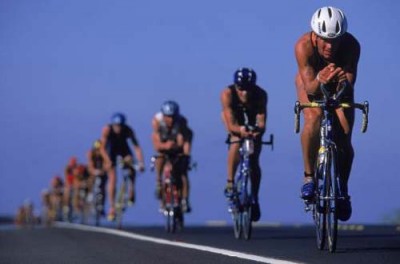
As an indoor cycling instructor, you’re going to find a large percentage of your students dabble in triathlon, or engage in it as a serious sport. Either way, you don’t want to be embarrassed by using the wrong triathlon-related words or terms in your class when talking to them about triathlon (including the ever-popular pronunciation of triathlon as “triath-a-lon”).
So to help you look better and converse intelligently and confidently with your indoor cycling students who are triathletes, this is Part 5 of a five part series called “Tri-Lingo 101” that will teach you how to use the correct triathlon terms. In this article, you’ll learn common triathlon race terms. Without further ado, let’s dive in!
Aid Station: Typically every 1 mile to 1K on the run and every 10-20 miles on the bike, there will be an aid station with gels and water. Plan for these when packing your race fuel and hydration.
Marshall: Typically one or several individuals are on the course, ensuring that the rules are followed, and flashing penalty cards at individuals who do not follow the rules. On the bike course, they are usually on scooters or motorcycles. These vehicles are legally permitted to be on the race course and are there for your safety.
Pack: A group of cyclists that forms during the race. It is possible, if each cyclist is separated by 10 meters, for this to be a legal form of racing in a non-draft legal race, but in many cases “illegal” packs form.
Penalty: During a race, if you are caught illegally drafting, littering, cutting the course, passing on the wrong side of the road, or committing any other activity that has been banned by the race director or officiating body, you will serve a penalty, which is typically A) stopping your bike, waiting, and then starting again; B) stopping for 2-5 minutes in a penalty tent; or C) having time added to your finishing time.
Penalty Tent: Also known as the “Sin Bin”, these are commonly seen in Half-Ironman and Ironman events, and are where you must stop to complete several minutes of penalty time if you are caught drafting or littering.
Podium: Typically the first 3-5 competitors in each age group qualify for a podium finish, which typically receives some type of trophy, medal or certificate in addition to a finisher’s certificate.
Slot: In any races that are “qualifiers” for any type of championship, such as Hawaii Ironman World Championships, there are a limited number of allocated slots that are given to the fastest triathletes. Many times, people will wait for the “roll-down” if they did not get a “slot”, which means they may be able to take slots that qualifying athletes turned down.
Special Needs: During an Ironman distance triathlon, there is a point about halfway through the bike and halfway through the run where you can collect a special bag that you have pre-packed with any needs you may have. The bag is given to you by volunteers.
Volunteer: These individuals are not paid and volunteer to do things like building transition area, handing out aid, timing the race, giving out medals, and even working in the medical tent. Smile at them and thank them!
Bio:
Ben is a fitness business coach, triathlon author, and sports nutritionist. If you want more videos, aricles and audios about swimming and other triathlon related topics, visit Ben’s free blog and podcast at http://www.bengreenfieldfitness.com . Also be sure to check out Ben’s endurance sports website Endurance Planet, at http://www.enduranceplanet.com and his Rock Star Triathlete Academy, at http://www.rockstartriathlete.com . Finally, if you want to learn how to grow your fitness business and make more money, visit Ben’s fitness business advice website at http://www.trainfortopdollar.com .
by John | Mar 2, 2011 | Ben Greenfield, Instructor Training

As an indoor cycling instructor, you’re going to find a large percentage of your students dabble in triathlon, or engage in it as a serious sport. Either way, you don’t want to be embarrassed by using the wrong triathlon-related words or terms in your class when talking to them about triathlon (including the ever-popular pronunciation of triathlon as “triath-a-lon”).
So to help you look better and converse intelligently and confidently with your indoor cycling students who are triathletes, this is Part 3 of a five part series called “Tri-Lingo 101” that will teach you how to use the correct triathlon terms. In this article, you’ll learn common triathlon run terms. Without further ado, let’s dive in!
5K: 3.2 mile run or race. Generally the distance in a Sprint triathlon.
10K: 6.4 mile run or race. Generally the distance in an Olympic triathlon.
Aerobic: This term is used to define the intensity of a run that is primarily conversational at a slow, easy pace. Generally, you burn more fat as a fuel and produce less “painful” lactic acid.
Anaerobic: High intensity pace that allows lactic acid to build-up, and can generally not be sustained much longer than a 10K.
Chip: a device worn above the ankle or on the shoe that allows timing during a race or event.
Elastic Laces: The “stretchy” laces many triathletes have on their shoes to allow easy and fast entry into the shoe without having to tie a knot.
Fartlek: A style of running that is “random” or variably paced. For example, a Fartlek run might involve running 5 miles on a trail, and sprinting at various intervals throughout the run. Also known as “speedplay”.
Hitting The Wall: Generally happens about mile 20 of a marathon — depletion of carbohydrate and drop in blood sugar leads to immediate fatigue and loss of energy.
Intervals: Short, fast repeats of generally 30 seconds to 5 minutes, interspersed with easy walking or jogging in between each effort.
Marathon: 26.2 miles. Generally the distance in an Ironman triathlon (and a Half-Marathon is the distance in a Half-Ironman, or 70.3, triathlon)
Pick-Ups: Short accelerations performed during the run, generally to stretch out the legs and prepare them for speedwork or a run. Usually 10-30 seconds long.
Plyometrics: Jumping, bounding, hopping or other explosive movements designed to train the body for reducing ground contact time.
Pronation: The inward roll of the foot as the arch collapses after the foot strikes the ground. Overpronation is excessive inward rolling due to weak support, which can cause many running injuries.
Runner’s High: An intense feeling of exhilaration or being “in the zone” that can occur during a run, usually due to the release of endorphins.
Strides: Similar to pick-ups, but usually performed as intervals (i.e. a set of 8 strides to warm-up prior to a race).
Supination: Opposite of pronation. Outward rolling of foot after foot strike. Less common, but also a cause of running injuries.
Bio:
Ben is a fitness business coach, triathlon author, and sports nutritionist. If you want more videos, aricles and audios about swimming and other triathlon related topics, visit Ben’s free blog and podcast at http://www.bengreenfieldfitness.com . Also be sure to check out Ben’s endurance sports website Endurance Planet, at http://www.enduranceplanet.com and his Rock Star Triathlete Academy, at http://www.rockstartriathlete.com . Finally, if you want to learn how to grow your fitness business and make more money, visit Ben’s fitness business advice website at http://www.trainfortopdollar.com .
by Ben Greenfield | Feb 13, 2011 | Ben Greenfield
As an indoor cycling instructor, you’re going to find a large percentage of your students dabble in triathlon, or engage in it as a serious sport. Either way, you don’t want to be embarrassed by using the wrong triathlon-related words or terms in your class when talking to them about triathlon (including the ever-popular pronunciation of triathlon as “triath-a-lon”).
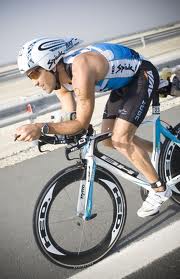
So to help you look better and converse intelligently and confidently with your indoor cycling students who are triathletes, this is Part 2 of a five part series called “Tri-Lingo 101” that will teach you how to use the correct triathlon terms. In this article, you’ll learn common triathlon bike terms. Without further ado, let’s dive in!
Aerobars – Because it is more comfortable and more aerodynamic for triathlon racing, most triathlon bikes are equipped with these type of bars, which attach to the handlebars or stem of a bicycle and allow you to ride in the aero position. These can also be placed on a road bike.
Aero Bottle – Many triathletes attach a water bottle to the aerobars rather than to the down tube or seat tube, which makes drinking in the aero position an easier task.
Aero Position – Also known as the time trial position, the aero position involves riding in a “hunched over” position with the elbows resting on the aerobar pads. This saves your running muscles and helps keep you aerodynamic, especially on the relatively flat bike courses that most triathlons have.
Bonk – Because you cover long distances while cycling, it's easy to get stuck during a ride or race without food or fuel. When this happens, your blood sugar can drop so low that your brain goes into a fog and your muscles quit firing. This is called a bonk. The fix? Eat fast and eat lots. I hate it when that happens… John
Brick – A “Bike-Run” workout, in which you run immediately after finishing the bike leg of a triathlon or a bike workout.
Cadence – The speed of pedaling while bicycling, also known as RPM, or Revolutions per Minute.
Disc – A solid wheel that is very aerodynamic and often used as a rear wheel in triathlons.
Down Tube – The tube of the bike that runs from the handlebars and diagonally slopes down towards your back wheel.
Drafting – Riding close enough behind the cyclist(s) in front of you that you pedaling becomes less difficult due to that rider stopping some of the wind resistance. This is illegal in most triathlons, and you must typical maintain 3-4 bike lengths behind the person in front of you.
Dropped – When you're riding with a group of cyclists who are drafting, and you eventually get too far behind to be in the draft, you'll find that the gap increases between you and the group, pedaling becomes harder, and you can't catch up. You've been dropped.
Hammer – To pedal very hard, typically for an extended period of time (i.e. “That ride was a Hammer-fest!”).
Seat Post – The tube on the bike that attaches to your saddle, and is typically adjustable up and down. On some triathlon bikes, it can be cut.
Spin – To ride easy, in recovery mode, or pedal with very low resistance. The opposite of hammer.
Time Trial – Typically a 20-180K ride at the maximum sustainable pace, usually performed in the aero position. The bike leg of most triathlons is defined as a time trial.
Top Tube – The tube that extends from the handlebars, between your legs, and horizontally back towards the back wheel.
Ben Greenfield is a fitness business coach, triathlon author, and sports nutritionist. If you want more videos, aricles and audios about swimming and other triathlon related topics, visit Ben’s free blog and podcast at http://www.bengreenfieldfitness.com . Also be sure to check out Ben’s endurance sports website Endurance Planet, at http://www.enduranceplanet.com and his Rock Star Triathlete Academy, at http://www.rockstartriathlete.com . Finally, if you want to learn how to grow your fitness business and make more money, visit Ben’s fitness business advice website at http://www.trainfortopdollar.com .

