by Joan Kent | Oct 6, 2017 | Health and Wellness, Master Instructor Blog

Image from http://postercabaret.com
By Team ICG® Master Trainer Joan Kent
As many of you know, cholesterol is absolutely vital to our lives and our health. It’s a waxy, pearl-colored, solid alcohol that’s produced primarily in the liver, but is so important every cell in the body can make its own.
Cholesterol has widely varied and important functions. It’s the precursor of all steroids: adrenal hormones, sex hormones, vitamin D and bile acids. It helps to structure cell membranes and modifies their fluidity to compensate for diet-induced changes. It helps to transmit neural impulses. It makes skin “waterproof.” It helps to transport triglycerides. It can function as an antioxidant.
Classifying cholesterol as good or bad hinges on whether it’s linked with cardiovascular disease or protects from it. A recent article states that high HDL (“good”) cholesterol doesn’t make up for high LDL (“bad”) cholesterol. This post is about the real cause of high LDL.
Many people think that eating fats raises serum cholesterol. When they try to lower their cholesterol, they reduce dietary fats. But dietary fat doesn’t necessarily raise serum cholesterol.
Cholesterol synthesis is controlled by an enzyme (HMG-coA-reductase) that’s triggered by insulin secretion. So foods that raise insulin secretion will increase serum cholesterol. Saturated fat raises cholesterol, but not because it’s fat. It raises cholesterol because it stimulates insulin secretion. Unsaturated fats don’t.
Insulin-triggering foods are more likely to increase our cholesterol than healthful fats. It’s just another way that sugars and processed carbs — and the high insulin secretion they promote — turn out to be bad for us. Good fats help us train well and stay healthy, so the distinction is important.
It works like this. Say you’ve just treated yourself to a lobster — cholesterol and all — with nothing else. As you digest, the cholesterol is released into your bloodstream. Special receptors, found in each cell, surface and pull cholesterol into the cells to be used in the ways listed above. As cholesterol is pulled into the cell, two things happen: 1) cholesterol production inside the cell stops, and 2) serum cholesterol drops because the cholesterol has been transported into cells.
What if you’ve had more than lobster? Say you’ve also consumed some serious insulin triggers: a drink, melted butter, bread and more butter, dessert. The insulin those foods stimulate starts cholesterol production within your cells. As a result, the special receptors don’t need to pull cholesterol from the bloodstream into the cell because the cell is making its own. Serum cholesterol remains high.
So why is LDL bad and HDL good? Because of their functions.
HDL is a scavenger. It gathers excess LDL and takes it to the liver to be broken down, and to the intestine to be excreted.
LDL transports vital cholesterol through the bloodstream to all of the cells that send up receptors to pull it inside. Along the way, though, cholesterol can stick to arterial linings and create plaque formations. That negative process is known as atherosclerosis. The plaque itself is a combination of LDL and sticky platelets.
If you’re wondering what makes the platelets sticky, sugar does a spectacular job. And the combination of higher LDL/lower HDL is written up in science journals as the expected result of a low-fat, high-carb diet.
Knowing this is important, so we don’t eliminate the wrong stuff. A previous post (Controlling the Sugar/Fat Seesaw) listed several benefits of eating healthful (unsaturated) fats, including enhanced endurance. Whether your students ride outdoors or stick to indoor cycling, cutting way back on good fats won’t help them lower LDL-cholesterol. And it may hurt their endurance. The best thing for them to do is keep the good fats, limit saturated and trans-fats, and cut down on junky carbs.
A few years ago in California, a U.S. national cycling champion taught a workshop on racing and recommended a high-sugar diet: “All the things you think you can’t eat, ladies!” She listed cookies, cupcakes, pastries, donuts, chocolate milk and more. I would disagree with her approach, which is probably all too common.
But here I’m simply presenting a way your students can lower “bad” cholesterol without decreasing endurance. Good fats can stay; bad fats and carbs should go. And sugar is ugly.
Save
by Joan Kent | Oct 4, 2017 | Best Practices, Health and Wellness, Master Instructor Blog
Early cycling classes. Late nights. Approaching holidays. Fall quarter can be a busy time, and it might be difficult to get enough sleep each night. But it's important to do so because sleep deprivation affects several factors related to health and weight management.
For one thing, sleep deprivation, even short-term, can lower leptin levels. Leptin is a powerful satiety hormone that tells the brain/body it’s had enough food and doesn’t need more. (Leptin’s functions are far more complex and diverse than these, but for the purposes of a short post on sleep, health and weight, this will serve.) The name leptin means “thin”, so if it’s not working properly or is in short supply, it can create the opposite effect.
Another thing inadequate sleep can do is raise levels of ghrelin. The hormone ghrelin works in opposition to leptin and stimulates the part of the brain that promotes eating. This “monster” hormone increases appetite, decreases metabolic rate, and even promotes a preference for fats.
Because ghrelin has such a negative influence on appetite and weight, it pays to know what else triggers it. A high-fat diet (even a high-fat meal) can do that, so keep your fat intake moderate. The type of fat — saturated or unsaturated — doesn’t seem to affect ghrelin levels but, for health reasons, unsaturated fats — omega-3s and omega-9s — are recommended. One obvious exception is raw, organic coconut oil: it’s saturated but extremely healthful. Still, use it moderately.
Sleep deprivation can also reduce melatonin. When we sleep, the brain releases melatonin, an anti-inflammatory hormone that can help heal any number of things in the body. Since inflammation is the source of most (some sources say ALL) disease, getting enough sleep is a key to staying healthy.
Getting too little sleep can trigger pro-inflammatory chemicals that make us less responsive to insulin, and that's never a good thing – either for health or for weight. Insulin resistance underlies many metabolic disorders. Those disorders include diabetes, hypertension, high triglycerides, high cholesterol, heart disease, breast cancer, colorectal cancer, polycystic ovary syndrome and polycystic kidney disease. Because these disorders tend to occur in clusters, someone with one is likely to have several.
Insulin resistance can contribute to weight gain, as well. If you have students who struggle with their weight, this is worth passing along to them. We typically hear that insulin resistance is the result of obesity/overweight. That’s true, but insulin resistance can actually cause overweight, too. I’ve mentioned this in previous posts, but here’s a brief summary. Body tissues differ in their sensitivity to insulin. The primary site of insulin resistance is skeletal muscle. Insulin resistant muscle doesn’t respond to insulin, so glucose isn’t transported to muscle tissue and is instead transported to fat deposits. In short, anything that decreases insulin sensitivity is bad news for health and for weight. (Diet can be a significant cause of insulin resistance, but we’ll limit this article to the effects of sleep deprivation.)
So the bottom line is pretty straightforward. Be sure to make sleep a priority, even when — or especially when — you're busy.
Save
by Dennis Mellon | Sep 27, 2017 | Master Instructor Blog, Music, Training With Power

Have you ever felt the “Power of 3”?
If you were to do a quick web search you would see that 3 is a very special number. It’s a favorite of storytellers; the three pigs, the the three blind mice, Goldilocks and the three bears and the Three Musketeers. It’s used in faith; the Father, Son and Holy Spirit as well as Mindy, Body, Spirit. You have the 3 olympic medals; gold, silver and bronze. In geometry the three sided triangle is considered the most stable shape. Photographers, artists and designers use the rule of thirds.
In strength training, many believe, three sets are optimal for strength gains. When participating in an indoor cycling class there are only three riding positions; seated with a fast cadence, seated with a slower cadence and standing. Numerous studies have shown that the brain responds to 3 in a positive way.
When writing my class profiles I like to take advantage of the “Power of 3”. I often use 3 song sets, the 3 riding positions and repeat intervals 3 times. I find the “Power of 3” to be, a POWERFUL technique.
[wlm_private ‘PRO-Platinum|PRO-Monthly|PRO-Gratis|PRO-Seasonal|Platinum-trial|Monthly-trial|PRO-Military|30-Days-of-PRO|90 Day PRO|Stages-Instructor|Schwinn-Instructor|Instructor-Bonus|28 Day Challenge']
Attached to this post is:
A detailed set profile to print
3 song harmonically mixed track to download Right Click > Save As / Save Target As to download. Open in iTunes and then you'll see this in your Spotify Local File folder.
Recording of me teaching this 3 song set in a class.
Save
Podcast: Play in new window | Download
by Jim Karanas | Aug 18, 2017 | Instructor Training, Master Instructor Blog, Teaching Intro Classes, Zone based Heart Rate Training

By Team ICG® Master Trainer Jim Karanas
This protocol, developed by Team ICG®, outlines a “first HRM experience” to help the student connect HR with perceived exertion. The last post covered the warm-up and Level 1. From here, the progression builds to greater levels of effort.
Level 2
This is where the student’s sensitivity will grow the most. A novice is least able to feel the subtle changes that occur at this level. Level 2 is the point at which a training effect, i.e., improved functioning of the cardiovascular system after recovery, begins to take place. Level 1 is not intense enough to produce such a fitness effect.
Still maintaining 90 rpm, have the students raise the resistance slightly. At some point, the low muscle load will lead to a combination of rhythmic breathing and light sweating. The sensation of a training effect is quite noticeable to the experienced exerciser. There’s a feeling that continued training at Level 2 would make you stronger. Over time, the practical consequence of the training effect is a reduction in force necessary to apply power, and you can feel this begin to happen at level 2.
This sensation is hard to pin down for beginners. They may notice an amplification of their senses, a tingling throughout their body, or emotions. They may feel more relaxed and peaceful, even though their HR has gone up. They may smile.
In order to improve, musicians practice scales. There’s awareness that practicing scales will make them better musicians, so they don’t mind doing it. That’s the training effect. Level 2 feels like the beginning of practice that you know will bring improvement.
As an instructor, you must spend time at this intensity to recognize and appreciate the sensations fully so that you can accurately describe them to your students. Then relate them to HR. Maintain for 4 minutes.
Level 3
Continuing at 90 rpm, add resistance to raise HR again. There should be an immediate shift in the students’ feeling of effort. It now takes work to maintain 90 rpm. There may be an immediate sensation of difficulty, e.g., burning in the legs and/or breathlessness. This should last no more than one minute, although Level 3 continues past that.
Some students will start to breathe rhythmically and exhale forcibly to mitigate the difficulty. This natural mechanism dispels carbon dioxide and stabilizes blood pH. Demonstrate rhythmic breathing with forceful exhalations and explain that it will alleviate the feeling of difficulty, so they’ll feel better. Have them notice, or even induce, synchronization between their breathing and their cadence.
Have them settle into a new, higher target HR. This HR needs to be at a level that they could hold for about an hour, but with difficulty. “There are a lot of HRs you could hold for an hour, but we’re looking for the highest one you think you could maintain for that length of time.”
This level of effort feels like working out. It’s sustainable for an hour or so and isn’t painful, yet requires rhythmic breathing and focus to maintain comfortably. Maintain it for 4 minutes.
This is a good time to discuss what aerobic really means and how the increased workload has increased the demand for oxygen.
Before this segment is over, let them know what’s going to happen next: you’re going to raise their level of effort to threshold. (You may want to modify some students’ training, depending on fitness.) Threshold, in this case, is the level of effort at which the body’s ability to transport oxygen to the working muscles becomes compromised, resulting in an increase in anaerobic metabolism and a state of continuous discomfort.
My post “Why Do I Have to Hurt?” mentions that we’re not neurologically wired to accept pain willingly. Unless we’re completely conscious of what we’re doing, we’ll unconsciously find some way to offset the work and mitigate the pain. (Reducing cadence is the most typical example.) Let them know that they’re about to go into hurt, and that it’s part of training. If they’re not up for it, have them stay at their present HR.
Level 4
While maintaining the same resistance, have them increase their cadence to 100 rpm. You must use Beatmatch; otherwise, they won’t pedal hard enough. “This time, you’re at a level that you could hold — with difficulty — for about 30, maybe 40, minutes.”
Point out that this should change a number of things in the body: certainly breathing (they may find it difficult to get enough air), body temperature (pouring sweat), even thinking (conflict and doubt). An internal monologue may begin.
Encourage them to maintain focus. There are various names for this level of effort — anaerobic threshold, lactate threshold, ventilatory threshold — and each of them means something slightly different physiologically. For now, we’ll just call it threshold. It is not an exact number and refers to the heart rate below which you can keep exercising for a sustained time (with effort), and above which you tire very quickly. Thirty minutes seems like an eternity.
Have them pick their target HR and maintain it for 4 minutes. It’s easy to recognize this level of effort in a student. No one should seem distracted. Also, a look of true anxiety is difficult to fake.
It needs to hurt right away. The hurt is manageable, but they’re never comfortable. If you were to approach the student and ask how he/she is feeling, the reply would be, “Please get away from me.” (Perception of this level may vary with fitness.)
If they’re doing it right, it’s not a good time to discuss or teach anything. Remind them to stay at their target HR, maintain the increased pedaling speed, and breathe out forcibly in a rhythm. If they can’t maintain 100 rpm, have them adjust their resistance slightly but maintain their target HR.
Level 5
Tell them that it’s now time to peak their HR, to take it as high as they can that day. They need to go above threshold. Add resistance and maintain 100 rpm to raise HR for the final stage. Alternate a 30-second standing jog at ~90 rpm with 30 seconds seated at 100 rpm — but at full effort. The actual standing cadence is less important than the effort, but it must raise their HR. Many students, however, will drop their cadence because they’ve stopped caring about what they’re doing. It hurts too much. So the best cue is to make them jog as fast as they can. The effort is barely manageable and not sustainable for more than a few minutes.
Do this for only 3 minutes. Every time they stand and jog, they attempt to raise the HR higher. Since they’re holding this for 3 minutes, it will be uncomfortable and pretty much about survival. Cadence will keep slipping. They’ll experience failure. Keep them checking their HRMs so they remember their peak HR. Play razor-sharp, acerbic music with a rhythm to which they can Beatmatch when standing. Tell them to stay tough and not give up until you cue it, even if they hit failure.
Recovery
Have them regain composure quickly. After they’ve rolled for a few seconds, have them take off all resistance and bring the spin up to 100 rpm. It should feel easy.
Your students now have a numerical representation to match a perceived awareness of their exercise HR range. They’re likely to have come close to max HR, which can be used to help determine zones, depending on your method.
Training zones can now be related to a perception of effort. This will eliminate ambiguity when it comes to determining the correct level of effort for a designed training.
Have them ride with good form for 10 minutes as they spin their legs. If they start to get cold, have them add a little resistance. Review the various levels of effort (including resting and warm-up) and have them recall both the perception and the approximate HR for each feeling.
Originally posted 2012-10-01 07:56:16.
by John | Aug 6, 2017 | Featured Instructor, Instructor Training, KEEPING IT FUN, Master Instructor Blog, Your Fitness Business
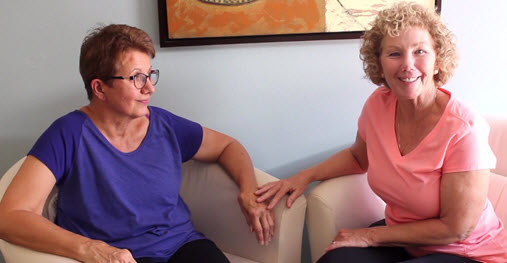
Hi, my name is Kathy Helmuth and I am excited to share a wonderful new program called Parkinson’s Indoor Cycling.
UPDATE September 25, 2014:
We are now offering an ACE approved Parkinson’s Cycling Coach training program. To learn if you qualify click here.
As group cycling instructors, we try to educate and encourage success in our indoor group cycling classes. We see those moments of achievement and we are excited for the participants who have reached their goals. In the Parkinson’s Cycling Coach classes, those moments of achievement are multiplied by 10.
Parkinson’s Disease can rob a person of smell, facial expression, movement, and flexibility.
Imagine this…. A person with Parkinson’s Disease comes into your indoor cycling class using a cane or a walker. He or she registers for the program, completes the necessary paperwork, and goes through the initial testing. You notice that this individual shows very little expression on their face.
After riding a few classes being coached at the proper intensity and cadence, that individual no longer needs a cane or walker. That person is walking with an improved gait and has better balance and flexibility. They have a smile and some expression back on their face!
Or imagine this…. a person diagnosed with Parkinson’s Disease not being able to smell the aroma of chocolate chip cookies baking in the oven. After a few Parkinson’s Cycling classes, that individual can now able to smell and taste those delicious cookies.
I have really enjoyed the opportunity to help these Parkinson’s individuals feel better and move through their daily activities with greater ease.
“Feeling normal” is the way one of our riders describes why she loves this program. In my interview with Sharon in the video above, she says that the pedaling class makes her “feel normal….like everyone else”.
I hope this helps ignite the compassion you have for helping others. Seven to ten million people have been diagnosed with Parkinson’s Disease around the world.
If we could provide you with the training you needed, would you be willing join us as a Parkinson's Cycling Coach?
We'll be offering a coaching certification in early October.
Click here to subscribe to our notification list.
Originally posted 2014-09-15 08:08:51.
by Tom Scotto | Aug 5, 2017 | Master Instructor Blog
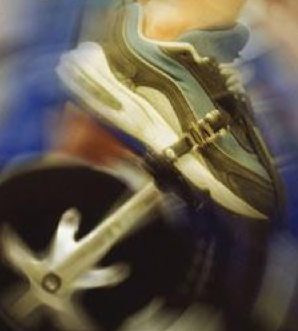 With the increase of those interested in getting a healthy start to 2012, more and more people are joining health clubs and attending indoor cycling classes. This is great! It provides a perfect opportunity to foster good technique and skills as these new members acclimate to our classes. One topic I have found myself addressing more than usual lately is proper footwear.
Multi-Purpose?
It is definitely a delicate balance at times as we try to encourage new or beginner riders to regularly return to class while guiding them toward good clothing and equipment choices. The more prominent issue lately is people riding with running shoes. I totally understand their mindset and appreciate their determination. They are starting this new exercise routine, which may incorporate running, weight training and cycling. Without understanding the nature of cycling, it would seem logical to just purchase a pair of running shoes and kill 3 birds with one stone (a terrible expression). As we know, this approach is not ideal when cycling is concerned.
Protect the Feet
As many of us know, the forces applied to the feet during an indoor cycling class can be great. These forces can be created by both resistance and speed alike. Simply put, if someone is wearing a running shoe, which is probably one of the worst options (besides those barefoot running shoes and Vibrams), the sole will flex placing stress on the feet. Under heavy resistance, a shoe with a soft sole will bend over the pedal, straining the intrinsic muscles of the foot plus ligaments, tendons and joints. In a similar fashion, high speeds can encourage riders to dorsiflex (angle their foot and toes upward) in order to stabilize the pedal. This exaggerated (and unnecessary) dorsiflexion can stress the extensors on the top of the foot and lower leg. To protect the feet from injury (and fatigue) from these strenuous forces, cycling shoes were created with stiff soles.
You Don’t Even Need Cleats
It can be very intimidating to learn all there is to know about the different types of cycling shoes, cleats, pedals, etc. Even though to us it appears very simple, to a person new to exercising in general, this can be overwhelming. We toss out terms like “SPD pedals” and “clipless”. Just think how confusing that can be…you “clip” into your “clipless” pedals. I try to put new riders at ease and tell them the most important reason to purchase a cycling shoe is to protect the feet. So I will often encourage the seemingly overwhelmed person to just by the shoes WITHOUT the cleats. I’ll of course educate them on the benefits of having a cycling shoe designed for walking when off the bike and write down “SPD” for them as they venture to the wilds of the local bike shop (where a techy geek with too much knowledge and not enough education may lurk in the darkness). Once they wrap their minds around the shoes and experience the vast difference, we take the next step toward cleats.
Bring on the Power and Performance
The rigidity of the soles on cycling shoes provides a more stable platform for delivering force to the pedals. Remember the foot is a “lever” and both the ankle and attachment to the crank arm (pedal axle) are the fulcrums. If the sole of the shoe is not firm, the power being delivered to the pedals will be affected.
In addition, without proper support or a firm platform, the muscles of the feet can fatigue. This muscle fatigue can lead to burning, pain and/or injury.
SPECIAL NOTE: If your cycling shoes are more than 3 years old, consider getting a new pair. Over time (considering the amount of use), the upper part of the shoe can stretch and the sole of the shoe can develop small, often unseen, cracks in the plastic, or breaks in the fibers (carbon soles). As the shoe loses its rigidity, its ability to support the foot and transfer power to the pedals diminishes.
————————————————
Whether it is spurring on the newcomer or persuading the veteran rider, help them understand the safety and performance benefits of using proper cycling shoes. If all else fails, convince them to at least switch to a tennis or basketball sneaker, which provide far more support than running shoes.
Originally posted 2012-01-26 17:14:35.