
by John | Jul 26, 2017 | Instructor Tech Help, Instructor Training, Product Reviews
I realize that not everyone has access to (or interest in) Spotify. And I'm guessing that the majority of successful Instructors are using the combination of iTunes and an iPhone to deliver their class music. If the later category includes you, this new My Cycle Class iPhone App maybe of interest.

Paul Surette developed myCycleClass to simplify creating a class profile using his iPhone and then guiding him with movements & cues that corrispond to each song.
Not sure if it's just me, but there is often things not obvious (read frustrating) when I first use any App. In the case of myCycleClass it took me a long time to figure out how to actually start the class 🙁 You click the + in the top right corner. Once I figured that part out it seemed to work well, but I'll admit that I didn't try it in an actual class.
You start by adding your typical movements > use the + button to add new.

Then common cues

Using the setting tab you can import iTunes Playlists. Select a playlist and you can add movements and cues.
When you're ready to start class you hit the + sign and are given an option to adjust the class length countdown timer.
One handy feature is you can easily email your playlist / profile to others.

If you are into techie stuff like this and appreciate the structure myCycleClass would bring to your teaching give it a try and let me know your results.
An alternative iPhone App is ClassBuilder from Cycling Fusion. Yes there are considerable differences between the two. The primary difference is myCycleClass is designed for a Movement based class where ClassBuilder is geared toward Intensity based classes.
Originally posted 2012-07-03 09:02:41.

by Joan Kent | Jul 24, 2017 | Health and Wellness
The #1 fear most people have when it comes to sugar addiction is not being able to quit eating sugar. More accurately, they fear how terrible they’ll feel when they stop eating it – and fear that will drive them back where they started.
The good news is it doesn’t have to be that way.
It took me quite a long time to get to where I am today with my sugar addiction – off sugar and with no cravings. But let’s be fair – I had no one back then to give me specific instructions or helpful coaching.
Instead, I was reading articles in science journals that sounded something like this: “Radio assays were performed on rat brain….”
Yes, the information was that exciting – and that remote from my personal struggles with sugar. For me, quitting sugar was about putting bits and pieces together and turning them into a formula to follow.
Now that sugar is recognized as addictive – and sugar addiction is recognized as problematic and widespread – books and guidelines on quitting are everywhere. I’ve written both.
So how long DOES quitting sugar take?
Getting rid of cravings for good will take a while, but quitting takes much less time. The answer is less than a week – if you do it right.
I’d love to help you do it right. Please visit www.FoodAddictionSolutions.com/Coaching and request your free Last Resort Nutrition® Cravings-Crusher Consult. Find out how great you can feel and how much energy you can have when you’re off sugar and free of cravings!
by Tom Scotto | Jul 24, 2017 | Master Instructor Blog

The Great Chris Boardman
Should people ride in an aero position during indoor cycling classes? I’ve been asked this numerous times by instructors and have battled with more than a few riders over the years on this very subject. My answer, NO. Here’s my take on it:
(1) Safely / Biomechanics
This may be the most convincing reason aero positions are not recommended for indoor cycling classes, and the most difficult to articulate. First, aggressive aero positions require much more specific fitting and postural alignment due to the angles, flexion and forces being applied (pelvis / spine). Most indoor bikes barely have enough adjustment to get into a proper riding position, so a rider would be hard pressed (or extremely lucky) to find a aero position that was appropriate. I can find myself spending 2-3 hours performing a bike fitting for an athlete on a actual Triathlon or Time Trial bike to obtain proper posture and alignment. Many indoor riders don’t realize that their back (spine) is not in proper alignment when they ride in an indoor class. The back should be relaxed and relatively flat from the pelvis to the shoulders. Unfortunately, it is common for riders to try and ride in an aero position in class and either (1) collapse their shoulders and sink down, (2) improperly flex at the thoracic (upper) spine and (3) improperly flex at the lumbar (lower) spine. To add insult to injury, some riders also attempt to look UP at the instructor while in this aero position causing the cervical spine to over-extend. Although some indoor bikes provide this pseudo-aero handlebar position, to date, I’ve not seen an indoor bike equipped with proper support for the fore-arms in order to use the position. This introduces more alignment and stability issues. Before your riders get the smart ideal to bring in support for their forearms, read on.
The second consideration is the fact that most indoor bikes do not move “side-to-side”. The risk of riding in an aero position (on any bike) is that you are creating another contact point with the bike (elbows/forearm). With the forearms resting on the handlebars (no elbow joint movement), the shoulder complex is isolated. This is not as detrimental on the shoulders as it is on the spine. With the shoulders isolated, the spine is now forced to absorb a greater amount stress due to pedal forces, as well as torsion and flexion caused by the movement of the hips. Since real bikes move under the rider (side-to-side), these forces on the shoulders, spine and pelvis are greatly reduced. Consequently, indoor bikes don’t have lateral movement which places the shoulders, spine and pelvis at risk, particularly under heavier resistance.
(2) Is He/She a Triathlete?
This is a “no-win” argument for the rider. If they are not a triathlete, there is no reason for them to attempt to develop the functional movement of a triathlete. Plus, they would not generally have the acquired muscular conditioning and postural alignment (that triathletes do) to ride safely in that position on an indoor bike. AND, if they were a triathlete, they would know how specific their aero position is and would never attempt to replicate it on an indoor bike.
If you can’t convince them with the above, try this…
I shame them into getting off their forearms. I’ve used a similar tactic to deal with cadence issues in class. I let everyone know (but intended mostly for the rider RESTING ON THEIR FOREARMS!), that riding with their forearms rested on the handlebars in not safe on indoor bikes. Triathletes know this which is why they don’t do it indoors. AND it is often a sign that a rider is tired and not able to hold their “proper” riding form. This way EVERYONE in the class knows that a person riding on their forearms, must be feeling weak and tired. No one wants EVERYONE “thinking” you may be weak, tired or have bad form.
I really appreciate the instructors who are constantly pursuing deeper knowledge into topics like this (besides the fact that it is one of my favorites). As instructors, we should be required to know best practices and safety issues of the disciplines we teach. It is great to see the quality of our industry improving and the integrity of instructors increasing.
Originally posted 2011-03-07 16:07:42.
by Barbara | Jul 23, 2017 | Instructor Training
I had been to plenty of cycling classes before this one. I had sat through the militant instructors, rigid with instruction. I had pedaled through classes where the coach was crouched, hidden behind his music. But here I sit, perched on a bike in the center of the back row, vowing to myself that this would be the last instructor that I tried out. And in she walked–her confidence and comfort oozing out. I could tell, even from my seat in the back row and only from her entrance, that she was the instructor that I had believed existed only in myth. But there she was.
​Over the next few months, I attached myself to her classes and finally realized what it was about her that drew me in. It was her ability to blend the gentle with the firm. Before class started, she would move throughout the room, helping people set their bikes up properly, almost whispering them the instructions, making each person feel like they were the only rider in the room. This was the gentle–the ability to quietly coach in the time before the first beat dropped out of the sound system.
And then there was the firm. Once she was in the saddle and the pedals started to fly, her ability to coach and cue the ride was unmatched in the local market. Her vocabulary was rich with adjectives, and her verbs were more than variations on “be.” So, “You are climbing a mountain” becomes “You grind and claw your way up the jagged side of an almost vertical slope.”
Once the ride was over, she met each of us at the door to offer, again, almost-whispered encouragement. So, if I were to offer advice on captivating your audience, I would have to say that it starts before class, and it extends well beyond the cool down. And it is all about the balance.
Originally posted 2011-06-10 20:37:05.
by Christine Hawthorne | Jul 21, 2017 | Instructor Training, Music
Movie soundtracks are great places to find fresh new tunes for your cycling classes. If you want to incorporate this type of music into your classes but you're not sure where to start, Hans Zimmer is your guy. He has composed music for over 150 films and he's one of my favorites when I'm searching for a serious climb or a chase sequence with a fast flat road. No lyrics paired with the orchestral sound allows your riders to focus on the ride and really work on form and function. His newest work is from the motion picture everyone is talking about, Dunkirk. Clocking in at around 8 minutes, Supermarine is one of my favorite tracks. (Also check out Impulse and Home.)
Starting on a flat road, bring it up to a climb (alternating seated/standing) at around the 2:00 mark, adding gear every minute. Things get serious in the final two minutes. Push with heavy gear all the way to the finish!
Supermarine by Hans Zimmer from Dunkirk (The Original Motion Picture Soundtrack) iTunes link
by John | Jul 21, 2017 | Instructor Training
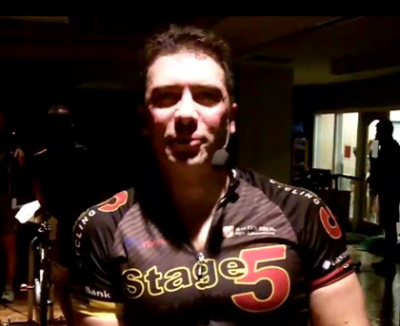 We've had a lot of requests for videos of complete Indoor Cycling classes and I can understand why. It's simply not practical to travel to Boston to experience one of Tom Scotto's classes, so a video you can watch on your computer or iPad/smart phone becomes an option. I could see training by myself with this while I learn the class and Tom's cues. The lighting at the Harvard Square Wellbridge club left a lot to be desired and at the same time it conveyed a sort of MTV music video feel to it. Enjoy!
Here's the class profile to print.
Download the video here. (Right Click – Save as)
You will also find it in your ICI/PRO iTunes feed.
// < 