Not ANGRY like; “I want to punch your lights out!” More like; “there comes a time where you want to turn the pedals with anger.” I like to use songs that communicate this type of intensity in my class when I'm looking for a very focused, very determined effort.
Here is a good example of what I mean:
Do you have other suggestions? Leave them as a comment so we can build a list for others to use.
Being a Power Training fanatic that I am, I also regularly monitor the forums and various blogs about power on the internet. I came across a fantastic thread of conversations on the Google Wattage forum (a place where serious cyclists, with serious money, talk about serious power). If you don’t ride outside, you might not be aware that there is a general disdain from cyclists about indoor cycling, and especially Spinning®. They lump all indoor riding into the same bucket and consider it a last resort for getting their ride on.
Unfortunately, they have missed more than the point. If you are a member of ICI/PRO, you already know how much fun riding indoors can be. This alone is a good enough reason to give indoor cycling a second look if you live in a climate that locks you out of riding outside for months on end. However, it’s the performance improvements that are the real draw of indoor cycling. There a number of cycling workouts that are nearly impossible to accomplish outside. This applies to both Heart Zone® centric workouts as well as Power workouts. Many of these workouts are designed to accomplish some of the coveted objectives of higher VO2, greater power, and an elevated threshold.
* Your speed on a bike decreases about 2% for each 1% of body weight lost through dehydration
* By the time you feel thirsty, you can already be at 2% body weight loss
* A 3% weight loss indicates dehydration has occurred
* Loss of fluid during exercise varies, but averages about 34 ounces per hour (3x that much in hot and humid conditions!)
* Hyponatremia, which is just as dangerous as dehydration, is a term used to describe “water intoxication” and can occur with excess water intake
* Acclimatized individuals who are used to training in hot climates or hot rooms can reduce fluid loss by up to 50%
Based on these facts, it would pretty important to make sure your indoor cycling class knows all about proper water intake.
After you’ve introduced the facts above, teach your class the proper formulas and rules for determining regular daily hydration and exercise hydration: (more…)
“Sometimes I can’t catch my breath when I’m riding, especially in the winter. I’ve never been told that I have asthma before — but could that be what this is?”
– J.S., Asheville, NC
Melissa Marotta writes:
First off, sorry to hear about your discomfort! Feeling like you can’t breathe is an incredibly scary experience for a lot of people. There are a number of conditions that could produce symptoms like yours, including the “exercise-induced bronchospasm” (formerly called “exercise-induced asthma”) phenomenon that I will describe in this article — so I encourage you to see your physician to help you figure out what’s going on for you, personally. This way, you can sooner get the appropriate treatment you need.
Many people have heard of exercise- or exertion-induced bronchospasm (EIB) but there is often some confusion about what the term actually describes. It refers to narrowing of the airways in association with exercise, both amongst people who have asthma (90% of patients with asthma experience an exacerbation of symptoms with exertion) and amongst people who do not. Research suggests that greater than 10% of general population may also suffer from EIB. Studies of elite athletes report a prevalence of EIB between 11-50%1. At particular risk are those athletes engaged in activities that require large volumes of air to be moved (i.e., cyclists, runners, swimmers, skiers, rowers, etc.) and those who exercise in cold, dry, or polluted (i.e., indoor rinks) conditions2.
Symptoms of EIB can be quite varied, let alone vague (i.e., non-specific discomfort, breathlessness, fatigue that might be “expected” under conditions of heavy exertion). Thus, EIB often goes undetected. Athletes, in particular, may be less likely to complain about discomfort1. That’s why it’s extremely important that you are aware of this phenomenon, so as to help those you coach (or yourself!) to recognize it and seek appropriate diagnosis and treatment.
Tomorrow we officially hit the half way point of our 16 week Winter Training program at the Global Ride Training Center. We’ve employed the Keiser M3 power indoor bikes and Cycling Fusion principals to maximize our use of the indoor environment. However, the foundational basis of all this training is anchored in the most important engine we are tuning – the cardio vascular system. For that, we are major proponents of the Heart Zones Training methods. Twenty four of us are preparing for personal bests and new levels of performance in the great outdoors on two wheels.
Those that have read my Cycling Fusion manifesto know that I’m passionate about pulling the indoor and outdoor world of cycling together. In our 16 week Winter Training program we have a third who have never done any significant rides outside, a third who are on my USA Cycling race team (men and women sanctioned races only), and a third who are just avid cyclists. Most however, have never really trained inside, so this program has been a big experiment for the bulk of the class.
Consequently I felt it important to give them some motivation to fuel the second 8 weeks since we are moving out of a 90% focus on Heart Zones training, and moving into a 75% focus on Power Training. Nothing speaks louder than results, so I retested some of the class to show the real facts of our progress so far. I retested a small sample, since the entire class will be retested at the end of the 16 weeks.
Our very own ICI/PRO Team Member Barbara Hoots announces;
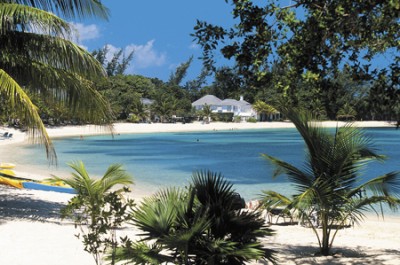
First Officially Licensed Spinning® Resort in Caribbean
(I know how hard she worked and all the hurdles she overcame to make this a reality. I'm very proud of her + it's going to be a great place to teach! Info about teaching here in exchange for an all-inclusive vacationHERE – John)
Find a hammock for after your class...
From their press release:
Rose Hall, Jamaica (February 2009) – Half Moon, the luxury resort located in Rose Hall, Jamaica, has teamed up with internationally acclaimed STAR 3 Spinning instructor Barbara Hoots and Mad Dogg Athletics, developers of Spinning® to offer guests the popular cycling-inspired Spinning® classes. This will make the luxury resort the only Caribbean resort to offer this popular fitness programme.
Equipped with 10 custom-designed Spinner® bikes and state of the art sound system in specially-designed Spinning studio, guests of the 400-acre resort can choose from three unique tours that invite them on a virtual experience of Jamaica.
The programmes Climb to Blue Mountain, No Problem Tour and Adventures in Negril were developed by Spin veteran Barbara Hoots and feature specially created soundtrack to inspire and energize riders. (more…)




 Being a Power Training fanatic that I am, I also regularly monitor the forums and various blogs about power on the internet. I came across a fantastic thread of conversations on the
  Consider the following facts: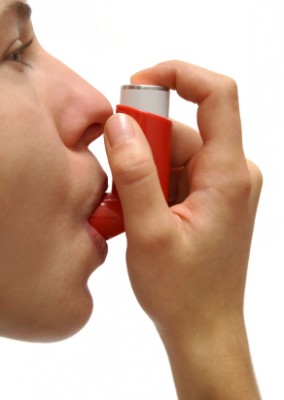
 Tomorrow we officially hit the half way point of our 16 week Winter Training program at the