Ben Greenfield is our newest ICI/PRO Team Contributor. Through his new RockStar Triathlete Academy, Ben has promised to help me with my training for the three Multi-Sport events I have committed to this summer.
Besides all of his education and experience as a competitive endurance athlete Ben is an Indoor Cycling Instructor just like us. He knows how to use a Spinning Indoor Cycling class to train for competitive endurance events and how to build a class that focuses on training (what I call Indoor Cycling 2.0). You can learn more about Ben here.
Listen to the Podcast below or subscribe for free using iTunes or Zune.
This Podcast is was last published on Jan 1, 2010, I have updated it with our new Podcast host information and I am representing it now. The product ChestLick is no longer available, but we want to keep the work available. I hope you enjoy it, Joey
Happy New Year!
I don't think I have done this before. I'm going to suggest that you forward this interview on to your participants & fitness friends to hear. It's a compelling story of the importance of wearing and using a Heart Rate Monitor + an excellent example of being your very own medical advocate!
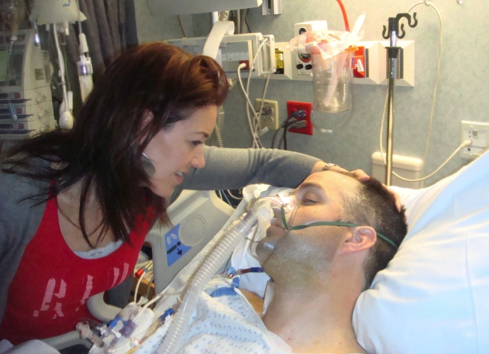
Imagine you are married to an IronMan distance endurance athlete. You learn that instead of flying off to compete in his next IronMan Triathlon, your husband is scheduled for open heart surgery. During his recovery and subsequent training he becomes an avid Heart Rate Monitor user but is frustrated by his monitor's inconsistency. So you find and begin distributing a product that will make his heart rate monitor perform like it should. I does. So well in fact that it leads to a second open heart surgery, preventing a certain heart attack.
I have been using ChestLick for about a month now and can attest to how well it works and how cleanly and easily it goes on.
ChestLick is a newly-developed, state-of-the-art, athletic heart rate monitor spray. ChestLick is used to ensure that your heart rate monitor is able to immediately and accurately receive the signal from your chest strap. Because ChestLick is so effective and unique, there are worldwide patents protecting the formula! This formula is non-residue, non-staining, and hypo allergenic! This same electrolyte spray is used in hospitals around the world.
Melinda would love to send you a sample. You can email her info@chestlick.com or visit www.chestlick.com to order some today. Listen to the Podcast below or subscribe for free using iTunes or Zune.
This Podcast is was last published on Dec 11, 2009, I have updated it with our new Podcast host information and I am representing it now. I hope you enjoy it, Joey
If you are anything like me, your life revolves around your computer. Email, FaceBook, iTunes, on-line shopping and this website are all inaccessible without a working computer.
Since we have an official "Geek" here at IndoorCycleInstructor.com, I thought I would offer some of his wisdom and experience to listeners like you.
Meet Microsoft Systems Engineer (and my brother) Dan Macgowan!
Dan joins me to discuss 5 1/2 common problems he routinely sees in personal and small business computers. Dan's expertise is with PC's but you Mac users will want to pay attention as well. The solutions and preventative actions Dan recommends apply to all types of computers.
Here is the link to the new FREE antivirus protection from Microsoft that Dan recommends in the Podcast and what I use.
The information below is from my upcoming book Ride Inside which will be published by VeloPress and Available on shelves in late November 2019
The Power Meter
When looking at the intensity of exercise, especially in the world of cycling, power is the ultimate metric. As we will explain later in Chapter 9, there are times where heart rate is a better metric to use, but overall all, cyclists must train using power to get better, faster and stronger. As we said above, the heart rate’s biggest downside can be it greatest advantage. Conversely, power’s biggest advantage can be it largest downside. Power is an absolute number, unchanging due to external factors that affect your life (sleep, stress, diet, emotional stability and more).
While many view this as a plus, it can be all too easy to
implode during a race or very hard ride because you are trying to maintain a
power number that your body is physiologically not able to maintain that
particular day, regardless of your training.
So, what is power? Power is simply how much work you are
doing on the bike. Power is measured in watts. The definition of a watt, from https://www.merriam-webster.com, is “the
absolute meter-kilogram-second unit of power equal to the work done at the rate
of one joule per second or to the power produced by a current of one ampere
across a potential difference of one volt : ¹/₇₄₆ horsepower.”
Most of the tools we have looked at in writing this guide
can provide you with power numbers, or have the capability to do so: trainers,
indoor bikes and outdoor bicycles. Before we look at how those devices generate
that data, you need to understand that most power numbers are an estimated
value. This is a large area of contention currently in the indoor cycling market:
if the power number on the bike is calculated or measured, but please know that
all power displays on indoor bikes, and the power meters on outdoor bikes, estimate
the data based on measurements and algorithms. What this means to you, the
rider, is that you should attempt to use the same equipment each time that you train
so that your data is consistent. The more serious you are about measuring your
gains the more important this becomes.
How is Power Calculated
As mentioned above, power is the
amount of work or energy that is being produced. The only true way to measure power
is through the use of a dynamometer, or "dyno" for short. A dyno
itself actually calculates the power data by simultaneously measuring torque
and rotational speed (rpm). This is the type of measurement that most sports
science labs utilize and this is the measurement that most bicycle power meters
use to calibrate and rate their performance.
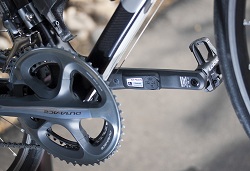
Most indoor bikes and outdoor bicycles
use power meters that are constructed utilizing one or more strain gauges or
load cells. In short, from https://www.merriam-webster.com, “a
strain gauge is a device that consists
of a fine wire firmly bonded to thin paper and that when attached to an object
subjected to stress indicates minute changes in strain by corresponding changes
in electrical resistance of the wire as it is likewise elongated.” To truly understand
a strain gauge, we looked to Omega Engineering (https://www.omegaeng.cz/prodinfo/straingages.html):
A Strain gage (sometimes refered
to as a Strain Gauge) is a sensor whose resistance varies with applied force;
It converts force, pressure, tension, weight, etc., into a change in electrical
resistance which can then be measured. Stress is defined as the object's
internal resisting forces, and strain is defined as the displacement and
deformation that occur.
For a more indepth explanaition
we look to Omega Engineering (https://www.omegaeng.cz/prodinfo/straingages.html):
Today, the typical power meter uses metal-foil strain gages. The metallic
foil-type strain gage consists of a grid of wire filament (a resistor) bonded
directly to the strained surface by a thin layer of epoxy resin. When a load is
applied to the surface, the resulting change in surface length is communicated
to the resistor and the corresponding strain is measured in terms of the
electrical resistance of the foil wire, which varies linearly with strain. Interestingly,
the most desirable strain gage materials are also sensitive to temperature
variations and tend to change resistance as they age. So the power meters should
be re-calibrated every so often to remain accurate, or at least as accurate as
they were designed.
In order to measure strain with a
bonded resistance strain gage, it must be connected to an electric circuit that
is capable of measuring the minute changes in resistance corresponding to
strain. Strain gage transducers usually employ four strain gage elements that
are electrically connected to form a Wheatstone bridge circuit. The output
voltage of the Wheatstone bridge is expressed in millivolts output per volt
input.
Wow, that is a lot of technical
knowledge. The most important take-away from all of this is that the power
meters that you find on bicycles, both indoor and outdoor, calculate power.
While you will use the power data to determine your training zones, and to
perform your actual training, what is actually important about that data is the
change in your numbers over the course of your training. What we mean by that
is that if you begin your indoor training cycle with an FTP of 230w and end the
cycle with an FTP of 260w you have gained strength, efficiency and endurance
over the cycle provided that you have used the same power meter (or indoor
bike) over that period and especially for starting and ending testing. While
there are libraries of information on power meter and indoor bike accuracy, the
delta in power from start to end is the bottom line. It is for this reason that
we advocate the use of a bicycle equipped with a power meter, which can be
paired with a Kinetic or Bkool trainer for E-Racing, for indoor training if you
are serious about continuing your power when you return to outdoor riding in
the spring.
Power Meter Features
We will take a look at the power applications
in Chapter 6, but for now, let’s look at the features that many power meters have.
In general, power meters are a measurement tool. That tool then needs to send the
data it calculates to some type of computer for storage and analysis. In most
cases, that computer is in the form of a cycling computer, such as a Garmin
Edge, Polar V650 or Wahoo Elemnt, or a sport (maybe multi-sport) watch such as
the Garmin Forerunner, Polar Vantage or Suunto Spartan. All of these computer
options have an amazing array of features and the ability to export or download
the training data to other programs that can sort and analyze that data to give
you unparalleled insight into your training and more importantly your strengths
and weaknesses. This data can be paired with heart rate data for a complete
view of your fitness level and progression.
This Podcast is was last published on Feb 2, 2017, I have updated it with our new Podcast host information and I am representing it now. I hope you enjoy it, Joey
Continuing this week's focus on "selling endurance" - please enjoy this Podcast from our archives featuring Spinning Master Instructor Janet Toussaint. Sometime I feel like a parasite! I get a hold of a Master Instructor and I'm not satisfied until I have sucked as much information from him or her as possible.
Janet Toussaint has some great ideas on how to sell the concept of Endurance Training to your class - we take this discussion even deeper than the last one.
Through the beauty of modern technology, you can listen to this whenever and wherever you wish.
This Podcast is was last published on Oct 14, 2009, I have updated it with our new Podcast host information and I am representing it now. I hope you enjoy it, Joey
One of the things that most excites me about the potential here at ICI and the technology we are tapping into, is that we have created a platform that allows us to seek out and interview some of the most progressive and experienced people in indoor cycling and bring them to you, our listeners and members. Where else can you hear interviews with the pros on subjects that help you grow as an instructor? (Except at an expensive conference once a year!)
We certainly do not know everything there is to know about indoor cycling, but we know how to seek it out and bring it to you. I have so many mentors I've learned from over the years who I would like to bring into the discussion at ICI. With every new person we interview, you will learn a different style, a different approach, or perhaps a new twist on something you haven't considered.
Today we are speaking with Master Instructor Janet Toussaint from the Boston area.
One of Janet's expertises is teaching endurance. She ran the Spinning program for years at the Boston Athletic Club and not only got the instructors to buy into the concept of teaching a moderate intensity ride, but the large member base as well. Now that is a tough challenge when all they seem to want is high intensity all the time - I am sure many of you are faced with a similar challenge.
In January of 2003 Janet came out to visit me in Vail on a ski vacation with her son JP. When we weren't skiing, I made her teach Spinning at my club! We were in the middle of a base building program at the time so I had her teach an Endurance workshop to my instructors. She had such a positive impact on our instructors and our program and I still use some of her special cues and metaphors that she used to motivate riders.
When you hear Janet's passion, I am sure she will inspire you too!
John and I enjoyed this discussion so much that we decided to go deeper into the subject of endurance and scheduled even more time with Janet. For ICI/PRO members, we will offer two additional podcasts that you will receive in your Super-Secret iTunes feed. The next interview will go more deeply into the essence of teaching an endurance ride. Even more exciting, the second one will be an audio PROfile on Janet's own favorite endurance ride, The Endurance Connection, replete with her all-star cueing, coaching and playlist.
If you have difficulty coming up with motivational things to say in your endurance classes, you won't want to miss any of these podcasts!
Listen to the Podcast below or subscribe for free using iTunes or Zune.