Welcome to week six of Music to Mention. This week's music to mention is one of my favorite songs for muscular endurance work: Pump It by The Black Eyed Peas. Muscular endurance is always a challenge for the instructor as there are 3-4 minute sections of the ride, some back to back, where the rider is in the saddle and maintaining a specific cadence and exertion level to achieve the development of muscular endurance. While this is understood by the cyclists in your group, the average fitness person that is looking for as much entertainment as workout they may find this work boring. That is where we step forward as instructors and use this time to educate our riders, work on form and allow them to listen to and enjoy the music. Have fun with this and use the longer sections to connect with your class and educate them on training.
There is no real timing for this song as the entire piece falls into a 75-80 (actual is 78) cadence. This is great work that pushes to cells to make adaptations such as increasing mitochondria and increasing enzime availability to burn fat for fuel, so have your riders go hard. I usually cue this as the highest gear they can maintain at 78 rpm or “Hard, but sustainable.” In order for them to get the fitness gains from muscular endurance work, they need to be in HeartZones of High Zone Three to High Zone Four.
We all experience this. You run into an old friend unexpectedly and greet them.
Their response includes something that you react to. It may have lasted only a fraction of a second. A raised eyebrow, indifferent smile, strange look, a shift in body language, the choice of a specific word… or the way it was said.
What ever it was, that tiny moment in time effected you in a way that has you thinking; is something wrong? Are you OK? Do you know a secret about me? You've forgotten my name!
The author describes the main subject of his book as “thin-slicing”: our ability to gauge what is really important from a very narrow period of experience. In other words, this is an idea that spontaneous decisions are often as good as–or even better than–carefully planned and considered ones. Gladwell draws on examples from science, advertising, sales, medicine, and popular music to reinforce his ideas. Gladwell also uses many examples of regular people's experiences with “thin-slicing.”
Gladwell explains how an expert's ability to “thin slice” can be corrupted by their likes and dislikes, prejudices and stereotypes (even unconscious ones), and how they can be overloaded by too much information. Two particular forms of unconscious bias Gladwell discusses are Implicit Association Tests and psychological priming. Gladwell also tells us about our instinctive ability to mind read, which is how we can get to know what emotions a person is feeling just by looking at his or her face. We do that by “thin-slicing,” using limited information to come to our conclusion. In what Gladwell contends is an age of information overload, he finds that experts often make better decisions with snap judgments than they do with volumes of analysis.
While reading Blink, I was struck by how people (yes they're experts on what they personally like/dislike) could be “Thin Slicing” our classes – and how they feel is based on just one little thing you do:
“I loved/hated the music” I love that she plays that new Pitbull song!
“She teaches a great class” Her smile makes me feel welcome/attractive/like I belong…
“It was boring” he looks like he's rather be somewhere else.
“He's awesome” he's the one Instructor here that remembers my name.
Slicing up your class into little pieces
There are 3600 seconds – in a 60 minute class. With 20 participants (who experience each of those seconds differently) your class could be Thin Sliced ~ 72,000 times or more. Yikes!
Now It would be ridiculous of me to suggest that you need to focus on that level. So how about just a few?
Let's start with this; how do you describe the people in your classes?
Students?
Members?
Riders?
Participants?
How about Pushers?
I was trading emails yesterday with Patty Kuhles who owns PUSH Cycle Studio in Prescott, AZ. Patty told me that they call their participants Pushers – which to me is a fantastic title to use as it connects everyone to her studio. I can hear one of their customers talking to a friend; “I'm a Pusher at PUSH Cycle Studio.” Kind of endearing, don't you think?
Let's go TEAM!
Brent Goodermont is an Instructor with Life Time Fitness. I took his class last month and was very impressed with how he referred to us as a TEAM.
It's time to really work now TEAM!
You need to keep up with the rest of the TEAM!
OK TEAM, you've earned this recovery 🙂
Now imagine that you ran into either Patty or Brent at the mall and they introduce you to a friend they're shopping with as…
This is [wlm_firstname], one of my Students…
This is [wlm_firstname], one of our Members…
This is [wlm_firstname], a Rider at our club..
This is [wlm_firstname], one of my Participants…
This is [wlm_firstname], one of our awesome Pushers…
Based on all the great comments we're getting, it looks like many of us like to wear a bit of eye make up when we teach. Last week was all about mascara. This week we'll look at eyeliner- how to best wear it, and good liners that have staying power.
I often get asked, “Should I wear eyeliner on the top or on the bottom?” My answer is: both.
Although dramatic, lining the bottom of our eye all the way back to center can minimize the look of our eyes.
Having said that, care should be taken not to minimize the look of our eyes by lining the bottom completely back into the corner. (See side picture).
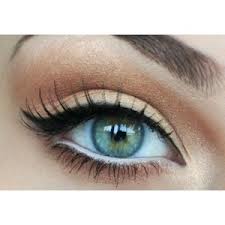
A more natural, eye opening option, is to line the entire top of our eye, and the lower eye half -way to the middle of our iris. (See picture below).
Black liner is of course the most dramatic, and least forgiving, color. Brown, bronze and gray are softer and more natural. A smudged pencil also gives a more natural look, gel liners the next step towards drama, with liquid liners being the most dramatic, but not necessarily the most long wearing.
Before gel liners came into being, I found liquid liners to be the best long wearing option. Since experiencing the gels, I've noticed liquids disappear a bit in comparison.
Gel and liquid liners are the most ‘age friendly' because we don't need to hold, or tug our lid in order to apply them well. Liquid liners, with a felt tip vs. a brush, are also user friendly and quite easy to apply.
If you're new to using liquid liner, an easy application method is to apply mascara first. Let your mascara dry. It gives a hard line to draw liner on. Looking down into a hand mirror, rather than directly into a wall mirror, will also make liquid application easier.
Kohl type pencils are great for smudging and creating a smokey eye, but aren't typically very long wearing due to their soft nature. Many liner pencils do come in waterproof formulas, but I've often found them to be quite hard to apply and I hate tugging at my eye area in order to get the hard pencil to go on properly.
This is a great example of liner in the water line (black on top, white on the bottom) and also using liner to open eyes by partially lining on the bottom.
Lining the ‘water line' (the eye membrane, or inside line of our eyelid) can lead to a very natural look (when used alone), or extra dramatic look (when paired with regular lining techniques). I find my eyes get quite irritated when I do it, and wonder about the sanitary nature of sticking eyeliners literally in our eye membrane???? At least with a gel liner and brush, we can wash the brush each time to keep things sanitary.
If your liner tends to transfer to your eyelid, in addition to using a long wearing liner, often a waterproof eyeshadow base can help. Oily eyelids are common and can be a culprit in eyeliner coming off long before we want it to. A couple shadow bases I've tried and like are: Stila Prime Pot ($20)- comes in two colors Caramel and Taffy, Tarte Clean Slate 360 Creaseless 12 Hour Smoothing Eye Primer ($19) and Elizabeth Arden Eye Fix Primer ($21.50).
A great ‘beginner' liquid liner is Lancome's Artliner in Ice Black ($30). The applicator is a felt tip (no stray brushes to worry about) and the Ice Black color is more like a translucent steel gray, so it's very forgiving as we're learning to apply it. I also like this color because it's much softer than black, brown and regular gray. The artliner's wear quite well, but come off easily with facial cleanser and water. I don't find I need make up remover to get them off. Although a bit pricey, they last 6-9 months with everyday use. (Be sure to shake well before use.)
*Lancome recently introduced Artliner 24H, which I don't like at all. It seems to have a vinyl component that looks fake and worse yet, pulled my lashes out when I tried to remove it at the end of the day. Travesty!
Tarte Amazonian Clay Waterproof Liner with Double Ended Brush ($24) is soft and easy to use and wears until you take it off. (I do need to use a make up remover. If I just use my cleanser, I have residual, which is a small price to pay for all-day wear IMHO). I also like the brush and love that it's included in the price. It comes in brown, black, indigo, bronze, plum and green. If you like a very soft look, the bronze is lovely. Tarte products have no parabens, mineral oil, phthalates, triclosan, sodium laurel sulfate, or gluten, so maybe popping this in our water line wouldn't be so horrible….I might try it.
Maybelline Eye Studio Lasting Drama Gel Eyeliner ($9.99) doesn't last quite as well for me as Tarte or Lancome, but the price point is great. It comes in Blackest Black, Brown, Charcoal and Eggplant. It also comes with a brush, although I like the Tarte brush much better and use that one all the time.
I know there are many great liners out there (and many not-so-great ones!) Time, money and the length of this post :), prevent me from writing about more, and trying most of the others. Please let us know what you've tried and liked, or tried and not liked.
Thanks, everyone, for your feedback on mascara!
Please comment, or reach out to me: amyjo@groupfitnessradio.com
*I don't receive compensation for writing PRO/STYLE, other than an occasional unsolicited piece of ‘advice' from John Macgowan, founder of ICI/PRO, my skydiving buddy and husband of 25 years. If I ever get something like product, or real cash money, I'll happily disclose that fact.
My last few posts have dealt with aspects of sugar addiction, including sugar’s effect on health. It’s important — you want to be healthy, right?
Still, I’ve avoided one topic because it’s almost guaranteed to alienate people — fructose. The sugar found in fruit. It’s nasty. We’ll get to the details on that soon enough.
Some people are surprised that fruit could be bad. After all, it’s natural. And whenever people talk about healthful eating habits, it’s one of the first things mentioned. “Eat lots of fruits and vegetables!” As if they’re equal. Fruits even come first in that recommendation.
I might agree with the recommendation in part, but would suggest limiting fruit servings to 1 or 2 per day. A serving is half a cup, or a medium-size fruit. Not much fruit, compared with vegetables. (You can go crazy with those veggies.)
I’ve always balked at “Five a day.” Once upon a time (pre-1991), the Basic Four Food Groups consisted of Meats, Milk Products, Grains, and FruitsandVegetables. The original 1991 Food Guide Pyramid was developed to give us a better idea of the relative proportions to eat. The second tier from the bottom was divided unevenly, into 2-4 fruit servings and 3-5 vegetable servings. Apparently, that was too nuanced, too specific. And so the slogan “Five a day” was coined, referring to the minimum number of servings of each and blending them back together, as in the Basic Four.
(I can’t even count the clients I’ve had who were more than happy to get their 5 a day from fruit and skip those pesky vegetables altogether. But I digress.)
The fructose takeover in beverages and prepared foods was designed to cash in on the lower cost of fructose, and the image it had as a “healthy sugar”. Sucrose (granulated table sugar) was seen as unhealthful. Yet fructose has negative health implications, some more serious than others. All of them contribute to a negative picture overall.
What does fructose do that’s bad for our health?
It’s cariogenic, so it causes cavities. It triggers sugar cravings in susceptible people.
It’s frequently malabsorbed, leading to abdominal complaints (bloating, flatulence, diarrhea). Many people are unable to completely absorb fructose in the amounts commonly found in high-fructose corn syrup products.
Due to rapid utilization by the liver, fructose has multiple metabolic effects. Long-term fructose use can lead to high triglycerides, an independent risk factor for heart disease.
Fructose can also decrease glucose tolerance and raise insulin levels. (If that sounds as if it could lead to insulin resistance and diabetes, you’re right.)
Whether people start with triglyceride issues or not, these changes are the expected results of increased fructose. People who respond to fructose normally show these changes at intakes of around 20% of total calories. Carbohydrate-sensitive people can show these negative responses to as little fructose as 7% of total calories.
Carbohydrate sensitivity is defined as exaggerated insulin secretion to sucrose, but fructose and other carbs can trigger the high insulin, as well.
Sucrose can cause many of these same effects. Sucrose is a disaccharide, half glucose and half fructose. ALL of these sucrose problems are attributed to the fructose in it, not the glucose. And no debate on this exists in the science journals.
So everyone agrees that fructose is what makes sucrose the junk that it is.
Fructose is ineffective as a pre- or post-workout fuel, and it actually does even more health damage than the stuff I’ve listed above. For example, both fructose and the sweetener sorbitol (converted to fructose in the liver) accumulate in the lens of the eye in diabetics, causing osmotic damage.
Let’s end instead by pointing out that even trending sugars can be junk. That includes agave, maple syrup, dates, and acai berries.
Getting away from fructose is a wise and healthful course of action. Because it may be difficult, though, cutting back on fructose could be seen as the final frontier in conquering sugar addiction.
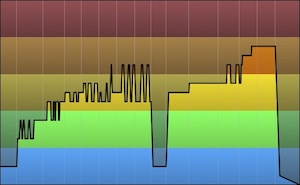
If you've followed indoorcycleinstructor.com for any length of time you know that I'm a huge fan of the 2T/3Z method of Heart Rate training which is the basis for Zoning. That simple Blue/Yellow/Red response from my Blink Heart Rate monitor is (to me) the perfect way to introduce zone based heart rate training into your class.
Here's some proof of it's success – OK it's a bit rough, but Diana presents a powerful truth that Zoning has worked for her in this video. Your students are in your class to lose body fat and Diana losing 100 pounds and finishing the Danskin Triathlon is a testament to the effectiveness of 2T/3Z Heart Rate training.
No more hunting for new music or counting out cues. Here is your ready to ride document, that can be displayed from your phone, or printed out onto cue cards. This ride is timed out, down to the second, to make your life as easy as possible!