This protocol, developed by Team ICG®, outlines a “first HRM experience” to help the student connect HR with perceived exertion. The last post covered the warm-up and Level 1. From here, the progression builds to greater levels of effort.
Level 2
This is where the student’s sensitivity will grow the most. A novice is least able to feel the subtle changes that occur at this level. Level 2 is the point at which a training effect, i.e., improved functioning of the cardiovascular system after recovery, begins to take place. Level 1 is not intense enough to produce such a fitness effect.
Still maintaining 90 rpm, have the students raise the resistance slightly. At some point, the low muscle load will lead to a combination of rhythmic breathing and light sweating. The sensation of a training effect is quite noticeable to the experienced exerciser. There’s a feeling that continued training at Level 2 would make you stronger. Over time, the practical consequence of the training effect is a reduction in force necessary to apply power, and you can feel this begin to happen at level 2.
This sensation is hard to pin down for beginners. They may notice an amplification of their senses, a tingling throughout their body, or emotions. They may feel more relaxed and peaceful, even though their HR has gone up. They may smile.
In order to improve, musicians practice scales. There’s awareness that practicing scales will make them better musicians, so they don’t mind doing it. That’s the training effect. Level 2 feels like the beginning of practice that you know will bring improvement.
As an instructor, you must spend time at this intensity to recognize and appreciate the sensations fully so that you can accurately describe them to your students. Then relate them to HR. Maintain for 4 minutes.
Level 3
Continuing at 90 rpm, add resistance to raise HR again. There should be an immediate shift in the students’ feeling of effort. It now takes work to maintain 90 rpm. There may be an immediate sensation of difficulty, e.g., burning in the legs and/or breathlessness. This should last no more than one minute, although Level 3 continues past that.
Some students will start to breathe rhythmically and exhale forcibly to mitigate the difficulty. This natural mechanism dispels carbon dioxide and stabilizes blood pH. Demonstrate rhythmic breathing with forceful exhalations and explain that it will alleviate the feeling of difficulty, so they’ll feel better. Have them notice, or even induce, synchronization between their breathing and their cadence.
Have them settle into a new, higher target HR. This HR needs to be at a level that they could hold for about an hour, but with difficulty. “There are a lot of HRs you could hold for an hour, but we’re looking for the highest one you think you could maintain for that length of time.”
This level of effort feels like working out. It’s sustainable for an hour or so and isn’t painful, yet requires rhythmic breathing and focus to maintain comfortably. Maintain it for 4 minutes.
This is a good time to discuss what aerobic really means and how the increased workload has increased the demand for oxygen.
Before this segment is over, let them know what’s going to happen next: you’re going to raise their level of effort to threshold. (You may want to modify some students’ training, depending on fitness.) Threshold, in this case, is the level of effort at which the body’s ability to transport oxygen to the working muscles becomes compromised, resulting in an increase in anaerobic metabolism and a state of continuous discomfort.
My post “Why Do I Have to Hurt?” mentions that we’re not neurologically wired to accept pain willingly. Unless we’re completely conscious of what we’re doing, we’ll unconsciously find some way to offset the work and mitigate the pain. (Reducing cadence is the most typical example.) Let them know that they’re about to go into hurt, and that it’s part of training. If they’re not up for it, have them stay at their present HR.
Level 4
While maintaining the same resistance, have them increase their cadence to 100 rpm. You must use Beatmatch; otherwise, they won’t pedal hard enough. “This time, you’re at a level that you could hold — with difficulty — for about 30, maybe 40, minutes.”
Point out that this should change a number of things in the body: certainly breathing (they may find it difficult to get enough air), body temperature (pouring sweat), even thinking (conflict and doubt). An internal monologue may begin.
Encourage them to maintain focus. There are various names for this level of effort — anaerobic threshold, lactate threshold, ventilatory threshold — and each of them means something slightly different physiologically. For now, we’ll just call it threshold. It is not an exact number and refers to the heart rate below which you can keep exercising for a sustained time (with effort), and above which you tire very quickly. Thirty minutes seems like an eternity.
Have them pick their target HR and maintain it for 4 minutes. It’s easy to recognize this level of effort in a student. No one should seem distracted. Also, a look of true anxiety is difficult to fake.
It needs to hurt right away. The hurt is manageable, but they’re never comfortable. If you were to approach the student and ask how he/she is feeling, the reply would be, “Please get away from me.” (Perception of this level may vary with fitness.)
If they’re doing it right, it’s not a good time to discuss or teach anything. Remind them to stay at their target HR, maintain the increased pedaling speed, and breathe out forcibly in a rhythm. If they can’t maintain 100 rpm, have them adjust their resistance slightly but maintain their target HR.
Level 5
Tell them that it’s now time to peak their HR, to take it as high as they can that day. They need to go above threshold. Add resistance and maintain 100 rpm to raise HR for the final stage. Alternate a 30-second standing jog at ~90 rpm with 30 seconds seated at 100 rpm — but at full effort. The actual standing cadence is less important than the effort, but it must raise their HR. Many students, however, will drop their cadence because they’ve stopped caring about what they’re doing. It hurts too much. So the best cue is to make them jog as fast as they can. The effort is barely manageable and not sustainable for more than a few minutes.
Do this for only 3 minutes. Every time they stand and jog, they attempt to raise the HR higher. Since they’re holding this for 3 minutes, it will be uncomfortable and pretty much about survival. Cadence will keep slipping. They’ll experience failure. Keep them checking their HRMs so they remember their peak HR. Play razor-sharp, acerbic music with a rhythm to which they can Beatmatch when standing. Tell them to stay tough and not give up until you cue it, even if they hit failure.
Recovery
Have them regain composure quickly. After they’ve rolled for a few seconds, have them take off all resistance and bring the spin up to 100 rpm. It should feel easy.
Your students now have a numerical representation to match a perceived awareness of their exercise HR range. They’re likely to have come close to max HR, which can be used to help determine zones, depending on your method.
Training zones can now be related to a perception of effort. This will eliminate ambiguity when it comes to determining the correct level of effort for a designed training.
Have them ride with good form for 10 minutes as they spin their legs. If they start to get cold, have them add a little resistance. Review the various levels of effort (including resting and warm-up) and have them recall both the perception and the approximate HR for each feeling.
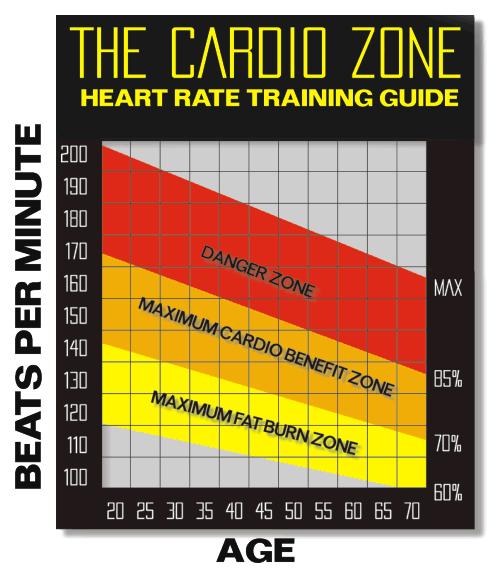
Should we adopt a standard method of describing Heart Rate Training Zones? My argument is that until we (I'm talking about everyone in the fitness Industry) all speak with consistent language, manufactures will continue to put stickers like this on fitness equipment. The Majority of people in your club will see this chart on an elliptical machine and remain confused by (if not down right afraid of) Heart Rate Training.
Danger Zone? Isn't that a song by Kenny Loggins?
Nothing will change until there is something to change to.
Where are you on this chart?
Does this chart provide anything even remotely helpful or beneficial?
As promised, here's Krista Leopold's Indoor Cycling Class Profile; Beat Down!
Training Type: LT Intervals
Working HR Zones: 4
Total Class Length: 55 min
Objective and Intensity
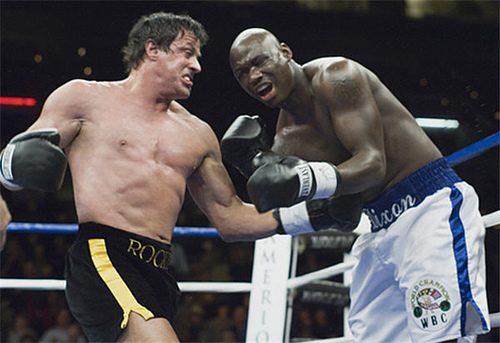
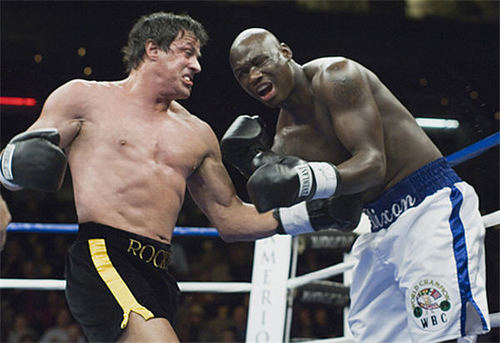
After recently being inspired by a boxing match I watched at the nail salon of all places, I decided to try to bring my riders into the ring for a full class. This ride is shaped by the structure of a boxing match. In professional boxing, boxers typically spar for 9-12 rounds of 3 minutes each with 1 minute in between each round. For our time constraints, we are going to fight for 10 rounds. Each round, we’ll use a different movement. Most of the rounds will be one movement sustained. In a couple of places, we’ll change it up.
For each round, we are going to work as close to LT as we can with opportunities to go higher than that sprinkled in. The challenge is to find that balance of intensity and restraint which will allow them to last a total of thirty working minutes. The average participant can sustain LT for 20 minutes. Since we’ll have short rest periods every 3 minutes, the ride presents an opportunity to push your limits while still being able to recover.
You can download Krista's trimmed to exact length and then fully mixed class playlist[wlm_private ‘PRO-Platinum|PRO-Monthly|PRO-Gratis|PRO-Seasonal|Platinum-trial|Monthly-trial|PRO-Military|30-Days-of-PRO|90 Day PRO|Stages-Instructor|Schwinn-Instructor|Instructor-Bonus|28 Day Challenge'] here – Right click > Save As.
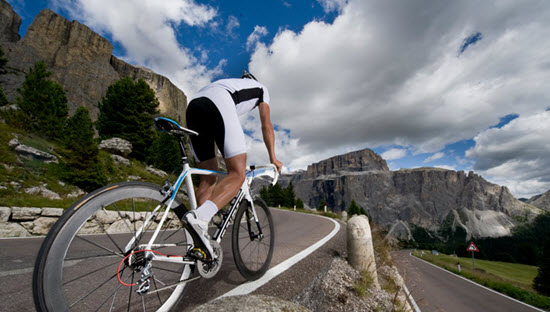
Long climbs have you bumping up against your power ceiling.
I prefer to limit the mathematical computations many Instructors typically ask of their classes. For example you'd never hear me say;
“now I want everyone at 85% of their FTP” or… “this next interval is 30 seconds in Zone 5B which is 103 to 106% of your LT/AT heart rate followed by 2 minutes in Zone 3 = 90%-93%”… everybody got that? Then let's GO!!!
I'll admit that part of this is due to my phobia of math. It's also because I recognise that there are a wide diversity of personalities riding in front of me. Sure, I've got a few engineers who could probably spit out the square root of their FTP between pedal strokes if you asked, but it's my impression that the majority of folks in your class would prefer that you leave the math for times when they have a calculator handy 🙂
Just this past Sunday I had two women in my Performance Cycle class cheer when I mentioned that I wouldn't be requiring any percentage figuring that morning.
But we still need to communicate intensities, right? That's where establishing Floors and Ceilings comes in. They're simple concepts everyone will understand – we all know what's below a floor or when we're up against a ceiling!
Master Instructor Dennis Mellon using this same Floors and Ceilings concept in his classes, except a little differently. We discuss how we each use them to (hopefully) communicate effectively, in this ICI/PRO Podcast episode.
[wlm_private ‘PRO-Platinum|PRO-Monthly|PRO-Gratis|PRO-Seasonal|Platinum-trial|Monthly-trial|PRO-Military|30-Days-of-PRO|90 Day PRO|Stages-Instructor|Schwinn-Instructor|Instructor-Bonus|28 Day Challenge']
Please let us know your questions.
You can read more about using VT1 Aerobic Threshold and VT2 Anaerobic Threshold to create easy to understand Floors and Ceilings here.
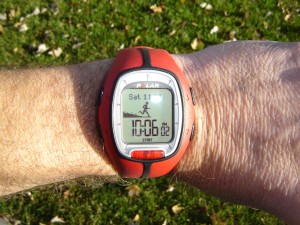
I got tired of replacing the chest-strap-battery in my old Nike monitor so I though it was time to upgrade. Based on the recommendation from a Personal Trainer at my club, I bought this Polar RS200. It is the lowest priced Polar monitor he was aware of that you can enter your own HR Zones. I tested it out this morning at my Indoor Cycling class. What impressed me the most is the new chest strap design, very comfortable! No more hard plastic strap cutting into my chest.
I'm noticing that Polar is now promoting a three heart rate zone system.
Welcome to the party Polar!
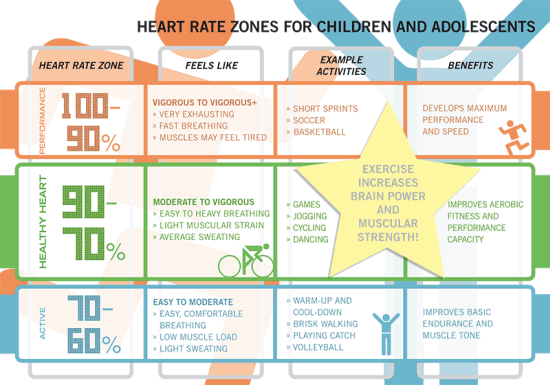
I subbed this morning and saw the sign on the right displayed. At first I didn't give it any notice, but then I did a double take; they're showing the five zones grouped into three… very interesting.
When I got back to my office I did an image search to see what else I could find. I haven't paid much attention to Polar, so some of this could have been occurring and I'm only seeing it now.
Exercise zones are ranges between the lower and upper heart rate limits expressed as beats per minute (bpm) or as percentages of your maximum heart rate (HRmax). HRmax is the highest number of heartbeats per minute during maximum physical exertion.
Heart Rate Target Zones
Exercise can be divided into three different: intensity zones. Each of these intensity levels corresponds to various health and fitness improving mechanisms in your body.
Here's what I found.
ACE promotes a Two Threshold & Three Zone System. Polar's personal training area clearly reflects this in the chart above.
Ignoring the fact that all of this is based on the antiquated Max Heart Rate – instead of a being based on aerobic or anaerobic thresholds – I see this as very good news for any of us trying to cut through the confusion and complexity caused by branded 5 or more zone systems. Instead we promote the simple and effective 3 Heart Rate Zone system anchored by both aerobic or anaerobic thresholds.
It's great to have Polar aboard – except they have a long way to go… please forgive my rant here 🙁
It defies explanation, how a company as large as Polar, can be so utterly clueless. Make sure you've completely swallowed whatever you're drinking before reading their page about; Determining Maximum Heart Rate.
Your heart rate has an upper limit, or maximum rate, called HRmax. HRmax is not a good predictor of fitness level or performance (it's mostly genetic), but it is used to quantify levels of intensity (as a % of HRmax). If HRmax isn't good for anything, why are you using it? It's like saying; this scale is wildly inaccurate… so go ahead and weigh yourself with it and we'll base your weight loss program on it.
You can determine maximum heart rate a number of ways:
1. Have your HRmax measured in a laboratory during a stress test. In a laboratory? OK sure, I have one down the street.
2. Do a maximal effort and record the highest heart rate (not recommended for untrained individuals). This will give you a fairly accurate maximum heart rate, but is difficult to do properly. Remember that HRmax depends on the activity, so establish HRmax in the sports you do most often. Huh? What's your definition of the word “fairly”? So if I'm “untrained” what do you suggest I do?
3. HR max-p score predicts your individual maximum heart rate. This feature is included in several Polar computer models. I get it – marketing types wrote this nonsense.
4. Estimate your maximum heart rate based on the formula 220 – age. This will give you a rough estimate, but is not nearly as accurate as the other methods described above. That's it? Those are your only choices?
For most individuals, maximum heart rate declines with age and values are usually between 170-200 bpm. This has been disproven years ago – why do they continue to say it?
We've been proponents of the Two Thresholds /Three Heart Rate Zone system for years here at ICI/PRO. We're not alone. ACE ( the American Council for Exercise) recommends this system as the most appropriate for the typical participant we see in class.