Take away their common language and destroy a great team. Wikipedia image
In the biblical story about the Tower of Babel, God wanted to prevent Man from building a tower that reached into the heavens. Construction of the tower was going along very well as everyone was working efficiently toward their common goal of reaching into the sky. Now I'm sure God could have just sent a storm to knock down the semi completed tower… but then Man would have simply started over. So instead he wrecked their construction team by causing everyone to speak a different language. Confusion was rampant since no one understood what the other's were saying. Construction halted and the team disbanded. Problem solved.
The recent survey we conducted included a number of questions about Teaching with Power – to get some understanding of “how's it going?” and the impact power has on your classes.
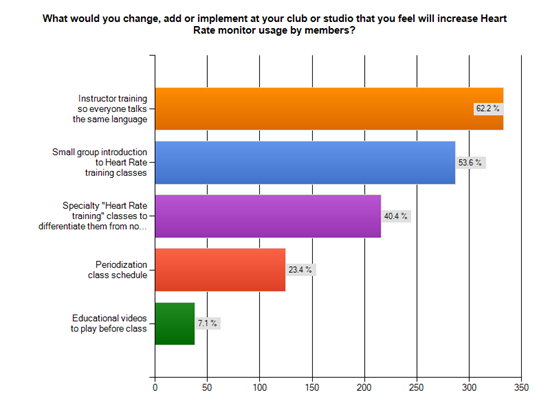
I see Instructors as bright people, who understand the root of many of the problems they encounter in class. So I asked the question:
Back during the Spring of 2011 we surveyed Instructors, asking the exact same questions – only about Heart Rate training. Unsurprisingly we got similar results.
So what can you do?
First you need to decide; “how much do I care about this issue?” Are you content to ignore it? Or are you someone who sees a problem and then looks for a way to solve it?
At the risk of sounding simplistic, all you need to do is create a common language between you and the other members of your Instructor team. Easier said than done, but don't make it too complicated.
And don't wait for Management – or expect them effectively solve this even if your Dept Head is 100% committed to the cause. Anything imposed on you and your team, without the voluntary buy-in from each team member, is guaranteed to fail. If you're in a Big Box and have experienced multiple new branded class formats, you know exactly what I'm talking about. Two weeks after the “big change”, everyone is back to their old style of teaching 🙁
My suggestion is to discuss this amongst yourselves. You could lead off by asking the question in an email with the intent to find a few other Instructors who see the problem:
Hi Team,
Do you feel like I do… that our class communication would be improved if we all spoke the same language around; Heart Rate and/or Power – Watts?
And then see what happens. Nobody wants to be forced into changing – but a few maybe willing to hear more from you. If you find some like-minded Instructors try to get them together – you might even offer to buy coffee. Present a simple solution; “my vote is we agree to only use 3/4/5 HR or Power Zones.” Just pick a number that everyone will agree on. Then discuss how do you decide the actual personal numbers that form the zones; Metabolic testing, Threshold tests, etc… Again you're looking for agreement, not who's right.
ICI/PRO contributor Dr. Melissa Marotta Houser is one of those people who ask; “Why?” and “What if?” a lot… and then sets off to answer her own questions. Back on Podcast #157 we discussed the research Melissa had done, trying to understand; Are There Psychological Effects of Heart Rate Monitor Use During Exercise?If you haven't heard this interview it's fascinating and it will give you additional benefits to training with HR that you can offer to your participants.
Building on her research, Melissa has found a population of people who could potentially benefit from monitoring heart rate, beyond exercise. She's published her findings the Journal of Family Medicine – a publications of the Society of Teachers of Family Medicine.
BACKGROUND AND OBJECTIVES: Rural patients with anxiety often lack access to traditional biofeedback modalities. Exercise heart rate monitors (HRMs) are tools used in the fitness industry to provide athletes with feedback on heart rate and regulatory breathing strategies. HRMs are inexpensive, discrete, and publicly accessible.
This randomized controlled pilot study explored whether use of HRMs for biofeedback during guided mindfulness, diaphragmatic breathing, and progressive muscle relaxation techniques could facilitate anxiety reduction as compared to these techniques alone.
METHODS: Fifty-three rural anxiety patients were randomized to HRM or control groups for four weekly 20-minute, scripted sessions with a non-behaviorist wherein they practiced these techniques; the HRM group received feedback on their heart rate response.
RESULTS: The HRM group had significantly greater improvement in state anxiety (State-Trait Anxiety Inventory) and self-efficacy (General Self Efficacy Scale), and a greater percentage of the group indicated that they “felt in control of their anxiety.”
CONCLUSIONS: This pilot study demonstrates that this novel, inexpensive, and accessible tool may be a useful clinical intervention for anxiety and can be easily incorporated by both behaviorists and non-behaviorist primary care clinicians into individual or group biofeedback treatment for patients with anxiety. This tool has additional potential for patients to use for anxiety self-management.
Further study with a larger sample and blinded design is warranted.
Well done Doctor Melissa – I'm looking forward to what you come up with next!
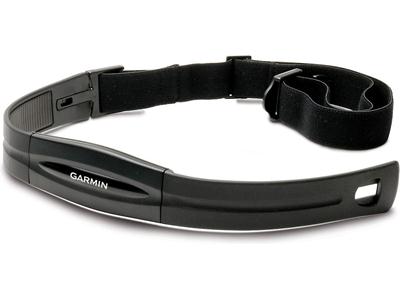
Bring your Garmin or other Ant+ compatible HR strap
Updated 10/30 below
Short notice… it's tomorrow night.
Here's the email invitation I received:
EDGE Cycle kick-off with Bahram Akradi & quests
This will be the 1st class offering in Minnesota of our “new”EDGE CYCLE signature Indoor cycle format!
Expect to have an experience that includes results, heart rate and community all with the future technology of LT Connect
Class time: 5:30-6:30pm
First come, first serve.
We kindly ask to arrive by 5:00pm for individualized LT Connect set up. Everyone who wants to experience this must have a heart rate strap (Garmin or Motorola).
Music will be provided by DJ Dan; guest instructors to get you pumped and a party at Rare to follow the hard yet fun work! J
We look forward to seeing you there~
What's being launched is the new EDGE Cycle class format that integrates with LT Connect – Life Time's branded heart rate display system. Similar to MYZONE or Polar's system, but no power like Performance IQ 🙁
Fun none the less as both Amy and I teach in the same room!
I'm planning to attend and will relay the details when I know more.
Update post class:
I took the class last night. If you teach at a Life Time, you might be excited if/when this gets to your club.
First stop when I got to the studio, was to check in and get my Garmin HR strap connected to the system. They had a desk setup and the person manning it asked for my name and if (and how) I knew my personal HR Zones. “What's your top of Zone one” was his next question – I couldn't answer, but I explained that I have been tested multiple times and my AT (VT2) was 162. My and base of Zone 3 (VT1) is… but before I could say 146, he had hit the button that auto-populates all the other fields and showed 145, close enough for me.
Next I was handed a little black box, a little bigger than an iPhone, that I pointed at my HR strap. This identified my unique Ant+ signal which connected me to my profile. And there I was “John” up on the screen with the others.
Suggestion: this isn't the time to puff your chest out and give the highest possible threshold you can imagine, with the intent of impressing others in the class. The accountability that comes from having your name up on the screen becomes very real, so I suggest being a bit conservative. So when the 3 minute effort is supposed to have you at the top of Zone 4 (and you're sitting one over from your Dept Head) with the last minute pushing into Zone 5, you don't find yourself wishing you have said 160. Pushing hard enough to add that one BPM that causes your gauge to go RED, is every challenging. Especially while you're convinced everyone in the room is watching to see if you can do it.
More when I have a chance to teach with LT Connect.
Spinning® Instructor and Zoning Specialist Kay Mamo presents our latest class profile; Just The Ride I Needed.
I’m a personal trainer (ISSA) and group exercise instructor. I’m certified to teach more than a half dozen indoor cycling methodologies as well as certified to teach Heart Zones® and the new 3-zone system, ZONING â„¢ fitness, created by Sally Edwards.
I’ve found that introducing my riders to ZONING and offering the use of BLINK heart rate monitors, provided by our facility (purchased from ZONING fitness), simplifies tracking the intensity of a workout. The Blink monitors have LED lights that flash BLUE, YELLOW or RED. In a class, we can run through a couple of easy field tests and determine how to set each person’s 3 zones. The Blue zone intensity is a heart rate that is below T1 (The first ventilatory threshold). The Yellow zone is the range of heart rates between T1 and T2 (The second ventilatory threshold). The Red zone is above T2. Details can be found at www.ZONINGfitess.com.
If you're anything like me, good ideas are easy to come by – especially when it comes to “ideas” about how to improve my class, changes (desperately) needed at our studio and new formats / programming we should be introducing as new classes.
But unfortunately many of those fabulous ideas of mine are never realized… and it's typically my fault.
Why?
Because I hadn't invested the effort to really think through everything and then formally present my “idea” as an actual “plan” to management. In the past I've figured that my “idea” was so good, that I could just throw it at my Dept Head and she'd run with it. Doesn't work that way.
The person you report to (Manager/Dept Head/Owner) also has a boss, or at the very least a partner. They need to be well armed with the details of your plan, before they will even consider discussing your “idea” with upper management.
ICI/PRO member and Zoning Specialist Kay Mamo successfully worked through this process and was rewarded with her very-own new class on the schedule. Kay and I discuss the steps she took in this episode of the Indoor Cycle Instructor Podcast.
Kay has provided a template you can use to bring detail to your idea. You can download it here.NOTE: Kay's plan is specific to the introduction of a Boot Camp that include a Zoning 30 minute cardio session. Feel free to change it up to reflect your dream class 🙂
When should you go hard… and when should you take it easy?
It's a great question. Often our response depends on very subjective feelings = we may think we know, but we really aren't completely sure.
As Jim Karanas pointed out in his Intervals post this week, we are often too focused on the Work component of exercise and not enough on the Recovery.
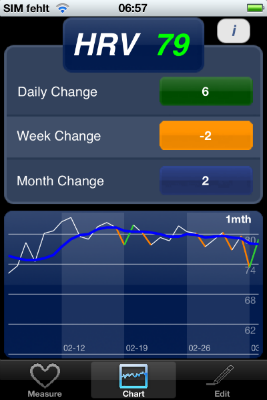
So how can you know when your body is rested and ready for more work? Athletes have for years used resting heart rate as a measure to understand. If it's elevated above normal maybe it's time to take it easy, or if normal, time to hammer.
My guest today is Simon Wegerif, an expert on HRV and the founder of myithlete.com. Simon feels he has a more scientific method of deciding if & when your body is recovered and ready for more.
ithlete is an application for either iPhones or Androids that measures and tracks Heart Rate Variability (HRT).
We're using a new player now and iPhone & iPad users will now (finally) be able to play the Podcast directly from your device. Yes I realize it's a little ugly, I'm working on getting a better looking version.