What would it be like to be losing both your vision and hearing?
Can you even imagine how challenging it would be teach?
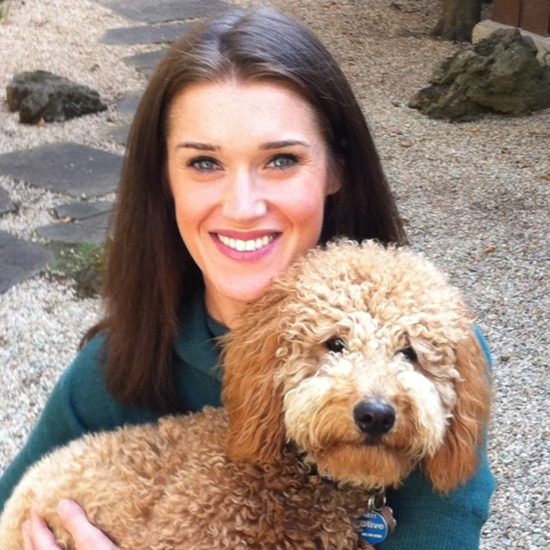
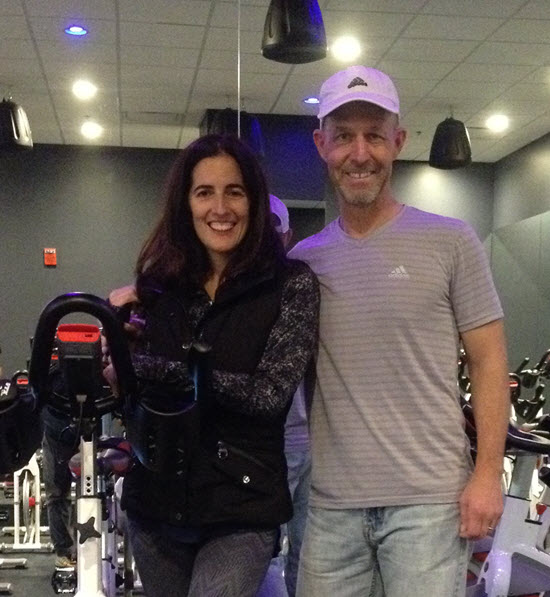
I just had to know more about Instructor Rebecca Alexander and then share her very inspiring story with you. Rebecca currently teaches at Equinox in New York City and has taught in the past at New York Sports Club, New York Health and Racquet and SoulCycle.
Rebecca has written the book Not Fade Awayabout her challenges with Usher Syndrome III, a disease that is slowly robbing her of both sight and hearing.
It was a delight for me to interview Rebecca – please enjoy our last podcast of 2014!
After listening to Rebecca's story, I encourage your to purchase and read her book using the link below. You can learn more at her websitewww.rebalexander.com
Also, if your family tithes annually like ours, and you're looking for a place to make a last minute donation, please join Amy and me in contributing to Rebecca's Usher III Initiative. Donation information is here.
Some riders are present to train and give 100% every class. Many, however, are present simply to be…present.
Through The Customer’s Eyes
When was the last time you really looked at the Indoor Cycling experience you offer through the eyes of your customer?
The riders who consistently attend your classes relate to you. But … have you taken the time to consider how a first time rider relates to you and your teaching style. Have you taken the time to
walk in a first time riders’ shoes or ride in their saddle. If you have had new riders in your class who chose to not come back, have you asked yourself…
Am I current and relevant to today’s customer?
Keeping up with our customers’ evolving WHY means accepting the radically different concept that an increasing number of riders don’t care about the workout. It means embracing riders who are more concerned with recovery from daily stress than recovery from working effort. It means delivering a fun, safe, and effective class to riders who train for LIFE alongside riders who TRAIN for the road or for a specific event. It means making them feel safe the moment they walk through the door.
Have you ever considered that the rider on the end in the 3rd row may be…
Overwhelmed by numbers, spreadsheets, and thinking in general
Or … Suffering from an eating disorder and low self esteem
Have you ever considered that the rider in the back row, 2nd bike in may be…
Training for the Special Olympics…grateful for a 2nd chance at life
A parent whose child recently tried to commit suicide
A rider whose spouse committed suicide
An ex college athlete whose body feels older than his years…
who rides for the non impact cardio, weight loss, and because he can escape
A verbally abused housewife who quietly arrives late and leaves early every class…
not wanting to be recognized and grateful to be alone for almost an hour
A recovering addict who rides to get high…and to stay sober
A military wife who misses her deployed husband
A depressed teenager who doesn’t seem to “fit in” anywhere.
A mother battling post partum depression
A parent of a Marine that never came home
A 50 year old father with 100lbs to loose before walking his daughter down the aisle
Or … A veteran who feels lost and unappreciated.
Have you ever considered that the rider directly in front of you …worries about losing their job?
Each one of these riders is real and has a name.
Each one of these riders wants to escape, to check out, and to get lost in the music.
Accept … Don’t Judge WHY
Welcome every rider free of judgment and celebrate that they have a WHY that is different.
Accept that a rider may not want to push outside of their comfort zone. That’s OK!
It doesn’t mean they are “lolly-gagging,” “wasting an hour,” or “need to leave if they aren’t going to make an effort” because they aren’t working as HARD as you are asking them. That’s not WHY they are there. For them, it was HARD WORK, just getting there.
For these riders, the CardioTherapy benefits of Indoor Cycling outweigh any interval or strength training benefit. These riders and countless others stepped out of their comfort zone simply by walking through the door. If we, as instructors are current and relevant to their WHY … these riders have a better chance of returning. Make them feel SAFE and FUN follows. If we are doing our job correctly, EFFECTIVE falls into place and riders see results … mind, body, & spirit.
Accepting and understanding that every rider is not in your class to TRAIN like an athlete is the first step to delivering the ultimate Indoor Cycling experience, to every rider in the room, every time … regardless of their WHY.
The folks at Cycling Fusion are offering their complete Global Ride series of Indoor Cycling videos at a 20% discount between now and the end of the year. Enter discount code VeryVIPDVDs at checkout. This might be a great time to stock up so you're ready with new virtual rides for the craziness that's coming in January 🙂
Here's a sample from from their latest Hawaii series – you'll find all the others here.
While I was in NYC last month I rode in two classes lead by Instructor Julie Jarrett. The first class was sold out, which was cool considering Julie has only taught for a few months + the studio Prime Cycle opened in September of this year.
After Julie's class I had the chance to sit and learn about her Reality TV production company Jarrett Creative and how she uses her time teaching as a inspirational break from day job. During our chat she explained to me how beneficial teaching has been to her marriage with business partner/husband Seth + how it has motivated him to start exercising after years of inactivity.
So why is Julie having so much success, so quickly? There's a lot of reasons; Julie and I explore them during my interview below.
Are you forever in search of songs that are motivating, fun and somewhat familiar (but not necessarily Top 40)?
I am too! I like tunes with built in ‘chant' like choruses that we can sing along to.
This week I present to you a band of siblings from Australia (really want to visit there someday) with a 75 rpm, 3:38 minute kickin' song I've been using 12 minutes into class to determine PTP. My class has been singing along and there's even a shout out every now and again as we work to our highest sustainable power.
If clients could meaningfully impact ingrained eating behavior by subtly fine- tuning their thinking patterns about exercise, would you try to help them do that? Consider these new findings from the Cornell Food and Brand Lab as an opportunity to move people in the right direction.
Research published recently in Marketing Letters showed that if participants thought of exercise as “fun” or a “well-deserved break,” versus a “workout,” it significantly changed the way they approached postactivity food consumption. Those with fun top of mind ate less than those who viewed exercise as a workout.
Abstract:
Do consumers eat more when they exercise more? If so, the implications could ripple through the multi-billion dollar fitness and food industries and have implications for both consumers and health-care providers. Three studies–two field experiments and one observational field study–triangulate on this potential compensatory mechanism between physical activity and food intake.
The findings showed that when physical activity was perceived as fun (e.g., when it is labeled as a scenic walk rather than an exercise walk), people subsequently consume less dessert at mealtime and consume fewer hedonic snacks. A final observational field study during a competitive race showed that the more fun people rated the race as being, the less likely they were to compensate with a hedonic snack afterwards. Engaging in a physical activity seems to trigger the search for reward when individuals perceive it as exercise but not when they perceive it as fun. Key implications for the fitness industry and for health-care professionals are detailed along with the simple advice to consumers to make certain they make their physical activity routine fun in order to avoid compensation.
I had to look up the word hedonic to be sure I understood what they meant by; consume fewer hedonic snacks. According to this online dictionary:
What I think they are referring to here is eating as a pleasurable reward, as in; I worked out today… so now I can treat myself to carmel roll/large vanilla latte, candy bar, etc…
All of us in the USA heard (or said) this last week during Thanksgiving – we're doing a “pre-burn” ride or “I'm doing the Turkey Trot Thursday morning”. The purpose of both is to give permission to indulge in hedonic eating, post workout. Problem is that even riding a hard, hour-long class will only consume maybe 300 – 800 calories. One small slice of pumpkin pie has around 300+ calories and that's without whipped cream.
So are we undermining our participants weight loss goals, with all of the metrics we offer?