Endurance Coach and Author Grant Molyneux joins us to discuss his book Effortless Exercise
and its importance in actually enjoying exercise, while building aerobic fitness & endurance, vs. dreading the thought that it is time to thrash yourself on the bike yet again.
Wouldn't it be fantastic if you felt great every time you exercised — every step of the way? What if you could consistently experience the bliss of the runner’s high or the flow of a perfect swim stoke and benefit from all the positive health benefits of exercise without any of the downside of pain and injury. Imagine what your life would look like if it became effortless to maintain your ideal weight, play with your kids, climb a mountain or participate in a triathlon on any given day, at any given age.
If you answered a resounding “Yes!” then effortless exercise is for you. Whether you’re a beginner or wanting to win an Ironman triathlon, the principles in this book apply to anyone seeking a deeper experience of exercise. Come on a journey into the Zen state of exercise that will transform your training and help you to achieve more with less. The ideas in this book will help you to go within for a deeper, richer experience that creates sustainable fitness and peak athletic performances through meditative flow states. Fundamentally you’ll discover the pleasure of exercise and be drawn to move every day because it feels so good to exercise this way.
I'm curious to hear your responses to this. Grant makes a great point how the pendulum of “conventional thinking” tends to swing back and forth… Long and Slow works best – no, wait. HIT is what will make you fitter, faster & thinner.
Cameron Chinatti excitedly emailed me about a discovery she made while reading The Power Meter Handbook: A User's Guide for Cyclists and Triathletes which is a new eBook from Endurance Coach Joe Friel. In this new ebook, Joe lays out a simple formula that you can use to “ballpark” a student's FTP Functional Threshold Power (or your own for that matter) giving everyone a little more clarity about the first step in creating Power Training Zones. Do we need a new acronym here… PTZ?
Cameron adds a bunch of additional detail during our interview and ICI/PRO members will see a link below to the spreadsheet tool Cameron created that does all the math for you 🙂
We're trying to understand the accuracy of this method and need you to add your experience if you can.
ICI/PRO is the independent resource for Instructors wanting to teach effective and entertaining power based classes. If you aren't seeing the link to the tool below click here to become an ICI/PRO member.
[ismember]Right Click > Save AsHere to download the FTP Tool. [/ismember]
Functional Threshold Power, better known as FTP, is the basis for establishing individual training zones using power/watts. Now that I'm teaching power based classes I've developed some questions about FTP and asked STAGES Indoor Cycling's Cameron Chinatti to answer them and give all of us a better understanding of Why is FTP Important? What exactly is FTP? and How can I help my students discover their individual FTP?
We are planning to have Doug Rusho (another Power expert) in the show soon to give all us Big Box Instructors an abbreviated version of an FTP assessment -OK not FTP exactly, but some benchmark that we can use during a typical class – giving our students some understanding of of where they should be working. Stay tuned 🙂
Heart Zones Master Instructor Laura Sachs contributes our latest Audio PROfile.
Laura recently published an article about heart rate training in the June IDEA Fitness Journal. Here's an excerpt and you read the whole article here.
Heart Rate Monitor Benefits
If an athlete wants to train rather than just to work out, using a heart rate monitor to zone in on the right intensity can help track the workout in an intelligent way. Quantifying an activity makes it possible to plan a course of action based on the outcome measurements and the monitoring of that activity. Clients can use a heart rate monitor to gain an accurate picture of workout intensity, putting absolute numbers such as 160 beats per minute (bpm) into relative numbers or percentages of maximum or threshold.
For example, if the number for a client’s low threshold (the first metabolic shift from increased intensity) is 140 bpm and the maximum heart rate (HRmax) from a field test measurement is 160 bpm, then the relative number (or percentage) is about 88% of HRmax (also referred to as Zone 3: Aerobic Zone). “Low threshold,” or “first threshold,” is referred to as T1 (Foster & Procari 2010).
Edwards has identified five heart rate zones, providing a simple way to set training zones based on participants’ specific response to exercise intensity.
For decades, fitness enthusiasts have used the 220-minus-age formula (age-adjusted maximum heart rate formula) to mathematically calculate HRmax and thereby derive cardiovascular training zones. According to Carl Foster, PhD, FACSM, professor of exercise and sports science at the University of Wisconsin, La Crosse, and past president of the American College of Sports Medicine, “The formula’s 220-minus-age is useless. There is no scientific validation for it.” To replace this generalized formula, Edwards has developed a half-dozen user-friendly field tests to determine both maximum and threshold heart rates that result in personalized zones for each individual. “The only way to safely and accurately estimate maximum heart rate,” she says, “is to take a submax field test. We can no longer rely on equations that were fabricated and invalid.”
After reading it I asked Laura to record this some of this as an Audio PROfile.
Here's your Spotify PRO/Playlist! Deezer. We have made every attempt to replicate the original playlist. In some instances the tracks specified were unavailable in Spotify. When necessary we have substituted individual songs of similar length and tried to maintain the Instructor's intent.
In a typical fitness conference “sponsorship”, Company A pays Event Promoter B a bunch of money to to be part of the event. That sounds good, but if you have been following us for any length of time you know that we don't always do what's “typical” here at ICI/PRO.
So when Chuck Cali from Zoning Fitness offered to become a sponsor of this year's conference I said; “only if your sponsorship will add value to the Instructors who attend!”
Chuck's response was “how about if we give the next 75 Instructors* who register a free $80.00 Blink Heart Rate Monitor?”
I love my Blink and see it as an excellent choice for the Club Athletes we teach each week. It's the perfect companion to the 2 Threshold / 3 Zone Heart Rate system we have been talking about.



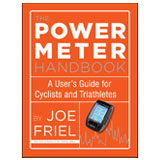
 which is a new eBook from Endurance Coach Joe Friel. In this new ebook, Joe lays out a simple formula that you can use to “ballpark” a student's FTP Functional Threshold Power (or your own for that matter) giving everyone a little more clarity about the first step in creating Power Training Zones. Do we need a new acronym here… PTZ?

