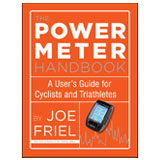
Cameron Chinatti excitedly emailed me about a discovery she made while reading The Power Meter Handbook: A User's Guide for Cyclists and Triathletes which is a new eBook from Endurance Coach Joe Friel. In this new ebook, Joe lays out a simple formula that you can use to “ballpark” a student's FTP Functional Threshold Power (or your own for that matter) giving everyone a little more clarity about the first step in creating Power Training Zones. Do we need a new acronym here… PTZ?
Cameron adds a bunch of additional detail during our interview and ICI/PRO members will see a link below to the spreadsheet tool Cameron created that does all the math for you 🙂
We're trying to understand the accuracy of this method and need you to add your experience if you can.
ICI/PRO is the independent resource for Instructors wanting to teach effective and entertaining power based classes. If you aren't seeing the link to the tool below click here to become an ICI/PRO member.
[ismember]Right Click > Save AsHere to download the FTP Tool. [/ismember]
I'm going to need a pair of these so I can see when Amy is slacking off on the Tandem.
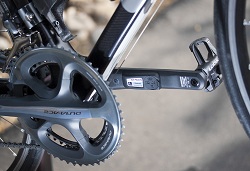
Stages Cycling has taken the technology they developed for the FreeMotion S11 series Indoor Cycles and is now offering the StageONE Power Meter to outdoor cyclists.
I don't have any direct experience other than a heads-up email announcing the launch of this , but there are two very informative posts from bloggers who are at Eurobike earlier this summer.
Stages Cycling readily admits that it's not necessarily trying to go head-to-head with established players such as SRM, Powertap, and Quarq in terms of outright technology, instead preferring to go after so-called ‘blue collar' riders who merely want a consistent means of tracking progress for training purposes.
Using a Bluetooth enabled device (the StageONE doesn't come with any display) you can add power and cadence for $699.00 which is less than half that of other systems = outdoor power gets a bit closer to being real for many of us 🙂
Will Grossman from Stages Cycling has promised me more information soon. Right now they are swamped with their launch and Interbike which starts tomorrow. Their website is supposed to go live today. http://www.stagescycling.com/
The “Heads Up Display” of student's performance data (watts, calories, cadence, HR, etc…) from Performance IQ looks like a fascinating addition to any club or studio. While not for everyone, the competitive element it introduces can make for a very exciting and motivating class experience.
But I had felt Performance IQ it was missing a few things:
The pre-class setup (entering all your students into the system) was a lot of work for the Instructor during the frenetic moments before class time.
There wasn't any option to collect or retain the each student's data.
The system only worked with the Keiser M3 Indoor Cycle.
All of that has changed now that Performance IQ is partnering with ZingFit who has a full-featured management system system for cycling studios. The beauty of this partnership is how well they compliment each other's service
Now…
Participants can reserve their bike online when they register for class using Zingfit's registration system. This in turn tells Performance IQ who's on which bike. No more need for the Instructor to do anything beyond starting their class and pressing the GO button.
Zingfit collects all the ride data from Performance IQ and displays it on a secure section of the Studio's website. Zingfit can even send an email to each of your students at the end of each class.
Performance IQ is now compatible with all Power bikes that use Ant+ (FreeMotion S11, Schwinn AC and CycleOps)
Listen to the Podcast below it hear all the details.
One of the next most important aspect of executing your research is having a way to accurately and consistently conduct the prescribed drills and record their results. This is the proverbial “before and after”; also commonly referred to as “baseline” and “performance testing”. This is so important that we researcher types typically like to be physically present for all Baseline tests, as well as final and/or intermittent performance tests.
The training that takes place between these before and after events can be conducted without this type of close oversight, provided the subjects have a clear understanding of exactly how the training is to be conducted. If all of the subjects performed the drills in different ways, they couldn’t realistically be compared to each other. Likewise if they performed the drill in nearly the same manner, but then recorded the results differently, we would likewise have a significant problem comparing results.
Consequently, researchers must emphasize how important it is to be true to the method of the training drills as well as the “before and after” measurements. The tools and techniques we use for gathering the results must be defined and assigned clearly.
Indoors vs Outdoors
Fortunately for those of us who are enlightened as to the power and benefit of Indoor Cycling, this is one of the times where the indoor environment really shines. We can control so many extraneous factors, that we are virtually guaranteed solid repeatability in not only baselining and performance testing afterwards, but also the day to day training if it is done indoors.
When working on a bike that doesn’t move, where there are no “imminent dangers” as there are on the road and trail, and where we can control both temperature and airflow, we have a typical “laboratory environment”. Some argue that this makes it also unrealistic, and thus brings any conclusions from the study under question. While there is merit to that argument, it can be put to rest by including outdoor baselines and performance tests along with the indoor protocols if that criticism seems to be worth addressing.
The advantages of the indoor environment doesn’t mean that we can’t conduct any of these experiments or trials outside, it just means we do have an ideal environment inside if and when we need it. If weather or traffic disrupt our consistency or flow in executing the drills prescribed for the study, we simply move operations inside and resume.
Muscular Endurance Baseline Test
Given the fact that we are studying muscular endurance (not muscular strength), we know that we want to have our test be one with a significant time duration. In addition, university researchers use “the point of failure” as an measurement indicator when researching Muscular Endurance, so will also incorporate this into our baseline protocol. Finally we have already defined the parameters of muscular endurance training to fall within a certain cadence range and at a heart zone of no less than zone 3. Thus we have enough details to create our specific Muscular Endurance Baseline Test Protocol.
Protocol Details:
Subjects will be instructed to warm up for 15 to 25 minutes before the test begins
Subjects will hold a steady pedaling cadence at an average of 75 RPM as far as possible
Subjects will find a resistance or gear level that will bring their heart rate into the middle of their zone 3 (using Heart Zones® methodology of zone determination)
The subject will increase their effort by 25 watts every 2 minutes and maintain the new wattage level without more than a 5 watt fluctuation
The test continues until the subject can not maintain the current watt level without fluctuating more than 5 watts, or they feel physically unable to continue increasing wattage.
Data Collected:
Date, time, location, and type of bike used in the test
Subject name, age, gender and self described fitness level
From minute 00:00 the following parameters are recorded precisely as they read on the bike console:
Time the readings were taken (00:00, 1:00, 2:00, etc)
Heart rate
Power Level
Cadence Level
This is starting to look like a real project now. In the next post we will discuss Sample size for the study, and recruiting those squealers, er… guinea pigs…. I mean volunteer subjects 🙂
It's a beautiful sunny Minnesota summer day here and I was enjoying it out on my old mountain bike. One of the reasons Minneapolis is as such a bicycle friendly city are the trails running everywhere. I really enjoy these smooth gravel paths because I can spend a couple hours JRA – Just Riding Along – link to a full descriptionwithout any real conscious effort of watching for cars or the other things that tend to consume you when you're out in traffic.
I used JRA to describe that first ventilatory threshold, VT1. It's the place; above chatty yet below focused effort, communicating the VT1 to the students in my class. It's a wonderful place to spend a few hours and when I'm here, working aerobically, my creative juices really start flowing.
So I'm JRA, when I came upon the sign alerting me that the trail was underwater. “Oh great, now I'm going to get all wet,” I thought. If you spend any time on the road or on a mountain bike, you know that a wet stripe up your back or soaked feet doesn't really add to an enjoyable time outside 🙁
I've ridden this trail for years. I realized that “trail underwater” typically means there's two or 3 inches of water from the surrounding swamp (I refuse to call it a “wet-lands”… it's a swamp), covering the trail. And I was right.
There are two strategies you can use to cross these little mini rivers, while staying as dry as possible; If the water's only a few inches deep the trick is to peddle as slowly as possible, minimizing any spray up your back. A little deeper and you'll be pedaling your feet through water, so you'll sacrifice I wet back to keep your feet dry. This requires a bit more finesse and can challenge your bike handling skills. You accelerate to the speed that you think you're going to need in order to coast all the way to the other edge, keeping your feet level, up and out of the water. Doesn't always work perfectly. You sometimes stall before the end and wind up doing a sort of rocking motion with your feet, engaging the freewheel through a small segment of the circle, hoping to propel your self forward, while keeping your feet out of the water and not falling over – which would defeat the whole exercise.
The challenge is going just slow enough.
After successfully navigating the water hazard and resuming JRA, I was thinking about how we're always talking about the maximum in class; the highest, what's your threshold heart rate, find your FTP, how long can you sustain this, etc. But we rarely try to define the other side of it… how slow or low should you go?
If you've taught for any length of time you've experience the “spinner”. That person who seems to think they're accomplishing something while furiously pedaling with no resistance. Having indoor cycles with power changes that. As part of my initial orientation I give a new student, I'll have them peddle with no resistance and watch the display. On the FreeMotion bikes no resistance equals no power. And it's a wonderful illustration to help people understand the futility of peddling and not really accomplishing anything of value.
[wlm_firstname] I'm not sure that I have the whole answer here so feel free to share your ideas.
I'm a big believer that every minute of class should be of value. Just as there are times outdoors when you have to go slowly, you are being productive… still moving yourself forward.
I try to communicate this need for productivity in every class I teach. I'll frequently lament the fact that I only have them for an hour. 60 min. isn't really that long, so let's not waste our time doing nothing.
How I cue this is easier with power, but the feeling is the same. I'll have everyone start the class with zero resistance. I'll ask everyone to find a comfortable cadence and begin adding resistance. I'll explain that productivity for each of us is different, and yet if were honest with ourselves we understand when we're there. My morning classes are typically a bunch of “A” types and I'll make the comment that busy work is not the same as productive work. “Just going through the motions may give the appearance of work to others, but deep down you understand whether you're truly being productive or not.”
My feelings are that riding “productively” should bring everyone to a HR near to or right at VT1 / base of Zone three in a five Zone system.
I reinforce the need for productivity at the end of the long interval. Recovery should be productive. I'll suggest to everyone that once they have recovered to the point where they feel some calm in their breathing, they need to return to that place of productivity – catching their Heart Rate at VT1 / JRA.
There'll be plenty of time, to fully recover, once we've crossed to the other side.[plulz_social_like width=”350″ send=”false” font=”arial” action=”like” layout=”standard” faces=”false” ]




 Study Controls
