Instructor Dennis Mellon presents his A little Bit of Everything profile as our 60th Audio Class PROfile! What has me most excited is Dennis has included a Harmonically Mixed playlist he created with Mixed In Key software on his Mac.
Dennis exemplifies exactly what I refer to when I say; “we provide a platform for smart, talented Instructors here at ICI/PRO!” It brings me huge pleasure to discover and then promote Instructors to our members around the world + produce their class profiles for your enjoyment.
We're convinced these profiles, from a real diversity of contributors, with help you grow as an Instructor and then keep your class filed with energetic and excited riders!
This new Audio Class PROfile will make an awesome addition to your rotation of class profiles.
Ride Profile: “A Little Bit of Everything”.
This is my “Go To” profile. This workout, like the title says, is a little bit of everything. Riders will work on all energy systems and all types of riding. At some point in this workout every rider will work on both their strengths and weaknesses. The ride will start with a warm-up followed by a Threshold Check. The first set will be a longer “around threshold” ride. In the second set riders will perform three, 2-3 minute, “above threshold” intervals. The Third Set is a sustained “Race” effort. The workout will conclude with three 1 minute max efforts.
You'll need this track – Proper Education to complete your playlist. Right Click > Save As and then open in iTunes. It should show in your Spotify / Local Files library and you can add it before syncing to your phone.
Listen to Dennis' presentation below.
Want to learn more about Dennis Mellon? Check out his website.
I love Shazam… have I said that before? Well I do. It's one of the few Apps I've used more than once on my iPhone.
I'm using the premium version which connects the track to Spotify – makes it easy to then add to one of my “fun to use” playlists for future addition to a new class.
Keeping my phone close to me, with the intent to be ready to Shazam a track, has become a habit. I'll also bring it to a class I'm attending to covertly swip an interesting track I hear 🙂
But there's one thing I haven't figured out; how do I tag the song, so I know where I got it from? NOTE: we've published so many of these free tracks that I'm always concerned that where I got it from, was here!
If you haven't yet, I would encourage you to listen to our latest Podcast that features 26 year old Cycling Studio owner Jessica Bashelor. If you're short on time, you really only need to hear the lead in where she describes her vision for her studio.
I knew that I wanted to have a really strong brand, that was based on; work and fun and music. And those are things that I sort of live by myself as a 26 year old.
Something about this interview has been bugging me until this morning. While riding in Amy's class it hit me. Jessica's brand doesn't include anything about education – zero. Just work/fun/music. Oh, and she throws in; taking life a little less seriously 🙂
Aren't studios supposed to be all about; coaching and purpose and threshold heart rate training and power training and weight loss and healthful living and fitness knowledge and, and, and?
Obviously not for Jessica or the rider's (I'd guess she'd never consider calling them “Students”) who pack her studio.
My generation wasn't any different.
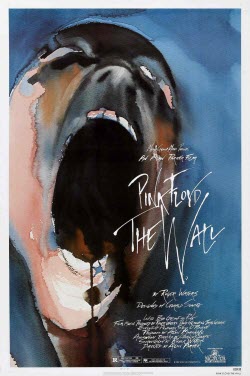
I was 18 years old in 1979 when Pink Floyd — The Wall dominated the the charts and captivated me and many of my friends. The album's most popular track Another Brick In The Wall, Pt. 2 spoke to me as a teenager; we don't need no education… we don't want no thought control…
http://youtu.be/zcevYuG3j7M
I didn't want anyone, telling me anything… I wanted to be heard and understood at 18, and this hasn't changed much now that I'm 52.
The Wall is a story about how we build metaphorical/emotional walls around ourselves. As a young person, or old for that matter, one way we build walls is we learn to tune-out people like our parents/spouses/bosses or teachers, when they talk at us, instead of communicate with us. As the father of two daughters, I know all about how ineffective it can be to try and “educate” them about what I wanted them to know and accept. It almost never worked. Often it had the opposite reaction and it wasn't hard to see them constructing their own wall to shut me out.
Sometimes the walls we create are small.
Have you ever had someone tell you; “I just answered that ten minutes ago” ? Chances are you created your own “wall” and it prevented you from hearing what could be plainly heard by others.
I was in a class last week where the Instructor talked nearly nonstop. While he rattled on about mitochondria and slow twitch muscle fibers, I found myself in my own little world – missing many of his cues. I'd come back to reality and find myself down when everyone was up or surprised when he announced the end of an interval, that I hadn't even realized we were doing. As I watched the rest of the class in the mirror it was obvious I wasn't the only one with a wall around me and my bike 🙁
I've always been a bit of a skeptic. While I don't typically use the exact words – prove it to me, when every I read/hear or discuss the next thing that will decrease/increase my lifespan, re-grow hair or magically increase fuel mileage by up to 80% – I instinctively question the message and/or messenger. For good reason. Often they're wrong… or or worse… lying to promote so agenda.
I'm not sure why, but for some reason I don't remember questioning the; too much salt is bad for you, line we've all heard a thousand or more times.
My Grandfather used to love McDonald's and White Castle hamburgers. “Two hamburgers and a coffee” was his typical order whenever he and I would sneak out for lunch. My Grandmother had a great sense of smell. Without fail, she'd know where we've been for lunch as soon as we walked in the door. She would begin harping on my Grandfather; “all that salt on those hamburgers will wreck havoc on your blood pressure. You know that”.
But as it turns out, much about what we've all been told about salt (and it's supposed negative health effects) is unsubstantiated by medical research… surprise!
Let’s begin with the 4 most important things you need to know right now:
1. There is zero evidence to support a drastic reduction in sodium intake.
A recent review of a study by the Institute of Medicine failed to identify a health benefit associated with sodium intakes less than 2,300 mgs/day, and concluded that there is insufficient evidence to determine whether sodium intakes of less than 2,300 mgs are harmful or beneficial.
In other words, there’s no evidence that a salt reduction will result in a health benefit (nor do we do know the potential consequences of reducing the salt content of food).
2. Reducing sodium intake can have unintended health risks.
But here’s what we actually do know: recent research highly suggests that low sodium intake can indeed increase health risks. Here are some of the unintended consequences of drastic reduction in sodium intake:
– Insulin resistance (diabetes) – Metabolic syndrome – Increased cardiovascular mortality and readmissions – Cognition loss in neonates and older adults – Unsteadiness, falls, fractures – Lifelong appetite cravings for salt
Despite this extreme lack of supporting evidence, here in America the Center for Disease Control and the New York Department of Health appear to remain intensely committed to their efforts to have us all consume less than 2,300mg/day, and for nearly half of us to consume less than 1,500mg/day.
The part about Insulin resistance (diabetes) really jumped out at me. My Grandfather developed Adult Onset Diabetes in his late 70's – he lived to 86. So I have as they say a “history” of this in my family = prefer not to get it myself. My lifestyle is nothing like his was; I'm very active vs. his sedentary / inactive life. My memory is that he was on a regiment to control his blood pressure (more history) most of his life. As elevated pressure was thought to be tied to salt intake, his doctor had prescribed a very low sodium diet. The guy almost never ate sweets, never snacked, overate or ate out at a restaurant. His wife cooked 97% of everything he ever consumed, always very low salt.
So now I'm left thinking; could his very limited salt intake, over a substantial portion of his life, have been a cause of his diabetes?