
by John | Oct 25, 2019 | Correcting Form, Instructor Training, Master Instructor Blog

Myth: Rider Setup / Bike Fit should be done before class.
Common sense says that the best time to help someone with their bike setup would be before class. After all, this new student has just walked in and they have 45 – 60 minutes in the saddle ahead of them.
So pre-class would be the best time, right?
Well… no, it probably isn't. And when you think about it for a few minutes, I'll bet you'll agree.
I got this myth from our local bike fit guru Chris Balser, who's actually known as The Bike Fit Guru.
Professional Bike Fit Myths
4. Saddle Height is not static. To demonstrate, bend forward and try to touch the floor. Do it again. Try repeating the exercise when it is cold, hot, at the end of a hard ride, before an easy ride, etc. It will never be identical because our activities and climate are always changing. Remember this when prescribed the “magic number”.
The point I think Chris is making here is that there are a bunch of external factors that can influence setting a rider's saddle height properly… the most important being the temperature.
Living here in the “Frozen North” we face the issue of “shrinkage” when we're cold – no, not that shrinkage silly 🙂 I'm talking about how your muscles and connective tend to shorten/tighten when they are cold. One of the worst feelings imaginable is how your back tenses up after climbing into a car, when it's been cooling all day in a 10° parking lot. You're forced bolt upright, with your back muscles near spasm and you can't bend forward to save to save your soul. Thank heavens for heated seats!
The opposite occurs when we are warm. We relax. Our muscles loosen and can extent completely. Is this beginning to make sense to you?
It's only after a thorough warm-up can a leg (or legs) comfortably extend. And proper saddle height can only be set with full extension.
So wouldn't it make more sense to check/adjust participants at the end of class?
When I rode with the top level cycling team here in Minneapolis, it wasn't uncommon for one to the club leaders to ride by and offer; “You need to raise your saddle 2 millimeters”. So I would. Except I can remember thinking the next morning when I went off on a training ride; “that can't be right… my seat is too high”, as I would feel the pulling in the back of my knee with each revolution. But then it would go away, or I forgot about it. Either way, once I was warm and could fully extend, my saddle height was exactly where it belonged.
Outdoor riding tip in cool/cold weather: If you leave home and don't feel slightly chilled for the first mile or two (or a slight pull in the back of your knee), you're wearing too many clothes – or your saddle's too low… or both.
But what about a new person to class?
I say get them close, but don't forget about them at the end of class. You could discuss this during your into/warm-up and then remind everyone during the transition/cool-down that you will be available post class to assess everyone's warm position.
I'm guessing you'll get more than a few takers – because I can guarantee that they've never heard this before.
Originally posted 2012-12-19 17:52:42.
by John | Oct 25, 2019 | Engage Your Students, Instructor Training

Question from a PRO member;
Hi John,
I hear you talk about your ninety minute endurance class and I would like to work up to a 90 minute class at our gym. Could you give me the details of how your class is structured for the 90 minutes? I have done some steady state rides in my class but this has been a difficult concept for my group to accept as some of them still feel that you have to “cough up a lung” to get a workout. Thanks for all that you do.
Teaching 90 minute Endurance classes can be tough for many Instructors, dare I say impossible for those of you who don't understand what I'm calling an “Endurance State of Mind” (with apologies to Billy Joel).
So you have some background, I've been teaching winter endurance classes since 1999. My Instructor job with Life Time Fitness resulted from one of my students (who was also a Lifetime member) complaining to the department head about the lack of “cycling specific” classes offered at their Athletic Level clubs. His recommendation lead to my 90 minute Sunday endurance class being the first regularly scheduled class of it's type. Along they way I've developed a class that seems to play well to those who desire this type of class.
NOTE: My class typically transitions to a full 2 hours in mid March. This year we will be starting March 11th – feel free to join us if you're in Minneapolis some weekend 🙂
So, what do I mean by an Endurance State of Mind?
Endurance is all about being able to endure something over time – and it's something you experience independently from others.
I can endure something along with you… but I can't endure something for you – that's for you alone to experience.
I talk frequently in class about the four components of Endurance:
- Muscular Endurance
- Cardiovascular Endurance
- Saddle Endurance – we spend a long time seated
- Mental Endurance
In a normal class your students are conditioned to look to you for direction, for the full time of the class. This isn't the case in my endurance classes; I'm trying to remove as much of me as possible from the class and teach everyone to look to themselves for direction, focus and motivation = Mental Endurance. It's very normal to find me riding in with the class and I may not speak for long periods of time, after laying out the basic profile. I see my role as creating the Place where we are all riding virtually. I find it helps to use structured video that includes a terrain profile.
Don't get me wrong, I'm still offering encouragement and cuing, it's just that it comes from a “we're in this together” rather than the “do this…now do this” typical teaching mode many of us follow in a normal class.
Here's where this maybe difficult for you – having an Endurance Frame of Mind requires you to trust in the capabilities of your students…. and then let them run with it. By capability I mean viewing every student as a self-directed endurance athlete. I actually tell them; I came here this morning believing each of you has the capability to successfully complete this class… now it's up to you to show that I was wrong.
How can you tell if you do or don't believe your students are capable? So many of us have spent our Instructing careers feeling as if we need to direct every minute of the class; every surge, hill, jump and recovery, or our class will become bored or lost.
Could you give them some short (yet specific) instructions and then let them do their own thing? Or create a place for them to be accountable for the time they are spending in your class… and then get out of their way?
Try this sometime: Lay out your plan in the introduction and explain that today everyone is doing what they feel they need. Then find a bike in the middle of the room, keep your cuing/coaching to the absolute minimum – and ride 🙂
Let me know what happens!
Originally posted 2012-02-21 18:15:54.
by John | Oct 17, 2019 | Best Practices, Instructor Tech Help

In this previous post I encouraged you to change your email password. Many of you must have followed my suggestion as I'm getting far fewer emails from hacked accounts. I continue to get them, but not the normal; “I've hacked your account and now I'll send a SPAM email to everyone in your contact list – which alerts your email provider. No. Now the bastards are getting sneaky…
Many of us use the “Out of office” / “I'm on vacation” auto response feature… and so are the hackers. They're only sending SPAM emails from a hacked account, after someone first sends you an email.
We're emailing ~ 10,000 Instructors every week. It's not uncommon for me to receive a few dozen responses; “Sorry but I'm off this week…” But now those responses include a link that is 100% SPAM.
Asking pleading with you here: Go in and change your password now if you haven't. If you are alerted that your account is sending a SPAM auto response go in and check to see if your vacation response has been mysteriously turned 🙁
And yes, I'm seeing this as another “Best Practice” of a Professional Indoor Cycling Instructor.
Originally posted 2012-10-11 07:54:11.
by John | Oct 11, 2019 | Engage Your Students, Instructor Training, KEEPING IT FUN, Promote and Build Your Class, Your Fitness Business
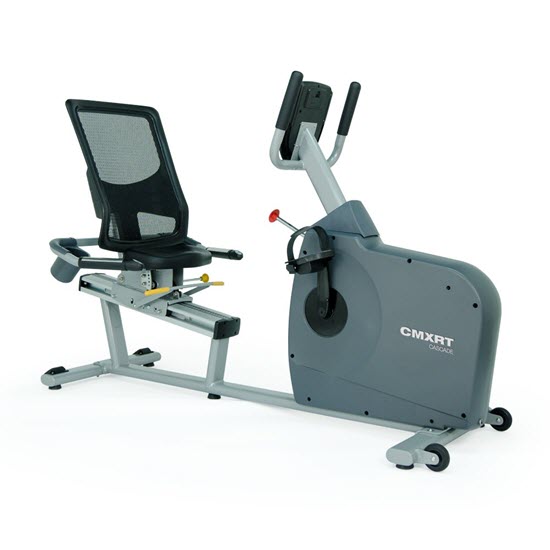
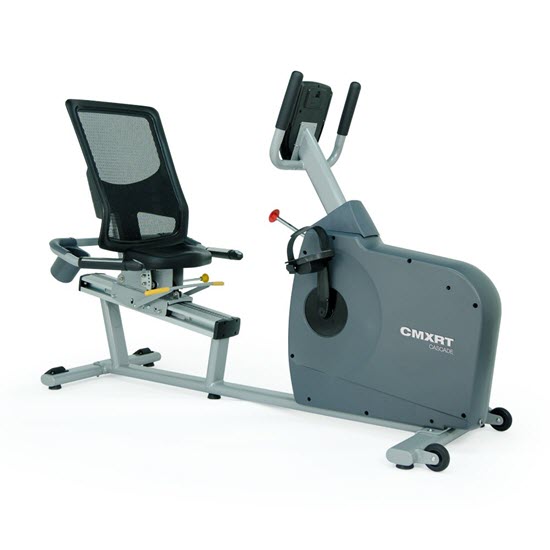
Would a few of these recumbents make your class more inclusive?
Would you agree that Indoor Cycles are a poor method/modality of exercise – for some populations?
There's a long list of people who would never consider participating in our classes, or even riding an indoor cycle alone at home. There's a bunch of reasons:
- Physical limitations
- Obese/overweight
- Existing injury
- Just plain afraid of that skinny, little, bicycle saddle 🙁
So, would it make sense to add a few recumbent cycles to your studio?
The reason I'm asking is because I met a great guy at this past IHRSA convention. John Kennedy's company, Cascade Health and Fitness, manufactures that recumbent cycle pictured above. He shared his idea to incorporate recumbent indoor cycles, into a traditional indoor cycling class, to accommodate people who won't or can't ride a conventional Indoor Cycle. I'll admit, at first it sounded like a crazy idea to me. But the more I thought about the potential to make our classes more accessible I got excited.
That would mean more butts-in-seats = people exercising. I'm all for that!
The first place I can see recumbents making a positive impact is in Parkinson's Cycling Classes. Parkinson's Cycling Coach Kathy Helmuth has taught me that many people suffering with PD have physical limitations.
The symptomatic relief that comes from cycling isn't available to someone who can't ride a typical cycle. A recumbent is completely different; a big comfy seat that sits low and a step-through frame that anyone who can stand should be able to mount. I think this could be a way to make PD cycling classes more inclusive. Awesome!
What about your run-of-the-mill cycling class? Would a recumbent work there too?
I've got no idea, so let's find out!
We're conducting an experiment
We're looking for two studios to participate in a trial to see what happens when you add a few recumbents to a cycling studio. John has offered two of their recumbents at no cost + you'll keep them in the end.
In exchange they're asking that you:
- Install the recumbents in your studio and make them available in as many classes as possible.
- Experiment with different class formats, profiles, cuing, etc. You'll be charting new territory here and I'm happy to help you as much as possible.
- Actively promote this new accommodation to your customers – running the trial to see what happens for two months.
- At the end of the trial you will be interviewed by me on my podcast We will explore what worked and what didn't, your ideas for improvements, etc…
- You'll provide a few short video interviews, where you discuss these classes with your actual participants.
Is this something you'd consider?
Then contact me and we'll discuss next steps.
Originally posted 2015-04-13 15:44:38.
by John | Oct 9, 2019 | Member Spotlight

When I was at the IDEA conference last summer I met the representatives from Demand Media. They create unique content for websites like Livestrong.com and ehow.com. The person from Demand Media told me that they were at IDEA recruiting Fitness Professionals who could contribute written and / or video content. When I returned I contacted a number of people who I thought would be interested. One of them was Leslie Mueller.
She just emailed me the link to her series of 15 videos on ehow.com that focus on pain prevention and stretching for different populations.
They look fantastic and I'm very proud of her! Feel free to contact me for additional information john@indoorcycleinstructor.com
A Speedy Post-Ride Recovery For Beginner Cyclists — powered by eHow.com
If you feel you have the talent to create content for publication at LiveStrong.com, ehow.com or one of their other sites you can apply here.
Originally posted 2011-02-13 13:27:41.
