This Podcast is was originally published on December 3, 2008, I have updated it with our new Podcast host information and I am representing it now. I hope you enjoy it, Joey
I met Gene Nacey, the founder of Global Ride, LLC, at the Heart Zones Convention last month. Gene premiered one of his new Virtual Ride DVD's during an Indoor Cycling Class. What's unique about these DVD's is that you can teach to them. I had a chance to talk with Gene during a short break in his “Nationwide Global Ride” promotion tour.
You can follow along with Gene's tour at his blog Here
Listen to the Podcast below or subscribe using iTunes or Zune.
This Podcast is was originally published on November 26, 2008, I have updated it with our new Podcast host information and I am representing it now. I hope you enjoy it, Joey
Keiser Cycling Master Trainer Suzette O'Byrne and I discuss their M3 Indoor Cycle and it's unique magnetic resistance system. Suzette also describes the focus of their Indoor cycling certification and module based continuing education programs. You can find Indoor Cycling Certifications and Workshops here.
You heard it here first!
I think Suzette gave me my first “news scoop“. Keiser Cycling is planning to announce a correspondence (home study) certification course by the end of the year. Listen to the Podcast for the details.
This Podcast is was originally published on October 10, 2008, I have updated it with our new Podcast host information and I am representing it now. I hope you enjoy it, Joey
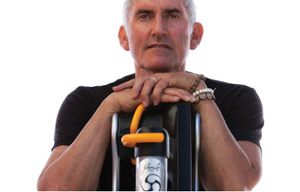
What a treat to be able to interview Johnny G along with Jennifer Sage as my co-host for this special Podcast. When you listen to him speak, it’s easy to understand why Spinning has become a household word.
Johnny G and Jennifer talk about their involvement with the Challenged Athletes Foundation at the Tour de Cove in San Diego CA. Jennifer is presenting and Johnny G is speaking during the 4 ½ hour Spinning Tour to raise money for the Challenged Athletes Foundation. Here’s the link to Jennifer’s Donation Page.
Next Johnny explains how his new Johnny G Krankcycle “competes with nothing, yet compliments everything.” Listen as he describes; his initial inspiration, what makes it special, group class formats and it’s use for physically challenged athletes.
This Podcast is was originally published on October 10, 2008, I have updated it with our new Podcast host information and I am representing it now. I hope you enjoy it, Joey
The first is that I’m going to be doing live Podcast Interviews at the Heart Zones USA – ACTIVE HEALTHY LIVING conference, coming up November 14th – 16th 2008, in Denver Colorado. I will be participating as a student in their – Level 1 (primary) and Level 2 (advanced) Cycling Instructor certification programs. I will be interviewing the presenters, participants and Podcast about my experiences as I go along. Will you be there? If so I would love to meet and possibly interview you. I am especially interested in following someone over the weekend who is getting their initial indoor cycling certification. Leave a comment or send me an email john(at)indoorcycleinstructor.com
Haven’t decided yet? Maybe this will help… Sally Edwards has offered my listeners a special 20% discount off the regular conference registration. Here is the special discount code to get your discount – trainersatconf08 You can register here
I promised two announcements. If you were me, doing a Podcast about indoor cycling, who would you feel would be the ultimate guest? Listen to find out if you were right. Be sure to subscribe to the free Podcast downloads. You won't want to miss what's coming next.
Listen to the show below or subscribe with iTunes with the link on the right.
Share this information with your athletes the next time they show up for a class and let you know that they are not going to follow along because they are “Base Training”.
For triathletes in the Northern Hemisphere, the season is almost over. Days are getting shorter, the weather is getting worse, and so for a lot of people training time is becoming limited and requiring that extra bit of motivation.
At this time of year you should be planning for next season and starting to think about winter training, which usually means a greater focus on indoor training. As such, a lot of athletes find themselves asking the question of how to make the most of their winter training. With time at a premium, and training over winter naturally becoming more about an hour here and an hour there, it’s important that you make every session count. My approach is to use winter training to ensure you see the biggest overall improvement in your performance come race season.
For the majority of triathletes, the area where most gains (in terms of time improvements) are to be had is on the bike. This means you must also alter your swimming and running in a way that will allow you to focus on your bike training while not completely losing your fitness in the other two sports.
Winter Bike Training
The ‘traditional’ approach to winter training is that of building your base fitness through riding long, slow miles. If you have the time (and weather) to do that, it’s still a great focus for your bike training over winter. However, most age-group triathletes and cyclists are busy balancing work life, family life, and training. The shorter, colder days naturally mean less time realistically available to train in any given session.
The winter focus that more often than not reaps the biggest rewards come race season is increasing your Functional Threshold Power (FTP) on the bike. By increasing your FTP over winter, when you transition to more outdoor riding in the spring, you’ll be able to ride faster for the same effort. And this will translate into material improvements over all race distances.
The good news is that it’s relatively simple to increase your FTP. The bad news is that it’s not easy. You have to be prepared to spend your winter doing some hard work. But as long as you’re prepared to work hard and commit to some intense indoor sessions you’ll reap the rewards and can start seeing a noticeable difference in as little as four weeks.
Winter Swim Training
This is the area that a lot of triathletes feel they need to focus on most because it’s their weakest discipline. If you’re a “middle of the pack” swimmer or better it’s tempting to aim to become a “front of the pack” swimmer by swimming three to four times per week and knocking a few minutes off your swim time.
However, let’s view the question through the lens of ‘how do I best make use of my winter training time?’ Is spending six to eight hours per week on swimming during the winter (once you’ve factored in travel and changing time) for a two minute time gain really time well spent?
For most triathletes, I believe you’re better off reducing the swim training to once per week, or even less. This is just enough pool time to maintain your stroke mechanics and then to build up again in the spring, when there is more daylight and hence more available training time.
For weaker swimmers, or beginners, your pool time in the winter is best spent practicing the correct technique, with appropriate drills, rather than training hard with poor technique and further embedding your stroke flaws.
Winter Run Training
It’s tempting to assume that in order to improve your running over winter, you need to be going hard and doing lots of tempo and interval sets. However, if your winter bike training is effectively focussed on building power, then that will take care of improving cardiovascular fitness. You can only train hard so many times in a week, and with that happening on the bike, it frees you up to concentrate on a winter of enjoyable steady running.
This will help develop your running mechanics and strengthen your ligaments, tendons and run-specific muscles. Then, as winter turns to spring and your biking focus moves towards endurance and away from top-end power, you’ll have the strength, fitness, and run durability to start to increase your running intensity without risking injury. Since the majority of triathletes are injured by running, this is an important consideration!
Below is an example of what an Annual Training Plan (ATP) using custom names may look like using reverse periodization. You can see that the volume stays low through the winter while focusing on specific aspects of each sport. As the weather warms up in March and April, the volume increases to build endurance for race day in June.
Especially for athletes racing long distance next year, the reverse periodization approach also means that you will reach the spring season feeling powerful, fast, and strong on the bike. This means that as you naturally increase the length of your long rides, you’ll be riding faster for the same effort level.
Boomer Rose is a BeatBoss & Schwinn® trained indoor cycling instructor with an AMAZING story. From the moment he first clipped in, Boomer knew his life changed. The ambience, atmosphere, and camaraderie of indoor cycling introduced the fact that a healthy high does exist. If you were to ask Boomer, he'll tell you it's hard to believe or even imagine the life from which he came. Here's WHY…
Boomer used to weigh over 300 pounds. He had a history of drug/alcohol abuse, homelessness, had been to jail twice, and had never held a real job. But … that was then and this is now … today, Boomer is a full time Crunch Fitness employee and teaches 3-8 cycle classes a week. He is adulting on the daily, has formed healthy relationships, and is an inspiration to anyone who struggles with anything. Most importantly, Boomer is happy, healthy, and strong!!! Indoor Cycling literally changed his life. Watch and listen as Boomer tells a little bit of his story here …….
Tonight, Boomer teaches a special and sold out indoor cycling class celebrating his 2 year milestone and it's going to be LIT!!! RockOn, Boomer Rose … ROCK ON!!!


 This Podcast is was originally published on December 3, 2008, I have updated it with our new Podcast host information and I am representing it now. I hope you enjoy it, Joey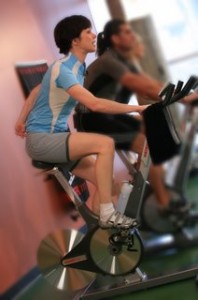

 This Podcast is was originally published on October 10, 2008, I have updated it with our new Podcast host information and I am representing it now. I hope you enjoy it, Joey
 This Podcast is was originally published on October 10, 2008, I have updated it with our new Podcast host information and I am representing it now. I hope you enjoy it, Joey