UPDATED 9/14 – We are no longer recommending the company involved in this podcast. When we renewed this month we were told we could no longer add an “additional insured” to Amy's policy unless we paid an extra $155.00. This is totally ridiculous in our eyes and we have gone back to Markel Insurance for Amy's liability insurance.
Indoor Cycling is experiencing a boom, with new bouquet studios popping up pretty much everywhere. This is great because all these new studios = more places for us to teach. But there's a small catch. Many of these new studios hire Fitness Instructors as independent contractors, not as true employees, but it shouldn't scare you away from teaching there.
There are multiple advantages for teaching as a self-employed contractor (you may be able to expense your fitness clothes and mileage) and a few disadvantages. The biggest being there's a very good chance the studio's general liability insurance won't protect you if someone gets hurt and sues you personally for millions of dollars 🙁
Professional Liability Insurance is designed to protect Instructors (you) and your family's financial assets, in the event that you're sued by a client. Many fitness businesses require contractors to have their own policy.
In a previous post; Low Cost Fitness Instructor Professional Liability Insurance I explain where I found a great deal (saved us $58.00) on an annual policy for Amy. I contacted the company for someone to interview and they provided Coleen Kelly, their Vice President Program Management for Aon Affinity and HPSO — Healthcare Providers Service Organization where we purchased Amy's insurance. This is no longer the case 🙁
Listen to my interview below (sound quality is low as we couldn't use Skype) and if you have additional questions you can call HPSO's info line 1.800.982.9491
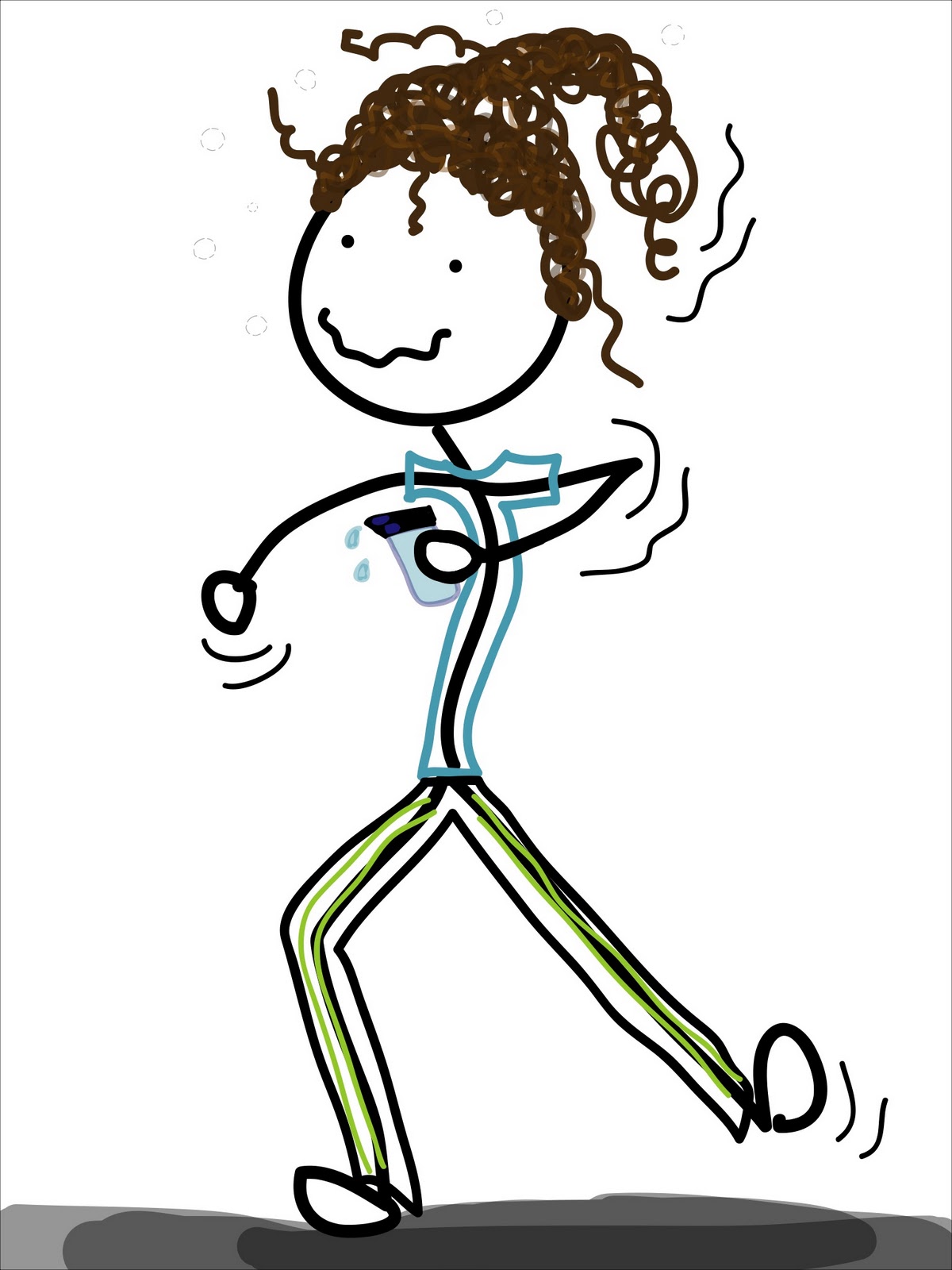
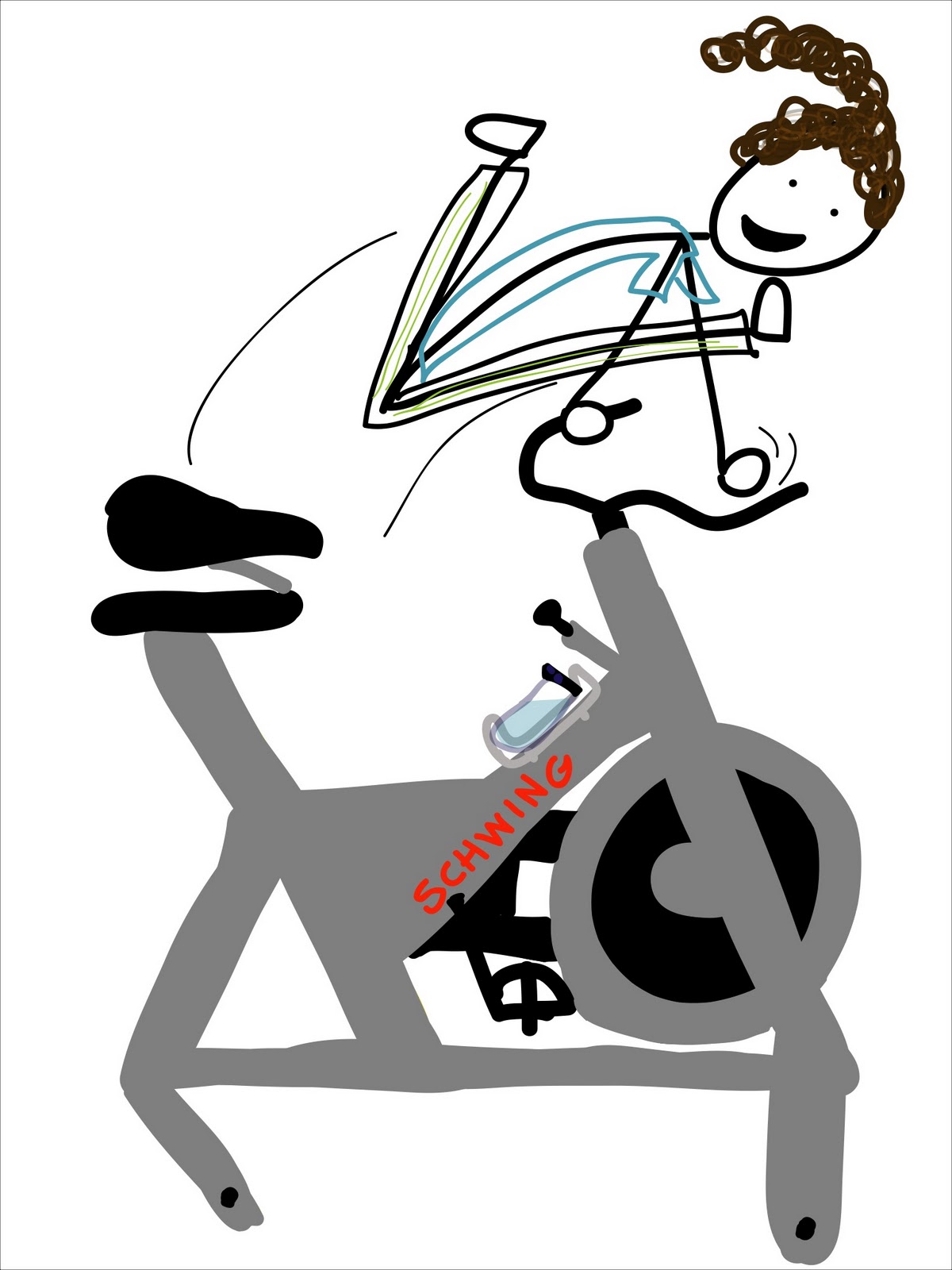
When I was back in Canada last month, my sister, known to all just you guys as GymSis, could not wait to take me to her gym. And since I had inspired her with the posts here, here, here and here, she felt compelled to drag her younger sister to her spin class. Oh joy.
People say we look like twins, but I don't see it.
She was kind enough to bring me a water bottle (courtesy of ChatterNephew). Oh hey, can we talk about this water bottle for a minute? I struggle with these in general. I avoid wide-mouth bottles when I can because I end up looking like I have a drinking problem.
No, like a physical problem.
I tend to do best with the adult sippy cup, a.k.a. the CamelBak water bottle. You just bite… and sip! (Anyone else hearing the “Bend and Snap”?)
I think we could all agree that I would be Paulette in this scenario.
Don't get me wrong, the *bite and sip* is awesome. But it did not prepare me for the fancy Contigo bottle. You have to push a button under the lip of the bottle that retracts the top so you can drink. There is a timing issue that GymSis had to explain to me after I may or may not have spilled everywhere: you let go of the button before you take it away from your mouth.
Well when you explain it that way…
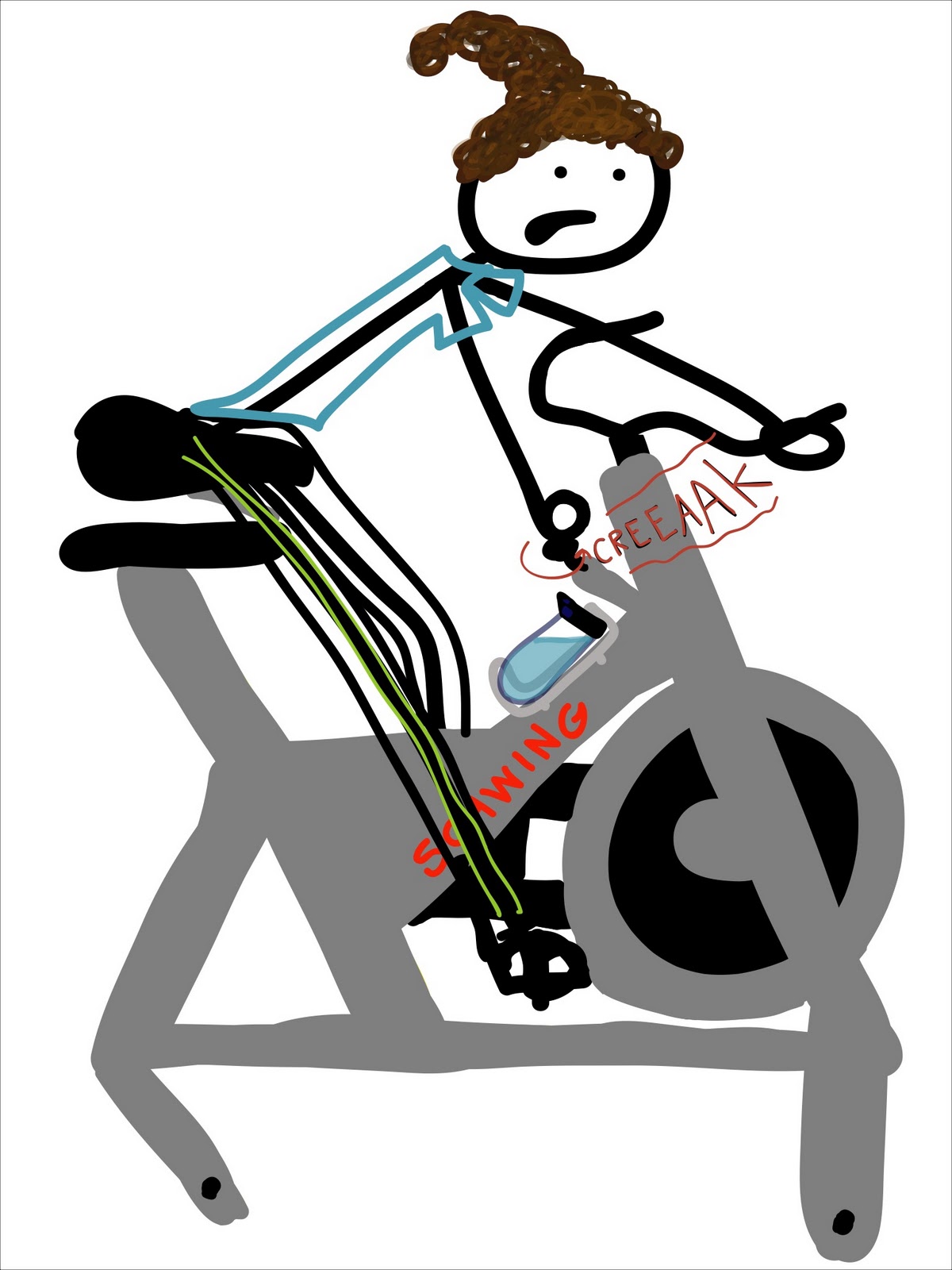
Ok, back to the class. We chose our bikes and hopped on; GymSis found one with a fancy, sparkly red seat.
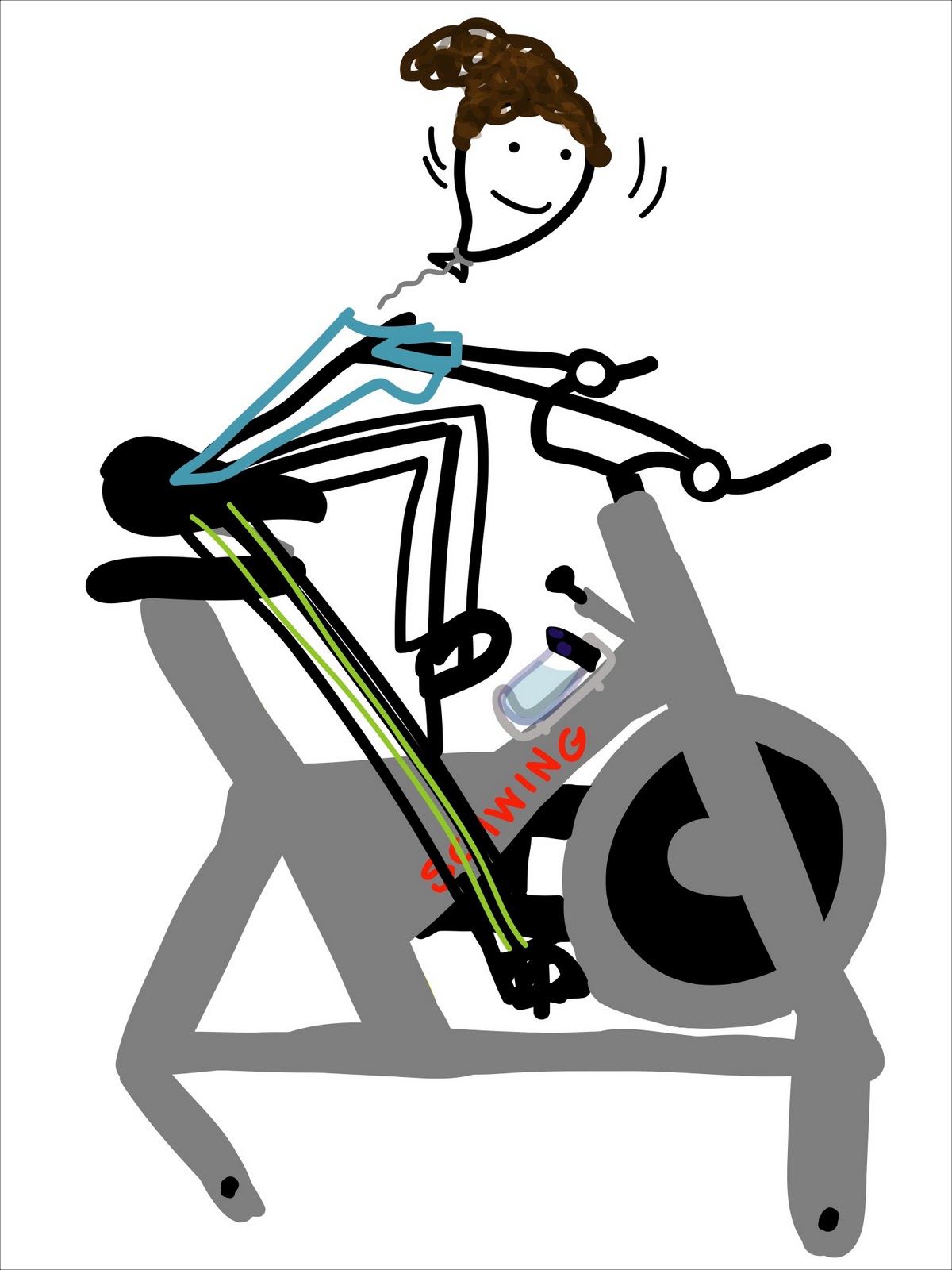
The bikes were on the older side, so the tension knobs were a little off. I would turn and turn and turn, spinning tension-free. Then suddenly I would just jerk to a halt.
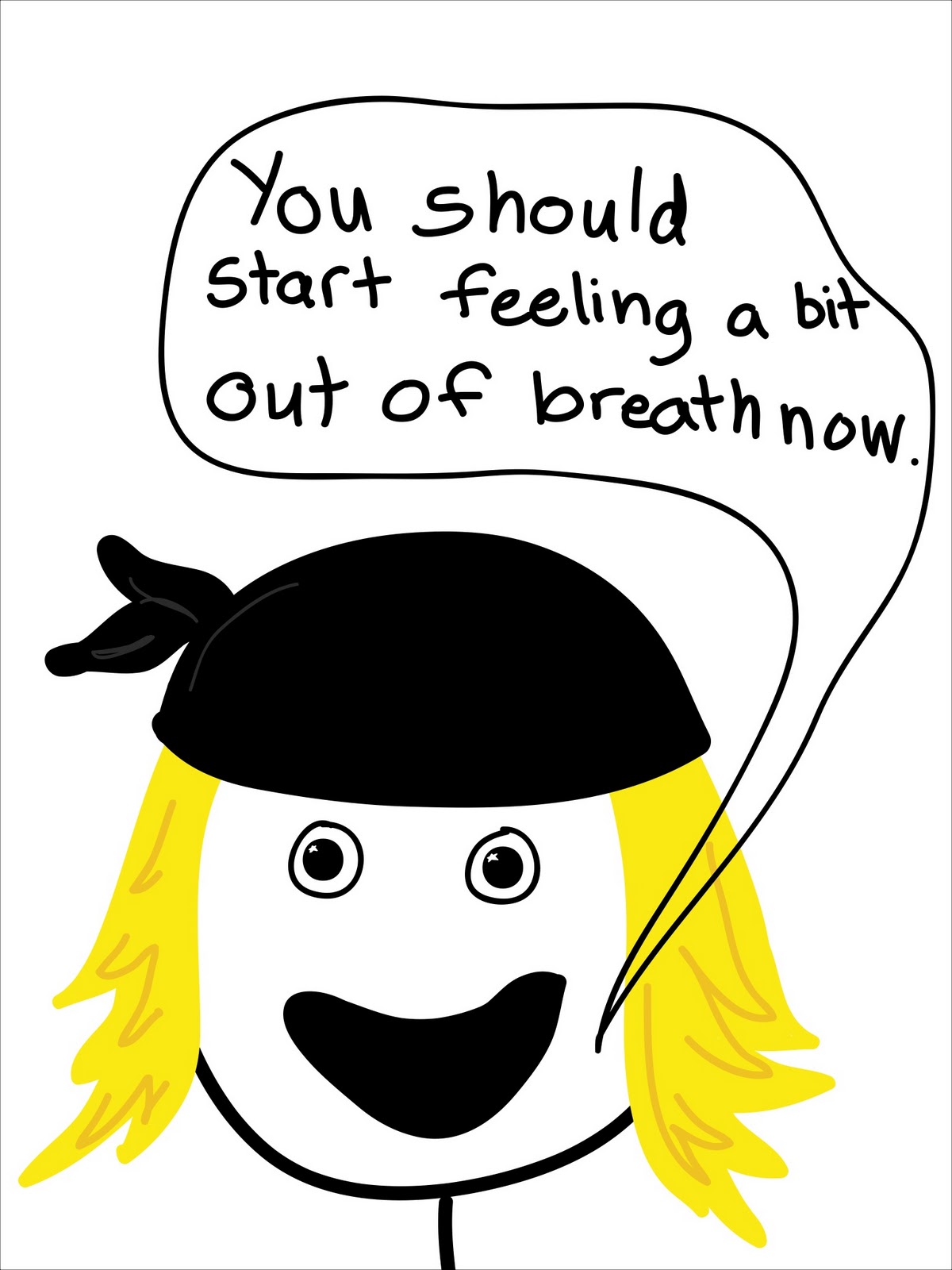
Once the class started, the teacher (her name was Natalie) always had lovely motivational phrases, such as:
And:
Start?? Really, Natalie? I think that happened when I sat on the bike. I was definitely a level beyond ‘slightly breathless'.
I got to try something new in this class: jumps. Natalie was once again very um, uh, motivating.
Side note: While talking about this later with my mom, she couldn't understand how we performed that maneuvre without hurting ourselves.
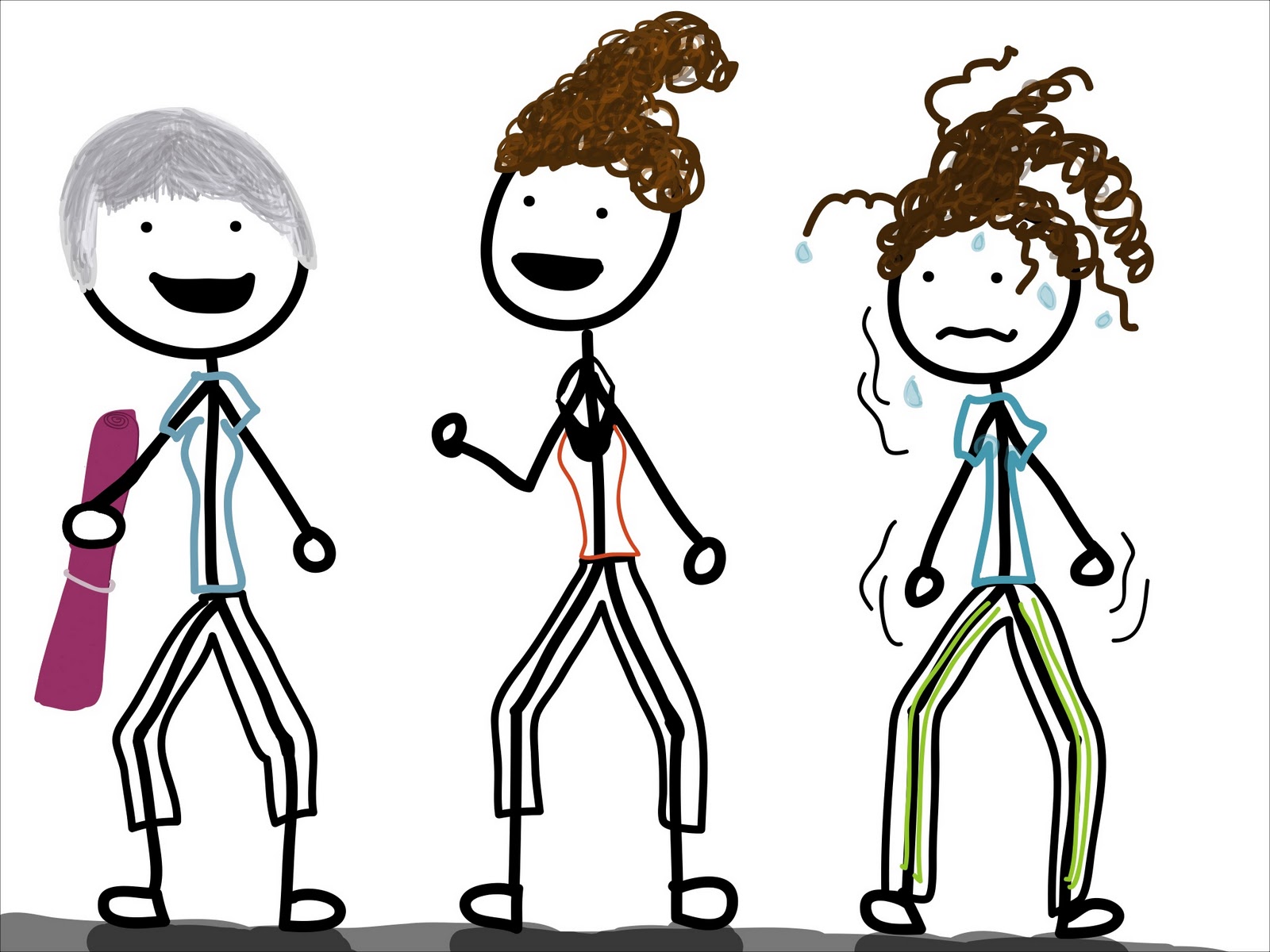
After surviving the ride, GymSis took me downstairs to meet our mom for a nice, relaxing BodyFlow class.
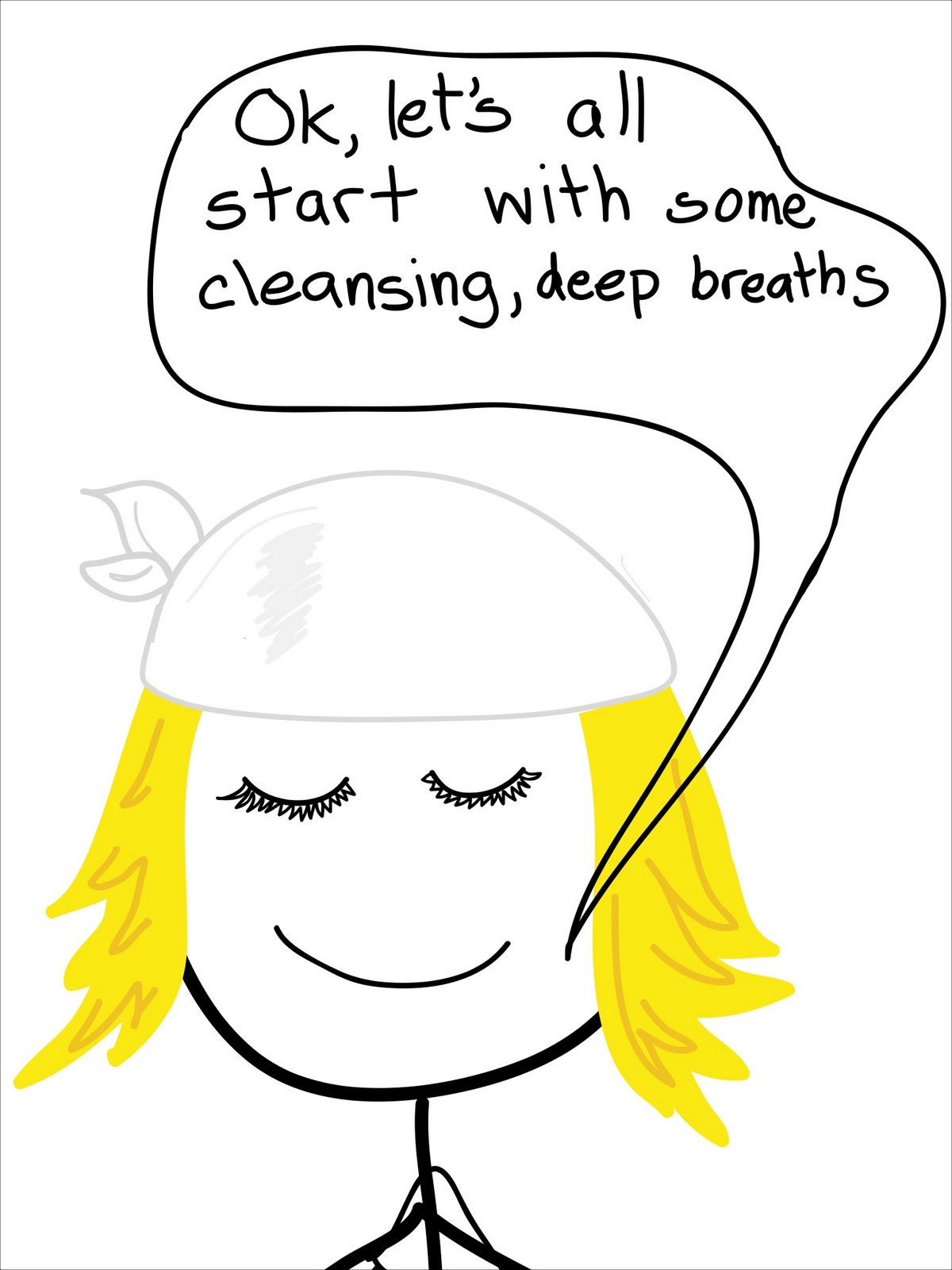
Imagine my surprise when I saw the instructor.
(That white scarf did not fool me.)
The class involved some tai chi,
some pilates,
and some yoga.
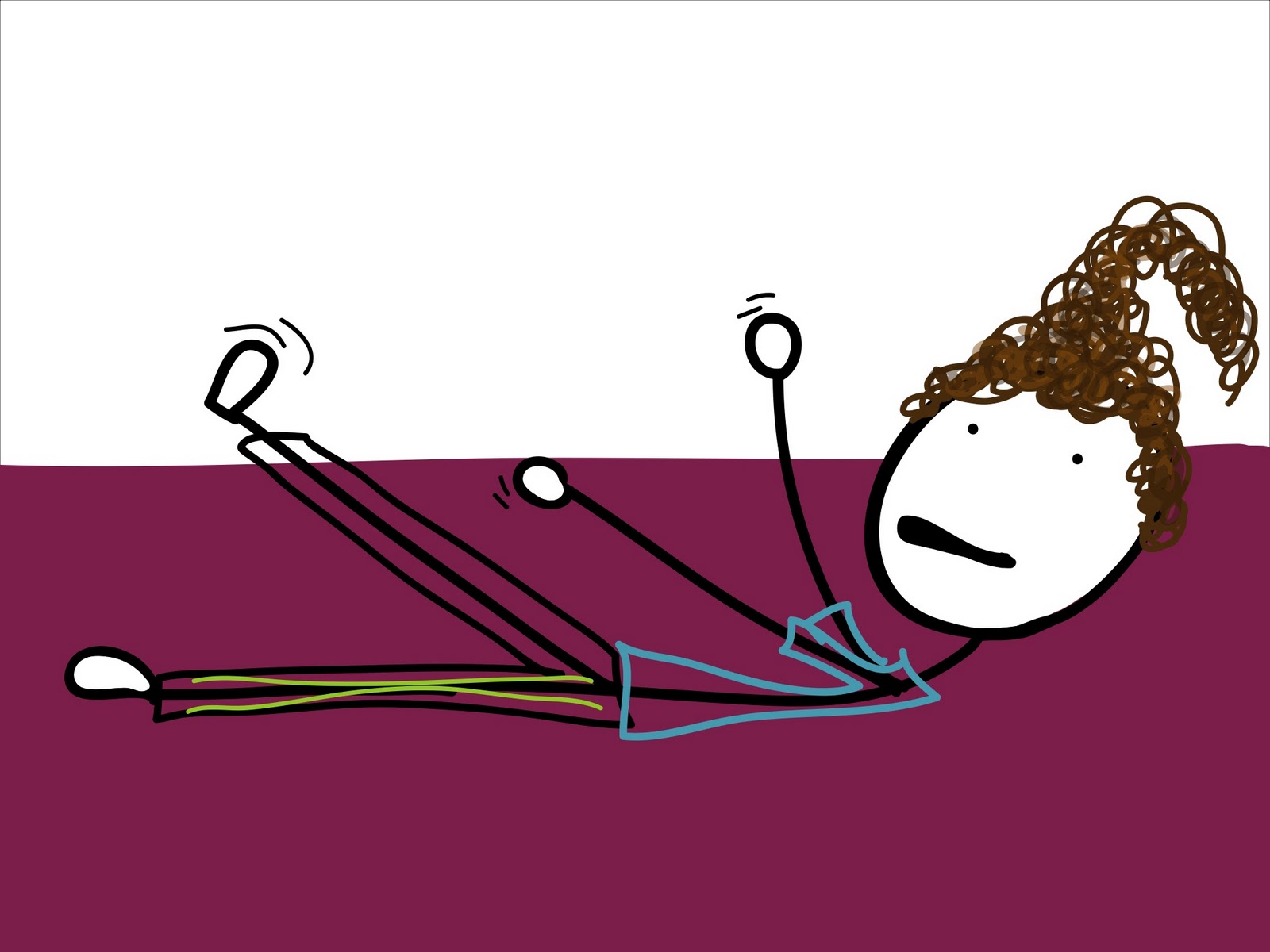
GymSis' bendiness is so impressive!
Hmm? What's that? Where's *my* yoga pose, you ask?
DON'T FORGET, you can go to my Zazzle store to buy your favourite TRI-ING TO BE ATHLETIC picture on a shirt, tote, mug, bumper sticker, or tech decal! There are lots of shirt styles and colours so look around. Let me know if you have any questions or requests 😀
I taught my last class today. My last ride so-to-speak. It all started seven years ago. I had been Spinning® for years. That day our regular instructor asked me to lead her class. She was just too sick.
To me – a pilot – it was like being asked to safely land an airliner because the pilots were incapacitated. Truth be told, I was far more prepared to land a 747 than lead the class. But I did it, and that is where my ride as indoor cycle instructor began.
Penning this post for ICI/PRO is – for the most part – where it ends. A memoire of sorts that highlights milestones of my journey from certified but lost, to Master Instructor, what I learned along the way about our craft and our industry.
Realizing the joy of being in the front of the studio, I took the first of countless certifications the next month. A one day, eight hour class. Leaving that afternoon I realized what I didn’t know.
I knew that to be the instructor I wanted to be, would require more than eight hours. So I did what all red blooded Americans do, a Google search on teaching indoor cycling.
Lucky for me John understands search engine optimization. ICI/PRO was top of the list and my life as an instructor changed.
Back then John was publishing ‘podcasts’ and posts talking about something he called Indoor Cycling 2.0. What?? I was in my car a lot in those days with my iPod plugged into the radio. I listened to it all trying to figure the best way to integrate such wisdom into my teaching.
There were guest speakers who discussed everything from music to very cycle specific training.
There were posts from this guy, Gene Nacey, who had started a company called Cycling Fusion. Gene wrote a book back then about training with power. The forward, written by Sally Edwards. Who were these people and why are they always talking about heart rate, power and cadence?
ICI/PRO offered class profiles with music suggestions. I found these very helpful but they had names like muscular strength or climbing power or aerobic volume training. It was all very overwhelming.
I realized what made it so overwhelming was that I had not really been educated. That my eight hour class hardly scratched the surface of what ‘training’ on an indoor cycle was really about.
My experience taking classes was just the opposite. My favorite instructor never did any of this stuff. I had reached a defining moment. Indoor cycling version 1.0 or 2.0.
I chose 2.0 because it had the education I yearned for and the structure that seemed missing from the classes I took. I had always been a fan of heart rate. Moreover, the new bikes at the JCC – where I was trying to land a sub job – measured heart rate and had power meters. I knew that seemed like the perfect combination but – at the time – had no idea why.
I got the sub job and a fair amount of opportunity to teach in those early years. I began my quest to get better through education. My sub classes (all I had at the time) were – unbeknownst to them – my guinea pigs.
Having read Gene’s Power Training Book there were some questions. I had found a way to land a ‘regular’ class in prime time by offering to do a power training course. I had questions, so I called him.
Gene is the quintessential professional. He always gave freely of his time to answer my questions. But he warned me, “Chuck where you are going you will discover a culture, the culture of indoor cycling. Good luck.” But more on that later.
Later that year he was doing the official launch of his new company, Cycling Fusion by hosting a summit of some of the most nationally regarded indoor cycle instructors. I’m not sure where I found the nerve, but I offered to kick off the summit suggesting that I was representative of the new 2.0 instructor. To my surprise Gene said yes.
The rest is history. My relatively short, but incredibly intense career really began at that summit, west of Denver high in the Rocky Mountains at Keystone Ski Resort. Why? I met Sally Edwards. Talk about unbridled energy. Sally – the only person ever inducted into both triathlon halls of fame – epitomizes it.
Suffice it to say that when I ran into Sally at the Denver airport after the summit I knew I was home. John led me into the room, Gene opened the window and Sally was the sunshine that poured through. There are not enough words to describe the learning one experiences working with Sally Edwards.
But if Sally was the sun shining on my personal learning crusade, Jim Karanas was the fresh air flowing through the open window.
Jim was indoor cycling 2, 3, 4 and 5.0 way before anyone ever heard of a ‘podcast’. Sadly, Jim left us a while ago, but his legacy lives on in all of those he touched. From Jim I learned to put the icing on the cake. That at the end of the day, it was not about me or just about heart rate or power, cadence or cycle specific training. It was about bringing to class the ability to touch each rider such that they were sure I was teaching class just for them.
When I made the choice to give up leading classes I did it with the knowledge that I had met my own challenge – to understand the whole of indoor cycling yes, but to touch the people who trusted me in a positive manner. How did I know? Simple really, rider feedback. Additionally, I had grown past the place where I was committed to only one way. I was comfortable teaching outside the keep-it-real philosophy that had governed my every thought for so long. I knew that Indoor cycling 2.0 was only a pass to explore and learn, not a rigid protocol to vigorously defend. That my job was not to suppose I knew what my riders needed, or how they got it, but to provide for them what THEY thought they needed that day. I can do that. I have done that. I am content. I have moved on but I have not forgotten.
In the coming weeks I will give John some additional posts written but never submitted. Posts that take a close, perhaps inside look at the realities of our industry. Fruit for thought or maybe, fuel for a fire.
It has been my privilege to have met and worked with so many great and talented individuals.
What message do you send from the bike, while conducting your class?
If that's that's of interest to you, here are two short videos to help you.
First is communication expert Alexa Fischer. She sets up her video on body language this way…
I was at a networking event recently (actually enjoying it, as I am wont to do), shaking hands, making small talk, when I saw her — arms crossed, head down, avoiding eye contact while she alternated between sipping her drink and scrolling through her phone.
And this made me think two things:
1. My friend, we’ve all been there. Who among us hasn’t felt nervous at an event filled with new people?
2. I want so much to come over and say hello! And ask you where you got that great haircut! But your body language is telling me you’d rather … not.
In today’s video, we talk about how body language affects how others view us, how our own body language affects how we feel, and how we can read someone’s body language and use that information to choose our words.
If you missed hearing our past interview with Alexa you can find it here.
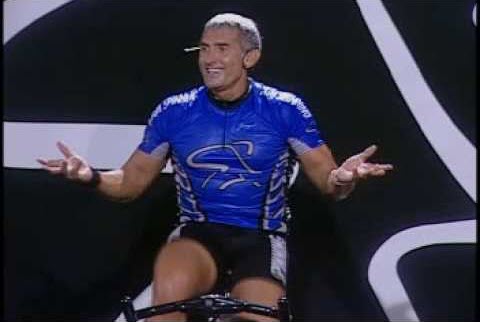
To build on the concept of projecting confidence, take a few minutes to watch Johnny G and see how he presents that “outward energy” on the bike.
Watching Johnny has me considering how often I sit up and project openness – rarely now that I think about it.
Do you spend the majority of your class down? Or are you sitting up frequently to reinforce an important point or simply to extend that outward energy to your class?
Here's a great opportunity for Indoor Cycling Instructors and Studio Owners to attract and serve a new demographic of riders – active seniors!
With over 12 MILLION members and 13,000 locations, SilverSneakers is a kind of quiet giant in the fitness industry. Participating senior citizens, across America, can take advantage of free access to health clubs and wellness centers that's paid through their health insurance.
The SilverSneakers FLEX program is designed for individual Fitness Instructors wanting to offer classes and activities at non-traditional locations. I've never stopped to ask, but I'll bet the large group of seniors we pass exercising in a local park on our Sunday AM bike ride is a FLEX class.
FLEX could be the perfect way to add some additional classes to your studio's schedule. Our FLEX approved Parkinson's Cycling classes are best conducted between 10:00 and noon. Seniors tend to eat dinner early (join us for the 4:30 blue plate special) so they might be open to a Senior Cycling class around 3:00pm.
FLEX Instructors are paid directly by SilverSneakers, so there's no cost to the participants. You can learn more by listening to this interview with Stephanie Wong – the Vice President, Field Operations for SilverSneakers' parent company Healthways, Inc. You can email her with questions; stephanie.wong@healthways.com
SilverSneakers is an industry-leading fitness program for older adults. It is delivered through a nationwide network of participating fitness locations such as YMCAs, Curves®, gyms, wellness centers and other facilities.
Our qualified SilverSneakers instructors will have the training and skills necessary to meet the needs of a rapidly growing population that values high-quality, personalized service.
Interested in finding out about our new FLEX instructor program? Click Here to download the program brochure.
Interested in becoming a SilverSneakers instructor? Click Here for more information.
So, we haven’t talk lately about design and that is part of my soul and the way I make “my leaving”. To me design is not only grabbing a pen and drawing — its way beyond that — it’s how you create momentum — it’s how you create experience — it’s how you get into people’s minds — its not only about drawing or colors — it’s the combination of emotions, experience, good taste, feelings, engaging and lot’s of out of the box thinking. Now I will take you to something that for most of you out there might think that I’m totally crazy but I want to share this experience with you. As some of you know, I’ve always been very active in sports and in the last year I’ve been sitting on my laurels doing nothing but working, working and working — so I’ve try a few things and none of them successful until I “discover” this year SPINNING®.
My wife one day told me about this beautiful new gym here in Miami — 360 energy in motion — she told me about the class that she took for free and afterwords she felt in love with it. So I say, well, ok let’s go, I’ll give it a try — but I think is a women sports — nevertheless, I will give it a try” So I step the day after into 360eim and immediately I felt in love with the place — very clean, very well though, very Zen (you can breath peace inside) and that its hard sometimes to accomplish on any gym — but this one have all the things that I dream to have in a gym without getting into an “extremely fancy luxury un-payable and boring place”.
So I took my first class with Scott Schlesinger a master instructor for Spinning® — men the rest is history — what a class, what a ride!!, great music (again very emotional — zen — feeling type) but at the same time very active — you sweat your ass there. Forget about the thing that I’ve said it was only for girls — this is SERIOUS workout. If you like biking you will LOVE Spinning. I felt in love with the sport because as a professional designer spinning gave me everything that my soul needs — great music (inspiration) — great coaching(motivation) — great experience (feeling)- good taste(bikes are beautiful and I cannot tell you about this place — is gorgeous!) — it’s 100% engaging and it will challenge you in a way that it will make you think out of the box by all means all the time. You get to know your self better with each class, guys believe me when I’m telling you that this is an amazing sport — you will sweat like you have no idea — you will feel strong in every sense of the way without getting yourself hurt and the risk is very low as you are pedaling indoors — don’t get me wrong — I love biking outdoors too — but with Spinning it doesn’t matter if it’s rainy out there, cold or hot, windy or dry you can still ride!!
I would like to share with you a few of this beautiful bikes and a nice video about a ride with Josh Taylor (the ride its called ANIMAL RIDE) at the netherlands with more than 500 bikes — listen to the coaching of this guy and imagine your self sweating every drop in this class — believe me you got to try at least one time and you will understand this lines. I got the opportunity a week ago to ride in a class here in Miami in another Spinning facility in South Miami with Josh Taylor and wow this guy was amazing. In another hand let me share with you this link about the gym 360 energy in motion if you would like to go and get your free class and try it — (yes, yes first class its FREE 100%) you will be amazed with the sport.
Everyone at this place are great at what they are doing Zsazsa and Gabby (the owners) are great teachers, Rinie, Jacque, Gustavo and Scott are amazing too plus you can have Yoga or Pilates classes as well!! But if you can’t go to this place for any reason don’t worry you can go to any other facility — just make sure that your teachers are certified by Spinning® ’cause there is a lot “indoor cycling classes” out there that are not Spinning classes and people could get confused about what the real sport is. But like I said before, the most important thing here is TRY go get anywhere you want but try and ride, you will love it.
also visit SPINNING.COM for more information on certified facilities around the globe.
… I’ll see you a few of you riding soon.
You can learn more about Charlie Green at this Facebook page.