I've been doing some consulting with potential cycling studio start-ups and a common question has been; should I consider leasing vs. conventional financing / paying cash?
My feeling is (to use the expression) Cash Is King for any small fitness business. If you listen to any of the past interviews (you'll find them here) I've done with Indoor Cycling Studio Owners, there are two common themes that keep coming up:
Studio build out and equipment costs are always considerably more than what's initially forecast in the business plan.
The business's cash flow doesn't ramp up as quickly as forecast.
Does it make sense to lease your Indoor Cycles… and possibly some of your other upfront hard costs like the audio/AV system, computers, technology PIQ/Spivi and possibly your studio's website? Saving your available cash or line of credit to carry you through a slow start (or surprise expense) maybe a good strategy. But it's a rather complex question to just offer a simple answer.
So I've found a fitness equipment leasing expert and I have an interview scheduled with him for this Tuesday Nov 4th. I met Joe Schmitz from F.I.T. Leasing at the past IDEA fitness conference and felt very comfortable talking with him. He's been in the equipment leasing business for a long time and he's agreed to help me explore the ins and outs of leasing.
When does leasing make sense for a new studio – or an existing studio looking to upgrade to new equipment?
When doesn't it?
Should I lease my indoor cycles directly from the manufacturer?
What other costs can be included, besides new Indoor Cycles?
What is the approval process?
Is it more difficult to get approved for a lease vs. a bank or SBA loan?
What documentation will you need?
Is there anything you want to do, or prepare for, in advance of needing your lease funds?
What happens at the end of the lease?
Explain any tax benefits of leasing vs. conventional financing or paying cash
Do you have specific questions you would like me to ask Joe? Let us know by Tuesday Nov 4th 10:00 central.
This interview will be published by Friday next week.
Please use the contact form below to explain your questions with as much detail as possible. Also include additional methods of contacting you if you'd like a personal response.
A member at our club asked me this morning asked me for a recommendation on a last minute Christmas present for her husband. She wanted to buy him some Indoor Cycling shoes, who she described as having “very wide feet”.
I know all about the challenges of finding comfortable shoes (of any type) that fit my very wide and flat feet 🙁 My kids have forever kidded me about how my two smallest toes don't lay flat – the Podiatrist called them Hammer Toesfor the way they fold back like the hammer on a gun. I'm convinced that I wasn't born with them. They got that way after being stuffed into narrow shoes for decades.
I've owned a bunch of shoes over the years, but none have been as comfortable as my old pair of Sidi Mega Road Cycling Shoes. Mega = mega wide and they saved cycling for me when they first came out. My pair has to be at least 10 year's old and I must have replaced the Look cleats on the bottom a dozen or more times.
But road bike shoes with flat bottoms and exposed cleats are far from optimal for indoor use. Her husband didn't ride outdoors, so what she was really looking for was a wide shoe with a recessed SPD cleat. My only suggestion to her was for the Sidi Dominator MTB Shoe which is their mountain bike shoe in a Mega width version.
Beyond that, I'm not aware of a wide shoe I could recommend to her. I spent some time searching online and wasn't able to find anything. There are lots of results for wide indoor cycling shoes, but everyone ended up being medium width.
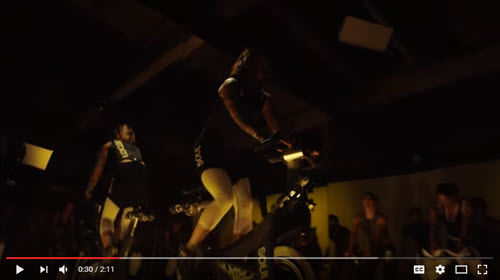
That isn't a normal SoulCycle Indoor Cycle she's riding!
I'd heard some rumors that this was in the works > Stages Indoor Cycles appears to be supplying SoulCycle with Indoor Cycles.
This would be a HUGE safety improvement to their classes. Why? Because the combination of a lighter aluminum flywheel + magnetic resistance greatly reduces the crazy pedal speedsseen in many classes using heavy flywheels and friction resistance.
Does this mean SoulCycle will be introducing Power based classes?
Check out this new, promotional video to catch a few glimpses of their custom branded Stages SC3s.In
Looking at this silhouette, there doesn't appear to be a computer or the Sprint Shift lever found on the original SC3.
Today is World Backup Day! Having a daily, scheduled, backup of all of your data is supercritical for everyone with a computer… especially Instructors who depend on iTunes to deliver their class music.
Here's a fun info-graphic that explains more > Courtesy of: Cloudwards.net
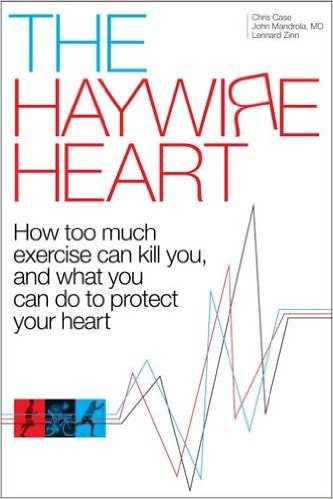
Beyond listening to our discussion below, you can get a Cliffsnotes understanding by reading Chris' original article, Cycling To Extremes, that was developed into his book.
Are endurance athletes hurting their hearts by repeatedly pushing beyond what is normal?
The sun was bright upon the upturned redrock Flatirons above Boulder, Colorado. It was a beautiful July morning in 2013. Lennard Zinn, a world-renowned technical cycling guru, founder of Zinn Cycles, longtime member of the VeloNews staff, lover of long rides, and a former member of the U.S. national cycling team, was riding hard up his beloved Flagstaff Mountain, a ride he had done a thousand times before. But this time, it was different.
His life was about to change forever.
When his heart began to flop like a fish in his chest, and his heart rate jumped from 155 to 218 beats per minute and stayed pegged there, his first reaction was simple: “I went into denial.”
He arrived to the ER that afternoon and was later brought via ambulance to the main cardiac unit for an overnight stay. Though he trusted the cardiologists and the ER doctor, he doubted their warnings. His denial was strong.
After following their recommendations for rest, he returned to training; the electrodes glued to his chest and the telemetric EKG unit dangling around his neck didn’t disrupt his routine. But the annoying episodes happening with increasing frequency during his more intense rides did. The flopping fish would return as his heart rate spiked. More upsetting was the phone call in the middle of the night from a faraway nurse who had been watching his EKG readings and had some shocking news: His heart had stopped for a few seconds.
Listen to the Podcast here – and then be sure to order and read this book. Then share what you've learned with your classes. You just might save someone's life!
Many myths about food and nutrition exist, but the 3 below keep coming up among prospective clients over and over. Let’s take a look.
1. Nutrition is only important for weight loss.
Yes, weight loss is the main reason people modify their nutrition. And yes, tons of weight-loss information is available online — and much of it contradicts other info you’ll find.
But good nutrition can help with many issues. For example:
– Do you have trouble recovering quickly after workouts?
The right food plan can reverse that completely.
– Do you have high blood pressure, diabetes, pre-diabetes, or other health problem? The right food plan can reverse those problems completely, as well.
– Do you experience mood swings? Do you feel as if you need more energy?
Once again, the right food plan can help you manage and reverse either (or both) of those issues.
2. Weight loss is just calories in/calories out. I can do it on my own.
You can do many things on your own, including decreasing calories. But be aware that foods are much more than the calories they contain. The hormones they trigger may be much more significant.
It’s not true that all calories are equal. Often, changing what you eat can make a bigger difference than decreasing how much.
3. Uh-oh: Major changes required. It’s too complicated and too hard.
It really doesn’t have to be hard. It’s absolutely possible to make small — and easy — changes that produce big results. But there’s a catch — you have to do it. And sometimes a good coach can help you make those small changes and get the results you want.
If you’d like help with your food in a way that’s easy, just click here and request your free Eating Empowerment Consult. Find out just how easy it can be to make small changes, step by step, that help you feel fantastic.




 . Mega = mega wide and they saved cycling for me when they first came out. My pair has to be at least 10 year's old and I must have replaced the Look cleats on the bottom a dozen or more times.
 which is their mountain bike shoe in a Mega width version.