by Joey Stabile | Aug 5, 2020 | Best Practices, Class Work-Sets, Creativity Indoor Classes, Instructor Training, KEEPING IT FUN, Master Instructor Blog, Training With Power
Welcome to the The Weekly Ride by Cycling Fusion
No more hunting for new music or counting out cues to develop your ride profile. Here is your ready to ride profile for a fully choreographed ride, that can be displayed from your phone, or printed out onto cue cards for your class. This ride is timed out, down to the second, to make your life as easy as possible!
(more…)
Originally posted 2018-06-12 06:36:07.

by Tom Scotto | Jul 30, 2020 | Master Instructor Blog
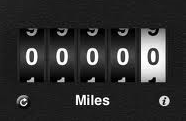 I appreciate all of the comments on the previous post which discussed what those kcals were. Let’s continue with another number often found on our indoor bike computer (and other fitness equipment) – TRIP or Distance Covered.
Looking at your total distance number at the end of a cycling class can often provoke 2 very different responses: “Oh, that’s cool” and “No Stinkin’ Way!”. Someone who doesn’t do much riding outdoors may not have a perspective on (1) how fast they would actually be riding and (2) how far they could go in, say, an hour. This rider may see a TRIP number of 20.0 — 22.0 and think “oh, that’s cool”. Another rider who is accustomed to tracking their distance when riding out doors may view 26.0 to 28.0 (miles) after a steady hard class and say (out loud) “No Stinkin’ Way”.
What’s going on here?
As I coach, you keep hearing me talk about all of these “factors”. I seem to have factors for everything from cadence to training zones to power output to riding aero on an indoor bike and the list goes on. Well, smirk if you want, but the Tom Scotto FACTOR-Y is going to churn out a few more. Indoor bikes and fitness equipment that calculate distance are often only looking at a single measurement. For the indoor bike this would be the rotations of the flywheel (heavy wheel providing inertia/momentum). The bike computer simply adds up the number of rotations of the flywheel (not the legs or pedals) and determines the distance as how far the wheel’s circumference has traveled. Since there are no internal or external gears like on an outdoor bike, one rotation of the pedals ALWAYS equals the same amount of rotations of the flywheel. What are some of the other factors? How much resistance the rider is using can play a significant role. Is the person pushing a lot of resistance which could indicate a “fast” actual speed or spinning at high cadence with little resistance translating to a slower actual road speed? Is the rider going uphill or downhill? What about wind resistance (no, not the fans)?
Here is an example from one of my riding experiences and the factors:
A number of members from my team would travel to Turkey every year for a couple of weeks to train in the mountains in warmer temperatures. One day, after having our traditional cup of Çay (Turkish tea), we headed toward one of the bigger climbs in the Taurus mountain range. It took us about 30 minutes to ride to the base of the mountain road where the climbing began. We climbed for 3 hours, transversing close to 70 switchbacks (sharp winding turns in the mountain road). We descended on a shorter back road for 45 minutes and arrived back at the cafe. One of the locals sitting at an outside table asked us how far we had traveled. I confidently looked at my bike computer and was disappointed to read only 48 miles. We were out for over 4 hours and only covered less than 12 miles per hour. In this case, my computer was not incorrect because it included ALL of the factors involved in my ride (the foremost being going “slow” uphill).
Simple Math?
Bringing it back to our indoor bikes, due to the factors that the bikes are NOT considering, the number we see displaying as our TRIP distance will rarely ever be accurate. So what is it? Each manufacturer may calculate this differently, but here is the formula for the Keiser bikes:
– 200 revolutions on the Keiser M3 = 1.0 (TRIP)
– Flywheel is 49 inches in circumference
– 1 revolution on crankarm = 8.75 turns of flywheel
– 49 x 8.75 x 200 / 12 = 7145.8 feet
– 1.0 on our computer = the rear flywheel traveling 1.35 Miles
Remember, the above calculations do not include the “factors” so we are still ONLY measuring how far the circumference of the flywheel is traveling. So what is the TRIP number good for? Since it is directly linked to our cadence (the more pedal rotations the higher the TRIP), one can observe if their overall cadence was higher or lower for a given ride or effort. Although the Keiser bikes already provide an average cadence number, the TRIP can tell you how many rotations you pedaled during the class (divide your trip by 200).
So, as instructors, it is important that we understand how these number work and what they represent. This will enable us to give sound guidance to our riders so they can view their efforts with a touch of reality. This will better prepare them (and not discourage them) if and when they venture outside.
Originally posted 2011-03-10 07:00:15.
by Jim Karanas | Jul 27, 2020 | Master Instructor Blog, Mental Toughness
 By Team ICG® Master Trainer Jim Karanas –
What’s the use of a state-of-the-art bicycle and a robust training plan if the rider hasn’t developed spirit or mental control?
Many coaches will tell you that no equipment or training method has value unless it helps to develop your spirit. Those coaches search for ways to infuse a calm and balanced mental attitude in their students and assure heightened clarity of perception. They may turn to enlightenment/spirituality to help students understand life better and cope with its complexity.
In the pursuit of effortless power on the bike, you must know that you are more than your intellect tells you. Training that emphasizes discipline of mind and recognition of spirit is paramount in that. To my understanding, two concepts are the basis of all training: center and intrinsic energy. In previous posts, I’ve referred to these as balance and aliveness or vitality.
I first witnessed effortless power in the mid-1970s at a martial arts demonstration. An aikido master displayed the power of ki (or chi), our intrinsic energy. With the slightest shove, he sent the five students attacking him into the air and onto the floor. The attackers appeared to be on wires doing a Hollywood stunt.
The next time I witnessed it was in the late 1990s at an indoor rowing regatta. The women’s world record holder for 2000 meters was on a rowing ergometer, warming up for the upcoming heat. The power output on her computer and the ease with which she rowed simply did not match. It was the first time I witnessed the combination of advanced fitness and the effortless generation of power.
I saw it again in 2002, during an annual time-trial up Mt. Diablo in Northern California. I was pursuing the coveted “under an hour” t-shirt for the 10.8-mile, 3200’ ascent. Most of the way, I followed a giant of a man, 6’4” tall, who outweighed me by 50 lbs. He wasn’t built for climbing but floated up the mountain effortlessly. He broke the hour and I did not. What I saw didn’t match what I believed he should have looked like on that climb.
My first personal experience with effortless power was in 2006, during the Furnace Creek 508, which I rode in 33 hours and 49 minutes, qualifying for RAAM. It was my pinnacle in cycling, training and racing. During my race preparation, my coach instructed me to “forget everything you think you know about cycling.” I learned that you can’t train your way to effortless power.
Although effortless power is not a result of fitness, fitness does result from the necessary training that culminates in effortless power. The simplicity is what I still struggle with, even to this day. It’s not a constant state, being centered and channeling intrinsic energy. The last time I experienced it was in 2008.
Center, maintaining balance, is always a struggle because of our chaotic reality. I spoke with one of my mentors recently about the difficulty of maintaining balance if you’re involved with business, friends and family, or are at an age where health matters manifest. Balance is more achievable when things are simple. In our society, living simply takes great discipline and sacrifice. Our balance is in constant flux, and so is our ability to achieve effortless power.
Sensing intrinsic energy is easier for some than for others. It’s not a simple declaration that you’re happy to be alive. It’s not a thought at all. Thinking obscures the sensation of feeling alive, even though it’s inherent in everyone. It takes discipline and practice to stay constantly aware of it, even more so to direct it. I spend time in all my classes searching for new ways to communicate the sensation. Without it, effortless power can’t be experienced.
In part 1, “What About The Watt?” I alluded to an indoor cycling practice that uses watts for something more meaningful than measuring power and improved fitness (along with its inevitable decline).
The watt measures force. How much force you can apply is a perception. So watts represent a limitation — in your mind — of your ability. Typically, to improve your ability to generate watts, you train your fitness. This improvement is short-lived. My experience is that generating watts beyond your current belief system is largely unrelated to fitness. It’s related to balance and your ability to coordinate and direct your intrinsic energy.
If the training you provide in your classes deals solely with fitness improvement, your students will never sense effortless power. Their watts may go up for the short term, but will eventually decline and disappoint. If, instead, the training you provide deals with achieving balance and coordinating the sensation of life, the students’ watt display will, at times, feel effortless, regardless of age. The pursuit of that engages the student for life and will lead to greater clarity and understanding.
Accepting that effortless power happens can be difficult, but becomes more possible once you witness it or experience it yourself. To experience it, however, you must have the discipline to deviate from the way you currently train and train others.
You can experience this through indoor cycling and using watts. My next post will provide pragmatic, specific, how-to exercises for leading yourself and your students to effortless power.
Originally posted 2012-12-10 04:43:02.
by John | Jul 21, 2020 | Instructor Training, Master Instructor Blog, Zone based Heart Rate Training

Cameron Chinatti from Stages Indoor Cycling alerted me to this Indiegogo project: BreathAcoustics All-in-One Headset. She was excited by it and I can see why.
I've spoken with the inventor Nirinjan Yee who's the CEO and Founder of BreathResearch and we will be recording an interview this coming Thursday morning – I'll try to have it posted by Friday so there's still time for you to help fund this project.
Nirinjan has some big hitters on her team including Sally Edwards and Dr. Carl Foster. Dr. Foster is conducting clinical research at UW Lacrosse to validate if this headset can accurately identify VT1 (first ventilatory/aerobic threshold) and VT2 (second ventilatory/anaerobic threshold) by measuring the distinct changes in breathing that occur with changes in intensity.
Breath Acoustic All-In-One Headset from Nirinjan Yee on Vimeo.
Here's why I feel this project is worthy of your support.
Perhaps the hardest part of teaching/Coaching Indoor Cycling / Group Fitness classes is effectively communicating your intended intensity.
Effective communication requires a common language between you and your participants.
How hard is HARD? What exactly does MODERATE feel like? Is my perception of an “8”… the same as yours? All of those descriptions are subjective = they only mean what I (me/you) think or feel they mean.
Walk into a Home Depot and ask for a gallon of Red paint – or – visit Amy at the makeup counter and ask for Red lipstick. Both Amy and the paint salesperson will ask; “we have quite a few different Red's… which shade are you looking for?” Then they'll show you a chart with all the different shades of Red for you to choose from.
With out realizing it, you're probably doing the same thing in your classes. In our attempts at getting our classes to work where we want them, we introduce more object descriptors = we'll probably be cuing to breath & breathing patterns; you've first noticed your breathing, need to open your mouth, jaw dropped, lost interest in speaking, sound like a freight train, gasping for air! etc… to help our riders understand the intensity we're looking for in class.
Next, we try to correlate those breathing patterns to a Heart Rate number or HR Zone; when you feel that early change in your breathing you're crossing your Aerobic Threshold T1… That strong, rhythmic breathing (without feelings of distress) has you in the middle of Zone 3; etc…
So why do we try to tie breathing (direct indication of intensity) to a Heart Rate number? Because it's really (beyond watts) the only objective measurement we can easily (and repeatably) make and we do so by using a heart rate monitor. We then assign a range of HR BPMs to a “Zone”. These HR Zones* become the common language between you and your students. If everyone knows their HR at VT2 (AT/LT) I can simply cue; “I need everyone at threshold” and the class understands.
Is there something magical about a specific Heart Rate BPM? Not at all… your heart is just responding to requests for more or less O2 and energy from the muscles it serves. Those requests are based on intensity and IMO anything that could improve the connection between intensity and Heart Rate BPM will help us to more effectively communicate with all those smiling faces riding in front of us.
Improving that connection (without needing to wear one of those awful New Leaf masks) sounds like something we should be supporting. That's exactly what BreathAcoustics is trying to accomplish with their Indiegogo project.
*I'm continuing my crusade advocacy toward the fitness industry adopting a common HR Zone system and have a number of expert interviews planned for later the Fall.
[plulz_social_like width=”350″ send=”false” font=”arial” action=”like” layout=”standard” faces=”false” ]
Originally posted 2013-09-14 09:02:35.
by Jim Karanas | Jul 18, 2020 | Master Instructor Blog, Video PROfiles

By Team ICG® Master Trainer Jim Karanas
At the Indoor Cycling Group, we believe that teaching with video will be the next wave to influence Indoor Cycling, differentiate in the eyes of customers, and keep instructors from being seen as a commodity by the big-box clubs.
Media consoles like Myride®+ will enable instructors to work with cycling videos more easily than ever before.
- It takes only seconds to create a video playlist of any length and any profile from the most extensive cycling-video library in the world.
- One touch moves the video forward or back seamlessly from one point in the video to another.
- Organizing the video library by terrain type (flat, mixed, climb, descent) gives instant access to any type of terrain with just a touch.
- Cutting-edge technology enables any video to fit any piece of music, and vice versa.
The strategy here is simple. Movies are slick, impact our physical sensations and drive emotion. ICG® is speculating that, once club operators see the quality of our video and its ease of use, they’ll want to offer it and get an edge on their competition. We wouldn’t be doing this if people weren’t already asking for it.
Now it comes down to us, the instructors. To differentiate ourselves and go beyond being a commodity — one that club operators see in blanket terms regardless of how much we invest in our education or how high the quality of our classes is — we have to be ready and able to teach with video.
We’re guessing that this transition will be hard for many instructors. Anytime change feels intimidating, we tend to dodge it. At ICG®, we don’t see that as good for the industry, or for us.
When the change feels too big, we’ve got to shrink it to make it more manageable.
[!private ‘PRO-Platinum|PRO-Monthly|PRO-Gratis|PRO-Seasonal|Platinum-trial|Monthly-trial|PRO-Military|30-Days-of-PRO|90 Day PRO|Stages-Instructor|Schwinn-Instructor|Instructor-Bonus|28 Day Challenge']
“Shrink the Change” has gotten a lot of press lately. Chip and Dan Heath, authors of the bestsellers Made to Stick and Switch, have discovered that the rational mind and the emotional mind are two different systems. The rational mind wants to change something; the emotional mind loves the comfort of the existing routine. This tension can doom a change effort. If it’s overcome, though, change can come quickly.
We believe that the Myride®+ technology, along with our latest online tutorial will shrink this change and make it easy and fun for everyone to use video in their classes. For instance, with just a touch of the screen, you can display a forward-moving flat road — indefinitely. You can do the same with a climb. Or just use beautiful scenery without forward motion. You can pause and start, prepare fully, partially, or not at all. BTW, the online tutorial is free for everyone.
Three videos follow that demonstrate how incredible it is. These videos have been selected from over 30 that make up our online tutorial. Each one is a gem and shows you another cool way to use Myride®+ and/or teach with video.
NOTE: These are massive HD Video files – click play and then stop… and wait for the video to buffer before clicking play again if you have a slow Internet connection.
Teaching with Video Introduction
//
Teaching with Video Road Ride
//
Teaching with Video Trail Ride
//
We’re launching Myride®+ at the IHRSA 2012 trade show on March 15-16 in Los Angeles at Booth 1201A. I hope you can come by and join Team ICG® for one of the 20 Myride®+ demo rides we’ll lead over the two days.
Will we see you there?[/!private]
Originally posted 2012-03-12 17:13:49.
by Jim Karanas | Jul 12, 2020 | Master Instructor Blog

Team ICG® Master Trainer Jim Karanas
In order to excel in a sport or activity, it’s necessary to train specifically for that activity. The term “cross-training” refers to a routine that involves different forms of exercise. The idea behind it is to permit recovery of the primary muscles used in the primary activity, while maintaining a high level of fitness. Cross-training is thought to limit stress on a given muscle group because different activities use the same muscles in slightly different ways.
Foster et al (1995) tested the cross-training hypothesis that athletes can improve performance in one mode of exercise by training in another, despite the principle of training specificity. It was found that muscularly non-similar cross-training does contribute to improved performance. A runner, for example, could use cycling to enhance muscle strength and reduce the chance of an overuse injury, while improving or maintaining aerobic capacity.
Current cross-training methods offer recovery for the primary muscles only by using them differently (e.g., substituting cycling for running). As a result, finding a cross-training activity for the indoor cyclist that permits complete rest of the primary muscles has been difficult, unless the athlete enjoys swimming — and that uses the legs, too. Besides, this approach won’t help in cases of leg injury.
Many resources recommend indoor rowing. Rowing is a fantastic cardiovascular exercise, but people misinterpret it as upper-body training. As rowing technique literature will confirm, however, rowing uses the legs predominantly. So, once again, we’re using the same muscles, just in a different way.
Non-cardio activities, such as Pilates, have also been recommended for cross-training. Yes, alternative activities can improve some aspects of fitness and provide a different perspective. But what happens to cardio in the meantime? How long can you cross-train without losing cardio fitness? In the case of an injury, time away from the activity could be long. Also, for the enthusiast with little time to experiment, alternatives may feel like a distraction from the preferred activity.
So the dilemma remains: What’s the best form of cross-training for the indoor-cycling enthusiast?
The UBE (upper-body ergometer) has been a long-standing option, but it doesn’t typically generate sufficient intensity to maintain fitness for the primary endeavor. Besides, it isn’t fun. Yet there’s a solution somewhere in there.
Pogliaghi et al (2006) studied the effects of cycling and arm-cranking on peak oxygen consumption (VO2 max) and ventilatory threshold to determine the cross-training benefit of each modality. Results showed cross-training benefit, due to central (i.e., cardiopulmonary) adaptations. Even though the muscles used in arm-cranking were not those used in cycling, the cardio stress to the heart and lungs was significant enough to register a true cross-training benefit.
Arm cranking is the perfect cross-training activity for the indoor cyclist. It’s the most effective form of exercise for maintaining cardio fitness while completely resting the legs. It can be used for general recovery or during periods of injury, and provides enough stress to maintain central cardiovascular fitness. But what about the fact that the UBE is boring?
The KRANKcycle® by Matrix Fitness, introduced fairly recently, fills the need perfectly. It’s easy to learn, and can then be used to generate serious, high-intensity training. Because of the short crank-arms and narrow crank axis, the intensity can be much higher than with a UBE. It can be used in a group setting, namely the cycling studio. The movements easily parallel those of indoor cycling. Finally, unlike using a UBE, Kranking’s a lot of fun.
On a day following an intense cycling class, you could take it easy on the bike — or you could rest your legs and Krank. Hard. The muscles need the rest, not the heart.
If you’re fortunate enough to have access to a KRANKcycle, bring one or two into your cycling space for the cross-training benefits Kranking can offer your students. If you don’t have access now, you might want to look into it. It’s the only true cross-training for cycling you can find, and offers other fitness benefits, as well. There’s nothing out there quite like it.
Originally posted 2012-04-23 16:42:45.
