by Joey Stabile | Sep 25, 2020 | Best Practices, Class Work-Sets, Creativity Indoor Classes, Instructor Training, KEEPING IT FUN, Master Instructor Blog, Training With Power
Welcome to the The Weekly Ride by Cycling Fusion
No more hunting for new music or counting out cues to develop your ride profile. Here is your ready to ride profile for a fully choreographed ride, that can be displayed from your phone, or printed out onto cue cards for your class. This ride is timed out, down to the second, to make your life as easy as possible!
(more…)
Originally posted 2018-05-09 08:10:21.

by Jim Karanas | Sep 22, 2020 | Instructor Training, Master Instructor Blog

By Team ICG® Master Trainer Jim Karanas
Indoor Cycling has always been about engaging students face to face, in a setting where member safety is enhanced and the specifics of riding an indoor cycle can be communicated effectively. This requires educated faculty to deliver the classes. It also creates additional expense for either the club operator or the instructor to pay for the education and additional time for the instructor to travel to and attend it.
Although online education can impact any instructor’s teaching knowledge, it hasn’t been widely accepted in Indoor Cycling. Currently, only two education companies offer online training: the Indoorcycling Group (ICG®), partnered with LIVESTRONG® Fitness, and Mad Dogg Athletics®, which provides Spinning®.
In 2010, the U.S. Department of Education published “Evaluation of Evidence-Based Practices in Online Learning.” The study found that students who took all or part of their instruction online performed better, on average, than those taking the same course through face-to-face instruction. Further, those who took “blended” courses, combining elements of online learning and face-to-face instruction, appeared to do best of all.
At ICG®, we saw that the greatest advantages of online learning, as suggested by this study, were time spent and expanded curriculum. Students spent additional learning time because an online module is self-paced. Expanding knowledge is simplified for the student through an extensive online curriculum because it’s easy to offer. Online learning is far more conducive both to increasing learning time and to learning a diverse program of study than is face-to-face instruction because it removes the two greatest barriers to instructor development — inconvenience and finance.
We’re not suggesting that it’s simply better to switch to online learning only. Others studies have shown greatest effectiveness through the use of online learning for advanced study, while keeping the basic practices face-to-face. This makes a good deal of sense with Indoor Cycling. Initial certifications should be in the form of live practicums to give new instructors the most saddle time.
Based on a growing number of studies, however, review, re-certification and the learning of advanced theory might best be done online. Self-paced online education provides as much time for study as the student needs, which can be particularly helpful when covering new material.
So, considering how important and expensive certifications for indoor cycling professionals can be, what might it be worth to you to be able to earn CECs online at your convenience and at your own pace, free of charge?
ICG® offers the most complete, internationally accredited program of continuing education — and we offer it for free. This support is available for ALL instructors through our online education platform. You can take the tutorials all at once or individually, as your time permits. What could be easier?
Just go to http://www.ic-pro.org/en/account/signin and create your own personal account. Your account will be immediately activated with all of our FREE CEC courses that are approved by ACE/AFAA and other certification organizations.
Our free curriculum includes:
Cyclewell: Circuit Format
Dri-Tri®: An express triathlon workout and teaching plan for the busy schedule
Continuing Education: 9 topics
- Aging and Adaptation
- Stretching
- Nutrition
- Competitive Cycling
- Training the Cancer Survivor
- Music and Motion
- Overtraining
- Periodized Training
- Heart Rate Training and Zones
I.C.G. Archive: 2 topics
1. Nutrition Periodization
2. Sportif Seasonal Training
The indoor cycling instructor is a prime candidate for advancement through online learning. The number of ICI-PRO website members and visitors demonstrates that a good percentage of indoor cycling instructors are online frequently. ICI-PRO website information is, as we know, genuinely useful for the indoor cycling professional. However, we still need to maintain certifications, which are costly and somewhat inconvenient, depending on instructor schedules. It’s for this reason that we invite you to take advantage of the ICG® online courses — some of which are of equally high quality as postings on this website — when you next need CECs.
We welcome the opportunity to serve you in this way.
Originally posted 2012-02-20 16:37:44.
by Tom Scotto | Sep 13, 2020 | Master Instructor Blog
 We know it is safe to keep both feet attached to the pedals and simply focus on one leg at a time, but is it safe, and should we unclip one foot to perform pedal stroke drills in our indoor cycling classes?
To stay on point I’m not going to discuss if and why 1-legged drills are effective, but rather limitations or concerns that should be considered when attempting them in our indoor cycling classes.
First, do outdoor cyclists perform 1-legged drills? Yes we do. They have been part of our training program, usually during the base training months (Dec-Mar) for as long as I can remember. Over the last 20 years I have spent countless hours in my basement riding my road bike on an indoor trainer. A considerable amount of time each week was devoted to 1-legged pedal drills with a goal of creating a smooth pedal stroke. So why wouldn’t we want to use this same training technique during an indoor cycling class?
1-legged drills can present a safety risk during an indoor cycling class for 2 reasons: (1) most indoor bikes use a fixed weighted flywheel and (2) it is difficult to maintain cycling form and proper biomechaincs.
As we know, the weighted flywheel on the indoor bike simulates the effects of inertia and momentum experienced when riding a real bike outdoors. Since the flywheel is “fixed” (the pedals can turn the wheel in both directions), it can apply forward pressure on the legs and joints once it picks up speed. When a rider pedals with both legs, often the weaker muscles of one leg (hamstrings and hip flexors) are counter-balanced by the stronger muscles of the other leg (glutes and quads) creating a smoother rotation. I’ve seen riders struggle in classes to maintain a smooth pedal stroke with both legs — remove 1 leg from the equation and their pedal stroke becomes very choppy. This happens because the weaker muscles cannot generate the same about of force as the stronger ones (flexors vs. extensors). However, due to the momentum created by the weighed flywheel, the pedals keep turning even though there is little to no force contribution for practically half the pedal stroke. In reality, half of the pedal stroke is not under the rider’s control. This can place a tremendous amount of force on not only the joints of the legs (hips, knees and ankles), but stress other stabilizing joints and muscles such as the back, shoulders and neck. 1-Legged drills are best performed on bikes that coast because the rider is forced to activate the muscles throughout the entire pedal stroke. As a result, it is usually VERY obvious which muscles are not contributing properly because the rider will experience “dead-air” and awkwardness often at the bottom and top of the stroke.
The other problem is “where do you put the leg that is not clipped in?” Back in the day….it was common for cyclists to have 2 milk crates. Maybe you’ve seen those plastic bins at the grocery store which hold four 1-gallon jugs of milk. As a kid growing up in Brooklyn NY, I remember the “milkman” placing one of these crates full of milk on the front steps of our house. Anyway, cyclists will place 1 crate on each side of their bike (locked into the indoor trainer) as close to the moving pedal as possible. To focus on one leg, we’d simply unclip and rest our foot on the crate. It was a perfect height to enable us to maintain our form and balance (BTW, 2 chairs will also work nicely). Unless everyone in your indoor class comes prepared with their own milk crates, riders are usually forced to do a number of things with their foot in order to pedal with one leg. They can try to dangle it in the air, prop it up on the center of the bike frame, reach way back and rest it on the back legs of the bike or even lift it up on top of the handlebars. I’ve tried them all but was not able to get my foot on the handlebars (stink'in hamstrings). Regardless of which leg position you can achieve, your pedal mechanics will be affected and you will place your joints and muscles at risk with little to no benefit. A number of years ago, an unstable rider was attempting to perform 1-legged drills with his leg suspended next to the bike. His foot wandered too close to the whirling pedal and he chipped his ankle bone (medial malleolus). The instructor of the class was overwhelmed with seemingly endless paperwork and scrutiny.
So from a health and fitness risk stratification standpoint, 1-legged drills (with one leg unclipped) should not be performed in an indoor class unless both the bikes have the ability to coast and riders are either wearing diamond-plate steel anklets or until clubs start equipping cycling studios with milk crates.
Originally posted 2011-08-05 11:30:24.
by John | Sep 1, 2020 | Instructor Training, Master Instructor Blog
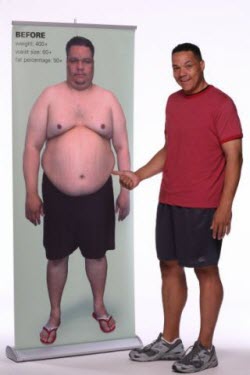
I'll bet Pete Thomas here made a few position changes.
Myth #7 – Once you find a good position, you shouldn't need to change it.
Back in Myth #3 I discussed how your students do want you to make suggestions to their setup, but they may offer some initial resistance because…
People are creatures of habit and routine. We all derive comfort from the familiar. Like robots, we try to do exactly the same thing every time we find ourselves in these familiar situations/places.
For the regulars in your class this means they get to the club at the same time, park in the same general location, attempt to get the same locker, find the same bike and set it up in exactly the same way, every time.
I was referring to making suggestions to students who's position on the bike was less than optimal.
So then once we get them set up correctly we shouldn't touch them, right?
Not always. People can (and do) change – and those changes may require a change in position.
Changes in weight can change more then your belly circumference.
I haven't experienced this personally, but my understanding is that adding some additional body fat can make your pants shorter. True story! Which makes perfect sense. If your butt gets bigger (due to the thickening of the fat layer beneath our skin, more material is needed to circumnavigate cover it, leaving less material in the length of each pant leg. Next people are making jokes about your flood preparations.
The inverse of this is true as well. As we loose body fat, we change dimensionally – hopefully everywhere – as the fat layers become thinner.
Now think about this. Let's say you have a successful student, one who loses a bunch of weight by regularly taking your class this winter. Can you imagine how a lessening of body fat can have an impact on saddle height? [you'd want to raise it]
Or vice versa? [lower it]
The trouble is that weight gain/loss is gradual, so a regular participant will just adopt with the changes.
So keep your eyes open for anyone who's beaten the battle of the bulge and help them celebrate their success by maybe raising their saddle a notch!
Originally posted 2013-01-09 16:32:30.
by John | Aug 23, 2020 | Best Practices, Instructor Training, Master Instructor Blog

With any luck I might get to your class in 2015
HAPPY NEW YEAR!
I did a ton of traveling this past year. Visiting studios where I've been brought in to troubleshoot issues, attended multiple conferences (IDEA/IHRSA/WSSC) and I have lost count of how many dozens of classes I've taken as a participant in 2014.
When I take a class, as a consultant or participant, I pay attention to things many other's don't. Take for example Instructor cues directed at correcting form/position/techniques… they almost always come at the very beginning of class, during her/his initial introduction – never to be heard again.
Which is exactly the wrong time IMO > let me explain why.
Think about the last time you walked into a party, an important meeting or a new class at school. There's a good chance that you were consciously aware of your body language as you entered the room, right?
You want to project confidence, so you stand up straight and tall and walk with purposeful steps. Your chin is lifted and your gaze is focused across the room, not (hopefully) down at your feet.
Perfectly natural as most of us want to make a good first impression, when we meet with new or important people.
When we sit down in these situations, we tend to stay near the front edge of the chair. We smile and continue to display strong, erect posture while seated, that is as long as we stay focused on it.
Conversation requires us to concentrate on things other than what we look like. Over time we may tend to relax. When we do, we will start to soften our posture, drop our head & shoulders, slide back into the chair and slump slightly, rounding our once flat backs.
The same process occurs to the participants in your class.
The start of class is an exciting time for your participants. Riders maybe looking around at who's riding near them or watching the Instructor. Some will feel a touch of insecurity (how do I look on this bike?) that causes them to “preen” a bit when they realise others are doing the same and casting a critical eye on them as well.
In your next class watch for this, if you haven't noticed it already. You might see a few checking themselves out in the mirrors. Others are focused on the rider in front of them, as they try to appear disinterested – but many are and their body language gives them away. The first words you speak may cause a few to sit up a little straighter. Right now your class doesn't need any direction on form/position/technique.
Everything come crumbling down
I have to smile thinking back on family dinners when I was young. My dad was a stickler about not slouching at the table; “sit up Mac!” – my nickname – was a less than gentle reminder. It never came at the beginning when I was focused on looking like I was in the military, rather at some point later in the meal when I'd lost focus, interest, or was simply bored with the whole ordeal.
So when should you be cueing form/position/technique?
When you see that your class needs it. Pay attention to everyone during the recoveries. Are they reasserting themselves on the bike? Watch and you'll see this with many of your outdoor cyclists, as they gather themselves back after a hard effort. There's a lot of unspoken peer-pressure in a group ride and many cyclists have learned to fight through the fatigue and at least appear strong to those around them.
When you observe dropped heads, shoulders, elbows or rounded backs, this could be your cue to jump off and walk the room. I know for me personally, when the instructor is walking near me I will self-asses my form without them saying a word.
This is getting long so I'll save; When it is time to cue form/position/technique – what should I say? until next week.
Originally posted 2015-01-01 04:09:36.
by Jim Karanas | Aug 17, 2020 | Engage Your Students, Indoor Cycling Group - Team ICG, Master Instructor Blog

Susan? or Bob?
It’s a given that different people come into our classes with different expectations, needs and goals. How can we as instructors/trainers accommodate their individual needs without alienating any single group?
Let’s take two hypothetical participants — Susan and Bob. They’re the same age, but Susan is interested primarily in weight management, arguably the most common fitness goal, while Bob is interested in getting stronger, fitter and faster on the bike because he rides outdoors frequently and races regularly. Can these two find happiness in the same indoor cycling class?
I’ve resolved this with a reasoning that works for me. First, I needed to define my professional role as I see it, which may differ from how the fitness industry sees it. As an instructor/trainer, my job is to create a situation and an environment in which members can experience the benefits of physical exercise, and nothing more. Which benefits these are will vary with the individual, and it’s important that I never assume what they could or should be.
Even though Susan tells me she wants to lose weight and Bob says he wants to race bicycles, I know from experience that what the members want is often far removed from what they need, regarding the benefits that training has to offer. Here’s an easy trap, though: I have to be careful not to presume to know what they need.
The goal-oriented approach to training has a built-in limitation. I have known many members who, after 10 years of trying to “get something” out of exercise (e.g., weight loss), were frustrated and disheartened. Maybe they had some limited success from time to time (that I even helped them achieve), but it didn’t last.
If a workout session has to produce a result, you have a paradigm for unhappiness. Instead, my current approach is to create a training session that allows a person to get whatever he/she needs from the workout without interference on my part. I keep in mind that the average member will not understand this approach right away, so the training has to be about something they can understand and offer them some fundamentals of training.
So I teach indoor cycling. This is because the bike has brought balance to my life. It has been a source of both hardship and delight, but the practice of cycling has made me happier. I look forward to riding my bike, whether indoors or out, every day.
I explain early on that I will ask them to ride as if they were riding a real bike outdoors because there are excellent reasons for everyone to train that way, no matter who they are: greater enjoyment of the class, for example, and good technique that will prevent them from wasting energy, so they can apply the energy to creating power. (The last point will clearly help Bob, but it helps Susan as well. The stronger the trainings make her, the more power she can generate, and the more calories she’ll burn.)
Now my job in class is simple: Teach the bike. Completely. Offer my students structured trainings that have helped me and never assume what they need. If it’s in my heart to lead a training on riding big gears in the hills, that’s what I do. What the students get, they get, and I don’t over- or underestimate my influence on it.
Sure, a student with a specific goal may need individual attention. If Susan really wants to lose weight, I can make recommendations and/or referrals. The same goes for Bob. My job as an educator is to show them how to modify what I teach — which is a valuable skill they can use in any class they may take in the future. I offer suggestions but recognize that this is their path. I can’t overshadow it with what I think they should do with, or gain from, their training. That’s not my job and would be a misuse of the trainer role.
Originally posted 2018-11-14 06:00:01.
