by Joey Stabile | Apr 10, 2020 | Audio PROfiles, Best Practices, Class Work-Sets, Creativity Indoor Classes, Instructor Training, KEEPING IT FUN, Master Instructor Blog, PRO/Playlists, Training With Power
Welcome to the The Weekly Ride by Cycling Fusion
Welcome to our new era of The Weekly Ride, you get:
- Full Ride PDF
- Apple Music Playlist
- Spotify Playlist
- File to Download the Ride directly into My Fitness DJ (Yes, no Programming)
- The Ride will be available for purchase in the iClass Builder Store (No Programming)
- A Podcast of the ride being delivered by a master instructor.
(more…)
Originally posted 2019-01-16 08:20:16.

by Tom Scotto | Apr 4, 2020 | Master Instructor Blog
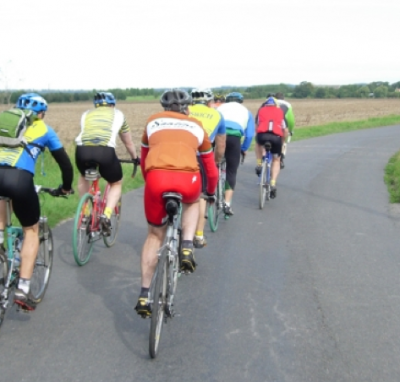 My approach to indoor cycling has always been to bring the qualities of cycling outdoors into the indoor cycling studio. On one hand, there are the general qualities of fitness and condition that everyone enjoys, cyclist or not. However, there are definitely attributes of training and riding that appeal specifically to those that enjoy riding outdoors. I thought I’d have a little fun and give you a glimpse into what goes on in my head when I design an indoor ride. Ok, maybe “fun” was not the right word and the thought of entering my head may have sent your mouse uncontrollably toward the back button. Regardless, here is taste of what goes on during an outdoor group ride and how it translates to almost every indoor ride I create (with the exception of race days).
Meet Up and Warm-Up
I’ve joked around multiple times that every good ride begins and ends at a coffee shop. That may not really be the case. The group I ride and train with on Saturday mornings meets at a local bike shop called Quad Cycles. After the usual banter, bragging and coveting of the latest gear, we roll the ride. Everything starts at an easy pace – very conversational. Often times we are riding 2 by 2 (or 2 abreast) chatting and catching up on whatever. You can often pick out the serious riders or those who understand proper warm-up buy their faster cadence (90-100 RPM). Their legs are spinning fast and smooth, and the pace is easy. After 20-30 minutes, we arrive at our first stop. This signifies the end of the initial warm-up and time to decide what we are going to be doing for the day.
Warm-Up Part 2 and the Ride / Training Focus
Our groups can range from 12 to 60 riders depending on the weather. There are usually 2-3 ride leaders who will create smaller sub-groups and will announce what their focus will be as we continue. “Tom abi”, which is how I’m referred to (which is “brother Tom” in Turkish), “What’s the plan for today?” I’ll let the group know the focus of what I’m planning to do, plus the distance (or time) and target speed. Each ride leader does the same and then people choose which group they want to continue riding with.
We pull out of the parking lot and begin the second part of the warm-up. The second part of the warm-up is both more intense and more focused toward what we are planning to do.
The Route
The second part of the warm-up leads us to our route – the roads where we are going to carry out the “mission”. Maybe it is a set of hills for some climbing or a long flat road for aerobic intervals or sprints. It can also be a rolling meandering course just to get some good endurance miles and time in the saddle. The point is, we select the road or course based on the purpose of what we want to get out of the ride.
Shut it Down
After we hit and complete the main course (pun intended), it is time to shut down and roll home easy. It’s a great time to chat and just chill on the bike. Technically we refer to this as “active recovery”. However, if the workout was designed right, shutting it down is welcome regardless of what you call it. Now I’ve been on many group rides around the country and this “shut down” is sadly rare. People will hammer until the last 100 feet before coming to a screeching halt at the café. I’m fairly strict and let people know when and where we will shut it down. You’ll be surprised how much comfort it brings people when they know everything will calm down at some point. This knowledge also makes the “route” more intense. Since everyone knows the shutoff point, they are now free to really go for it during the “main course”. Are you seeing the connection to indoor cycling? How the effectiveness of an indoor ride can be increased or hindered by how it is created or explained?
Bringing the Experience Indoors
So how does this translate to designing and indoor ride? Well, here is how it translates to me:
(1) Warm-Up 1 (5-6 minutes) — Easy spin to loosen up the legs, raise the heart rate and increase body heat. Explain the purpose of the ride and provide some options for people to choose from.
(2) Warm-Up 2 (5-8 minutes) — Greater focus during the second part of the warm-up to prepare the mind, muscles, energy systems, etc. for what is ahead.
(3) The Course (35-40 minutes) — Get down to business! The drills. The Intervals. The challenges.
(4) Cool-Down & Stretch (8-10 minutes). Depending on how intense the last efforts were, we may take 3-5 minutes to cool-down and then 6 minutes to stretch. We use this time to chat again and reinforce what we experienced and ways to interpret how our body responded to the ride.
————————————————–
So there you have it. That’s what’s on my mind when I’m designing the ride and actually riding a profile in class. If you are interested in attracting outdoor riders to your class, try to put together an experience they connect with. If you’ve never been on a group ride, take a Saturday or Sunday morning and join up with a local club or informal group. Just don’t expect it to go down “exactly” as I’ve described above. Those that know me, also know I like to keep things structured and well planned….a bit.
Originally posted 2017-04-03 14:12:49.
by Tom Scotto | Apr 1, 2020 | Master Instructor Blog
 It’s like trying to drink from a fire hydrant!
During the weeks of September we were focused on improving our instructor and coaching skills. Articles were posted on how we look, sound and feel as we lead our classes. We were already bubbling with info, thoughts and ideas and then the ICI/Pro Conference hit and WOW — knowledge/inspiration overload! I walked around during the little time I had between my sessions and witnessed the buzz, with excitement flying everywhere. Sometimes we can receive so much (good) information and energy that we end up overwhelmed and paralyzed and utter (in a very small voice)….”I just want to teach a great indoor cycling class…” We can struggle to try to implement EVERYTHING we learned which may run the risk of turning us into an instructor we are not. Huh!?
You bring a certain energy, passion and experience to your classes that is unique to you. That is why people love you. We want to hone our skills without changing the personality and style that make us who we are. Now if we realized something we were doing was not correct or better done a different way, by all means, change that. But sometimes we can stumble away from a bombardment of information thinking we need to be totally different. I’ve taken a week to digest what happened to me over the last month of both writing (which is a self-convicting exercise), presenting and digesting what others have been saying, and I needed a gut check and a way to approach “how” to improve AND “what” to improve on.
Here is a concept from Cycling Fusion’s Essential Training for Indoor Cycling workshop that may help sort it out. To help instructors with this improvement dilemma, Gene Nacey created the CHIME Cueing method. CHIME is an acronym that stands for the attributes of a good, well-rounded instructor: “Coaching, Helping, Inspiring, Motivating and Educating”. Among the benefits of using this method is the ability to assess what type of instructor you are and how to continually improve. I’ll give you some definition for each one, but before you start running amuck criticizing yourself, let me give you 2 pieces of guidance:
(1) The 10,000-Foot View
First, think through each attribute and how much of each you currently exhibit, and more importantly ENJOY using in class. This cursory exploration will provide a good view of our overall teaching approach. Each of us will have a tendency toward different attributes based on our style and what type of instructor we are or want to be. Some of us like to coach or are coaches so leaning toward that trait in our classes is natural. Others of us may bring inspiration which can be a great way to bring beginners into our world. And still others may be the eternal educators who provide life-changing wisdom with every ride. And the list goes on…. Who are you?
(2) Going Deep
Now, take another tour through these attributes to see which you believe need improving. You can do this in 2 ways: (1) be brutally honest with yourself or, (2) ask someone else to be brutally honest for you. Remember, the goal is not to have 100% of each attribute. Not only would that be rare, but it would demonstrate a lack of passion. What?! Yes, someone who is good at everything often does it at the expense of being great at something. We have an expression in athletic training; “Race your strengths and train your weaknesses” Continue to run (or ride) with your strengths as an instructor, but also work on those areas that are not your strong suit so you can become more effective.
C H I M E
Here is a brief description and example of each attribute to get you thinking:
Coaching
We tend to focus more on the big picture and the “complete” rider. We emphasize the commitment to what was started and seeing the changes as the goal grows nearer:
“I’m counting on seeing each of you here every Monday. It’s our commitment to each other. I’ve seen you working really hard in class. You’re doing great!”
Helping
We are always looking for ways to help riders with even the smallest things from finding the right cycling shoes to becoming more aware on the bike:
Instructor sees a student with inadequate resistance, and hips popping. “As we increase our cadence, you may begin to feel your hips pop or jump a little bit. If that happens, add just a little more resistance, and you will feel your hips stabilize”
Inspiring
We pull from past experiences, whether ours or someone else’s to inspire our class to push through:
Instructor has a student learning to use a heart monitor for the first time, and they seem confused.
“Don’t worry, I couldn’t even set my watch before I started using a heart monitor. Now I use it every time I train indoors and out. It has become as common as putting on my shoes and I’ve seen so much improvement in my fitness.”
Motivating
We look ahead at the goal and bring it to life, drawing it closer and making it tangible:
The class is in the last 5 minutes of a 20 minute power test. “Yeah, this is where it hurts, and this is where you want to back off, but this is also where you prove that you have what it takes to see it through to the end.”
Educating
We love and thrive on training concepts and know that if our rider’s understand them, they will train smarter and see “real” results:
The instructor is about to do Sprints in an advanced class. “In this advanced class, we are going to focus more on developing the fast twitch muscles. These are engaged in the most explosive efforts like sprinting, or hard accelerations.”
*********
Please feel free to share cues and approaches from your strengths so we can all learn, grow and become more well-rounded instructors.
Originally posted 2011-10-09 08:11:00.
by Tom Scotto | Mar 26, 2020 | Master Instructor Blog
 I asked a few indoor cycling instructors how often they take time off from teaching and all I got was ………………….. Yup, dead stares and dead silence. What are you taking about? You know, like taking a week off from teaching — a little R&R? Once they understood the question (which I thought was clear the first time), the common response was — never.
I’m going to switch into Coach Tom mode. I want you to consider yourself an athlete, because frankly, that is what you are. The instructors I asked taught a minimum of 4 indoor cycling classes per week PLUS some taught other group fitness modalities, also worked as personal trainers and even competed. One of my future articles is going to specifically address balancing competition and teaching, but for now let’s just talk about taking care of YOU.
I’m going to shoot straight — many of you reading this (at least this far) will not agree or believe me until you actually take a legitimate break. No explanations will suffice and no scientific studies will convince. Why am I so confident of this? I experienced it. I was teaching 12 classes per week, commuting to the clubs and coaching riders on the road. Most of my weeks totaled 19-29 hours in the saddle. My justification: “This is what I do. I’m a indoor cycling instructor and coach.” People told me I looked tired and gaunt. Well, I’m supposed to look gaunt, I’m a cyclist. Due to a combination of business travel and a family vacation, I was forced to take 2 weeks off from teaching. I know what you are thinking, and yes, finding subs for 24 classes was overwhelming but doable. When I returned, I was refreshed, enthusiastic and healthy. It was noticeable by more than just me.
We will fight the concept of taking the needed time to care for our bodies and recover physically, mentally and emotionally, but we need it. So how much and how often should we take a break? That is a good question and one I don’t have an answer to because it depends on how much you teach and your lifestyle. As a coach, I like my athletes to take a week of rest and recovery for each 4 to 5 weeks of focused training. This may be a bit much if you teach fulltime as a means of making a living. I like to get a break after every 8 weeks of teaching. That works for me. Now there are other options as well. You don’t have to take a week or two off consecutively, instead take 3-4 days off or setup a long weekend. Remember, it is not just about you. You are providing the energy and inspiration for those in your class. If you don’t walk in with it, you can give it.
So how do you know you may be in need of a break? If you still have not been able to answer my opening question, the answer is simple — IT IS TIME! Some other signs are lack of energy (particularly before class), fatigue, low motivation, bored with your workouts or profiles, classes appearing longer than normal and overuse injuries. Listen to your body and listen to others. I’m very fortunate to have riders in my classes who respect me and who are not afraid to provide feedback. One rider in a class that I’ve taught for 7 years approached me afterwards and said, “you didn’t have IT tonight”. He said the class was still good, but it wasn’t at the level he had come to expect and enjoy. It was tough to hear, but he was right. It was time. I owed it to myself and I owed it to my class.
So take care of yourself. Listen to your body. You are an athlete, a motivator and an inspiration. Lead by example and lead strong.
Originally posted 2011-07-29 05:00:00.
by Joey Stabile | Mar 5, 2020 | Best Practices, Class Work-Sets, Creativity Indoor Classes, Instructor Training, KEEPING IT FUN, Master Instructor Blog, Training With Power
Welcome to the The Weekly Ride by Cycling Fusion:
No more hunting for new music or counting out cues. Here is your ready to ride document, that can be displayed from your phone, or printed out onto cue cards. This ride is timed out, down to the second, to make your life as easy as possible!
(more…)
Originally posted 2018-01-30 09:00:13.

by Joey Stabile | Feb 25, 2020 | Best Practices, Class Work-Sets, Creativity Indoor Classes, Instructor Training, KEEPING IT FUN, Master Instructor Blog, Training With Power
Welcome to the The Weekly Ride by Cycling Fusion:
No more hunting for new music or counting out cues. Here is your ready to ride document, that can be displayed from your phone, or printed out onto cue cards. This ride is timed out, down to the second, to make your life as easy as possible!
(more…)
Originally posted 2018-01-30 09:00:13.
