Anyone who knew Jim, loved him. He was a very influential part of creation of what all of us recognise as Indoor Cycling today. Jim's knowledge of training was unequaled, as was his wisdom and understanding of what Instructors needed to do, to truly meet the physical and emotional needs and expectations of their participants.
All of us here at ICI/PRO benefitted immensely from Jim's insightful articles and Podcasts. This post of his profoundly changed my perception of my role as an Indoor Cycling Instructor. Three simple concepts that began the slow process of opening my eyes and accepting both the appeal and value of non-traditional forms of Indoor Cycling…
Who am I to decide?
If a workout session has to produce a result, you have a paradigm for unhappiness. Instead, my current approach is to create a training session that allows a person to get whatever he/she needs from the workout without interference on my part.
Just present the opportunity
As an instructor/trainer, my job is to create a situation and an environment in which members can experience the benefits of physical exercise, and nothing more. Which benefits these are will vary with the individual, and it’s important that I never assume what they could or should be.
Then accept their choice without judgement
I offer suggestions but recognize that this is their path. I can't overshadow it with what I think they should do with, or gain from, their training. That’s not my job and would be a misuse of the trainer role.
Shortly before we lost Jim, he wrote Non-Authentic Indoor Cycling. If you haven't read it please take a moment and do so, because it describes his progressive vision for Indoor Cycling and what he felt would be our roles as Fitness Professionals.
If non-authentic IC is going to make a mark, why not embrace it for what it is — a way to train on the bike that makes (some) people fit and happy?
…
Why shouldn’t any and every indoor cycling program be taught by those who are truly qualified to teach indoor cycling? That would be the likes of us. We know indoor cycling best. We could create a program — inauthentic fluff, if you will — that’s still authentic in its safety, structure and cardiovascular benefit. Why not?
Interested in being part of a group of Instructors who believe like Jim did?
By Team ICG® Master Trainers Jim Karanas and Joan Kent
Over 12 years ago, Jim developed an athletic training program that eventually earned the tagline “Stop exercising. Start training.” At ICG®, we think there’s a difference between the two, one that people ask about frequently. Training encompasses more than the physical aspect of the ride.
Currently, training versus exercise is a popular topic. An internet search readily reveals the ongoing discussion, with suggestions and ideas as to the difference.
According to some sources, training is based on having a purpose, setting goals and achieving specific results. Exercise, in contrast, has been said to lack focus, goals or purpose. Training is said to be intense and engaging. Exercise is said to lack intensity and even be boring.
But are those really the differences? Say someone wants to lose weight and begins the following process: an indoor cycling class on Monday, an elliptical workout on Tuesday, a kickboxing class on Wednesday, Bikram yoga on Thursday, treadmill running on Friday, and body conditioning on Saturday morning.
Is that exercise or training? There’s a goal/purpose. The activities listed would provide intensity, plus variety to prevent boredom. Yet the weekly plan looks more like random exercise than structured training, so the differences must lie elsewhere.
We think the above distinctions are only part of the difference between training and exercise, and not necessarily the key points.
First, for a workout plan to be training, it probably needs to be progressive. Progressive training might start with foundation-level workouts and move into more intense levels of effort that are also designed to make the participant stronger in the activities. For that to be effective, the activities might need to be limited (say, to indoor cycling and treadmill running), rather than a hodge-podge of many unrelated things. Specific adaptations occur more consistently when the activities are specific, too.
Limiting the activities and following an overall progression wouldn’t preclude changing the format. But changes would be designed to elicit a specific training outcome for each session, rather than simply to prevent boredom, and the student is made aware of that objective.
The progression might culminate in performance events. A lot can be said about athletic performance, and will be in another post, but maximum efforts differ from what could be called “pseudo-hard.” People who love to work hard are typically talking about pseudo-hard efforts, rather than max.
Attitude or mindset is also important. It’s not simply working out to drop a few pounds, but training to develop our consciousness, nourish our body, change and quiet our thoughts, and balance our mind. Let that be the philosophy. Workouts without philosophy lack consciousness. Training is about bringing consciousness into the process. When we focus on what we’re doing and stay highly conscious of all of it, it’s never boring. It’s simply what is.
To maintain presence, we need to recognize the intrusion of thought immediately and bring awareness back to the moment, no past, no future. A sense of self in the moment is the way to turn off the mind. If we project into the future, the mind comes in like a tidal wave and sucks us into a stream of thought. Thoughts create time, make minutes feel like hours, and rob us of the desire to continue.
Then there’s pain. Or more precisely, the approach to it. We’re all familiar with “no pain, no gain” and the attitude that pain — certain types, at least — can be good because it means the workout is beneficial.
There’s also the “Hulk Will Smash” approach: the more it hurts, the more I like it. Grrr. Fanatics with no sense beyond the muscle of exercise may use that to complete their workouts, but addiction to pain isn’t training.
Training is a more mindful approach to pain that involves feeling it, fully understanding it, being sensitive to it — and putting a space around it, becoming nonreactive.
In what we do, pain is inevitable. But it’s just a trigger. It may stimulate resistance that compares to an emotional state. As our emotional threshold rises, our reaction to the pain changes. It doesn't feel any better. It just doesn't bother us as much. The warrior chooses death. Athletes choose physical pain, or at least non-avoidance of pain. As the polarization in our mind diminishes, our emotional reaction to the pain becomes one of acceptance or even dismissal.
Any athlete can recall having had the time of his/her life despite feeling pain during an event. A couple of decades in the fitness industry make it clear that anyone who wonders why an athlete would do something unpleasant, like push through pain to reach a goal, can’t adhere to a fitness program for any length of time.
Tools such as consciousness, presence in the moment, attentiveness, curiosity, non-reactivity, and so on are ultimately ways to add balance. Training tests our effectiveness with them. Exercise lacks these tools.
As promised, here's Krista Leopold's Indoor Cycling Class Profile; Beat Down!
Training Type: LT Intervals
Working HR Zones: 4
Total Class Length: 55 min
Objective and Intensity
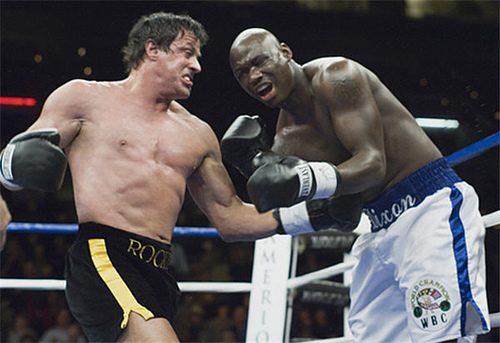
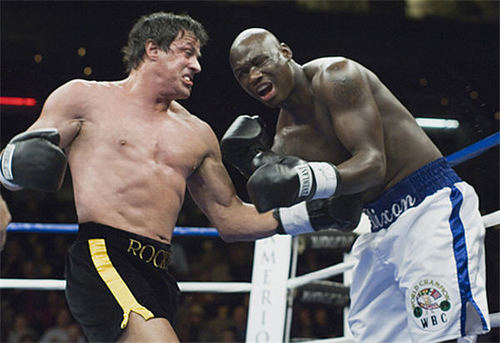
After recently being inspired by a boxing match I watched at the nail salon of all places, I decided to try to bring my riders into the ring for a full class. This ride is shaped by the structure of a boxing match. In professional boxing, boxers typically spar for 9-12 rounds of 3 minutes each with 1 minute in between each round. For our time constraints, we are going to fight for 10 rounds. Each round, we’ll use a different movement. Most of the rounds will be one movement sustained. In a couple of places, we’ll change it up.
For each round, we are going to work as close to LT as we can with opportunities to go higher than that sprinkled in. The challenge is to find that balance of intensity and restraint which will allow them to last a total of thirty working minutes. The average participant can sustain LT for 20 minutes. Since we’ll have short rest periods every 3 minutes, the ride presents an opportunity to push your limits while still being able to recover.
You can download Krista's trimmed to exact length and then fully mixed class playlist[wlm_private ‘PRO-Platinum|PRO-Monthly|PRO-Gratis|PRO-Seasonal|Platinum-trial|Monthly-trial|PRO-Military|30-Days-of-PRO|90 Day PRO|Stages-Instructor|Schwinn-Instructor|Instructor-Bonus|28 Day Challenge'] here – Right click > Save As.
As today marks the start of the Indoor Cycling season, I felt it would be helpful to you to explore the concept of Winter Training with a real expert on the subject, Gene Nacey from Cycling Fusion.
Gene has been offering a comprehensive Winter Training program for cyclists at his club in Pittsburgh for four years. Listen in as we discuss why offering a multi-week program could help you build your class numbers, increase retention and potentially add additional profitability to your club or studio this winter. Not to mention delivering some very fit cyclists to their outdoor season next spring 🙂
Here are two new songs that will have your riders sprinting like they mean it. Sprinting songs are sometimes the hardest to find, so you will definitely want to tuck these away and keep them to use time after time.
If you're looking for a shorter original or a faster, longer remix, Scooter has you covered with their new release Bora! Bora! Bora! Try the original or the extended version.
I’ll switch gears from my recent posts on using public speaking techniques to enhance our teaching to talk about what we say. In The Art of Cueing, I discussed the use of cues to bring depth to the class and make it more than just a workout. Cues concerning the science, the music, the video, your personal experience, even philosophy can make your class more interesting and more impactful.
Philosophical cues are the most difficult to incorporate. Instructors don’t typically cover philosophy when they teach because they don’t think people want to hear it, or they don’t feel comfortable talking about it. Someone who doesn’t teach might say the first is true. But maybe that person hasn’t yet heard a well-delivered philosophical message and is just uninformed.
I understand not feeling comfortable talking about it and will address that later.
Adding philosophy to a class so it doesn’t sound like preaching is what I call “messaging.” A class without messaging is just a workout. It might even be a good one. But the instructor’s power will weaken over time, just like playing the same workout video over and over. It diminishes with no message. All the public speaking techniques in the world can’t compensate for a class that lacks substance.
Unforgettable lyrics are unforgettable because they send a message. A public address goes viral on YouTube when it sends a message. Messaging will touch a person’s life beyond the great workout you just delivered and compel him/her to come back to your class again and again.
What’s a message? Any life concept that you bring to the class and that can be experienced in the class as result of the training you’re providing. A couple of examples:
Focus
Coaches often tell you to “stay focused” but rarely tell you how. Focus is not simply directing your attention to what you’re doing. That leads to thinking. Thinking will weaken focus. Focus is complete engagement in what you’re doing. A focused mind pays no attention to distractions. Fast descending takes focus. If you’re not 100% engaged and non-reactive to distractions, you might crash. How do you train yourself to be this way — not just during a dangerous descent, but right now, so you get the most from your workout? That’s the essence of our class today.
Motivation
Something that happens outside of you that you consider “motivating” is not a strong incentive. You might see someone overcome great adversity or hear a story that strikes a personal chord with you and feel filled with motivating energy. These external motivations work temporarily, but have far less impact than motivation you generate by yourself. I want you to look at motivation as something personal. Then you have the ability to train and get better at it. You can train yourself to be motivated the way you train anything else.
When you understand how to do this, motivation is endless, limitless. The only time you won’t feel motivated is when it’s a personal choice, and you’ll recognize it as such. You’ll no longer look to me or to anyone else to motivate you to train. You’ll rise to the occasion again and again because you’ve trained yourself to do so. I’ll show you how to do this in today’s workout.
As an instructor, all you have to do now is deliver a physical practice (the day’s ride) that delivers the results you just promised to deliver in your message. If I’ve enticed you, and you want to learn how to focus or be consistently motivated, the solution is simple: Come to my class. That’s the power of good messaging.
The messages you can deliver are many: how to engage fully, how to sense meaning, how to expand your concept of what you can do, how to sense your life energy, how to direct it, how not to react to adversity, how to develop discipline, how to go beyond hope and fear, and on and on.
How do you, as an instructor, learn to deliver these messages, both verbally and physically? First, you must want to. Second, you must become a student of philosophy. You study and you ride, and you bring the lessons that you learn from your study to the bike, and then to class.
I have a small library of what I call my “Life Books”. These are about 10 books that I have found extremely helpful. I’ve read each of them dozens of times. A good philosophical book is one you immediately realize you need to reread. My first Life Book was Way of the Peaceful Warrior: A Book That Changes Lives. It was the first book to encourage me to approach my training from a conscious perspective. I have several copies with dog-eared pages and many handwritten notes throughout.
Physical movement has been part of spiritual training for thousands of years. It was not meant to provide exercise. Daily activity was supposed to do that. Keep a conscious attitude, go beyond the workout, and deliver a message every time you teach.





 It was the first book to encourage me to approach my training from a conscious perspective. I have several copies with dog-eared pages and many handwritten notes throughout.