Amy and I aren't big on camping > actually we refuse to camp unless there's a hot shower in the tent. But this music festival in Dover, Delaware sounds like a blast.
You know Coachella and Bonnaroo, but you may not have heard of Firefly. This musical camping extravaganza kicks off its third year today in Dover, DE. What's nice about festivals like Firefly is that they give you a chance to see a slew of bands you already like discovering some of your future favorites en route to the different stages. Even if you’re not already familiar with the indie-rock scene, you still might recognize one of the 100-plus big name bands and emerging artists gracing the woodsy campgrounds this weekend.
They've published a playlist at shape.com from the top bands here – but no Spotify playlist… so I've created one for you 🙂
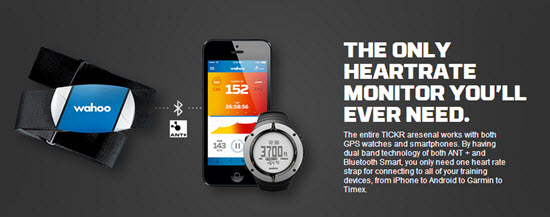
Finally a Heart Rate strap with both Bluetooth and Ant+ connectivity 🙂
I've been using a new TICKER Heart Rate Monitor straps – I'm excited to tell you about them + they'll be awesome used with the new Apple Smartwatch.
The guys at Wahoo Fitness emailed me today about their new line of HR straps that send out both BLE (Bluetooth Low Energy) and Ant+ frequencies. About time someone thought to offer both in the same monitor strap!
Up until now, your decision about what monitor strap to purchase was based on what device you wanted to connect with:
I want to connect to my iPhone / smart phone = you buy a bluetooth strap. Bluetooth is the only signal your phone can pair with.
I want to connect to a Garmin bike computer or use the strap with Performance IQ's display system = you purchase an ANT+ strap.
This new TICKR strap has both Bluetooth and ANT+ and it doesn't cost anymore than most single frequency straps – that's awesome in my book!
They've solved a second problem
How many times have you felt like saying; “IS THIS DAMN THING ON?
No Heart Rate strap, that I've ever seen, gives you any understanding that it's working. Is the battery good or dead? Do I need more spit to get it connected? I'm seeing that these new TICKR straps have two colored LED lights to show the TICKR’s device connection and heart rate detection – more awesomeness – and no more wasted trips to Walgreen's to buy one of those ridiculously expensive little flat batteries, when that isn't the problem.
I can't wait to try one and will update you once I have.
Master Trainer Cameron Chinatti from Stages Indoor Cycling joins me to offer suggestions on how you can solicit constructive feedback… and then what to do with it once you receive it.
Cameron's handout begins:
Dear _____________________________________________
As a fitness professional, I take every opportunity to improve my craft to better serve each and every one of you. In addition to the time and resources that I voluntarily dedicate to learning new exercise formats and methodologies, I also strive to improve myself.
My current self-growth project is entirely dedicated to being an effective “cue-municator”. I recently completed a cutting-edge indoor cycling course and one of my assignments is to fully understand and embody my strengths – not only as an instructor, but also as a person. If you are willing, please share your helpful, honest feedback.
[wlm_nonmember]
Cameron's handout is reserved for ICI/PRO members. We offer monthly and annual subscription options:
Prime Music is a great deal for listening – but won't work for your cycling class.
I love my Amazon Prime membership and our family easily recoups the annual fees with the free two day shipping they offer. So when I saw that they are now offering a free music streaming service as part of Prime, I figured I needed to see if this service could be a replacement for Spotify – it's only available in the USA.
I downloaded the Prime Music App and was instantly underwhelmed by how clunky this was to get working. I won't go through all of the steps (there's a lot) before you see music on your iPhone. Multiple steps on the App > which reference steps on your laptop had me questioning why I was bothering – that's your role John… you work hard so hundreds of other's don't mistakenly waste their time. You do have the option to download tracks for offline use, which is good, but I couldn't figure out how to rearrange or add/remove tracks. Admittedly I didn't spend too much time with it because…
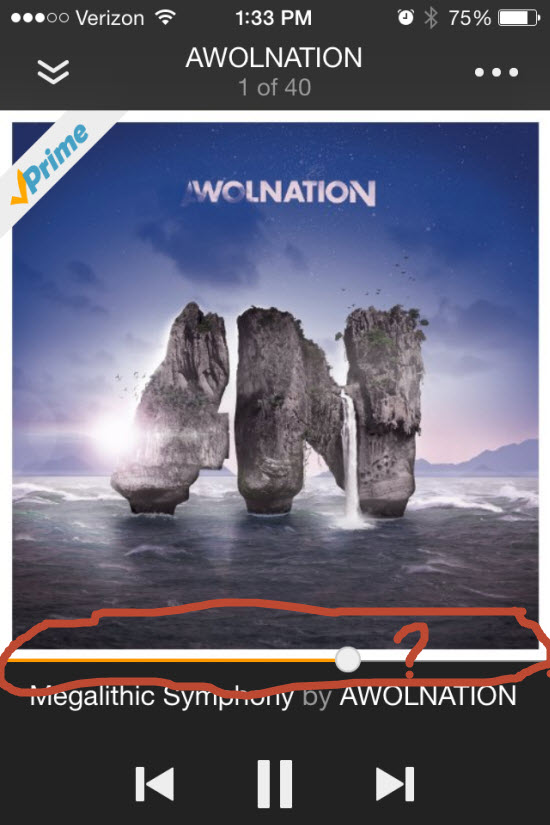
by that point depression had set in. After finally sorting through enough to get a track on my phone and play it, I quickly found a deal breaker – NO TRACK LENGTH TIMER 🙁
OK, so who would want to take advantage of Amazon Prime Music?
I suppose someone who is still exclusively using iTunes and/or CD's, and has an Amazon prime account, may enjoy this. Beyond that I can't think of a reason. But hey, you get what you pay for!
New, Improved and Improving*
Amazon isn't looking to do battle with Spotify or a future iTunes streaming service. They're just looking to add some additional bling to Prime so they will:
Retain their millions of current Prime subscribers.
Convert existing Amazon customers into Prime members.
Learn more about Amazon Prime and Prime Music here.
*Credit for this goes to Barbara Hoots. During her presentation at WSSC she focused on studios needing to be continuously providing customers; New, Improved and Improving services if they want to want to grow and get/stay profitable.
Plenty of things about nutrition are important but, to me, kinda boring. This is one of those things. But the topic is health-related, so it seems like a viable one.
What’s great is many foods are said to be powerful disease fighters, and this post will cover several of them. Those who plan to object that I’ve left out a bunch will be right. This is not meant to be the definitive, exhaustive list of such foods.
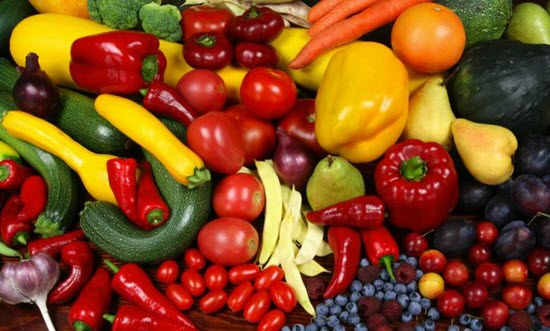
As you probably already know, colorful pigments in foods often indicate the presence of phytonutrients that can fight cancer, heart disease, and other diseases associated with oxidative damage. Oxidative damage is caused by free radicals, molecules that have lost an electron. Free radicals can scavenge electrons from healthy molecules, which may then develop diseases, including cancer.
Free radicals occur during normal metabolic functions but can also be created by toxins, processed foods or pollution. Potential sources of free radical production are everywhere. Antioxidants in foods help guard us against the damage they cause.
Red/blue foods contain anthocyanins. Examples are cherries, blueberries, plums and strawberries. In addition to anti-inflammatory benefits, they can protect against memory loss and declining motor skills.
Yellow/orange foods contain carotenoids, which can fight lung cancer. Examples of these foods are sweet potatoes (a wonder food in themselves), pumpkin, carrots, winter squash, cantaloupe, and broccoli. The chlorophyll in broccoli masks the yellow/orange pigment.
Orange foods, such as mangoes, oranges and papayas, contain cryptoxanthin, which is said to reduce cervical cancer risk.
Lycopene is well known for its ability to fight prostate cancer and heart disease. Since cooked tomatoes contain lycopene, they sparked, as you may recall, an odd controversy on whether or not pizza is a health food. No comment needed.
The yellow pigments — lutein and xeaxanthin — can protect the eye from blue-spectrum light and guard against macular degeneration. Corn and spinach are foods that contain them. Again, the chlorophyll in spinach masks the yellow pigment.
Astaxanthin is an important antioxidant found in pink foods — wild salmon, shrimp, lobster and crab.
An often-overlooked produce color is white. White produce is said to protect against stroke. White produce includes cauliflower, parsnips, Daikon radish, cucumbers, apples, pears, and bananas. Apples and pears are also anti-inflammatory and may help reduce blood pressure.
Looking beyond colors, some high-ranking antioxidant foods are dried beans, blueberries, cranberries (not dried — those are sweetened), berries, artichokes, prunes, apples, pecans, cherries, black plums, and Russet potatoes.
Cancer-fighting foods include almonds (10 per day), apples, blueberries, cherries, Brazil nuts, chickpeas, lentils, red beans, oranges, green leafy vegetables, dark green vegetables, tomatoes, wheat grass juice, and cruciferous vegetables.
Those much-touted and healthful cruciferous vegetables include broccoli, cauliflower, Brussels sprouts, cabbage, spinach, arugula, bok choy, collard greens, Daikon radish and other varieties, horseradish, kale, kohlrabi, mustard greens, rutabaga, turnips, and watercress.
As you can see, several foods show up on more than one of the above lists. Those are nutrition powerhouses.
Despite the appearance of various fruits on all of the lists, my general recommendations are 6 to 13 servings of vegetables per day (a serving is ½ cup), plus 1 to 2 servings of fruit per day (a serving is ½ cup or 1 medium-size fruit). Choose your fruits and vegetables from the lists above, and above all, stay away from the 5-a-day approach. That can too easily turn into 5 servings of fruit with no vegetables.
Don’t forget to include nuts and beans. And, of course, avoid junky, processed foods to limit free radical formation in the first place.