Do you really know when your class music is at exactly the right sound level?
That it's not too loud so it's unsafe… but not too quiet that you miss out on the energy?
How about the level of your microphone… is it adjusted so your voice and cues are easily understood by your class?
I only know one Instructors on the planet who can answer this with, YES John, I do know when my mic and music volume are adjusted correctly – our very own Jennifer Lintz. That's because Jennifer teaches at a studio where they've spent $766.00 to purchase one of these soundear noise meters. In this article she discusses teaching class with it hanging in the back of her studio. She only needs to take a quick peek and watch the color changes to know when everything is adjusted properly.
Image from http://www.soundsafety.com.au/
$766.00, for something you could live without, is what my buddy Randy would call “Stupid Money”. To be fair, the SoundEar appears to have been designed for use in hospitals, where the intent is keeping noise levels very low.
Continuous understanding vs. checking once or twice a year 🙁
Do you still do this in your class?
Over the years I've seen infrequent requests from GF Dept Heads saying something similar to:
We're getting complaints about music levels in some classes!! Please check the sound levels in your classes!! I have a sound meter in my top drawer you can use. I'm also going to make spot checks of classes to check and see that you're under 100 decibels – which is our company policy.
How does checking my sound level today help me a month, week, day or even 20 minutes from now?
I can't help comparing an annual sound check to the good old days when we checked our pulse with fingers and a watch. This gave the illusion of doing something important, but it's a worthless exercise when you compare it with the understanding you get from a Heart Rate monitor that display BPM continuously. If my HR is too low, I can increase my level of effort, and then wait, check again and adjust as necessary.
The typical fitness studio sound system includes a bunch of knobs that will change the sound levels. Where I teach there are 5 ways I can adjust what my class hears:
Master Volume Knob
iPod Volume Knob
Mic Volume Knob
CD Volume Knob
And the volume level slider on my iPhone
+ don't forget how many tracks play at a different volume
All those knobs effect how loud the music will be in class. Making a mark on the Master Volume Knob (as often suggested) ignores all the other settings that will over ride the Master Volume Knob. I need a meter that tells me the correct settings to make for the best class experience.
You don't hear… what they hear
In most studios there's what I call a cone of silencer, that looks like this:
What sounds perfect to you on the instructor bike can be deafening to riders in the front row. The only way you can truly understand what your class is hearing, is to get off and walk around the room.
So I propose building a Fitness Studio Sound Meter that looks like this prototype
Why in the clock?
Every fitness studio (if it doesn't already) should have a clock hanging on the back or side wall, so the Instructor can easily know the time. I feel it makes perfect sense to incorporate the sound meter where it's plainly visible while teaching.
Visible to you… but discrete
I've already test marketed this idea to a few dozen Instructors and Studio owners. The one negative concern expressed was not wanting participants focusing or judging you based on their watching the sound meter. So our design features small LEDs that are very easy to see in any level light.
I have a saying; “my ideas always sound good… to me“. The purpose of this campaign is to find out if my idea sounds good to you 🙂
I'll be posting more details and a link to Indiegogo campaign tomorrow (Sunday 3/30/14)
I'm having so much fun building a playlist, using a single as the “base” track to build off of and then scrolling through related artists to fill in the rest. Plus it doesn't hurt to hear multiple; “great music tonight John!” at the end of class to know I'm doing something right 🙂
In the previous PRO Podcast, I linked to this playlist I built using Peter Frampton — Do You Feel Like We Do – Live as the “base” or “root” artist from which I explored artists related to Peter Frampton in Spotify. Eric Clapton has been a long time favorite of mine and when Spotify said he's connected with Frampton – that was all it took to include a 7:07 version of Layla from Derek & The Dominos which was the band that introduced us all in the USA to Clapton and band-mate Duane Allman – the future lead guitarist of the Allman Bros. band.
I love long climbs at higher than typical cadences. Layla is perfect to really tax the leg muscles of your Club Athletes during a seven minute effort at 58 RPM. Plenty of opportunity to alternate in / out of the saddle for sure!
This cover may fit where your need a sub 3 minute effort
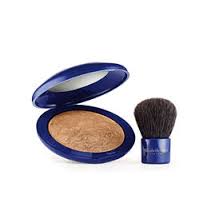
This powder comes in Warm or Deep Glow, so all skin colors are complimented. A dusting with a big powder brush over foundation and under blush helps give an even all over tone and yields a lovely glow. It basically makes my skin look younger.
I also like to run the brush down my neck and on my chest area- I'll take younger looking there too!
The last bronzing powder I bought from Elizabeth Arden lasted over 3 years, so at $42.50, it's a pretty good investment!
Let me know if there's anything you'd like to talk about here at PRO/STYLE. You can reach me: amyjo@groupfitnessradio.com
Image from http://www.sustainablemontreal.ca/2010/07/13/7-milespotato-the-beauty-of-the-bicycle/
By Joan Kent, Ph.D.
“Sugar is bad stuff, but what should I eat on a long ride?” Over the years, many cyclists have asked me that question. In reply, I came up with the idea for Dr. Joan’s Potato Goo. (No, that’s not a brand name, just my private joke.)
I’ve used Potato Goo successfully on many long rides, including indoor centuries. The late, very great Jim Karanas made it the staple of his diet on long rides (he also ate other foods on ultra rides). I’ve often made extra for group rides, and it has developed quite a following. It even brought a skilled rider back from a complete bonk after he’d been eating bars and gels all ride long.
Never one for complicated recipes, I make this the easy way. You’ll need:
– raw potatoes of any kind (red potatoes have a really terrific, smooth texture, and I use organic)
– salt (sea salt is nice for the minerals, but not essential)
– a little water (I used distilled)
– snack-size zipper bags
– a food processor.
Select about 3 or 4 potatoes and cook them, with skins, any way you like. I microwave because I’m the laziest cook in the known universe, but choose your favorite method. They should be soft when done.
Let the potatoes cool. Slice them and place them in a food processor with some sea salt. How much salt depends on the number and size of the potatoes, but you’ll need to taste the mixture once you’ve started mixing. IMPORTANT — It should taste salty, but not overly salty.
Add water, a little at a time, to make a paste. You’ll be squeezing the Goo out of the corner of the zipper bag, so adjust the consistency. Too thick will obviously not squeeze out easily; too watery will make a runny mess.
Once everything’s in the food processor, just start it and let it run until the Goo has a uniform texture. Taste for the salt, add more if necessary, add water if necessary, and done!
Spoon the Goo into snack-size zipper bags, filling each bag with only the amount you’d want to consume at a rest stop. I actually carry a few zipper bags of Goo in my back jersey pocket, inside a light-weight plastic bag from the grocery store, and keep the empty zipper bags in the plastic bag until I find a place to dispose of them.
So what do you get with Potato Goo that you don’t get with bars, gels, shots, or other sugars? You get the recommended electrolytes — potassium from the potatoes, sodium from the salt — along with the fastest carbs going. Much faster than sugar. Glycemic index (GI) is hardly the be-all/end-all, but here’s one instance in which it’s quite helpful. The GI of potatoes is far higher (faster) than that of sugar, so the potatoes start working almost immediately. You can really feel them. There’s no sugar crash. And potatoes don’t cause the gastro-intestinal upsets commonly associated with fructose — a common ingredient in many bars and sports drinks.
For anyone who’s sensitive to sugar, this is a better way to fuel because you won’t find yourself dealing with sugar cravings, withdrawal, malaise, or other after-effects of sugar consumption.
Caution: No nutrition surprises on Performance Day! If you have a major ride coming up, try this on a training ride first. Know how your body responds before you invest 100% in Potato Goo. Please always eat a solid pre-training meal before your ride.
Dr. Joan’s Potato Goo has worked for indoor and outdoor cyclists, runners, and indoor rowers. If you try it, please let me know how it works for you.
Spinning® Instructor and music expert Chris Hawthorne provides our latest class profile that uses the four cornerstone movements in the Spinning program®:
Think of this profile like a square track. You will be taking your riders around the track four times. The first time around the track, each movement will be given 4 minutes. The second time around, 3 minutes. The third time around, 2 minutes. Your final lap will be 1 minute per movement.
Each square, or corner on the track is a ‘cornerstone’ movement:
Square One = Seated Flat (80-110 RPM)
Square Two= Standing Flat (80-110 RPM)
Square Three= Seated Climb (60-80 RPM)
Square Four= Standing Climb (60-80 RPM)
This to me is one of those profiles we all need to have in our “back-pocket” – and it will be perfect for a less experienced Instructor to use to teach a great class. As Chris says during the recording, her participants appreciate her simple & predictable profiles. Combined with her excellent playlist, Chris and I feel your class will enjoy Four Corners.
Chris Hawthorne AKA Chrispins and I had a Skype date yesterday morning, to record our latest Audio Class PROfile – Four Corners. I'll be publishing it later today for all of our ICI/PRO members to enjoy.
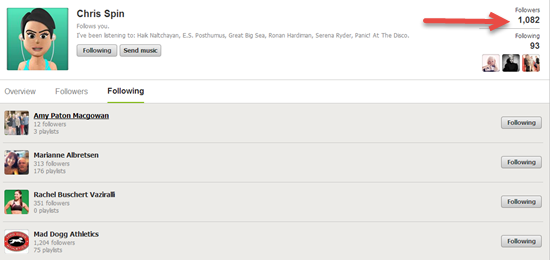
Chris is another of the smart, talented people I enjoy promoting here. She has a real wealth of knowledge about music discovery, playlist creation and all things Spotify. With over 1,000 followers, her Spotify profile is one of the first places I go to steal find new music for my classes 🙂 Visit chrispins1.wordpress.com and you'll understand why Chris's blog has become a real go-to place for new music and playlists suggestions for Instructors.
Before we started with Chris's profile, I hit record and we discussed her weekly music discovery tool, some common questions she gets about Spotify from new users and her trick for getting missing iTunes tracks to show up in Spotify – she calls it magic.
During the interview I mention a low cost (under $25) bluetooth receiver you can use to connect your iPhone/Android wirelessly to the club's sound system. Here the post for more information.