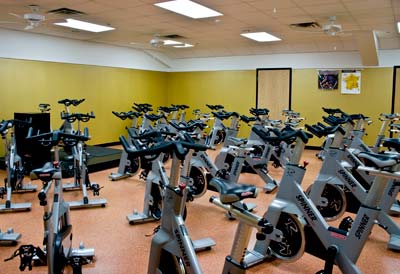
Not lost as in the “Lost” TV show, but Lost as in episodes of the Indoor Cycle Instructor Podcast that have fallen off the listings in iTunes.
The problem is that the iTunes Podcast Directory will only display a total of 40 individual Podcast listings. All the earlier episodes are essentially lost and not available for download to your computer or iPod.
Now if you have been with us since August of 2008 you have them all, but with Instructors discovering us every day many of you have missed some of our very best interviews!
Many familiar voices were first introduced to our Indoor Cycling Community in these early episodes including; Tom Scotto, Barbara Hoots, Dr Haley Perlus, Gene Nacey and I’ll never forget my interview with Johnny G!
To help those of you wanting these lost episodes, I have bundled what I feel are the very best 24 Podcasts that you can purchase & download. You can find a listing of exactly what is included on this page ICI Podcast — The Lost Episodes
Based on her unbroken string of last place finishes, Sally Edwards is the absolute worst Triathlete in America. But Sally has a good reason for coming in last… it's so no one else has to.
Listen as she describes her involvement in Danskins and Trek Womens Triathlons and she has a challenge for all of our female listeners; grab a girl friend and commit to training and competing in your first Tri.
Sally also has a fantastic opportunity for those of you interested in taking the step to becoming a Heart Zones Triathlon Coach.
Listen to the Podcast below or subscribe for free using
I did it! My application to the IODA Promonet promotional music distribution network was accepted and now we can provide you with Free Music Downloads every Friday!
This week it's all about the drums with a powerful track from Cult of Youth. If you are looking for a track to take your class (if they're ready for it) to 124 RPM like Tom Scotto shows in the Cadence Builder video, this may be the one you are looking for. It will also work well as a steady climb at 62 RPM.
To download the song click the orange square or “Right Click” and select “Save Link As” to decide where on your computer it saves. If your settings in iTunes are correct, click the song link after its downloaded and it should open and be saved in your iTunes library.
Do you have a specific computer related question? Please let me know and I will try to answer it for you. If you are having a problem, rest assured that you are not alone and I'm here to help 🙂
Music is such an important part of our classes and yet I can find very little information available about what can be done to improve the quality of the sound in the studios where we teach.
That scarcity of info ends starting today with this article, which is cross posted over at www.cyclingstudio.org
As an indoor cycling studio designer, I’m often asked how to prevent class music from pumping through the walls and disturbing businesses next door. After interviewing many reputable sound control companies, Ryan Gibbons with Auralex wowed me with his brilliance and agreed to submit an article that would outline acoustical treatment options that studio owners can implement to ensure a happy environment for all. If you’re considering opening a studio, read this first!
Total Sound Control
By Ryan Gibbons, Sound Applications Specialist
As we all know, indoor cycling classrooms can present an array of acoustical issues for both studio owners and customers alike. Loud music levels and equipment noise can translate to a harsh acoustical environment inside the studio and can disturb neighboring businesses which ultimately leads to lower profits. Obviously, having happy customers and neighbors is essential to a successful business.
A question we often hear at Auralex is, “If I put some of your foam on the walls, will it keep my neighbors from hearing my music?” The answer is unfortunately a qualified “No.” We refer to the limiting of transmission of sound between structures as “isolation.” Properly isolating a space requires construction materials and would likely require a remodel of an existing space. This can be a time-consuming and sometimes expensive process; however, if done correctly it can be well worth the effort.
From our experience, the most efficient way to eliminate room-to-room sound transmission is to build what we call a “room within a room.” This involves two steps. First, decoupling (acoustically separating) the new structure from the existing structure is important to eliminate structure-borne vibrations. Generally these vibrations are caused by low-frequencies travelling through the walls, ceiling, and floor. This can translate to your attached neighbors as “boomy.” Decoupling the structure can help control those vibrations, thus reducing the amount of noise people in the other structures hear. Next, we suggest placing mass (drywall/sheetrock and insulation) between the existing structures to help control higher frequencies from travelling through the existing walls. Accomplishing these two steps should help improve your relationship with your neighbors considerably.
Auralex has a publication on the web called “Acoustics 101.” This is a great resource that can help guide you or your general contractor through the proper construction to isolate your space. It provides detailed drawings on the topics discussed, and is easy to read and understand. You can find this publication on the web at www.acoustics101.com. Also see our page, Bothering Your Neighbors?for helpful diagrams and audio clips.
When it comes to interior acoustics, there are many solutions for these dilemmas and a wide array of products designed to help you reach a comfortable acoustic environment. The two most commonly-used sound absorption materials are high-quality acoustic foam and specialized acoustic fiberglass (no, not the stuff you buy at the hardware store). For brevity, at times we’ll generically call acoustic foam just plain “foam,” although there are very dramatic differences in cell structure and density between acoustic foam and the thousands of other types we could manufacture. (This is why you can’t just run down to the local SuperMart and buy mattress pads with which to acoustically treat your studio.)
In addition to the two most popular types of acoustic absorption materials, a Class A, fire resistant, natural fiber panel called SonoFiber. SonoFiber acoustic panels are the perfect solution for those budget-conscious projects requiring a Class A fire rating without the aesthetic demands of designer treatments such as fabric-covered panels.
Acoustic sound absorption foam is well-suited to alleviate slap and flutter echo, the two most common problems in rooms not specifically designed for music recording and performance. In fact, foam can turn even the most cavernous warehouse or gymnasium into a suitable acoustic environment.
Feel free to contact me if you have any specific questions about your studio, and I’ll be happy to provide any assistance, suggestions, or solutions. You can contact me at Aurale via email at auralexinfo@auralex.com or by calling 1.800.959.3343.
I have an interview scheduled with Ryan on Thursday March 24th. If you have a question you would like me to ask him send it to john@indoorcycleinstructor.com by the end of Wednesday the 23rd.
Honestly, pretty much anything that came across my headphones today would be enjoyable because it is 50 degrees and sunny here in Minneapolis on St. Patrick’s Day. But, I love this Italian American instrumental rock guitarist and multi-instrumentalist with multiple Grammy Award nominations. Tom Scotto and Gene Nacey from Cycling Fusion like to use an instrumental track in the warm up. I think this is a great idea. It gives us an opportunity to coach through the necessary introductory information without having to compete with lyrics. Joe Satriani ‘s, “Is There Love In Space?” CD, released in 2004, has 10 not only usable, but really great songs on it. “Up In Flames”, with a cadence of 90 will get your class in the mood to kick some butt if you have anaerobic threshold intervals planned for them. “Is There Love In Space?” is a bit more mellow, but still has a cadence of 90 and I use it to start one of my aerobic base building classes. “Just Look Up”, cadence 88 is a nice last flat. It is nice and mellow. “Searching” is 10 minutes long and has a cadence of 80. I love it for load building. I have my class really focus on holding their cadence and add a bit of load each minute and watch their heart rate climb from mid zone two up to threshold by the time the song ends. Check out this video of Joe live in Tokyo doing “Searching”
“I Like The Rain” cadence 64, has some funky vocals in it. “Souls of Distortion”, cadence 64, “If I Could Fly”, cadence 68, “Lifestyle”, cadence 68, “Hands In The Air”, cadence 80 and “Gnaahh”, cadence 64 are all good, with different flavors for different approaches to climbing. Watch the vocals on “Ghaahh” though. A bit racy… Enjoy!
As an indoor cycling instructor, you’re going to find a large percentage of your students dabble in triathlon, or engage in it as a serious sport. Either way, you don’t want to be embarrassed by using the wrong triathlon-related words or terms in your class when talking to them about triathlon (including the ever-popular pronunciation of triathlon as “triath-a-lon”).
So to help you look better and converse intelligently and confidently with your indoor cycling students who are triathletes, this is Part 5 of a five part series called “Tri-Lingo 101” that will teach you how to use the correct triathlon terms. In this article, you’ll learn common triathlon race terms. Without further ado, let’s dive in!
Aid Station: Typically every 1 mile to 1K on the run and every 10-20 miles on the bike, there will be an aid station with gels and water. Plan for these when packing your race fuel and hydration.
Marshall: Typically one or several individuals are on the course, ensuring that the rules are followed, and flashing penalty cards at individuals who do not follow the rules. On the bike course, they are usually on scooters or motorcycles. These vehicles are legally permitted to be on the race course and are there for your safety.
Pack: A group of cyclists that forms during the race. It is possible, if each cyclist is separated by 10 meters, for this to be a legal form of racing in a non-draft legal race, but in many cases “illegal” packs form.
Penalty: During a race, if you are caught illegally drafting, littering, cutting the course, passing on the wrong side of the road, or committing any other activity that has been banned by the race director or officiating body, you will serve a penalty, which is typically A) stopping your bike, waiting, and then starting again; B) stopping for 2-5 minutes in a penalty tent; or C) having time added to your finishing time.
Penalty Tent: Also known as the “Sin Bin”, these are commonly seen in Half-Ironman and Ironman events, and are where you must stop to complete several minutes of penalty time if you are caught drafting or littering.
Podium: Typically the first 3-5 competitors in each age group qualify for a podium finish, which typically receives some type of trophy, medal or certificate in addition to a finisher’s certificate.
Slot: In any races that are “qualifiers” for any type of championship, such as Hawaii Ironman World Championships, there are a limited number of allocated slots that are given to the fastest triathletes. Many times, people will wait for the “roll-down” if they did not get a “slot”, which means they may be able to take slots that qualifying athletes turned down.
Special Needs: During an Ironman distance triathlon, there is a point about halfway through the bike and halfway through the run where you can collect a special bag that you have pre-packed with any needs you may have. The bag is given to you by volunteers.
Volunteer: These individuals are not paid and volunteer to do things like building transition area, handing out aid, timing the race, giving out medals, and even working in the medical tent. Smile at them and thank them!
Bio:
Ben is a fitness business coach, triathlon author, and sports nutritionist. If you want more videos, aricles and audios about swimming and other triathlon related topics, visit Ben’s free blog and podcast at http://www.bengreenfieldfitness.com . Also be sure to check out Ben’s endurance sports website Endurance Planet, at http://www.enduranceplanet.com and his Rock Star Triathlete Academy, at http://www.rockstartriathlete.com . Finally, if you want to learn how to grow your fitness business and make more money, visit Ben’s fitness business advice website at http://www.trainfortopdollar.com .





 I did it! My application to the IODA Promonet promotional music distribution network was accepted and now we can provide you with Free Music Downloads every Friday!
 “New West”
 Buy at