It’s a given that different people come into our classes with different expectations, needs and goals. How can we as instructors/trainers accommodate their individual needs without alienating any single group?
Let’s take two hypothetical participants — Susan and Bob. They’re the same age, but Susan is interested primarily in weight management, arguably the most common fitness goal, while Bob is interested in getting stronger, fitter and faster on the bike because he rides outdoors frequently and races regularly. Can these two find happiness in the same indoor cycling class?
I’ve resolved this with a reasoning that works for me. First, I needed to define my professional role as I see it, which may differ from how the fitness industry sees it. As an instructor/trainer, my job is to create a situation and an environment in which members can experience the benefits of physical exercise, and nothing more. Which benefits these are will vary with the individual, and it’s important that I never assume what they could or should be.
Even though Susan tells me she wants to lose weight and Bob says he wants to race bicycles, I know from experience that what the members want is often far removed from what they need, regarding the benefits that training has to offer. Here’s an easy trap, though: I have to be careful not to presume to know what they need.
The goal-oriented approach to training has a built-in limitation. I have known many members who, after 10 years of trying to “get something” out of exercise (e.g., weight loss), were frustrated and disheartened. Maybe they had some limited success from time to time (that I even helped them achieve), but it didn’t last.
If a workout session has to produce a result, you have a paradigm for unhappiness. Instead, my current approach is to create a training session that allows a person to get whatever he/she needs from the workout without interference on my part. I keep in mind that the average member will not understand this approach right away, so the training has to be about something they can understand and offer them some fundamentals of training.
So I teach indoor cycling. This is because the bike has brought balance to my life. It has been a source of both hardship and delight, but the practice of cycling has made me happier. I look forward to riding my bike, whether indoors or out, every day.
I explain early on that I will ask them to ride as if they were riding a real bike outdoors because there are excellent reasons for everyone to train that way, no matter who they are: greater enjoyment of the class, for example, and good technique that will prevent them from wasting energy, so they can apply the energy to creating power. (The last point will clearly help Bob, but it helps Susan as well. The stronger the trainings make her, the more power she can generate, and the more calories she’ll burn.)
Now my job in class is simple: Teach the bike. Completely. Offer my students structured trainings that have helped me and never assume what they need. If it’s in my heart to lead a training on riding big gears in the hills, that’s what I do. What the students get, they get, and I don’t over- or underestimate my influence on it.
Sure, a student with a specific goal may need individual attention. If Susan really wants to lose weight, I can make recommendations and/or referrals. The same goes for Bob. My job as an educator is to show them how to modify what I teach — which is a valuable skill they can use in any class they may take in the future. I offer suggestions but recognize that this is their path. I can’t overshadow it with what I think they should do with, or gain from, their training. That’s not my job and would be a misuse of the trainer role.
If you have teenage boys at home like I do, you may have already heard the tracks I'm sharing today. My guys love both soccer and basketball and when they aren't playing on the field and the court, they are often found in the basement with their friends playing FIFA or NBA on the Playstation. FIFA 2016 came out earlier in the week and I get just as excited as they do because I love to check out the track lists when the new games come out. I almost always find at least a few good songs to use in my classes. (NBA 2K 2016 is coming out Friday.)
Here is a list of the entire track list for FIFA. You're sure to find something you like. One of the better known tracks on the list is New Rush by Gin Wigmore which has been appearing on my playlists for a while now.
Try this one for a flat road at around 100 rpm's. It was just released in August 2015 and it has a great sound:
Take a picture of yourself with your class or on your instructor bike. You may want to ask your club manager or one of the kids in the club's childcare to take the picture so no one is left out.
Attach it to an email to: john@indoorcycleinstructor.com
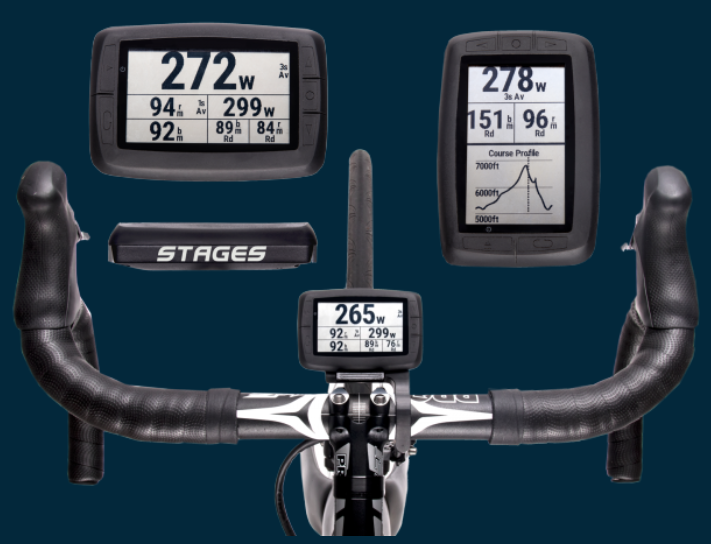
Stages Dash is a power-training-optimized GPS head unit that seamlessly integrates with Stages Link, a new cloud-based training and analytic system that includes custom-tailored coaching and education for cyclists of any ability. Stages Link will be in beta release fall 2016 and Stages Dash will be available early 2017, with a MSRP/RRP of US$399/€399.
“When a rider buys a power meter, they’re looking for something more than a number–they have a goal,” said Pat Warner, SVP of Stages Cycling. “After three years providing power to Team Sky, we’ve realized that athletes from professional to recreational have similar aims: they all want to meet their goals and they need simple guidance and immediate feedback to succeed. This new Stages ecosystem enables all riders to maximize their performance and meet their goals, with a simple and intuitive interface featuring unrivaled customization, and training programs that learn and adapt from each rider’s unique characteristics and achievements. “
Stages Dash
The Stages Dash performance training GPS head unit is specifically designed to coach a rider to his or her best performance. In the five years since launching the Stages Power meter, Stages Cycling has optimized its use with 3rd party cycling computers, but discovered a need for a highly-focused, customizable, training device. Stages Dash answers this unmet need with the delivery of robust Bluetooth and ANT+ connectivity to Stages Power and 3rd party devices, plus GPS capabilities, while introducing new features including the ability to offer guided workout coaching and specific provisions to manage critical training metrics across all devices.
Stages Link
Stages Link is a hub of cloud-based coaching, education, training analysis and equipment management tools, which were developed collaboratively with the analytics experts at Today’s Plan. The system is backed by the industry’s most advanced analysis capabilities currently being used in the professional peloton. Stages Link custom tailors training plans and daily workouts to benefit rider performance and enable performance goals, whether the goal is to simply improve fitness or target specific races over multiple seasons.
Stages Link will also help you quickly set up your Stages Dash and keep tabs on your Stages Power meter, all while being open and compatible with 3rd party devices. Stages Link plan pricing is TBD, however, riders who purchase Stages Power or Stages Dash will receive complementary access for two months.
“We’ve developed a complete experience that will personally guide a rider through the process of living with and meeting their performance goals with power,” said Warner. “This system we’ve developed is an easy and fast way for a rider to achieve their best performance.”