This Podcast is was originally published on May 7, 2017, I have updated it with our new Podcast host information and I am representing it now. I hope you enjoy it, Joey
The latest issue of ACE Certified News features an article: Create Safe, Effective Indoor Cycling Classes. The author, health and fitness writer Karen Asp joins me to discuss what she describes as the "Five Common Mistakes" made by Indoor Cycling Instructors. Karen also explains what motivated the American Council on Exercise to contract her to write this story.
NOTE: I'm trying to get approval from ACE to reprint the article and will post it asap.
Listen to the Podcast below or subscribe for free using iTunes or Zune.
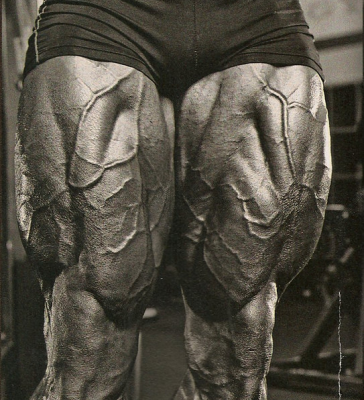
“Will indoor cycling make my legs big?” I’ve been asked this question a number of times over the years. A few people told me their personal trainers told them that. Others just made the assumption based on the fact that we are constantly using our legs (not a bad assumption). The question was always asked as if people feared they would walk out of class with bulging quadriceps, calves and glutes.
I’m sure that I may have been asked this question more than some because….well….my legs are quite big. It is rare for me to find a pair of cycling shorts that fit comfortably without cutting of the circulation to my lower legs. For the record, I didn’t get my legs from cycling. Back in the day, my primary sport was baseball. Coming out of high school, I looked to have a promising career as a ball player until I blew out my shoulder. I was a catcher. Catchers find themselves sitting in a squat for most of their lives. To make matters worse, one of my early coaches used to have me (and the 2 other catchers on our team) run around the field in a squat position. I can only image what that must have looked like. My legs were so big during my last year of baseball that I was the only player who did not have his last name on their back. The back of my uniform read “Piano Legs”.
So it is understandable that someone would walk into my class, look down at my legs, and fear they would never be able to wear a skirt again after some indoor cycling rides with me. The fact is that cycling reduced much of the bulky-ness of my legs and toned them. No joke, my legs used to be twice the size as they are now. So why did this happen? First, cycling doesn’t provide high impact on the muscles (unless you crash into something which is unlikely indoors). Impact, such as when the foot strikes the ground when running or jumping, will cause the muscle to rapidly resist force resulting in an eccentric contraction. An eccentric contraction will cause the muscle fibers to lengthen as they attempt to stabilize the joints (resist collapsing or flexing). This impact can be very traumatic on the muscle resulting in micro-tears and muscle growth. Second, indoor cycling usually does not provide consistent muscle overload which would provoke more muscle fiber recruitment. Portions of a class may have some explosive efforts or muscular strength drills, but the majority of the time will be spent at low to moderate workloads.
Cycling is predominantly a high repetition activity. In general, high repetition exercise will serve to tone muscle because it promotes increased blood flow and muscle conditioning without the overload. Using weight training as a comparison, someone lifting weights to build muscle mass will target heavy loads and sets consisting of 6 to 10 repetitions. A person interested in toning their muscles will use lighter weight and sets of 15 to 20+ repetitions. Applying this concept to indoor cycling, we are pedaling thousands of rotations (repetitions) per hour*, which is going to have an overall toning and conditioning affect on the muscles.
So the answer is no, it is highly unlikely that indoor cycling will bulk up your legs. So ride away and advertise your class as the way to a beautiful, toned and fit body (at least the legs anyway).
* An average cadence of 80 RPM for a 60 minute class will result in 4800 pedal rotations for one leg.
This question from a prospective ICI/PRO member got me thinking today, while out on my early AM training ride…
I'm interested in signing up for your programs, but I have a few questions about the information that is received. When you receive the classes, are there instructions included with how to teach each song; meaning what to do when?
Good question.
I answered her saying that the majority of our Audio Class Profiles are Intensity based – segments of time at a specific level of effort defined by RPE, HR Zone or Power/Watts.
After I hit send I started to reconsider my response – are our profiles mainly intensity based? So I took a one of our most popular profiles (Welcome to the Jungle from Krista Leopold) with a specific focus on how much movement/position/cadence change she had included.
It turns out not much… here's what I found in the PDF download.
Krista's introduction is all about intensity:
Welcome to the Jungle is a high-intensity class. For the student, the prescribed intensity gradually increases from below threshold to maximum effort, which is advisable only for students with previous experience and solid fitness levels. Just as in any class, new and deconditioned students will be coached to ride only where they feel comfortable. This ride is best taught to a group that you already know, and is not a ride to use on a day when you are subbing or just starting out in a new setting. Ideally, you would have announced it in advance so that they are prepared and rested for it. Instead of using heart rate numbers for this ride, we will rely on good ‘ole RPE. You and your students will benefit from having 1-10 scale RPE chart displayed. We will work through four rounds of intervals separated by a complete recovery. Each round will increase in intensity and the recovery time will decrease.
Page two includes this:
For all of the work efforts I recommend theSpinning® movement called “Running with Resistance,” but any movement can be substituted. Running with Resistance is particularly effective because it is a move that is specifically done for short periods. It allows you push a higher resistance at a higher intensity in a way that is different from a sprint. Done correctly, you can easily push your heart into the high end anaerobic zones.
In the description for song #2
Toward the end of the warm-up, we will accelerate as we leave the saddle, almost like jumping,
to finish raising our exertion to right around 6 on the RPE scale.
Then there are a few random suggestions:
It’ll be a fun, high-cadence climb that will be as easy or
as hard as they want it to be.
For this final effort you are mostly cheering them on, reminding them that their cheering squad is
cheering them on, and giving them their starts and stops. Be very clear with every start and stop (of the Tabata intervals) because you don’t want them to miss it. I find that a “3-2-1-Stop” countdown at the end of every
segment helps them by giving them a regular pattern to follow.
Krista's Welcome to the Jungle Quick PROfile only includes one reference to movement
Created by: Krista Leopold, aka GroupFitPower
Training Type: High-Intensity Intervals Working HR Zones: Zones 4-5c
Total Class Length: 60 minutes
Warm-up: 12 minutes Start with a long warm-up to help settle them in. After 8-9 minutes, bring them out of the saddle to get them energized.
1:3 Intervals Round: 11 minutes 30 seconds “Hard” (RPE 7) + 90 seconds “Moderate” repeated 4 times, followed by complete recovery of 2 minutes.
1:2 Intervals Round: 9 minutes 30 seconds “Very Hard” (RPE 8) + 60 seconds “Moderate” repeated 4 times, followed by a complete recovery of 3 minutes.
1:1 Intervals Round: 10 minutes 30 seconds “Very, Very Hard” (RPE 9) + 30 seconds “Moderate” repeated 4 times, followed by a complete recovery of 6 minutes.
2:1 Tabata Intervals: 4 minutes 20 seconds “All-Out Maximum” (RPE 10) + 10 seconds “Moderate” repeated 8 times.
Cool Down and Recovery
After reviewing a few more it appears that I was right, our profiles are primarily intensity (not movement) based. But is that a good thing?
Wasn't the original Johnny G programming nearly all movement based? Jim Karanas made some interesting points about movement based classes in his Non-Authentic Indoor Cycling post.
It won’t last. Silly trend. Dance parties on bikes with music videos can’t last. You can’t even call it training. It’s just physical movement, not sure it’s even considered exercise. It’s totally without direction.
And yet SoulCycle is packing them in and as near as I can tell they're using a whole lot of movement in their classes.
Jim ends his post with this:
If non-authentic IC is going to make a mark, why not embrace it for what it is — a way to train on the bike that makes (some) people fit and happy? Assuming it’s validated as safe and effective (ICG has already contacted the American Council on Exercise and proposed a study), then shouldn’t every indoor cycling education body offer a program on how to teach non-authentic indoor cycling? Why shouldn’t any and every indoor cycling program be taught by those who are truly qualified to teach indoor cycling? That would be the likes of us. We know indoor cycling best. We could create a program — inauthentic fluff, if you will — that’s still authentic in its safety, structure and cardiovascular benefit. Why not?
Could the solution, that many of us are looking for, be as simple as just sprinkling some fun movement into a solid profile that's intensity based?
This post has been adapted from an article By Selene Yeager published on June 13, 2019 which can be found HERE.
The following is excerpted from Climb! by Selene Yeager–your guide to train for, conquer, and ultimately fall in love with hills. I (Joey) have read Climb! and I recommend the book, again both for indoor and out.
How does one train for a mountain bike stage race, a hard race where you have hour-long climbs, short grinders, and rollers all thrown into the mix, for 4 to 6 hours a day, day after day. The answer is simple, hill repeats and lots of them.
If you are not already doing hill repeats in your indoor classes, you should consider them. They are hard, they allow you to dial in your time at intensity, and they will build a stronger student. Not all repeats have to be the same, some can be level, such as 3 x 8-minute or 6 x 5-minute hill repeats where you have 24 to 30 minutes at threshold. Others can be crafted to mimic real-world conditions, where you’re hanging onto attacking riders or trying to stay away or make a break, like 8 x 3 minutes or 12 x 2 minutes, so the same time at even higher intensity.
These not only train your body to produce more power aerobically, better manage lactate, and produce more power at your threshold, but also bolster your mental reserves, because it’s just as challenging for your mind to blaze up the same lung-busting climb as it is for your muscles.
The following hill repeats are taken from an outdoor preparation plan that is designed to build climbing power. Generally, a workout like this is only done once or twice a week and on fresh legs. Also, though hill repeats are designed to be somewhat torturous, they’re not intended to bury you. These should be done at an 7-8 on a scale of 1-10, not a 9 or 10. Your speed, intensity, and/or power should be within the goal range on every repeat.
Uphill Sprint 20s:
Being able to surge and recover helps you hang with the group up climbs and gives you the reserves to power through undulating climbs that kick up into double-digit grades.
Do It: Design a ride that has a steady climb in the 10 to 15 minute range for duration. Begin the climb in HeartZone 4, climbing at your lactate threshold (LT) RPE of 7 to 8. After 2 minutes, stand up and attack at just below all-out sprint intensity, HeartZone 5, (RPE 9) for 20 pedal strokes. Sit and go right back to climbing at your LT. Repeat every 1 to 2 minutes (depending on your fitness) all the way up the hill. Perform the drill one or two more times.
Rock The Rollers:
To keep going strong through rolling terrain, practice 2-minute attacks.
Do It: Design a ride with short climbs that take about 2 minutes to crest. Wind up before you hit the climb, so you’re at LT (RPE 7 to 8) as soon as the hill starts. Climb at LT for 90 seconds, then go as fast as you can (RPE 9 to 10) for the final 30 seconds all the way to the top. Repeat four to six times.
Short Rest Repeats:
These classic climbing intervals simulate real-world climbing conditions where you often don’t have the luxury of fully recovering before you’re hit with the next incline.
Do It: Design a climb that takes about 10 minutes to climb. Roll into the climb and crank your intensity to your LT heart rate and/or power (RPE 8). Hold it there for 6 minutes. Recover for 3 minutes. Repeat for a total of four climb intervals.
Rocket Drills
As the name implies, these short intervals go from 0 to 60, like a rocket, to develop the explosive strength and power you need to punch up steep climbs without losing speed and momentum.
Do It: Design a short incline that takes about 2 minutes to crest. Begin from a standing or slow-rolling start (much as you would a race), on a count of three, explode up the hill as hard as you can (RPE 8 to 9) for 2 minutes. Recover for 3 minutes. Repeat 5 to 10 times.
I hope that this helps you in your next class design. I always try to bring a little of the outside in every time I ride......Joey