No more hunting for new music or counting out cues. Here is your ready to ride document, that can be displayed from your phone, or printed out onto cue cards. This ride is timed out, down to the second, to make your life as easy as possible!
Corbin Chinatti Ruff with Mom and Dad – Sorry Dunte, this picture was so cute I couldn't pass up using it for this post 🙂
Stages Indoor Cycling's Dunte Hector joins me to discuss his ideas about integrating power, while using your existing music playlists. Brilliant in its simplicity and so easy to implement… I wish I had thought of it myself. Learn Dunte's trick below.
We actually recorded this PRO Podcast back several years ago and we mention that Cameron Chinatti was due to give birth at any moment. Well on Feb 13 (after we recorded) Corbin Chinatti Ruff became the newest member of the Stages family.
I coach a four month long winter training camp that offers 14 indoor cycles and 6 bicycle trainers. This allows participants to bring their own bikes, mount them on the trainers and ride alongside the stationary bikes. Everyone gets a fantastic experience with this mix. But there are a few things to know about mixing trainers and spinners.
Why offer Road Bike Trainers? Having bike trainers as part of your program will expand your market, increase your class capacity with a small budget, and give new interest and challenge for instructors and riders alike.
There are three important things to consider if you are mixing spinners and trainers in the same room: Why BYOBike, Location/Set-Up/Noise, and Cueing for Instruction. 1.) Why BYOBike?
Why would someone want to bring their own bike in the first place? For a number of reasons, using your bike on a trainer is a more realistic experience.
It’s About Fit.
The fit is just better on a “real” bike. Owners of bikes have the seat/handle bar location adjusted, a saddle that they are accustomed to, and crank positions that fit their body. If not, this is a great opportunity to help your riders with a proper bike fit.
Vital to fit is that the spread of the pedals on your own bike is the right width. I find that on some brands of spinners, the pedals are set much wider apart than you’d find on a road bike. This can cause knee pain. We tested the Kaiser M3 bikes at my Club and several riders (me included) experienced knee pain. While I like many features on the Keiser M3, I discovered that the pedals are set 1” wider than the Lemond Revmaster. This can be a make or break in comfort and dissuaded us from purchasing the bikes.
Practice with Changing Gears
While it is not quite like riding outside, riding your own bike on a trainer does give you practice in shifting gears and learning your own gear ratios related to work effort. We’ve had many riders who bring in a new bike and want to try it out to “learn the bike” before taking it outside.
It’s a Harder Ride
On your own bike, there is no help from a weighted flywheel. If you are not pedaling on a bike, the wheel stops going around. That means every pedal stroke counts a little bit more. It is 100% your own effort.
Spinning bikes are a “fixed gear” with a weighted fly wheel that retains energy which means you are getting assistance with every pedal stroke from the momentum of the flywheel, especially at high RPM.
Trainers are 20% the Price
Bicycle trainers are about $350 compared to a spinning bike at $1800 (of course, prices vary wildly for both of these options). If you want to add more bikes to a room, you could add 5 trainers for the price of one Spinning® bike.
I use Kurt Kinetic Fluid trainers because they are fairly indestructible and give a very smooth, quiet ride. All you need is the trainer, a mat, and the front wheel cup. When you mount a bike to a trainer, the rear wheel has now been lifted off the floor by several inches. To avoid feeling like you are riding “downhill” (since the front wheel is lower than the back), you need to raise the front wheel. Most brands of trainers come with a front wheel support. I like the supports that offer a variety of tire sizes and heights — sometimes you may want to even raise the front tire higher than the rear if you are going to focus on a hill climbing workout. This will help to put the rider’s body in a more realistic climbing position.
In a pinch, if I don’t have a front wheel support, I’ll use a riser from a step aerobics bench. They are about the right height to level the bike.
Who you Attract
You want your program to meet the needs of a variety of participants. With trainers, you will attract riders who may otherwise never consider a “spinning” class. The cyclists who want to go through the trouble of bringing their own bikes to a class are usually the ones who are avid outdoor riders. This will expand your market — with a low cost – to a whole new group of cycling enthusiasts. Of course it will be up to you, as an instructor, to make it worth their while. And your spinning participants may see the bikes on trainers and develop the interest to take up biking outdoors. This makes your members much more likely to continue with bike related fitness programs.
2.) Location, Set-up, and Noise
OK, let’s say you are going for the mix of indoor cycles and trainers in you class. What can you expect?
Location
Where, oh where, do you put the BYOBers? Near the entry door.
With years of experimentation on where to physically put them in the room, I have found that it is simplest to group them nearest to the entry door. This makes it easier for navigating the bikes in and out of the room. Plus you want all the trainers in one area. Close proximity makes it easier to give specific cues to the trainers vs. the others. I can look at the group on trainers, give the cue, and know they are staying on track with the rest of the group.
Dirt
Bikes can be dirty. We require that the riders bring clean bikes and clean shoes to class. Plus we always have them wipe down their mats after class. This helps everything stay clean. If you can set up a bike cleaning station outside of your facility, you will win the hearts and admiration of cyclists.
Set-Up
We provide the trainer, on a mat, with a front wheel cup. A bike on a trainer takes up about 30% more length than the foot print of a spinning bike. I usually set the trainer off the back of a typical bike mat with the front wheel cup at the front of the mat. This way the sweat from the rider still falls on the mat.
As an instructor, you need to know how to attach the bike to the trainer. There are several steps to be aware of. I usually let the rider set up their own bike, but if they haven’t done it before, you’ll need to give them help. We always have a floor tire pump on hand because tires should be filled to the correct pressure to have the best ride on a trainer.
1. Rear Skewer
Most trainers have some sort of screw on cup that attaches to the rear wheel skewer on the bike. Some bikes have skewers that will not fit in these attachment points. It is a good idea to have loaner skewers on hand (Kurt Kinetic Trainers come with a skewer that will fit the trainer) and you can swap it out for the rider. It is simple to do, but you should be confident in what you are doing. If you have any questions about how to swap out a skewer, go to your local bike shop and have them show you how before you do it on someone else’s bike. Chances are that your rider will know how to do this.
2. Jiggle Test
Once the bike is mounted to the trainer and before you add the tension to the rear wheel, make sure the bike is stable. I simply grab the frame and give it a jiggle. If the bike seems a little wiggly, increase the tension on the axel mount. If the bike is stable, you are good to go.
3. Skid Test
After adding tension with the resistance roller to the rear wheel, grab the wheel and give it a tug to spin the wheel. Does it skid on the resistance roller? If it does, then apply more resistance to the rear tire. Tug it again. When there is no skidding or squealing, you are ready.
Before class starts, it is a good idea as an instructor to give each bike the jiggle and skid test.
Noise
Yes, bikes on trainers are louder than the stationary bikes. That sound, the revving of the bike tires on the trainers, gives added “feel and fuel” for everyone as you increase/decrease speeds through your workout. If you aren’t used to wearing a microphone when you teach, you may want to start.
The noise level of the trainer will depend on two things: the trainer model and the tread on the bike wheel. Some models of trainers are simply noisier. That is why I like the fluid trainers — they tend to be quieter.
More tread (and wider tire) = more friction = more noise. A smooth tire will be much quieter than a knobby one. If you notice a rider with a noisy tire, suggest for the purposes of the class that they switch out their tire to a narrow smooth one. This will also reduce the wear and tear on their regular tire.
I'll follow up next week with how I actually teach one of my BYOB (Bring your Own Bike) Indoor Cycling Classes.
John's note: We're excited to have Coach Robin (AKA CycleMole) on the ICI/PRO Team and I can't wait for her to share her story about where the name CycleMole came from and I'm super interested in learning exactly what it takes to ride around the world on a bicycle!
Robin Robertson
Creator of Cycle Moles: Indoor Cycling for Outdoor Adventure
USAC Level 2 Coach, ACE Personal Trainer www.cyclemoles.com www.powertopedal.com
No more hunting for new music or counting out cues. Here is your ready to ride document, that can be displayed from your phone, or printed out onto cue cards. This ride is timed out, down to the second, to make your life as easy as possible!
My guest in this PRO Podcast episode wants to help you develop a 1,000 Watt Presence & express yourself brilliantly. It starts with“taking a personal inventory” of yourself interacting with and teaching your class.
Listen as communication expert Alexa Fischer explains why recording yourself interacting and teaching your class is the first step to making small improvements to how effectively you present to and communicate with your participants.
About Alexa Fischer
There’s nothing like a 1,000 Watt Presence to ignite and inspire everyone you meet. In case you have lost touch with your own star qualities, Alexa Fischer knows how to bring out your inner light. She has transformed normal civilians into confident, dynamic speakers. The results? Less Fear. More FUN. And maybe some fame if you’re a really dedicated student! Alexa is a graduate of Northwestern University, B.S. in Speech, and The Yale School of Drama, M.F.A. in Acting. She has appeared on countless episodes of hit television shows and national commercials. Beyond the television, her audiences include entrepreneurs, non-profits, corporations and teens.
Listen to my interview with Alexa below or you'll find it in the ICI/PRO members only iTunes feed.
Here is a past Podcast that explains an easy way you can record your own class, using your iPhone or Android phone.
Click the image for more information on Alexa's course
I've taught Indoor Cycling classes for about 15 years and thought I understood all of the Do's and Don'ts of delivering music to my classes. Based on the technique offered in this podcast, I'm realizing I still have a lot to learn…
Dennis Mellon is one of those Instructors who really gets music. His understanding of creating great playlist is probably one reason he was voted the top Instructor where he lives in Colorado. In a past interview Dennis introduced us to the concept of Harmonic Mixing – paying attention to the musical key of each track and combining only those tracks that are in complimentary keys.
My initial interest was learning; when does Dennis creates his class playlist? Is it after he's decided on the specific profile? Or does he build his profile around his playlist? Listen below to learn his method – he actually does it both ways.
Then, during our conversation, Dennis casually explains how his simple technique for transitioning between short intervals. “I just hit next.” I've always believed that forcing a change, before a song has finished, was too disruptive. Dennis's view is that the disruption is exactly what he's looking for 🙂
The 8:50 Blue Man Group song (with the silence in the middle) that I refer to is Exhibit 13 – except it isn't available in Spotify 🙁 You can find it in the iTunes music store and it's in Deezer.
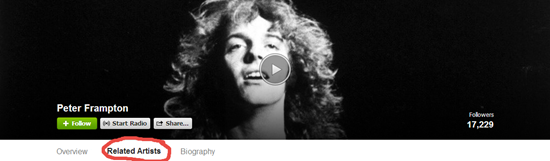
Here's the playlist I built to go with the new Epic Planet RAAM video. I started out looking for a 13 minute song to match the long climb that finishes this video. At 13:47, Peter Frampton — Do You Feel Like We Do – Live is a perfect choice. Past experience has shown me that you can go crazy trying to compile a playlist that matches a structured video exactly – better/easier to match up a few of the important sections in the ride.