by Joey Stabile | Dec 26, 2017 | Best Practices, Class Work-Sets, Instructor Training, KEEPING IT FUN, Master Instructor Blog, Training With Power
Welcome to the The Weekly Ride by Cycling Fusion:
No more hunting for new music or counting out cues. Here is your ready to ride document, that can be displayed from your phone, or printed out onto cue cards. This ride is timed out, down to the second, to make your life as easy as possible!
(more…)
by John | Dec 21, 2017 | Instructor Training, KEEPING IT FUN, Master Instructor Blog
I feel a bit sad (and confused) whenever I see an Instructor's comment to the effect of; “I'm not interested in entertaining my class.” It's usually followed with something like; “my role in class is to coach people through effective exercise.” or “people should just be content to ride the bike and not need to be entertained.”
So why would anyone be adamantly against entertaining their participants? I'm not sure (which is the confused part), but I do know that my best classes are those where I feel like a polished performer on a stage. It's like a drug to me – that high I feel when I'm really on my game and wanting to experience it over and over again.
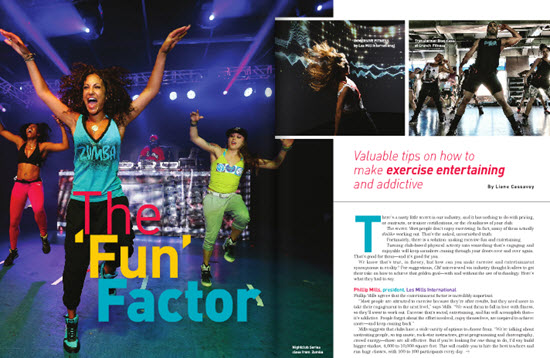
Club Business International magazine has a great article this month: The Fun Factor – Valuable tips on how to make exercise entertaining and addictive. I have created a PDF of the article that you can download here and there's a lot of great ideas you can apply to your classes tomorrow.
It begins with this:
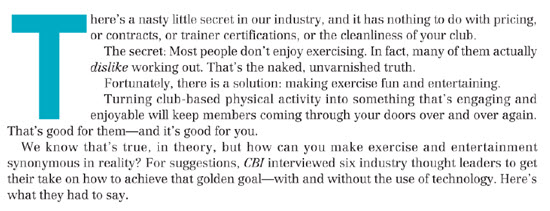
Most people don't enjoy exercising
The brilliant Keeping It Fun concept, from studio owner Karen Casler, is based on the simple (but often ignored) fact that most people don't really enjoy exercising, but nearly everyone enjoys having FUN.
Sure you'll have some self directed athletes that will endure a focused “Real” class, so as not to be stuck riding alone in their basement. But those same folks will also enjoy a FUN class the same as everyone else > and many will adapt to the class in ways that meet their training needs.
My observations are that the most popular Instructors understand this and typically conduct very FUN classes. I'll never forget the advice I was given early in my career, by a MI at Life Time Fitness:
First you need to give them what they want (FUN)… and only then can you give them what they need (specific training)!
by Joey Stabile | Dec 19, 2017 | Best Practices, Class Work-Sets, Instructor Training, KEEPING IT FUN, Master Instructor Blog, Training With Power
Welcome to the The Weekly Ride by Cycling Fusion:
No more hunting for new music or counting out cues. Here is your ready to ride document, that can be displayed from your phone, or printed out onto cue cards. This ride is timed out, down to the second, to make your life as easy as possible!
(more…)
by Joey Stabile | Dec 12, 2017 | Best Practices, Class Work-Sets, Instructor Training, KEEPING IT FUN, Master Instructor Blog, Training With Power
Welcome to the The Weekly Ride by Cycling Fusion:
No more hunting for new music or counting out cues. Here is your ready to ride document, that can be displayed from your phone, or printed out onto cue cards. This ride is timed out, down to the second, to make your life as easy as possible!
(more…)
by Gino | Dec 11, 2017 | Instructor Training, Master Instructor Blog, Training With Power
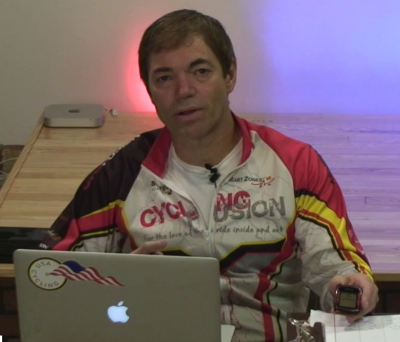
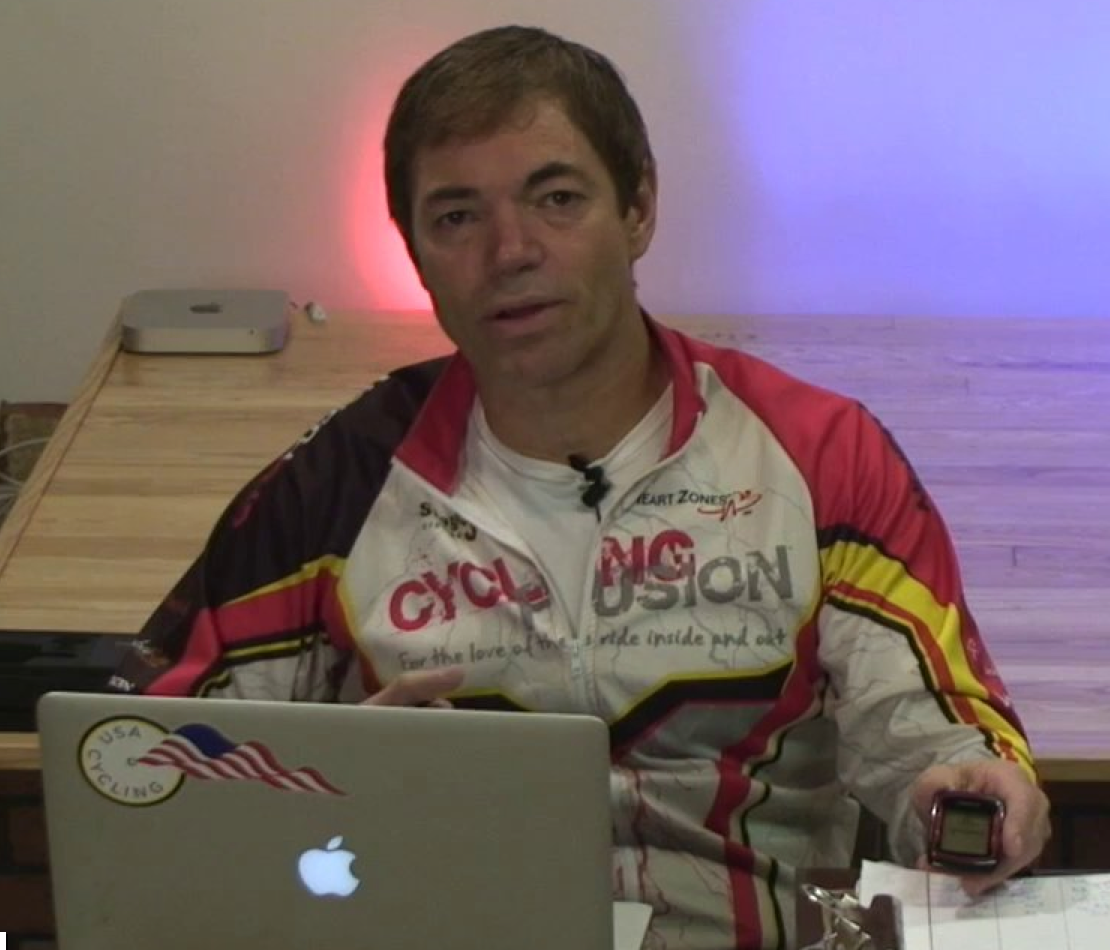
Coach Gino walks us through data collection
The first two video blogs showed the detailed process of performing power tests on the Keiser m3 bike with Garmin Vector power pedals mounted on them so that the power shown on the Keiser m3 can be compared to the power being measured by the Vector pedals. As you know, the m3 displays power based on a calculation or table within the computer that is a function of the magnet’s position with respect to the flywheel and the speed of your pedaling (cadence or RPM).
The standard approach considered most accurate and reliable in the industry is to measure the power where it is applied — somewhere between the feet moving those pedals, and the axel of the wheel being propelled forward by the pedaling motion. Power meters can now be found in any number of places along that continuum; from the pedals to the crank arms to the bike’s bottom bracket and the most widely used place of all – in the hub of the rear wheel. These power meters contain strain gauges that literally are sensing the torque or force being applied as you pedal.
It is these power readings that are then recorded on the Garmin 500 bike computer that I paired to the Vector power pedals to get a true reading of power being exerted during each pedal stroke. In fact, there are strain gauges in each pedal so that it also reports on the differences in power generated from each pedal; left and right. So we now can know what the real power numbers are as we work out on the Keiser m3.
This is the 3rd video in the series that shows the exact process I underwent to take the data generated (from both the Keiser bike and the Vector pedals ) during these tests and record them. The recording of data included both graphic snapshots as well as detailed numeric data from both the Garmin and the hand written readings taken during the actual test (since the Keiser offers no way to retrieve the data from their computer). These were all then copied into a single spreadsheet for comparison and analysis.
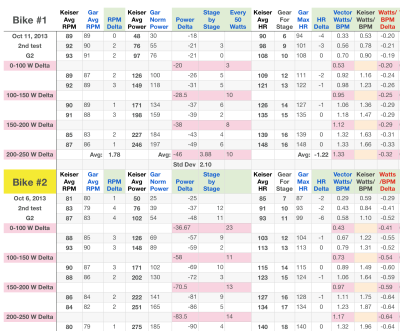
Spreadsheet shows both Keiser display and Garmin Vecor #s
I warn you, if you are not a data geek, and are not experienced in the unique joys of number crunching, this video may not be safe for you. Make sure to have soft surroundings as you watch this video. Without the proper training and experience, you may find yourself falling asleep at an alarmingly fast rate. Viewer beware! Click the link below if you dare… I mean to watch the video. ☺
Watch the 3rd video blog.
http://vimeo.com/78927160
Indoor Cycling Power Accuracy & Validation Research from Cycling Fusion on Vimeo.
Originally posted 2014-01-29 17:21:10.
by Christine Hawthorne | Dec 8, 2017 | iTunes, iTunes & Spotify Training, Music, Spotify
 I get a lot of questions about Spotify, but the one question that I get over and over from people that are interested switching from iTunes is: “Do you own the music?”, or “Can I sync music from Spotify to my iPod or burn it to CD? “ And my answer is always the same: “No, you can’t, but you won’t believe what you CAN do for only $9.99 a month!” Now I know that bothers a lot of people. What's the sense in spending $9.99 a month and having nothing to show for it? How is this worth the cost?
It seems that when it comes to music for our cycling classes, there are two camps: Those that want to own all of their music, and those that see their music as more disposable and don't mind ‘borrowing' it.
If you are strictly an iTunes user, then you own the music that you purchase. Well, at least you own the license to listen to songs on many devices.(* Here’s an interesting article from CNN that raises questions about digital music ownership.) It’s all yours. I once strictly used iTunes and now I own a LOT of music. Most if it I rarely listen to or use in my playlists anymore. It just sits there taking up storage space on my computer.
If you are a Spotify user, you are essentially borrowing the music. You are paying Spotify $9.99 for UNLIMITED access to their extensive library of tunes. I (along with many other cycling instructors that have jumped on the Spotify bandwagon) believe that the borrowing is the way to go.
Here are my top 8 reasons why I would rather borrow music from Spotify than buy it :
- I have unlimited access to music. I rarely am unable to find a song that I am looking for. If that does happen, I will purchase the song on iTunes or Amazon, but I’m still not spending as much money as I was pre-Spotify.
- I can listen to a song all the way through and then decide if it’s something I want to use in my playlist. I can’t count the number of times that I have purchased a song on iTunes and then later found that it was not suitable for my playlist.
- Spotify has a radio feature that allows me to ‘like’ songs as I listen. These songs then go into a file called ‘liked from the radio’ and can be easily accessed for future playlists. This is a great tool for finding new music.
- I don’t have songs (most of which I’m not listening to) clogging up all of my computer space.
- I can take my playlists ‘offline’, which means I can use them anywhere, even without an Internet connection. **You do need to have an iPhone or smart phone device to sync your music.
- I can follow other instructors and see what they’re listening to. I can check out their playlists and if I like what I hear, I can pull a few of the songs over to my own files. If I’m in a bit of a rut, I can even follow someones entire playlist and sync it to my device to use in my own class. (Tip: This is frowned upon if you work in the same gym.)
- Many songs that I borrow, I may only use a few times. If I use it more than that, it will always be there. If I don’t use it again, I won’t feel that I have wasted my money. There are many other songs out there just waiting to go on my next playlist.
- In my leisure time, I do enjoy listening to music. The music that I listen to at home or in the car is not always the same as the music I listen to in my cycling classes. For example, I love using Pitbull in my classes. I can honestly say that I would never listen to his music outside of my class. So owning a bunch of Pitbull does not seem cost effective to me. Here’s another example: My all time favorite band is the Beatles. I have rarely used any Beatles tunes in my classes, but I love to listen to them in my leisure time. Do I own all of my Beatles music? You bet I do. And if I want to borrow it from Spotify, I have that option too.
Spotify is the best $9.99/month I have ever spent as an instructor. It has made my class preparation less time consuming, more fun and much more convenient and to me and that is worth every penny.
What do you think? Do you feel more comfortable owning your music or are you OK with borrowing it?