When discussing muscles involved in the pedaling motion of cycling, most people think of quadriceps and hamstrings. While these muscles certainly play an important role, the many muscles of the hip also deserve attention, and the weight room is the perfect place to keep them functioning properly.
Before discussing different strength and mobility exercises, we should first look at activation exercises for your Gluteus Maximus (referred to as the glutes) muscles. The reason for needing to activate your glutes is simple–as a population, we spend way too much time sitting, and as a result, what happens is what noted spinal researcher Stuart McGill terms gluteal amnesia–your glute muscles can “go to sleep” and not function properly.
When your glutes aren't functioning properly, other muscles (hamstrings and lumbar extensors) are called in to do the job of the glutes, mainly hip extension. Think of hip extension as the downward action of pedaling.
The problem is that these muscles aren't designed to be prime movers–they're designed to support the action of the glutes. Inability of activating the glutes can result in low back pain (low back muscles compensating), hamstring strains (overacting hamstrings), hip pain (resulting from hamstring-dominant hip extension) and knee pain (poor glute medius strength).
So, to activate your glutes, try the Single-Leg Hip Lift. Here's how it's done: Lie down on the floor with your legs bent and lift one foot off the floor. Lift your hips up in the air, concentrating on contracting your glute muscles. Make sure you keep your toes of the working leg up as shown. Pause for a second or two and lower. Perform 2 to 3 sets of 8 to 12 reps on each side.
Hip Mobility: Keeping your hips mobile is important for overall hip function and athletic performance. Mobility refers to the ability of your joints to move through a pain-free, unrestricted range of motion. For cyclists, hip mobility is critical since pedaling occurs in one plane of motion, and after miles and miles in the saddle, hip tightness and restriction may develop. The following movements will help with hip mobility.
Split Squat: The traditional split squat is a great exercise to get started on hip mobility. To make this exercise even better, concentrate on contracting your glute on the trailing leg to help stretch your hip flexor.
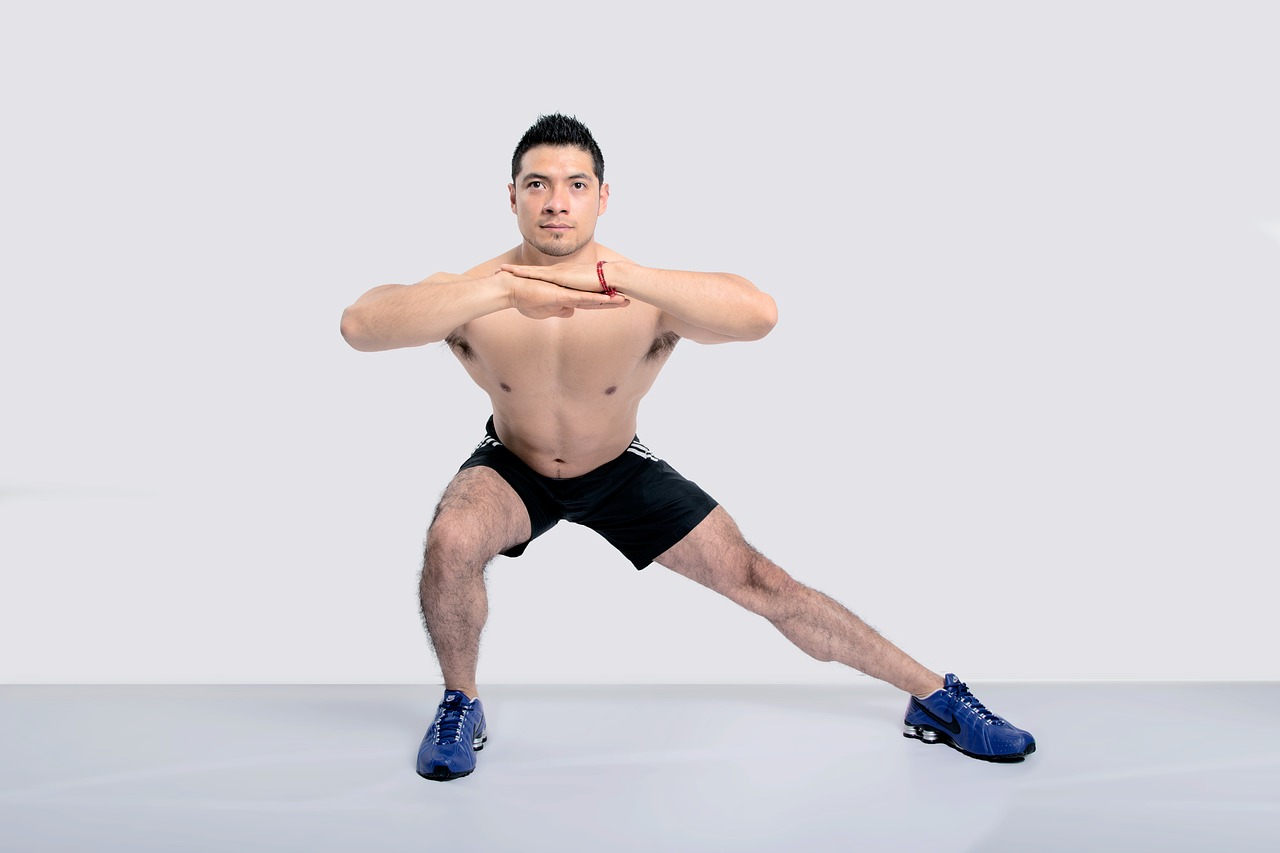
Lateral Squat: Stand with your feet approximately double shoulder-width apart. Shift your weight to one side and drop your hips down and back, keeping your knee over your toes and your weight over your bent leg. Pause for a 2-count, return to the starting position and repeat to the other side.
Hip Strength: If you are currently doing a regular strength-training program, chances are you're already doing some foundation exercises for your hips. Squats, lunges, leg presses, and step-ups all work the prime movers of your hips. Along with these exercises, it's also important to do some supplementary exercises to work your hip's supporting muscles. you've probably heard of your shoulder's rotator cuff. Well, your hip also has a cuff, or a group of muscles that help stabilize and support movement. For these exercises, you'll need a mini-band, a longer thera-band or tubing (both are sold at many sporting goods stores, or can be purchased online), and a cable-column unit.
4-Way Mini-Band: Place a mini band around your ankles and spread your feet about shoulder-width apart. Keeping your legs relatively straight (you want the motion to come from your hips) and toes pointing forward, walk forward 10 steps, then backward 10 steps. Take a short break and then walk to the right 10 steps, then to the left 10 steps. Again, focus on keeping your legs straight and toes pointing forward. It is very important to start with a light-resistance band. You'll be working the smaller hip stabilizers, so you don't need a lot or resistance.
X-Band Walk: For this one, you'll need a large band or piece of tubing. Step on the band and spread your feet shoulder-width apart. Form an “X” in front of you with the band and stand up tall with your shoulders down and back. Keeping your toes pointing forward, take 10 steps to the right, pause and then return.
4-Way Cable Hip: You'll need a resistance band for this one. With this exercise you're focusing on four movements: flexion, extension, abduction and adduction. Stand up straight while doing the exercise. If you have to lean excessively, step closer to the anchor point of your band to decrease resistance. You'll find that not only are you working the muscles of the leg that's moving, the muscles of your stance leg will work quite hard stabilizing and balancing.
Modifications to Traditional Exercises: Our hip joints are very mobile and allow for movement in three planes of motion: the sagittal plane (flexion and extension), frontal plane (lateral movements), and the transverse plane (rotation). Knowing that, here are several modifications you can make to your traditional exercises to work your hips through a more complete range of motion.
Lunge Variations: You can do traditional lunges, or even clock lunges where you keep one leg stationary for 12 to 6 and then the other leg stationary for 6 to 12. To make the movement a touch more difficult, hold weights in your hands while you perform the exercises. There are Lateral Lunges, Rotational Lunges, Lateral Step-Up, and Rotational Step-Up as well.


 This Podcast is was originally published on December 10, 2018, I have updated it with our new Podcast host information and I am representing it now. I hope you enjoy it, Joey


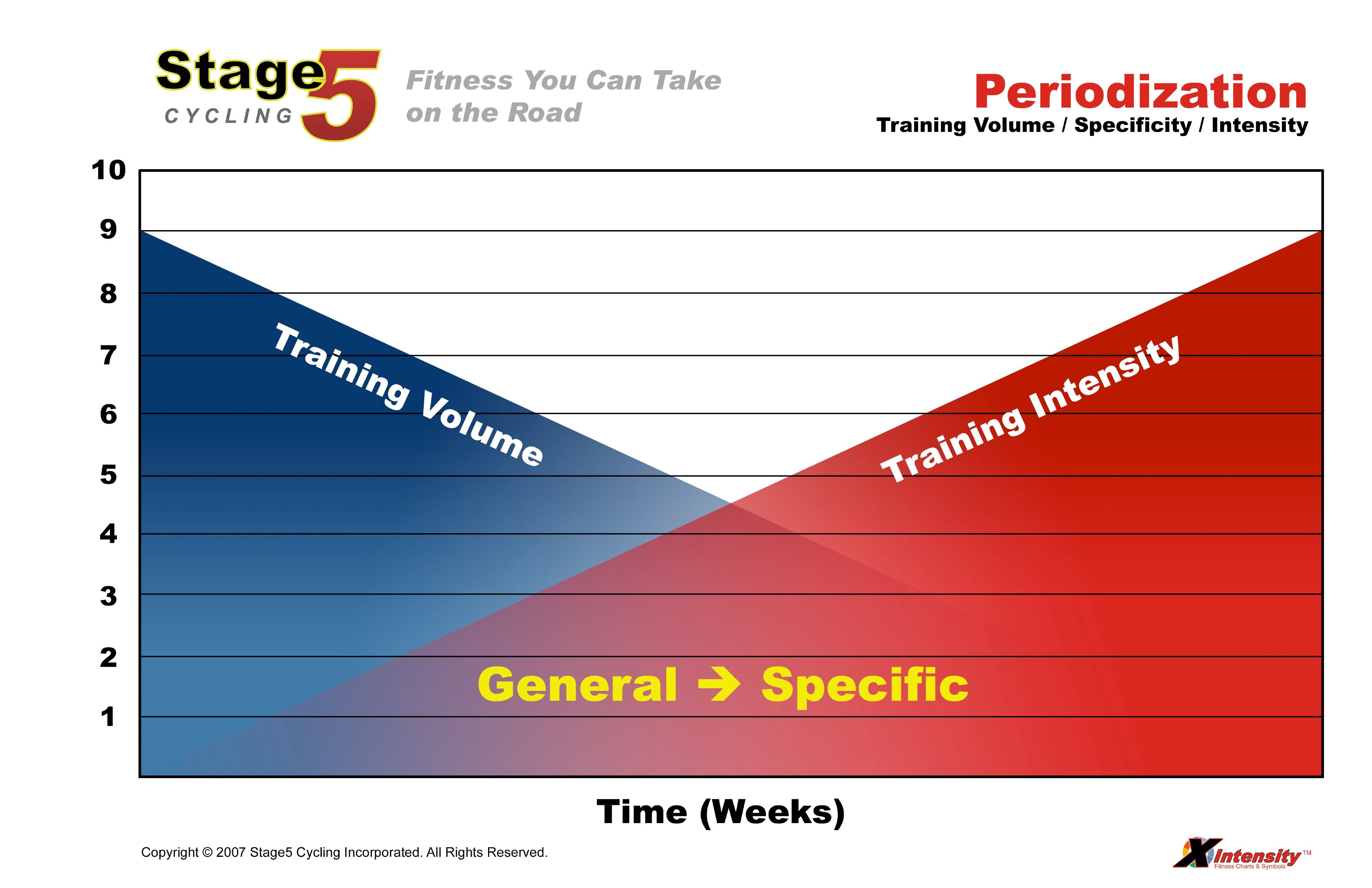
 eriodization is the backbone of an instructor's success, and it can quickly become the key to your popularity as an instructor and it will become the foundation for your students to reach their goals. Periodization is the process of structuring training into progressive phases or blocks of time that are organized into Macro, Meso and Micro cycles. The outdoor cycling community uses periodization as a method to increase their strength and to peak for their target (or A) race.