Sixteen weeks, countless hours on the bike, more Yoga & Pilates than I thought I’d ever see, and all the 40+ VO2 tests later, the results are finally in. The Winter Training program based on Cycling Fusion Training principles, at Global Ride has produced results that have exceeded even the most ambitious expectations set. These results were not relegated to just the first season participants either. From our newbies to our experienced racers, the numbers prove beyond a shadow of a doubt that This Stuff Really Works!
Below is a summary of an outstanding article that I read on Training Peaks. The original article published on March 28, 2019 · By Maria Simone can be found HERE.
Many slogans that you find about doing work can inspire and motivate! However, it’s only through doing the right work that you will make our big dreams a reality. We can think about doing the right work in three ways: consistency; discipline with intensity and volume; and recovery.
Consistency
Consistency is the most important element of any training plan. In order to build your fitness and prepare your body for the demands of race day, or a really hard class, you need to be able to train daily.
To train consistently, we need to plan ahead in order to balance training with other life priorities. Of course, in some cases, it may not be possible to fit the scheduled training on a particular day. If you are self-coached, review the rhythm of the plan. Consider whether it’s possible to swap days, shorten or modify a workout, or skip the session when unexpected conflicts arise. When all else fails, remember one day here and there won’t ruin your overall consistency. Try not to regularly miss key workouts or rethink the flow of the plan and/or your life schedule to set yourself up for success.
Discipline with Volume and Intensity
A second area where athletes unknowingly sabotage themselves is in their discipline sticking to intensity and volume targets. It’s important to stick to the targets for how hard or easy a workout should be (intensity) as well as how long or short a workout should be (volume). All too often athletes like pushing their endurance-based workouts into a tempo or Zone 3 effort because they feel like they aren’t working hard enough. Unfortunately, by raising the intensity, the athlete no longer reaps the endurance benefits, and they are not working hard enough to reap the benefits of a high-intensity session. We often see this in our classes. This is where we are doing work, but not the right work.
Recovery
Recovery is central
to your body’s ability to adapt to the training sessions. Training
breaks you down – recovery lets your body put itself back together.
How can we enhance recovery? The most important recovery tool is sleep. According to the National Sleep Foundation, sleep deprivation or “sleep debt” increases the production of the stress hormone cortisol while decreasing the production of glycogen. This combination means you won’t wake up feeling ready to tackle the day’s training session.
Beyond sleep, you can enhance recovery with daily nutrition, as well as properly fueling and hydrating before, during, and after workouts. If you aren’t putting the right gas in your tank, your car won’t work the way you want it to. If you aren’t incorporating a consistent recovery protocol into your training plan, then your body won’t adapt to the training stimulus.
Proper training isn’t just about doing the work. It is about doing the right
work, which includes a focus on consistency, discipline with your
intensity and volume, and recovery. Get the mix right, and you will
continue to see your body and mind working properly towards your next
big dream.
Welcome to the Indoor Cycle Instructor Podcast | ICI/PRO Premium Education free podcast. This episode was recorded live in San Diego CA by Amy and Joey while at the 2019 IHRSA Event. This episode is a general commentary on the show and a brief rundown of the people that we connected with at the show. We will have several more indepth episodes with Amy and Joey and then several episodes with the indiviuals and their companies throughout the year.
While it may seem redundant to say, most indoor bikes do not move. Please, stop and think about that for a moment. We are not talking about forward motion or distance, of course an indoor bike does not move forward. But what about the other motions that are involved in cycling.
When a rider is out of the saddle, most riders sway the bike from side to side a bit. Why does this happen? Generally, it is the mechanical reality of the situation due to applying extreme power to each pedal. Since the pedals are not on the centerline of the bike, applying a large force to the right pedal will, physically speaking, apply a rotational force that pushes the top of the bike to the right and the bottom of the bike to the left. Without this counterbalancing motion, the wheel would kick out to the side. By swaying the bike in the opposite direction, the amount of force that can be applied to the pedals is increased without crashing.
The second primary aspect of swaying the bike is that it allows the rider to engage their upper body (especially core and arms) into the movement which increases power.
Take a moment and watch some of the pros race, they only have about a 12 degree sway; less than most avid riders. This is due to their efficiency and power.
The last aspect of swaying the bike is that it allows the rider to more thoroughly align their biomechanics with the work that is being done. By tilting the bike, the rider is able to keep the leg that is driving down with a majority of the force in alignment lessoning the outward lateral stress on the joints.
With the exception of a few new bikes on the market, most indoor bikes do not provide movement side-to-side, and none of them replicate the true motion of an outdoor bicycle. Because of this limitation, instructors must emphasize relaxation when riding and allow gentle upper-body movement. Attempting to maintain a still upper body can place the spine and surrounding muscles at risk from the forces being generated by the legs.
Boomer Rose is a BeatBoss & Schwinn® trained indoor cycling instructor with an AMAZING story. From the moment he first clipped in, Boomer knew his life changed. The ambience, atmosphere, and camaraderie of indoor cycling introduced the fact that a healthy high does exist. If you were to ask Boomer, he'll tell you it's hard to believe or even imagine the life from which he came. Here's WHY…
Boomer used to weigh over 300 pounds. He had a history of drug/alcohol abuse, homelessness, had been to jail twice, and had never held a real job. But … that was then and this is now … today, Boomer is a full time Crunch Fitness employee and teaches 3-8 cycle classes a week. He is adulting on the daily, has formed healthy relationships, and is an inspiration to anyone who struggles with anything. Most importantly, Boomer is happy, healthy, and strong!!! Indoor Cycling literally changed his life. Watch and listen as Boomer tells a little bit of his story here …….
Tonight, Boomer teaches a special and sold out indoor cycling class celebrating his 2 year milestone and it's going to be LIT!!! RockOn, Boomer Rose … ROCK ON!!!



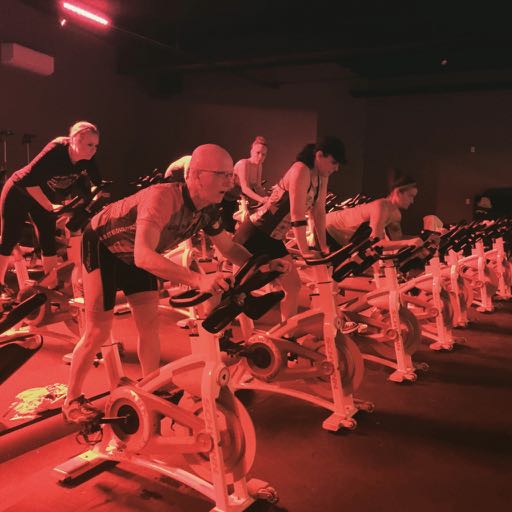


 Welcome to the Indoor Cycle Instructor Podcast | ICI/PRO Premium Education free podcast. This episode was recorded live in San Diego CA by Amy and Joey while at the 2019 IHRSA Event. This episode is a general commentary on the show and a brief rundown of the people that we connected with at the show. We will have several more indepth episodes with Amy and Joey and then several episodes with the indiviuals and their companies throughout the year.


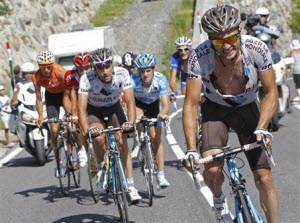
 r bike does not move forward. But what about the other motions that are involved in cycling.
