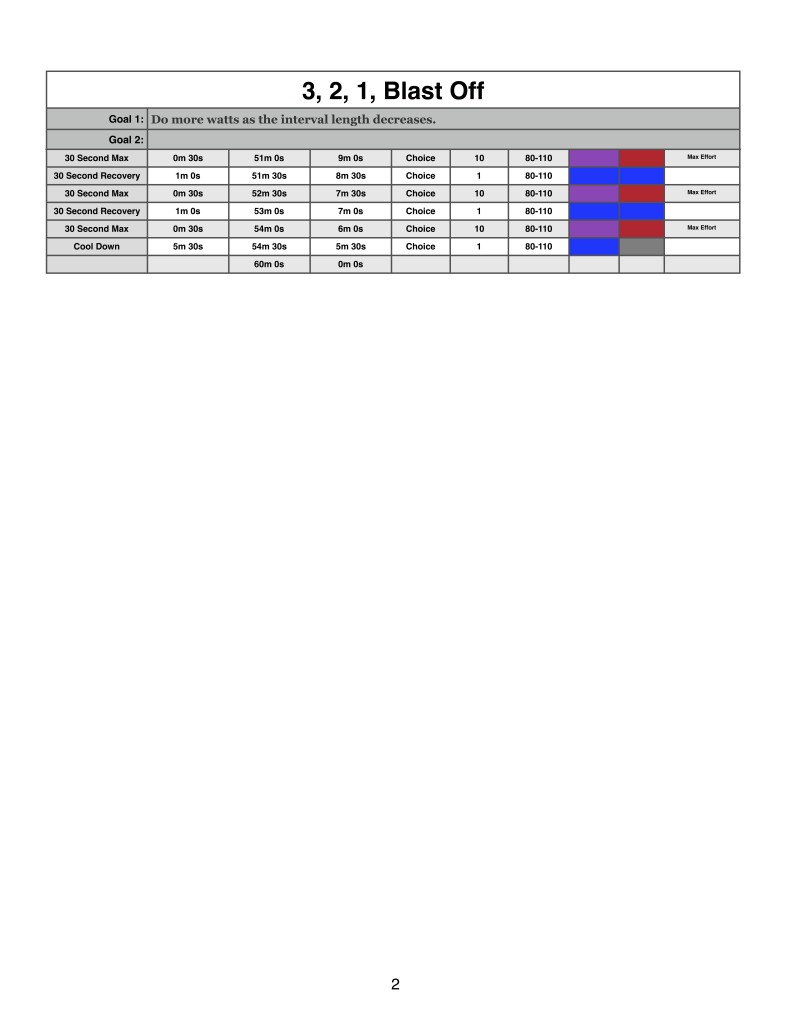
Power Education Specialist Benjamin Sharp talks about how to properly perform Hill Intervals using Stages Power. Hill Intervals are four 5-minute efforts done on a hill with a brief rest period between each effort. The goal is to find consistent power during each effort and across all four efforts.
Micro Intervals simulate the demands of racing. In this video Power Education Specialist Benjamin Sharp explains how to athletes preparing for an event, but haven’t the opportunity to ride in a group or to do training races beforehand can get the intensity. Micro intervals are a great way to jump start the system to simulate the demands necessary during a race.
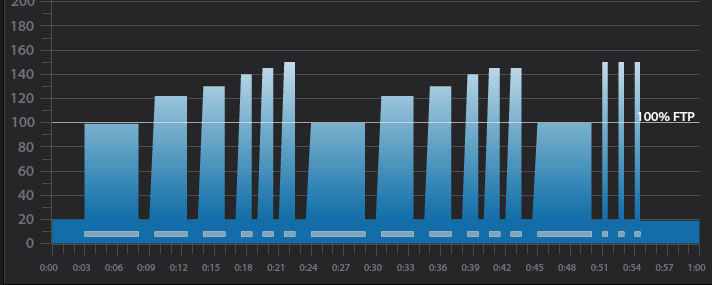
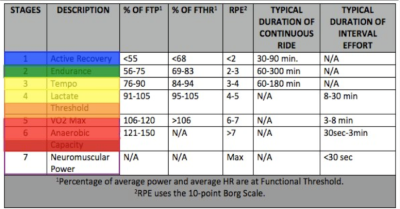
Most often Benjamin Sharp prescribes micro intervals that are 10-15 minutes sets of 15 seconds on and 15 seconds off. The ON portion is VO2 (zone 5) and the OFF portion is a little below your FTP (zone 3). Then you “simply” follow this ON/OFF pattern continuously for the entire 10-15 minutes. Note, that you are never at rest during this 10-15 minutes.
These micro intervals are to be performed on flat to rolling terrain so you can stay in the same gearing/cadence throughout the entire interval. That means you won’t have to shift as you switch from the ON to OFF portions. Rather, during the ON portion you’ll accelerate and increase power and cadence and during the OFF portion you’ll ease up, decreasing force and reducing cadence.
The most important part of these intervals is to make sure you’re hitting the zones during each portion. This means not over powering the ON portions to the point at which you’re having to reduce your power below Zone 3 during the OFF portions.
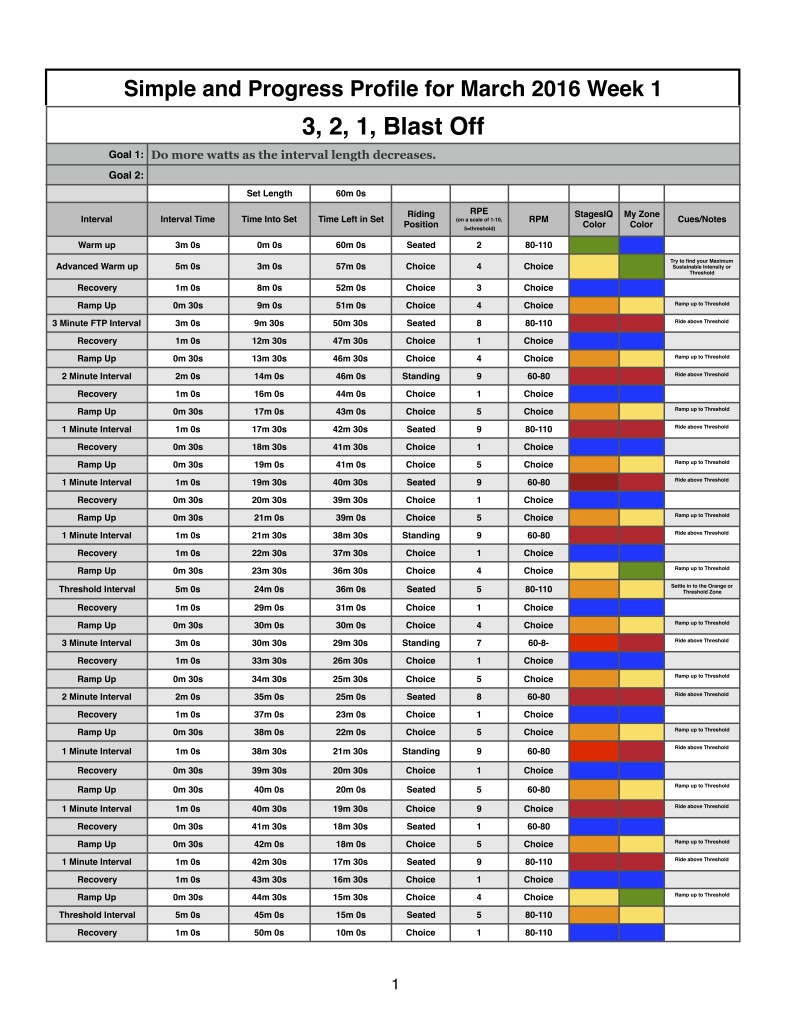
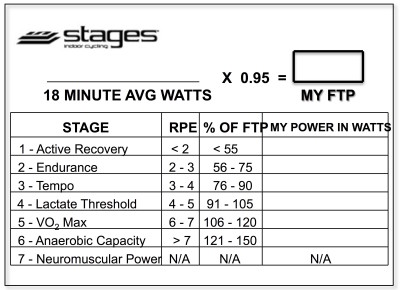
Below, Premium Members can read a detailed description of this Class Profile, download a printable Class Profile that can be used in class, read a detailed description of the Power Based Training Zones and download a printable Power Postcard.
[wlm_private ‘PRO-Platinum|PRO-Monthly|PRO-Gratis|PRO-Seasonal|Platinum-trial|Monthly-trial|PRO-Military|30-Days-of-PRO|90 Day PRO|Stages-Instructor|Schwinn-Instructor|Instructor-Bonus|28 Day Challenge']
You don't find opportunities to ride and learn from the experts everyday, let alone for FREE!
Join Stages Indoor Cycling, Director of Education, Cameron Chinatti and Master Educator, Dennis Mellon and learn…
Best Power Practices
Video Rides to remember
Stages Special Edition of Performance IQ
Power zone training
and more!
Here are the descriptions and form links to register for each:
–
8:30-10:00 – Oh no! Not the Power Police – Led by Cameron Chinatti: It’s official: consoles and power measurement for indoor cycling are here to stay. But with every new piece of equipment comes ‘creative’ misuses and abuses. Avoid getting caught by never committing a crime in the first place! You’ll learn the most common crimes against consoles, then get ready to ride as we explore our top-ten best power practices. These Simple Setsâ„¢ will give you hours of new ride content and provide priceless aha! moments for your participants. Join Stages® Indoor Cycling to see how easy it is to use today’s data to achieve tomorrow’s goals.
11:00-12:00 -Head Up to Get Down! – Led by Cameron + Dennis Do you want to know that you’re doing exactly the right amount of effort? Join Stages® Indoor Cycling for a ride with our Special Edition version of Performance IQ Heads Up Display, better known as Stages IQ. A quick 3-minute assessment is all you need to determine your Power Rx – the most important piece of ride data you’ll ever need! For the first time ever your entire class is doing exactly what they need to get better and see the results they’ve always wanted.
1:30-2:30 -Show Me – Led by Dennis Mellon:If a picture is worth a thousand words, then a video is worth a million! Since the inception of indoor cycling, instructors have been talking and talking in an attempt to set the scene for their riders' indoor journey. Let’s stop talking and start showing! What is the speed of a sprint finish or the increased pulse of an epic ski run? Let’s dance to the beat of your favorite artist and experience the POWER of your favorite band playing a live concert. Through the use of video and the new Stages SC3 Eco Screen there is no course that cannot be ridden and no metric that cannot be evaluated to take your riders on the most epic fitness journey ever!
3:30-5:00 – Oh No! Not the Power Police + SIQ – Led By Cameron Chinatti:It’s official: consoles and power measurement for indoor cycling are here to stay. But with every new piece of equipment comes ‘creative’ misuses and abuses. Avoid getting caught by never committing a crime in the first place! You’ll learn the most common crimes against consoles, then get ready to ride as we explore our top-ten best power practices. These Simple Setsâ„¢ will give you hours of new ride content and provide priceless aha! moments for your participants. Join Stages® Indoor Cycling to see how easy it is to use today’s data to achieve tomorrow’s goals.
I've been in my share of Indoor Cycling studios where, by the end of class, the air is so thick with humidity that you can no longer see yourself in the mirrors. The room stinks and every breath feels like you're riding at 10,000 feet – your lungs starving for oxygen.
Are your experiences similar to mine?
I'm discovering that there's a very simple cause for poor/bad indoor air quality; insufficient ventilation that is the result of a HVAC (Heating,Ventilation & Air Conditioning) system that wasn't designed for the occupancy and activity levels of the rooms inhabitants.
Typically new small/boutique fitness studios are opening in retail spaces with HVAC designed for sedentary office workers – not 30 athletes riding below/@/above threshold for 60 minutes 🙁
The lead author of the study is PhD student Carla Alexandra Ramos from the University of Lisbon, Portugal. Carla agreed to join me to discuss her findings and offer suggestions to improving the quality indoor air in your club or studio on this addition of the Podcast.
Carla has published a number of research papers on indoor air polution that you can find them here at researchgate.net
Are you committed to the health & wellness of your participants?
Then shouldn't we all be doing something to improve the air we're breathing in class?
A good start would be completing this short survey on the quality of the air in your club or studio. Create your own user feedback survey
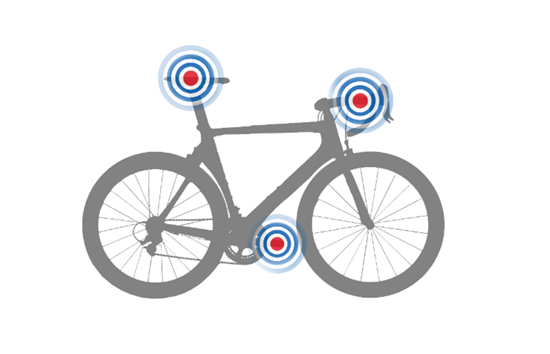
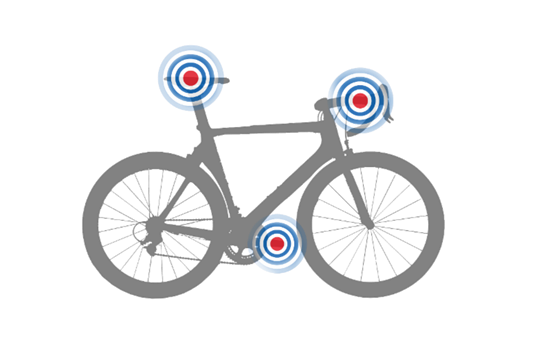
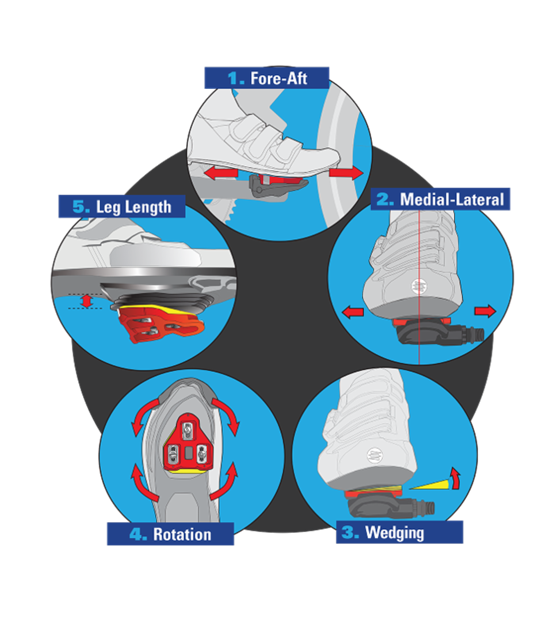
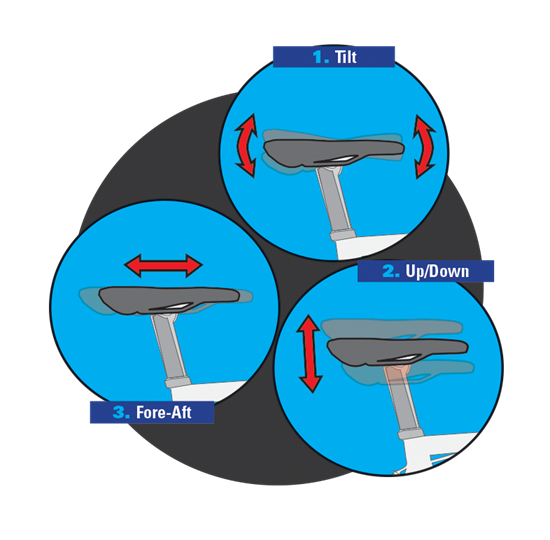
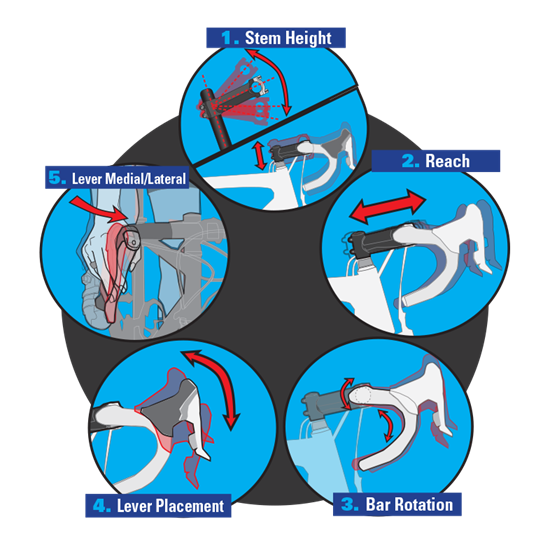
The guys at BikeFit.com do a great job using infographics to communicate the process of proper bicycle fit. Today they sent out these images and I wanted to share them with you. Each details the multiple points of adjustment that can be used to ensure a comfortable setup.
Having been through a three hour, professional fitting like what BikeFit.com offers – I have experienced how many of these adjustments are effected by others… i.e. saddle fore/aft affects height and reach to the bars, cleat position can require a change in saddle position, etc…
A comprehensive fitting is really important for someone who is riding thousands of miles a year and/or is super concerned about efficiency = getting the maximum amount of power to the road.
So how detailed should you be with a new participant? After setting up people for over 15 years, it's my view that you just need to get them close and feeling comfortable. You obviously don't have 3 hours and with the exception of the Keiser M3, the adjustments on Indoor Cycles are too coarse to really fine tune a person anyway.