The Weekly Ride – 06/04/18 Mixed Ride

The Weekly Ride – 06/04/18 Mixed Ride

Welcome to the The Weekly Ride by Cycling Fusion

No more hunting for new music or counting out cues to develop your ride profile.  Here is your ready to ride profile for a fully choreographed ride, that can be displayed from your phone, or printed out onto cue cards for your class.  This ride is timed out, down to the second, to make your life as easy as possible!

(more…)

Originally posted 2018-06-12 06:36:07.

More from Master Communicator Joe Ducosin – CycleQuest Studio

More from Master Communicator Joe Ducosin – CycleQuest Studio

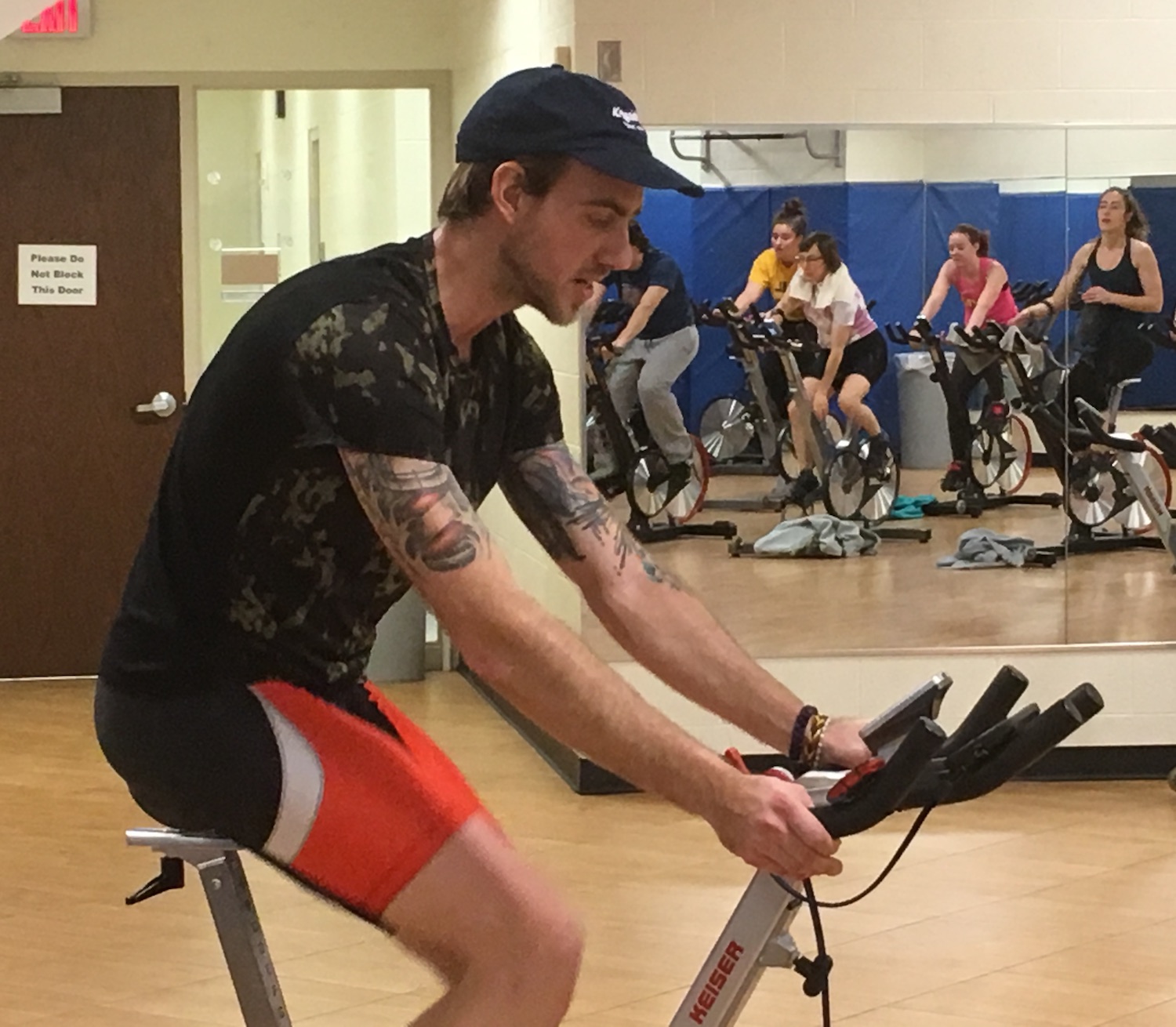
When he's not running the business, Joe (on the right) rides with his customers.

When he's not running the business, Joe (on the right) rides with his customers.

I love sharing the emails Amy and I receive from our boss – CycleQuest Studio owner Joe Ducosin 🙂

Hi everyone,

Thanks to all of you for continuing to be part of the CycleQuest Studio instructor team. This is the busiest time of the indoor cycling season where attendance is going to be at its highest over the next few months so we need to continue to provide the best workout experience in our classes to maintain a high customer return rate.

Here is my quarterly reminder of instructor expectations and tips on creating a positive workout atmosphere at the studio. I know the list is long but please read through them. Thanks!

  • Don't just instruct, anyone can get in front of the class, play music and run through drills. Inspire, encourage, interact, create a “motivating positive atmosphere”, know what the class wants; make it fun!
  • Stay connected with your instruction, let the class know what they should be doing every moment; emphasize certain key parts of a song for motivational effect. How long are the intervals? How long to the end of the drill? Are you ending with the song?
  • For new customers give options to long climbs out of the saddle, isolations, quick jumps, long upper body arm workouts.
  • Drills I discourage: 1) clipping out of a pedal to use only one leg – riders tend to put their free foot on the frame of the bike which scratches the paint and they end up knocking their water bottle on the floor. Also the pedal can easily hit their shin on the backstroke if they let their leg hang free. 2) Pedaling backwards — this causes the drive belt to wear incorrectly and track wrong. 3) Using dumbbell weights on the bike.
  • Articulate other aspects of fitness while instructing; consistency, diet, nutrition, cross training, goals, and competitive events.
  • Learn rider’s names. Introduce yourself, use MBO and the sign in sheet or go around the class and have them introduce themselves. This is the best way to make that personal connection.
  • Keep your playlists and drills fresh. Use the clean version of songs. I know there will be times when curse words slip through, just try to minimize them. Check out Spotify the premium version for $9.99/month, a great alternative or complement to iTunes. I just recently made the monthly investment and am using Spotify consistently. Here is a great article on the getting started – https://www.indoorcycleinstructor.com/icipro-instructor-resources/the-art-of-finding-new-music-in-spotify/ and browse to www.indoorcycleinstructor.com to read more articles by John and Amy Macgowan on what Spotify is all about.
  • Monitor the studio temperature with the display in the stereo cabinet. Open the back door only wide enough keep the max temp at 72 with fuller classes. If the studio temp drops below 68 the door needs to be closed again. The back door should only be opened to get in fresh air in and slightly cool down the studio. Take charge on regulating the studio temperature and the back door. When the studio is colder than 64 degrees wait a few songs until everyone is warmed up before turning on fans.
  • Before playing a DVD movie get approval from me. No rated R movies and for PG-13 watch the segments you will play to see what might be inappropriate. If there is inappropriate dialog do not turn on the closed caption.
  • When setting up new customers on the bike be sure to explain the computer, what they should expect during the class, options, what their challenges are being new and proper form. Proper leg extension and seat fore/aft position are the most important parts of the setup. Let me know if you have any questions on this topic.
  • ALWAYS use the headset mic! This is a requirement. Having everyone in the class hear you at all times without having to yell is key to a great workout experience. Ask the person furthest away can hear your voice through the mic can be heard. If you are not comfortable using the headset mic please consult with me. There are two headset mic's – channels 1 and 2 on the soundboard. Let me know if you need help understanding how to use the board properly. When the mic starts to give a heavy echo typically the foam end piece is full of sweat and will have to be dried out using a paper towel.
  • Music sound level – Be aware of keeping the music level appropriate for creating a “motivating workout atmosphere”. Ask the class how the sound level is and adjust per their feedback. You should be constantly turning up the sound level to emphasize a certain motivating essence of a song, like feeling the driving beat, and then turning the sound level down to give instruction. When giving small talk be sure to turn your music down. Having the music too loud is just as de-motivating as too soft.
  • Thefts in building – It has been reported that there were attempted break-ins in a few of the offices of our building. If helping at the front desk and the front desk area is going to be unattended please close the front studio door when classes are in session as many customers leave their coats, jackets and boots by the front door.
  • Announcements – Continue to talk about what is happening at the studio from the announcement sheet on the instructor bike. Encourage everyone to use the small fitness studio to stretch or get in a light workout before or after class when a personal training or group strength class is not in session.
  • Try to arrive to the studio at least 15 minutes before the start of class to help with bike setup and meet new customers.
  • Address studio etiquette to customers when needed: do not answer cell phone in class, keep personal discussions to a minimum so as not to disrupt the class (loud and consistent conversation not related to the current workout), being respectful.

As you can see, a “motivating and positive workout atmosphere” is the theme I am driving home here. Thanks for taking the time to review my expectations and let me know of any concerns you have with the topics listed above.

Regards,

Joe

Originally posted 2013-02-12 05:46:35.

More from Master Communicator Joe Ducosin – CycleQuest Studio

Sneaky Little Tricks to Blow Up the Size of Your Class

by Barbara Hoots
Do you dream of teaching a kick-ass class in a packed studio with unstoppable energy? Follow my FIVE BEST TRICKS ON THE PLANET and I guarantee your dream will become a reality.

1. Volunteer to Be a Guest Speaker.Hot Instructor giving presentation
Last week I spoke to a local civic club on the benefits of group exercise and physiological effects of endorphins. While my
presentation was not specifically geared toward indoor cycling, I seized the opportunity to distribute free Spinning® passes and now
have six new students in class! Most civic, social, or religious organizations in your community are desperate for free guest speakers! Volunteer to give a presentation on the benefits of exercise and reap the reward — a full class!

2. Use Your Body

(more…)

Originally posted 2009-10-02 06:46:52.

More from Master Communicator Joe Ducosin – CycleQuest Studio

The TV’s Too Loud… No it isn’t… Yes It Is… Is not… Is too!

sound meter for spinning classes

Click to download this App – I'm sure a search on your Droid phone will find something similar.

ICI/PRO member Kristin Krantzman makes an excellent point here in her comment, to my earlier post about sound levels.

I have one student that really complains about the loudness of the music. She has tried wearing special noise protectors.
She tells me that I am damaging my own hearing as well as that of my students if I do not reduce the volume.
BUT, when she is in my class and I reduce the volume to the level she wants, the rest of the class can barely hear the music. Students start cross-talking in class and they lose interest. What can I do? I agree that increasing the volume so high that the walls are shaking is not healthy. But, when the members cannot hear the music and they start talking to each other in class, that is not good either. Anyone have ideas about how to handle this sensitive problem???

Kristin you're making a great point about “subjective” vs. “objective” measurements. We all have different levels of hearing. I want to call it a “sensitivity” to sound that may have reader's nodding in agreement, if they've ever had an argument with their spouse about the sound level coming from the TV.

You and your student are having the time honored, back-and-forth of; “it's too loud”… “no it's not”… “yes it is”… “I like it this loud”… “it will damage your hearing”… “no it won't”… which goes on without resolution because there's no “objective” sound level you can point to as an authority.  I know from 24 years of marriage that a subjective argument like this will never end in “Win – Win”. Amy get's mad and leaves the room or I begrudgingly turn down the volume. Either way only one of us “wins” and, more often than not, neither of us feels good about the outcome.

The same is true for you and your noise sensitive student. If you had a sound meter in your studio (or living room) you could point to it and say something like; “our sound levels don't exceed 85 dB, which is the maximum level recommended by The National Institute for Occupational Safety and Health (NIOSH).

Can you see how having this “objective” measurement could change everything [wlm_firstname]? Instead of your student arguing with you, her complaint is totally with some third party authority. She may still believe that the music is too loud, but her issue isn't with you or your club. You're following the recommendations of a highly authoritative government body.

She maybe frustrated by all of this, but none of it will be directed at you. Smile and say; “I'd really like it if you stayed for my class, but I will completely understand if you don't.” And then it's critical that you make a very direct disengagement from him or her. Physically turn your body, break eye contact or say hello to another student. If you give her the chance, she'll re-load and come at you with another complaint or a different spin on her original complaint.

Handled correctly, my guess is that she'll stay for your class because…

People frequently use non-specific complaints to advance their own self interests!

It's said, but true. Every day people are trying to manipulate you into doing… what they want you to do! 

Kristin's comment included this:

She tells me that I am damaging my own hearing as well as that of my students if I do not reduce the volume.

Please tell me if I'm wrong here – This student's expressions of concern, for Kristin and the other students, maybe completely well-intentioned. But I've been around far too long not to think that at some level she's simply taking advantage of Kristin's concerns for the wellness of everyone in her class, with the intent to manipulate Kristin into doing what she wants.   

If you've had sales or customer service training, you'll recognize customer comments such as “your music is too loud” as a classic objection or complaint without specificity. Sales people learn that when presented with a non-specific objection; “your price is too high” the only effective response is to make the objection specific; “compared to what?”

The same is true in a customer service situation; “your music is too loud” needs to be qualified and made specific “our classes don't exceed the recommended safe maximum of 85 dB” effectively neutralizing the complaint. “Next?” you say, as you smile and greet the next person in line.

Like it or not, as the Instructor you are also a front line Customer Service person for your club or studio. Be aware that complaints from students aren't always what they appear. Bringing clarity to a complaint, by identifying specifics, can go a long way toward peace and harmony in your class and a lot less frustration for you, the Instructor.

P.S – I've downloaded the free sound meter App for my iPhone shown in the screen shot above. I played around with it last night and plan to use it to establish an agreed sound level for the TV in our home. So the next time I hear; “it's too loud!” I can check and see who's right 🙂

P.S.S. You may want to forward this to your owner or Dept Head, so you're both on the same page if/when this student tries to escalate her complaint to management.

Originally posted 2012-08-30 07:53:36.

More from Master Communicator Joe Ducosin – CycleQuest Studio

Shiny (sweaty) Happy People

Soulcycle good moring america

Five million viewers of ABC's “Good Morning America” TV program were treated to a wonderful promotion for Indoor Cycling this past week. As I watched I just couldn't help myself and began humming REM's Shiny Happy People. That was exactly what I was seeing > hundreds of shiny, happy people enjoying riding inside. I can't think of a better way to kick off 2015!

I'm of course describing the nationwide 2015 SoulCycle resolution ride that aired Jan 7th live on “Good Morning America.

What a way to jumpstart January! SoulCycle joined Good Morning America today for its Resolution Revolution. We tapped it back on SoulCycle bikes in their dressing rooms and hallways as well as in Times Square – while GMA showed live feeds from Soul classes happening in Bethesda, Chestnut Hill, Coral Gables, Short Hills and West Hollywood! Check out this video clip of all the action, including an interview with instructor ANGELA DAVIS on how to stay motivated as well as an update on our SoulScholarships Program. It was a good morning, indeed!

Here's the video of the event if you haven't seen it.

http://vimeo.com/116184911


Originally posted 2015-01-11 13:54:43.

How To : FTP Test by Ben Sharp of Stages Cycling

How To : FTP Test by Ben Sharp of Stages Cycling

CTpufzPUEAA2ee2.jpg-large


FTP, a concept refined by power authority, Dr. Andy Coggan, is an estimation of the amount of work you are able to do in an hour. It serves as the basis for loads of other important metrics (e.g. TSS, CTL, ATL, TSB, etc.) that will be covered in future entries. Most immediately, the FTP value serves as the cornerstone to setting up training zones.
Rather than asking athletes to attempt a one hour maximal effort to determine FTP, I prescribe the method that Hunter Allen, co-author with Dr. Coggan of Training and Racing with a Power Meter, has developed. The protocol itself is actually quite simple: after a substantial warmup, start a lap on your head unit, and smash it for 20 minutes, as hard as you can. The average power recorded for the 20 minute test is multiplied by .95 to estimate what your “hour of power” (or FTP) would be.
The ideal terrain for a 20 minute test is a moderate (3-5%) steady climb that can be ridden safely without interruption (e.g. no stop lights). Of course, most of us might not have access to terrain that meets these requirements. A flat road (with the same requirement for safety) will do and of course, riding the test on a stationary trainer indoors is a great alternative.
“Smashing it” for 20 minutes might sound pretty straightforward but, to get the most out of your test, some smart pacing will be required. When prescribing an FTP test to my athletes, I encourage them to break the test down into smaller, more manageable chunks, like four-five minute efforts. For each five-minute time period, have a soft goal for average wattage. Trying to increase the average power for each five-minute segment (compared to the segment prior) will go a long way to helping you achieve proper pacing. As you get to the end of each five-minute portion, take an assessment based on your rate of perceived effort (RPE) and ask yourself, “Can I keep up this intensity? Can I increase the intensity for the next five minutes and the remainder of the test?” When it comes to the last few minutes, you should be at full effort, eking out every last bit of energy to assure that you have averaged the highest power possible. I refer to the wattage goal as “soft” because no matter what the goal power might be, you are going to be limited by your feeling on a given day. You might be able to do more work than you anticipate and you might not be having the absolute best day and will potentially fall short of your expected power output. Don’t let expectations get in the way of having your best test. Remember, the goal of testing isn’t to meet a particular number but rather, to measure your best performance you can do on a given day. Being in tune with your RPE is critical.
With your new FTP number in hand (best 20 minute power x .95), you can create training zones. With some simple calculations, you will be able to determine your training zones based on Allen and Coggan’s chart below.


FTP-testchart-800x3221

Now that you are armed with your training zones, I suggest you record some of your regular rides and take a look at the files afterward to see how much time you are spending in each of your zones. This information can go a long way to helping determine what the demands of a ride/race/event are and potentially guide your training a bit, to meet those demands.
ABOUT BEN SHARP: Formerly a program director for USA Cycling, Benjamin Sharp is the resident Power Education Specialist for Stages Cycling. Prior to joining the Stages Cycling team, Benjamin spent seven years coaching the USA Cycling National Team. Under Benjamin’s guidance, riders racing for various national programs won 13 World Championships, and stood on 8 additional World Championship podiums. Benjamin’s crowning achievement was coaching the US women’s team pursuit team to the silver medal at the London Olympic Games in 2012. An accomplished athlete in his own right, Benjamin has amassed more than a dozen national championships in a cycling career that has spanned three decades. Benjamin is a USA Cycling Level 1 coach and has earned the USA Cycling Power Certification. As a coach, Benjamin’s strength is making accessible to the masses, the science of high performance elite athletics. As a Continuing Education provider for Stages Cycling, Benjamin now spends his time educating professional, amateur, and indoor athletes alike on the virtues of training with power.

Originally posted 2016-02-24 21:25:56.