
by Jay Duplessie | Aug 12, 2019 | Engage Your Students, Jay Duplessie, Motivation

Blink, Blink, Blink …………………goes the clock on your VCR. Yep, I said it, VCR. It is mind boggling to me that I have children (ages two and four) who will never know a Tape Player, VCR, 8 Track, and possibly even a DVD. Technology moves fasters than the fastest cyclist on his/her best day. But this story isn’t about VCR’s or technology. It’s to illustrate a point about how we as a culture like to change, modify, and complicate things even when they don’t need to be. I am writing this even at the risk of getting backlash from much more “technical” and experienced outdoor riders. But like I said in my first post, I speak from the heart and you’re either going to love me or hate me. If you’re looking for stats or data to shave off 3 seconds from your hill climb…..then I’m not your guy.
I still remember the very first VCR my mom and stepfather bought. He was a car dealer and had gotten a great bonus check. It was summer, probably July, and we loaded up in the car and headed to the Video Rental store. For you young readers, we used to have places that had VCR tapes lined up on all of the walls so you could choose what you wanted. In addition, WAY back then (early 1980’s) we had discs that looked like large vinyl records but played like a DVD. They were encased inside hard plastic covers. Anyway, back to my story. The VCR most likely costs us $600, weighed as much as my brother and I combined, and if I am not mistaken had no more than 5 features. Play; Stop, Pause, Forward and Backward. More expensive ones had “Record” so you could tape Price is Right or your favorite soap, but as a 10 year old I was just excited to rent Friday the 13th (The first one).
That VCR had less technology than the cheapest, crappiest cell phone on the market today, but when I look back it did absolutely everything that we ever needed it to. Then somewhere in some big board room a group of people decided that we (the consumer) needed to have options. And not just a couple, but over a hundred that the most experienced technical engineer would have trouble programming. So my question is WHY !?!?! Why do we need to complicate every single thing in our world to the point that we either lose some of the enjoyment OR feel like a complete idiot because we can’t or don’t want to spend the day trying to figure it out ?
How does this apply to us, the indoor cycling people of the world? And actually, I will go so far as to throw in all Group Ex AND Personal trainers to this query. What are WE doing as coaches and leaders to complicate things that don’t need to be complicated? I still believe, and may be wrong with everyone OUTSIDE my class, that my people come to me for more than instruction on how to peddle, when to get their heart rate up, or when to stand up. Let’s face it, I “teach” (HATE to use the word teach, I prefer coach) a class on how to get on a bike and peddle. Sure, there are MILLIONS of ways to teach and A LOT that goes into it……FOR AN ELITE ATHLETE to do the tour!!! But I have 30 to 60 people who, like me, are there for so much more than to learn all the tricks to shave off 3 seconds from their best time. And even if my people ARE there to learn how to shave of the 3 seconds, I believe (speaking about my people of almost 20 years) are trying to shave that time for internal reasons. Reasons of personal growth, pride in ones accomplishments, or even to use that shaved 3 seconds as a metaphor for something much bigger in their life. That’s why I teach and have always taught from a spiritual perspective and not so much from a technical perspective.
I am so fortunate to “coach” at arguably the best club in the US. I spent 10 years in all 50 States as a Sales manager and so I have been in too many gyms to name. I have seen trends in workouts, classes, equipment, and I am never surprised at what comes next. Right now this “Cross Fit” craze is amazing to me. We are now as an industry demonstrating that “hey, you didn’t need to join a gym with all the Cybex equipment because that spare tire in your garage, sprints up and down your street, and jump rope is all you need for a great workout. And you know what, they’re right. Why is a sprint on a Schwinn spinning bike any more beneficial than a sprint up the hill in your neighborhood?? It’s different because our people come to us for something they can’t get at home in the basement or in the garage. For some of you, maybe it is the technical lingo you use. Some of you may be like me and teach good form but with a focus on the “spiritual” aspect of the ride. The truth is that if we do it right and with proper form, then all of these things will get us to the goal, which is for our people to walk out feeling healthier and in MY opinion both “physically” AND “mentally.”
My point is that we don’t have to complicate things the way we sometimes do just so that we can stick with the trends. If your class demands that, than do it. But don’t lose focus on your core audience of people, the ones who stuck by you for 20 years. Give them the best music, the best guidance, the best stories, and the best up to date techniques IF that is what is going to give you and them the result you’re looking for. Let’s remember and never lose sight of the fact that our members come to us to lead them and if we tell them that rubbing their tummy while sprinting doubles the amount of calories they burn, then chances are most will do just that. So it’s our obligation to introduce the right amount of “new” technology if and only if the benefit is there. THEY are giving up one hour of their lives and putting it in our hands. I for one ONLY want to provide the best.
So the next time you jump on your bike ready to start class, remember that blinking clock on your old VCR and ask yourself “have I put together a class with total focus on helping them achieve their goals?” or have you designed it based on an article on the latest “Crave” from some gym in a posh LA studio? Do your research, make sure the latest “thing” is right for your students and then apply it. But don’t buy the VCR with 100 programmable features that you don’t know or understand until you SET THE CLOCK ON IT FIRST!! Now go press PLAY and have some fun. And please send me your thoughts so I can learn my audience.

by John | Nov 1, 2018 | Best Practices, Engage Your Students, Instructor Training, Master Instructor Blog, Training With Power, Zone based Heart Rate Training
If your objective is to communicate (sell) the value of either Training With Heart Rate – or – Training With Power, teaching your class using Three Zones will be the most easily understood, accepted and remembered… here's why.
The Rule of Three
It's no accident that throughout history – thousands of years in fact – three (3) is the magic number in many, memorable fairy tales, myths and marketing campaigns. They're easily remembered and shared because they follow The Rule of Three…
There were three little pigs, three blind mice, Goldilocks and the three bears, Three Musketeers, three wise men and the Three Stooges.
{Reduce, Reuse, Recycle} {Earth, Wind and Fire} {Good, Better, Best} {Hot, Warm, Cold} {High, Medium, Low} {Small, Medium, Large} {Gold, Silver, Bronze}
1st, 2nd, 3rd – who ever remembers (or cares) who came next?
This copy writing blog explains the Rule of Three very well in the context of effectively communicating ideas.
It all comes down to the way we humans process information. We have become proficient at pattern recognition by necessity, and three is the smallest number of elements required to create a pattern. This combination of pattern and brevity results in memorable content, and that’s why the Rule of Three will make you a more engaging writer.
Sticky Ideas
You see the Rule of Three used all the time across diverse areas of life. Why?
Because information presented in groups of three sticks in our heads better than other clusters of items. For example:
- “Life, liberty, and the pursuit of happiness”
- “Government of the people, by the people, for the people”
- “Friends, Romans, Countrymen”
- “Blood, sweat and tears”
- “Location, location, location”
- “Father, Son and Holy Spirit”
- “Faith, Hope and Charity”
- “Mind, body, spirit”
- “Stop, Look and Listen”
- “Sex, Lies and Videotape”
- “I came, I saw, I conquered”
I'm confident you can add a bunch more to this list, which kind of makes my point. All of our brains are hard wired to create and retain patterns of three concepts… not four, five, six or seven – three is the magic number.
Sally Edwards understood The Rule of Three. Her three heart rate training zones concept called Zoning is designed to appeal to as many people as possible.
Please note that I didn't ask; What's the most accurate/precise/correct number of HR or Power zones? My question was; What's the best number of Heart Rate and/or Power Zones in our classes?
Cameron Chinatti with Stages Indoor Cycling says the answer is 7 Power zones. So does Joe Friel, Dr. Andrew Coggan. Chris Carmichael appears to use five. All super smart and knowledgeable people to be sure. Administered properly to a committed endurance athlete, 7 power zones is probably the most accurate/precise/correct number of HR or Power zones for them to train with.
But 7 Power training zones is too many IMO for our classes filled with Club Athletes.
The ICI/PRO Power Training Zones follow The Rule of Three.

I'll follow up with more detail later this week.
by Joey Stabile | Oct 17, 2018 | Engage Your Students, Health and Wellness, Strength Training

Protein Power: It’s Not Just for Muscles (Part 2 — Appetite Control)
By Joan Kent, PhD, and Shawn Bevington
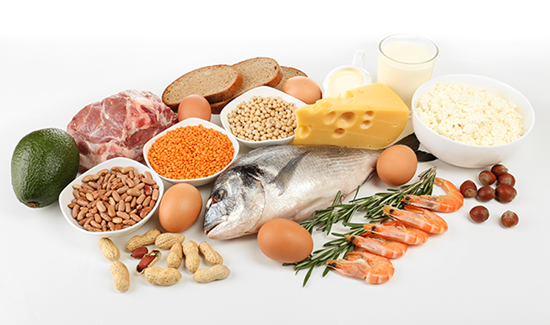
Protein is used to make hormones, which are messengers in the body. They’re produced in one part of the body and then distributed — through blood, interstitial or other body fluid — to other organs or tissues. There they modify activity and function.
This brief post will focus on just a few hormones and how they affect appetite.
*CCK (Cholecystokinin) – Satiety is the feeling that you don’t need another meal because you’re still satisfied from the last one.
CCK is arguably the most powerful satiety hormone in the body. It reduces appetite by stimulating the function of the brain’s key satiety center, the VMH (ventromedial hypothalamus).
CCK is released when we eat protein and fats. It affects our food preferences by reducing the desire for carbs.
Anyone who suffers from an exaggerated desire for carbs probably needs to eat more protein. Vegans, for example, may experience strong cravings for carbs, including sugars. Finding a true protein source is a key factor in reducing vegans’ cravings. More on that in Part 3.
Eating adequate protein can also be key in conquering sugar addiction for this same reason.
*Ghrelin – Ghrelin increases appetite by stimulating the brain’s lateral hypothalamus. The LH can be seen as a ‘feeding’ center.
Eating protein can help to reduce ghrelin release. In healthy men, a high-protein breakfast decreased post-meal ghrelin levels more than a high-carb breakfast. The high-protein meal also slowed gastric emptying. Researchers attributed both effects to the secretion of CCK and glucagon, both triggered by protein.
*Glucagon – Glucagon is a hormone made in the pancreas. Insulin is, as well, but the functions of the two hormones are oppositional and work to balance glucose levels.
Insulin also tends to be a fat-storage hormone, while glucagon moves fats out of storage and into the blood stream so they can be utilized as fuel, rather than stored.
While many foods trigger the release of insulin, only protein foods trigger glucagon. Glucagon is also secreted when we exercise.
As mentioned above, glucagon and CCK seem to control appetite by modifying ghrelin levels.
Don’t miss protein and brain chemistry, age, and the vegan solution in Part 3, right here this week!
Shawn Bevington is a holistic health coach, certified by the National College of Exercise Professionals (NCEP). He has been a fitness trainer for six years, and boasts another seven years of activity in various programs, including football, shot-put, pro wrestling and other strenuous sports. Self-motivated, Shawn has spent years researching on his own – and putting that information into practice with his clients. His knowledge, skill and experience have made him a sought-after fitness trainer, both by clients and by colleagues who bring questions to him.
Dr. Joan Kent has a PhD in Psychoactive Nutrition. She was the first to document the brain chemical pathways of sugar addiction and to explain the sugar/fat seesaw hormonally and chemically. Joan has helped hundreds and hundreds of clients with metabolic conditions — diabetes, hypertension, heart disease, cancer — as well as clients with inflammation and mood disorders. Joan has written 2 best-selling books: Stronger Than Sugar, on conquering sugar addiction, and The Sugar-Free Workout, on fueling before, during and after training for optimal performance. Visit www.LastResortNutrition.com and grab your free gifts.
by Joan Kent | Aug 28, 2018 | Engage Your Students, Health and Wellness
A previous post covered ways that sugar can increase fat consumption. One way is that fat makes sugary foods taste sweeter. That may mean a sugar/fat combination tastes preferable to a sugar-only food, such as hard candy.
Clients have told me that, when they eliminate sugar from their diets, they can actually enjoy snacking on a brown rice cake topped with a slice of tomato or sprouts.
When they’ve been eating sugary foods, though, such a snack seems unappealing and unpalatable. At those sugar-laden times, they find themselves wanting different things: bologna or salami sandwiches, for example, or other heavy foods.
Those heavier foods have more fat in them than the first snack, so the clients are consuming extra fat — even though they weren’t necessarily seeking high-fat foods in the first place.
In my dissertation, I named this “secondary fat consumption.”
Secondary fat consumption can occur in several different ways:[private PRO-Platinum|PRO-Monthly|PRO-Gratis|PRO-Seasonal|Platinum-trial|Monthly-trial|PRO-Military|30-Days-of-PRO|90 Day PRO|Stages-Instructor|Schwinn-Instructor|PRO-Studio|28 Day Challenge]
– We eat more of a fatty food (like peanut butter) when we have sugar (jelly) to eat with it and make it taste better.
– We eat sugar, which triggers endorphins, as explained above. That shifts our preferences to other foods that trigger endorphins — to more sugar or to high-fat foods, or both.
– We crave something sweet and want the sweetest taste we can get — so we instinctively choose a sugar/fat combination, instead of, say, a hard candy with sugar only.
Unfortunately, that’s not the worst of it. High-fat foods we eat trigger the hormone ghrelin. To me, it always seemed like a Monster Hormone.
For one thing, ghrelin slows metabolism. Who wants that?
At the same time, ghrelin stimulates the part of the brain that increases appetite (the lateral hypothalamus). That gives “secondary fat” a chance to increase calories — not only through the secondary fat calories themselves, but also through all the other foods we might suddenly want to eat simply because that secondary fat has triggered ghrelin and our appetite.
It’s obvious that there’s potential for a self-perpetuating cycle in this, and that it can toboggan its way down a slippery slope and pick up speed.
It also seems obvious that — bottom line — sugar is the culprit in this metabolic mess.
Avoiding sugar is one important factor in transforming your health, increasing your energy, and feeling great. Heart disease, the #1 cause of death in the U.S., has been linked with inflammation. So have diabetes, hypertension, cancer, and more.
Inflammation is strongly affected by nutrition, and sugar’s effect on insulin and hormones makes it a strong contributor to inflammation. Dare I advise, yet again, not to eat it?[/private]
by Matt Wahleithner | Jul 10, 2018 | Best Practices, Engage Your Students
Principles to being a successful Group Fitness Professional
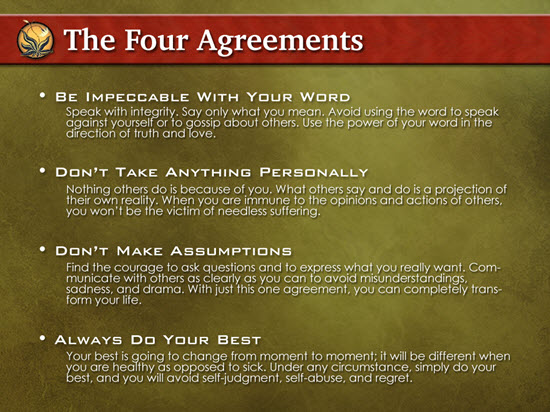
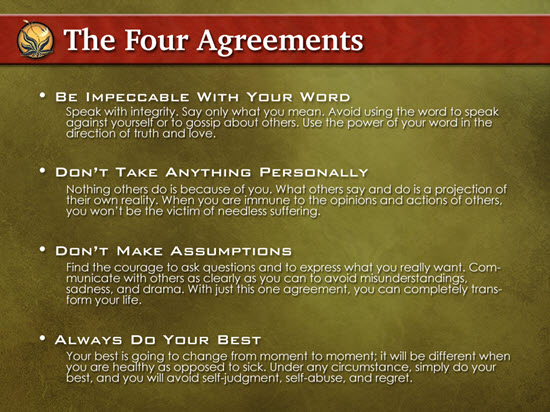
You have your Mic on, your equipment is all set, you have new killer choreography, and your class is packed! You head over to hit play and start class… What’s going through your head? For me personally when I head over to my IPOD to hit play, I take a deep breath, clear my mind and focus in on what, Don Miguel Ruiz calls, THE FOUR AGREEMENTS: Be Impeccable With Your Word/Don’t Take Anything Personally/Don’t Make Assumptions/Always Do Your Best. When I do this, I know that the class that I am about to teach can change lives and inspire people to be better than when they walked in to class.
Be Impeccable With Your Word, say what you mean and mean what you say. This is so important when you are in front of your class because your participants are hanging on your every word and every word needs to mean something. Try to avoid filler words and repetitive motivational cues, like some of my favorites, GOOD, LOOKS GOOD, and KEEP GOING. Although some of those may seem like okay phrases to use, they really don’t provide and significant feedback that will help participants during class. Instead try being stronger with your phrases; Keep Going For 20 More Seconds, Your Form Looks Good, and Excellent Job With That Drill. These cues are letting your participants know exactly what to do and how they are doing at it. When your cueing is STRONGER and more EFFICIENT your classes are easier to follow and this will help grow your numbers!
Don’t Take Anything Personally. When your participants come in and want to criticize or don’t show excitement during your class, 99% of the time is has nothing to do with you. This is a hard thing for many instructors, including me, to understand but once you do, it will be that much easier for you to relax and enjoy your classes.
Don’t Make Assumptions, because not everyone in your class is going to tell you everything or always ask for help. When someone walks into your class, you are responsible to make sure that they get everything they need and are clear on the format and goals of the class they are about to take. Even if you have regulars in your classes it’s still very important that you not assume they know everything and make sure they understand and are clear on the set-up and goals for the class ahead. Great each person as if it’s their first time and if you know them or remember them, make the greeting more personal by using names or asking them if they are seeing progress on their goals. This small touch will keep people coming back time and time again!
Always Do Your Best, because people are counting on you to help them achieve great things! No matter what may have gone on in your day, you need to leave it at the door and do your best to help those who have come to achieve great things in your class. Make sure you come into class prepared and ready to motivate and inspire people to be better and the only way to achieve this is if we are doing our best! Best ways to be prepared is to plan out your classes well in advance, learn choreography fully before teaching it, rehearse your script of what you’re going to say and when, dress the part, show up early to check equipment and be available for participants, and the most important part, have fun!
Following these Four-Agreements as a Group Fitness Professional will ensure that you are always on top of your game and helping change lives every time you press the play button.
by Joan Kent | Jul 5, 2018 | Engage Your Students, Health and Wellness
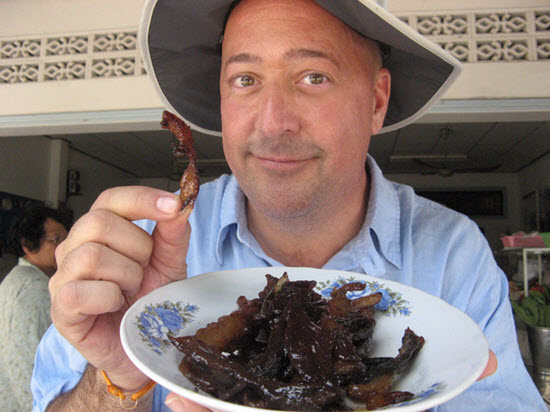
No, these don't include anything from Andrew Zimmern
This short post covers 6 relatively unknown — and odd — tips that can help us control how much we eat.
Odd Tip #1: Hide Your Breakfast Cereal
This first tip comes from Brian Wansink, PhD, who is well known for his work on food psychology and eating behaviors. His research has revealed that simply keeping breakfast cereal in full view throughout the day — say, on the kitchen counter — has an impact on weight.
Two facts came forward with this.
It didn’t make a difference if the cereal was junky (Fruit Loops, Cocoa Puffs) or more healthful (oatmeal). Just keeping it visible was the salient factor.
Also, the difference in weight between revealers and concealers averaged 21 pounds.
Since it doesn’t affect meals directly, keeping cereal in the kitchen cabinet seems like an easy way to help control food intake.
Odd Tip #2: Change Your Plate Color
I’ve come across this tip in two ways.
1) Using a plate that’s the same color as the food you’re eating encourages eating more food.
Of course, meals typically include several foods of different colors. A practical way to use this might be to think in terms of side dishes you’d like to limit. For example, if the side dish is white — potatoes, pasta, white rice — it might be a good idea to avoid using a white plate.
2) Then there’s the color blue. Eating from a blue plate seems to make people eat less. One theory is that the color blue is “off-putting.”
I wonder this matches up with the first part because there’s no blue food. (Yes, blueberries are purple.)
So if we want to keep eating lots of vegetables, maybe we should avoid green plates(!).
Odd Tip #3: Limit Your Food Variety
Variety seems to make us eat more. That could be one reason that a buffet-style meal encourages overeating.
But I’ve also heard that keeping too many different types of food in the kitchen could have a similar effect, prompting us to want to sample the different foods.
Maybe the best way to enjoy variety would be to change shopping lists from week to week, rather than buying lots of different foods at one time.
Odd Tip #4: Use Smaller Serving Spoons
The test study I read about used M&Ms to investigate how people ate from a big, full bowl of the candies in an office setting. Apparently, a large scoop invited greater M&M consumption than a teaspoon.
I wonder if there’s an unconscious link between the number of “spooning” actions and how much food we’re willing to take. One scooping action may seem less greedy than 5 teaspoons, even if the quantity is the same.
A practical way to make use of this at home might be to use a smaller serving spoon for the foods you’d like to limit (for example, mac & cheese) and a larger one for vegetables and other healthful fare.
Odd Tip #5: Change Your Eating Rate
Slowing down is a meal tip that’s been around for a long time, and it seems intuitive that eating slowly would decrease food volume. But that didn’t seem to work for women, although it did for men.
What worked for both men and women was to begin the meal at a normal rate of eating, then slow down to about half speed for the rest of the meal.
The article I read didn’t specify exactly when to slow down, so I’d suggest just after the initial hunger has passed.
Odd Tip #6: Eat Smaller Food.
Cutting food into very small pieces seems to limit the amount we’ll eat.
Again, I wonder if it relates to arm action, the plate-to-mouth action. If it takes more of those actions to eat the food, maybe we unconsciously limit the number of times, rather than the amount of food per se.
Whatever the reasons behind these odd tips, they don’t involve eating different foods or counting calories, just a simple shift in behaviors.
I’m for whatever works, so why not give them a try? And if they help with holidays meals, so much the better. Please let me know which, if any, work for you.