by John | Oct 25, 2019 | Engage Your Students, Instructor Training

Question from a PRO member;
Hi John,
I hear you talk about your ninety minute endurance class and I would like to work up to a 90 minute class at our gym. Could you give me the details of how your class is structured for the 90 minutes? I have done some steady state rides in my class but this has been a difficult concept for my group to accept as some of them still feel that you have to “cough up a lung” to get a workout. Thanks for all that you do.
Teaching 90 minute Endurance classes can be tough for many Instructors, dare I say impossible for those of you who don't understand what I'm calling an “Endurance State of Mind” (with apologies to Billy Joel).
So you have some background, I've been teaching winter endurance classes since 1999. My Instructor job with Life Time Fitness resulted from one of my students (who was also a Lifetime member) complaining to the department head about the lack of “cycling specific” classes offered at their Athletic Level clubs. His recommendation lead to my 90 minute Sunday endurance class being the first regularly scheduled class of it's type. Along they way I've developed a class that seems to play well to those who desire this type of class.
NOTE: My class typically transitions to a full 2 hours in mid March. This year we will be starting March 11th – feel free to join us if you're in Minneapolis some weekend 🙂
So, what do I mean by an Endurance State of Mind?
Endurance is all about being able to endure something over time – and it's something you experience independently from others.
I can endure something along with you… but I can't endure something for you – that's for you alone to experience.
I talk frequently in class about the four components of Endurance:
- Muscular Endurance
- Cardiovascular Endurance
- Saddle Endurance – we spend a long time seated
- Mental Endurance
In a normal class your students are conditioned to look to you for direction, for the full time of the class. This isn't the case in my endurance classes; I'm trying to remove as much of me as possible from the class and teach everyone to look to themselves for direction, focus and motivation = Mental Endurance. It's very normal to find me riding in with the class and I may not speak for long periods of time, after laying out the basic profile. I see my role as creating the Place where we are all riding virtually. I find it helps to use structured video that includes a terrain profile.
Don't get me wrong, I'm still offering encouragement and cuing, it's just that it comes from a “we're in this together” rather than the “do this…now do this” typical teaching mode many of us follow in a normal class.
Here's where this maybe difficult for you – having an Endurance Frame of Mind requires you to trust in the capabilities of your students…. and then let them run with it. By capability I mean viewing every student as a self-directed endurance athlete. I actually tell them; I came here this morning believing each of you has the capability to successfully complete this class… now it's up to you to show that I was wrong.
How can you tell if you do or don't believe your students are capable? So many of us have spent our Instructing careers feeling as if we need to direct every minute of the class; every surge, hill, jump and recovery, or our class will become bored or lost.
Could you give them some short (yet specific) instructions and then let them do their own thing? Or create a place for them to be accountable for the time they are spending in your class… and then get out of their way?
Try this sometime: Lay out your plan in the introduction and explain that today everyone is doing what they feel they need. Then find a bike in the middle of the room, keep your cuing/coaching to the absolute minimum – and ride 🙂
Let me know what happens!
Originally posted 2012-02-21 18:15:54.
by Krista Leopold | Oct 11, 2019 | Engage Your Students

Yesterday was devastating. I began to think that after the tragedy at Newtown, our country had finally hit its breaking point. I was pretty sure that violence had won and that more and more of these stories would be told.
Today it seems I was right, and yes, it is true that violence continues. But if the trends I see on Facebook and Twitter and all around me in response to the explosions at the Boston Marathon are any indication, violence has not won.
Hope is making a huge comeback.
At times like these we wonder “what good can come from this?” The only answer is from you and me. There are many reports and examples of folks who refused to let senseless violence have the final say. But you don't have to be in Boston to make a difference.
There is a great quote from the late Fred Rogers making its rounds again, as it did in December. Mr. Rogers says that as a child, he was told that in times of distress he should “Look for the helpers.” It is a beautiful quote and has helped countless people remember that even though hatred tried to destroy, love rushed in to protect. But I personally think that looking for the helpers isn't enough. You and I are in positions of influence. We are leaders. We are called to BE the helpers.
I may not be in Boston today. I'm not a world figure or a solider or in any position to change the whole world. But I do have a sphere of influence in which I can encourage and help hope to flourish. That sphere encompasses my family, my co-workers, my friends, my students and more. As a fitness professional, I have the unique opportunity to nurture my students. I might even be an anchor of normalcy to a participant who is suffering and just wants to keep it together.
What can I do in my classes? I can foster the virtues and values I wish to see more of in the world: respect, dignity, patience, empathy, charity, generosity, integrity. These can grow right along side mental and physical strength in the hands of a caring coach. It can be something as simple as the encouragement to “get strong today so that you can be strong for someone when they need you most.” Even just a hug or a smile or a high-five can be enough to make someone's day.
On a day when the world is hurting, be the helper. Be a healer. It might mean sacrificing a little bit of your own needs to provide for someone else's. Reach out to do something for another human being not because it is your job, but because it is the right thing to do. You have no idea how far one act of kindness can reach. It could go so far as to prevent the next tragedy from occurring. That's what I'm hoping for.
Originally posted 2013-04-16 11:11:19.
by John | Oct 11, 2019 | Engage Your Students, Instructor Training, KEEPING IT FUN, Promote and Build Your Class, Your Fitness Business
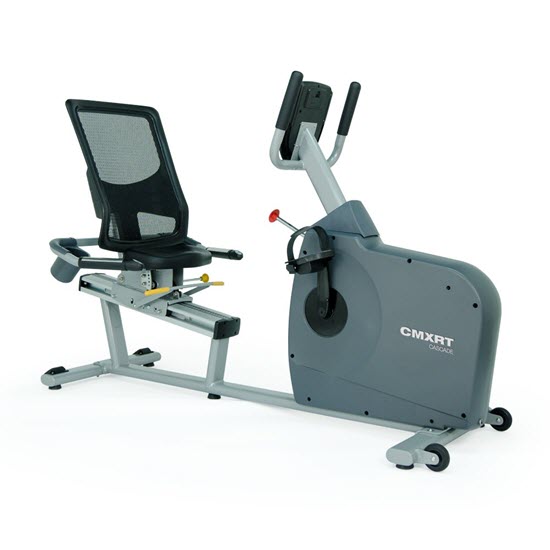
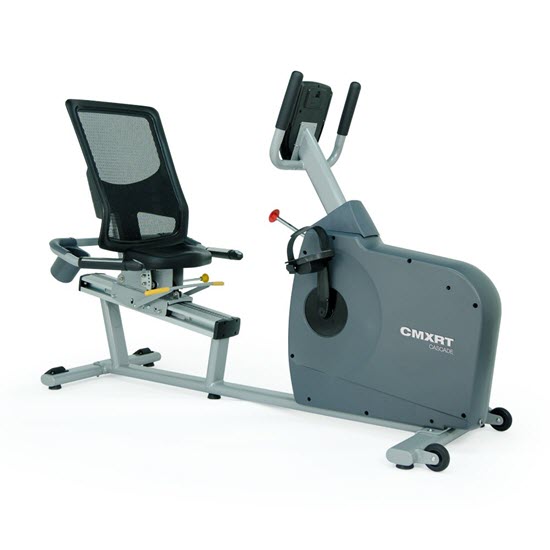
Would a few of these recumbents make your class more inclusive?
Would you agree that Indoor Cycles are a poor method/modality of exercise – for some populations?
There's a long list of people who would never consider participating in our classes, or even riding an indoor cycle alone at home. There's a bunch of reasons:
- Physical limitations
- Obese/overweight
- Existing injury
- Just plain afraid of that skinny, little, bicycle saddle 🙁
So, would it make sense to add a few recumbent cycles to your studio?
The reason I'm asking is because I met a great guy at this past IHRSA convention. John Kennedy's company, Cascade Health and Fitness, manufactures that recumbent cycle pictured above. He shared his idea to incorporate recumbent indoor cycles, into a traditional indoor cycling class, to accommodate people who won't or can't ride a conventional Indoor Cycle. I'll admit, at first it sounded like a crazy idea to me. But the more I thought about the potential to make our classes more accessible I got excited.
That would mean more butts-in-seats = people exercising. I'm all for that!
The first place I can see recumbents making a positive impact is in Parkinson's Cycling Classes. Parkinson's Cycling Coach Kathy Helmuth has taught me that many people suffering with PD have physical limitations.
The symptomatic relief that comes from cycling isn't available to someone who can't ride a typical cycle. A recumbent is completely different; a big comfy seat that sits low and a step-through frame that anyone who can stand should be able to mount. I think this could be a way to make PD cycling classes more inclusive. Awesome!
What about your run-of-the-mill cycling class? Would a recumbent work there too?
I've got no idea, so let's find out!
We're conducting an experiment
We're looking for two studios to participate in a trial to see what happens when you add a few recumbents to a cycling studio. John has offered two of their recumbents at no cost + you'll keep them in the end.
In exchange they're asking that you:
- Install the recumbents in your studio and make them available in as many classes as possible.
- Experiment with different class formats, profiles, cuing, etc. You'll be charting new territory here and I'm happy to help you as much as possible.
- Actively promote this new accommodation to your customers – running the trial to see what happens for two months.
- At the end of the trial you will be interviewed by me on my podcast We will explore what worked and what didn't, your ideas for improvements, etc…
- You'll provide a few short video interviews, where you discuss these classes with your actual participants.
Is this something you'd consider?
Then contact me and we'll discuss next steps.
Originally posted 2015-04-13 15:44:38.
by Jennifer Lintz | Oct 9, 2019 | Engage Your Students, Instructor Training

I'd like to welcome Jennifer Lintz – the latest addition to the ICI/PRO Team. Jennifer is a registered dietitian and indoor cycling instructor from Rochester, MN. She will be contributing a series called “Speak their Language,” focusing on specific populations of cycling students. I interviewed her a year ago when she had recently completed her Spinning® certification – John.
By Jennifer Lintz, RD, LD
I will be the first to admit — after my husband, probably — that I am a terrible dancer and leave a lot to be desired in the rhythm department. So, naturally, I attended a hip hop dance class a few weeks ago.
Okay, in reality, if it weren't for running into the instructor just prior to class, I probably wouldn't have set foot in that studio to save myself the embarrassment. But, before I knew it, there I was … a new student in a foreign environment, about to do something that intimidated me.
In retrospect — and with all kidding aside — the experience was hugely valuable for me because it refreshed my memory about what it feels like to be “the new guy.” It also reinforced all of the things we instructors can be doing to help first-timers feel welcome, comfortable, and eager to come back.
I hope you’ll find my observations about the instructor’s strategies useful, and perhaps you will have a few of your own suggestions to share. Below are the techniques the teacher used that were helpful to me.
She identified me as a new student. She knew I had never been to this particular class before and was enthusiastic about me trying it. That alone began to ease my nerves and opened the door for more conversation between the two of us, building the foundation for a relationship.
She gave me a pep talk. New cycling students may feel just as jittery and intimidated as I did. The instructor let me know that I would not be the only new student in class and also mentioned there would be some veterans; that brief interaction removed another layer of my nerves. In cycling, this type of conversation could take place while assisting new students with bike set-up.
She provided an introduction. As a new student, it was nice to hear the instructor say “My name is _______________, and today we are going to do X, Y, and Z.” In cycle, this could be achieved by starting a class with: “Good Morning Everybody! My name is _______________ and I’m glad you are here. We’ve got a lot of endurance work to do in the first half of class today, followed by several hill drills in the second half.” Brief is usually best here; specifics can be saved for just prior to each drill or activity.
She didn’t single me out. Instead of saying “Jennifer, make sure you get that grapevine right this time,” she said something along the lines of: “I know we have a few new folks in class today, so if you are feeling a little lost, don’t worry. Just make it your goal to keep moving and have fun. You’ll get more comfortable with the moves each time you come to class.” Similarly, if we see new students — or any student — who needs some helpful coaching, we can address the entire group rather than looking directly at the person who needs the assistance.
She offered modifications. Several times throughout class, I was informed that I could simply things a bit. When we know there are new students in our midst, we can let them know they have options by saying something like: “If your body is asking for a break on this hill, scale back your resistance and ramp things back up when you feel ready. Just keep moving.”
She gave great cues. Given I had no idea what I was doing, clear descriptors were hugely helpful to me. In cycle, some of our first-timers may be clueless about what a flat road should feel like, not realize that tension is needed in order to do speed work, or be unaware that it can be dangerous to pedal with too little or too much resistance. Even if we feel like a broken record, providing clear instructions and safety cues during a workout is very important. The individuals who are more versed in the specifics of cycling can (and may) tune us out, but that is okay.
She checked in with me afterward. When it was all said and done and participants were trickling out the door, the instructor approached me and said “How did it go?” This gave me the impression that she valued me attending and cared that I had a good experience. It’s not always possible to touch base with each new student after class, but when we have the time, it can give them a chance to ask questions about anything that didn’t make sense and provides us an opportunity to offer up a “Congratulations on making it through” and a “Hope I’ll see you again soon.”
While I’m sure I’ll never be on the next “So You Think You Can Dance,” my experience in that hip hop class gave me the confidence to know I can survive a dance workout and can keep it in my repertoire of exercise options for the future. Hopefully we can give new students a similar feeling when they attend indoor cycling for the first time.
I would love to hear your thoughts on this topic, too.
Originally posted 2012-12-08 06:40:20.
by John | Sep 21, 2019 | Engage Your Students, Giving Back To Your Community

Last year I had the pleasure of interviewing Michael Sadvec, co-owner of Fit On Indoor Cycling Studio located in Manhattan Beach, CA. Michael shared with us his plans for their upcoming Tour de Pier, which was a big success!
Tour de Pier is back again this year and Michael sent me a note asking for my help promoting the event. They're planning to raise a half million dollars to be distributed to the; Hirshberg Foundation for Pancreatic Cancer Research (pancreatic.org), The LiveSTRONG Foundation (livestrong.org) and Cancer Support Community (cancersupportredondobeach.org)
John,
I hope all is well!
Tour De Pier is right around the corner… May 18th! This year we should smash our $350.000 mark and are already at $256.000 with over a month to go. Goal is $500,000.00 (http://www.tourdepier.com/faf/home/default.asp?ievent=1086425) Mad Dogg Athletics is donating all of the bikes this year and we should be close to 300 or more. Would love it if you could give us a shout out.
This year they are partnering with a SoulCycle studio located in Greenwich, CT – where I see they've already sold out all of their available bikes 🙂 There are still spots open for the Mahatten Beach event – more info here.
You can learn more about Tour de Pier and possibly pick up a few ideas you could apply to hosting a charity ride of your own, by listening to this podcast
Originally posted 2014-04-10 09:53:47.
by Ben Greenfield | Sep 4, 2019 | Engage Your Students
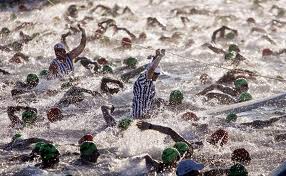
As an indoor cycling instructor, you’re going to find a large percentage of your students dabble in triathlon, or engage in it as a serious sport. Either way, you don’t want to be embarrassed by using the wrong triathlon-related words or terms in your class when talking to them about triathlon (including the ever-popular pronunciation of triathlon as “triath-a-lon”).
So to help you look better and converse intelligently and confidently with your indoor cycling students who are triathletes, this is Part 1 of a five part series called “Tri-Lingo 101” that will teach you how to use the correct triathlon terms. In this article, you’ll learn common triathlon swim terms. Without further ado, let’s dive in!
Beach start: Starting from the beach and running into the water to begin a triathlon.
Buoy: The floating markers used on a triathlon course to indicated course layout, distance and turns.
Deck: The hard surface around the pool.
Draft: To swim directly behind or beside the swimmer in front of you, which makes it easier to swim.
Floating start: Starting from the water without the feet touching to begin a triathlon.
Freestyle: The common front stroke style swimming usually used in triathlon.
Kickboard : A floating piece of styrofoam used to for kicking drills.
Lane : A sectioned area of the pool for lap swimming. Typically, a pool is divided into 3 or more lanes.
Lane Lines : The floating markers which that separate the lanes.
Lap: From one end of the pool to the other and back.
Length: From one end of the pool to the other. A “half” lap.
Flags : Small triangular pennants hung over the pool to indicate that the end of the lane is near.
Master’s: A swim class, group or club for adult swimmers.
Open Water: Outdoors swimming in a lake, river or ocean.
Pull Buoy : A floating piece of Styrofoam that goes between the legs so that a swimmer doesn’t need to kick.
Transition: Transitioning from the water to the bike portion of a triathlon.
Wall : Vertical part of the pool that is typically touched between lengths.
Wetsuit legal: A triathlon in which the water is cold enough to allow a wetsuit.
Bio:
Ben is a fitness business coach, triathlon author, and sports nutritionist. If you want more videos, aricles and audios about swimming and other triathlon related topics, visit Ben’s free blog and podcast at http://www.bengreenfieldfitness.com . Also be sure to check out Ben’s endurance sports website Endurance Planet, at http://www.enduranceplanet.com and his Rock Star Triathlete Academy, at http://www.rockstartriathlete.com . Finally, if you want to learn how to grow your fitness business and make more money, visit Ben’s fitness business advice website at http://www.trainfortopdollar.com .

Originally posted 2011-02-06 09:08:50.