by John | Jun 23, 2015 | Instructor Training, Your Fitness Business

I'm a huge fan of Amazon Prime because it makes me feel super productive and efficient. When I realise I need something, rather then adding the item to a shopping list (I'll probably forget to bring to the store), I take 30 seconds to order it on Amazon. Then I hear my dog Maxx bark when the UPS guy delivers the package two days later.
Now they're offering business owners a similar service called Amazon Business. Similar that it offers free two day shipping… different because it's free to qualified business owners!
About Amazon Business
Amazon Business is a new marketplace on Amazon .com that gives businesses of all sizes access to hundreds of millions of products in a shopping experience built for businesses. New features include FREE Two-Day Shipping on orders of $49 or more, business-pricing on select items, multi-user accounts, and approval workflows. Businesses can now shop on Amazon and use purchase orders to improve recordkeeping. Amazon Business also makes it easy for businesses to compare multiple offers on products, and is integrated and certified for punchout with leading purchasing systems.
You can apply here for your Amazon Business account. To qualify you need a Fed ID number, which you should already have as a business owner.
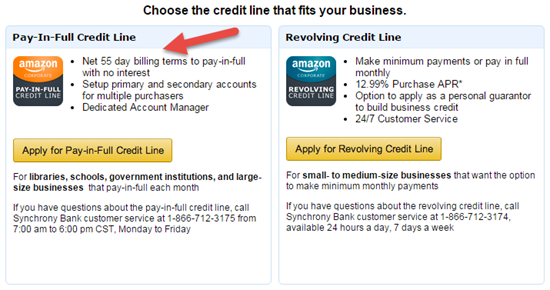
There's options to establish a line of credit directly with Amazon. Your Amex card doesn't offer 55 day net billing… but Amazon does 🙂 Why can they offer this “free” money? You're aware that credit card companies charge fees, right? By bypassing Amex, MC or Visa, Amazon's costs are lower = they'll pass on the savings to you! If you prefer to pay over time the revolving rate looks competitive to any other business card and Amazon doesn't charge any annual fees.

So, what can you purchase? Just about anything, except they don't appear to have actual IC repair parts. Here's a few that came to mind.

by Joan Kent | Jun 15, 2015 | Engage Your Students, Health and Wellness

The current nutrition buzz is that sugar’s bad news. It is.
The fact that admitting this is considered a new direction by nutritionists, dietitians and the public shows how off-base the nutrition field was for such a long time. It even makes the nutrition field appear ridiculous.
At least, to me. I’ve been blasting sugar for 20+ years, at times getting blasted back for doing it.
But it’s worth tracking the events, so we can blame the culprits who deserve it….
Once Upon a Time, Sugar Was Bad
In science journals in the 1970s, sugar’s negative health effects were getting lots of attention. Films were available — some very good. A popular book was written on problems of sugar consumption: Sugar Blues, by William Dufty.
Interestingly, Sugar Blues was written before much (if anything) was known about the brain chemicals triggered by sugar. And way before any connection was made between sugar and appetite, cravings, health, moods, and more.
It wasn’t till 1975 that endorphin (beta-endorphin) was “discovered.” So the 1974 book was a little ahead of its time. And yet it was timely because scientists were researching sugar.
That wasn’t good news for the sugar industry. And the sugar industry is a powerful lobby in Washington, D.C.
If you don’t think food industry lobbyists influence the government, an eye-opening book is Food Politics by Marion Nestle. She describes the laborious, frustrating process of developing the original Food Guide Pyramid.[wlm_private ‘PRO-Platinum|PRO-Monthly|PRO-Gratis|PRO-Seasonal|Platinum-trial|Monthly-trial|PRO-Military|30-Days-of-PRO|90 Day PRO|Stages-Instructor|Schwinn-Instructor|Instructor-Bonus|28 Day Challenge']
Nestle was working for the USDA and visited daily by beef and dairy industry reps. Their complaints — and the pressure they applied — were significant factors in the Food Guide Pyramid, released in 1991.
Those complaints made the original Pyramid vague and confusing for consumers in several ways. Years later, it had to be revised for clarification. (That’s a side issue, but stay with me.)
The take-home point is that the food industries are the real constituents of the USDA. We, the consumers, are not. Our health is of far less concern to that government agency than placating its constituents.
Which brings us back to sugar in the late 1970s.
The sugar industry didn’t care for the scientific emphasis on the health problems linked with sugar and began working its evil.
Sugar Devil Spins Fat As the Enemy
By 1984, fats had been designated the new Dietary Demon.
From that point until the late 1990s — and beyond — we suffered through the low-fat craze. And a craze it was, although it was disguised as the Right Way To Eat.
Some people still believe it! They even cite Ancel Keys, whose work has since been debunked by several sources.
During that time, several things happened — none good, except for the sugar industry.
First, scientists turned away from sugar and began looking at fats.
They investigated health problems linked with high-fat diets, saturated fats, red meats, cheeses, and other “bad fats.” New scientific findings emerged and found their way into mainstream media.
In 1995, an entire supplement of the American Journal of Clinical Nutrition (AJCN) published the papers from a conference on dietary sugar.
The presenters were hand-selected from researchers whose names I immediately recognized. They consistently found that sugar had no negative consequences on health, weight, or even cavities.
Do I have to tell you that funding for these scientists come from makers of sugary food products?
Here’s the take-away: After the conference, all companies attending (General Mills, Kraft, and other big sugar-users you know) could “legitimately” claim that their reps had attended a scientific conference — where it was conclusively shown that sugar is not bad for any reason whatsoever.
Also during the low-fat craze, the food industry developed low-fat and nonfat versions of their products. Conveniently for the sugar industry — and not coincidentally — the products used sugar to replace the flavor lost when fat was removed.
One example? Cream cheese. The full-fat product contains no sugar, but the nonfat version did and does. A line of low-fat frozen foods — ironically named Healthy Choice — added sugar to every product, including soup. Other companies followed.
Product developers even created artificial fats. Remember Olean and Olestra? (How about the side effects, such as anal leakage? Perhaps that’s a story for a different post.)
With all of these low- and nonfat foods available, dietary fat fell far below the original recommendation of 30%.
That 30% had been endorsed by the American Heart Association and the American Cancer Society — until the low-fat craze hit us.
My clinical observation was that protein intake fell, too, especially among women. Protein contains fat — sometimes a lot — so women who were concerned with weight loss just let that go. They started eating carbs, and lots of them.[/wlm_private]
Part 2 is about how we became a nation of sugar junkies and what happened when fitness professionals finally saw the light.
by John | Jun 8, 2015 | iTunes, Latest News, Music, Spotify

Kind of underwhelming if you ask me.
OK, I was wrong when I said last week that Apple doesn't do “Me Too!” products and services. I just sat through the live presentation and didn't see anything that would persuade me to switch from Spotify. They made a bunch of noise about “connecting” with artists, but nothing about sharing or connecting with other users. From what I could see there isn't anything that will improve how you deliver your class music. Even Apple's playlist timer fonts are tiny 🙁
I'll still try it at the end of the month when it's released as an iOS 8.4 update. It sounded like Apple Music will be built into iTunes… or the other way round, so every iPhone/iPad will automatically get it.
Pricing
Apple Music will offer a free 3 month trial, then it's $10.00 a month. There is no free option like Spotify. If you have a bunch of users in your house, the family share plan (up to six users) for $15 a month might be of interest. It could help me and Amy save $60 a year.
by Karen Casler | Jun 8, 2015 | Giving Back To Your Community, KEEPING IT FUN, Your Fitness Business

Karen & Co. at The Magic Castle
The Indoor Cycling Studio Supplier Trifecta
As an Indoor Cycling studio owner or manager, you want your supplier relationships to be a WIN/WIN/WIN where your supplier wins…your customer wins…and you win.
Find the right retail supplier and you add value to the overall customer experience and to your bottom line.
On the flip side, choosing a supplier in haste can cost your studio time and money.
Poor decisions risk creating a false brand illusion, detract from your customer’s overall experience, are expensive lessons to learn.
A new Indoor Cycling studio owner or manager lacking in retail experience is left to rely on trial and error and the test of time to determine what retail products work or don’t work. Social media advice and google searches may help you determine what works in other studios … but there is no guarantee that what works for one will work for the next.
So, once you have narrowed down your chooses of suppliers, think about choosing a partner instead of a supplier. Stay focused on WHY you offer a specific retail product and consider the following…
1. CHOOSE A BRAND NOT A PRODUCT
The way you treat a product is different than how you treat a brand
A product is something. A brand stands for something
How you feel about a brand trickles down to your customer
Products come and go. A brand is here to stay
…very similar to how one feels about a job vs. a career
2. KNOW THE PEOPLE BEHIND THE BRAND
Passion drives success
You're passionate about your small business so choose partners with passion
…FUN Fact:smart business people surround themselves with like-minded people
3. CONSULT YOUR MISSION STATEMENT
Your mission statement is the foundation of every decision you make
…if you don't have a mission statement GET ONE
4. CAN YOU WRITE A TESTIMONIAL?
A brand that parallels and magnifies your own brand is easy to write about
A brand for which words are hard to find…may need to be reconsidered and
…go back to questions 1, 2, & 3
Think of your suppliers as partners and watch the WIN/WIN/WIN MAGIC unfold.
Here’s WHY…
A supplier who is also a partner amplifies brand awareness for both brands.
A supplier who is also a partner adds value to the overall customer experience.
A supplier who is also a partner makes you and your partner $$$.
A supplier who is also a partner … well … that’s KEEPING IT FUN for everyone!!!
YOUR CUSTOMER WINS. YOUR SUPPLIER WINS. YOU WIN.
EVERYONE WINS.
Additional FUN Fact:
The article … WIN/WIN/WIN, was inspired by a testimonial I wrote for Violet Love Headbands. While writing the testimonial, it dawned on me that the reason Violet Love Headbands are so successful at our studio is because of the partnership that I share with the founder/owner, Rebecca Michaels. It's not the product that's amazing, it's the people behind the product. KC

Rebecca and Karen share a business philosophy of #keepingitfun
Email info@totalstockroom.com to inquire about wholesale pricing on Violet Love Headbands and product. Violet Love by Rebecca Michaels